
Qibao Meiran Wan: A Classic TCM Formula for Hair Loss Due to Liver and Kidney Deficiency

Many people find themselves developing gray hair at a relatively young age, or their hair gradually becomes thin and falls out easily, often accompanied by soreness and weakness of the lower back and knees, dizziness, tinnitus, and low energy.
From the perspective of Chinese medicine, these issues are often closely related to the strength of liver and kidney function. In the traditional Chinese medicine approach to tonification and regulation, there is a highly representative formula—Qibao Meiran Wan—which has long been used for premature graying and hair loss caused by liver and kidney deficiency.
Please note that this article is for informational reference only and cannot replace professional diagnosis or treatment advice. Below we will introduce the composition of Qibao Meiran Wan, the typical constitutional characteristics it corresponds to, as well as contraindications and safety issues that require special attention, to help you better understand this classic formula.
Why Are Hair Loss and Gray Hair Linked to the Liver and Kidneys?
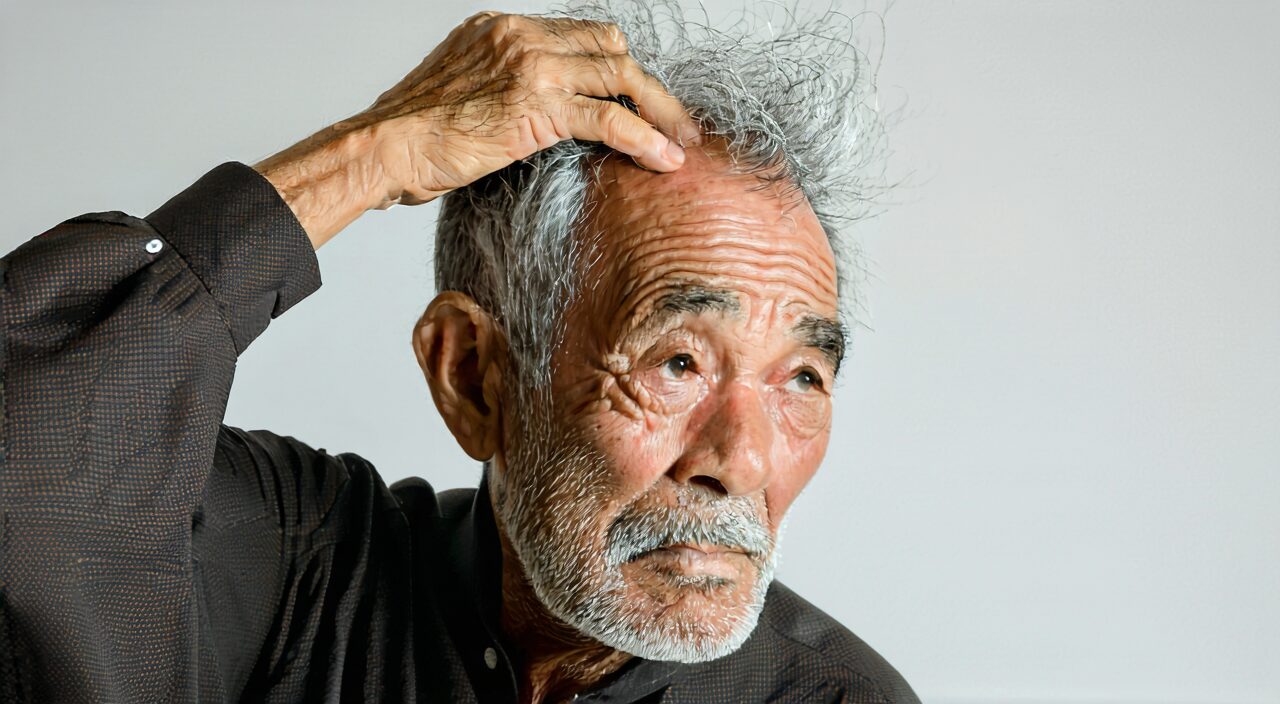
Chinese medicine theory holds that “the kidney stores essence, and its manifestation is the hair,” and “the liver stores blood, and the hair is the surplus of blood.” That is to say, the luster, growth, and shedding of hair directly reflect whether kidney essence is sufficient and whether liver blood can nourish it.
When a person is chronically overworked, stays up late, overtaxes the mind, or simply ages, it can easily lead to the hidden depletion of liver and kidney yin blood, resulting in a state of liver and kidney deficiency. This state may manifest in the hair as dryness, premature graying, increased hair loss, often accompanied by deficiency signs elsewhere in the body.
Therefore, when addressing this type of hair loss or gray hair, traditional Chinese medicine often considers tonifying the liver and kidneys, replenishing essence, and nourishing blood. Qibao Meiran Wan is one of the classic formulas that follows this regulatory approach.
Composition of Qibao Meiran Wan and the Roles of Each Ingredient
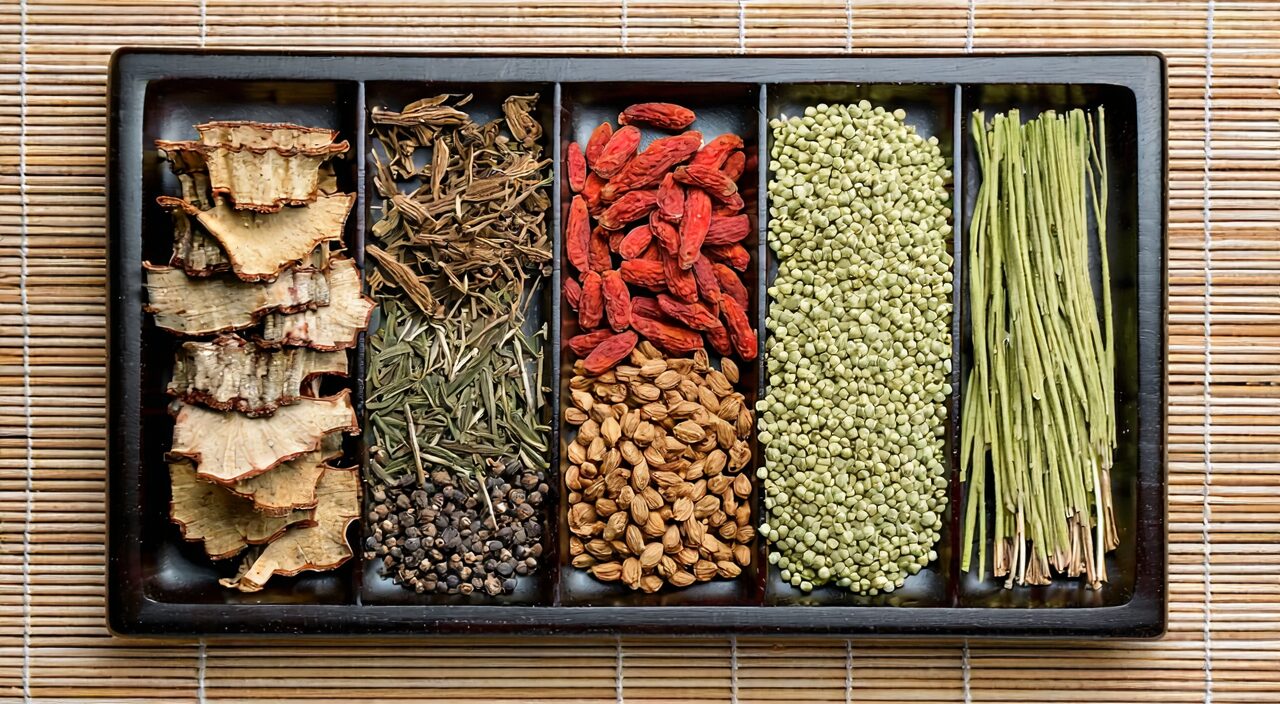
The combination in Qibao Meiran Wan is highly representative, embodying the principle of tonification with unblocking and taking both yin and yang into account. Its typical composition includes prepared He Shou Wu (Polygonum multiflorum), Gou Qi Zi (Lycium barbarum fruit), Tu Si Zi (Cuscuta seed), Bu Gu Zhi (Psoralea fruit), Dang Gui (Angelica sinensis), Niu Xi (Achyranthes root), and Fu Ling (Poria cocos). Preparations from different sources may vary slightly in excipients or individual herbs, but the core combination is basically consistent.
Prepared He Shou Wu
Prepared He Shou Wu is the core ingredient in this formula and must undergo strict processing. Traditionally, it is considered to tonify the liver and kidneys, nourish essence and blood, and strengthen sinews and bones. It has a good tonifying effect for those with premature graying, soreness of the lower back and knees, and other signs of essence-blood insufficiency.
However, there is a big difference between raw He Shou Wu and the prepared form. Moreover, He Shou Wu carries a potential risk of liver injury. Only properly processed prepared He Shou Wu should be used, and the dosage and duration must be strictly controlled. This point will be emphasized later.
Gou Qi Zi and Tu Si Zi
Gou Qi Zi excels at nourishing liver and kidney yin, benefiting essence and improving eyesight, with a relatively mild nature. Tu Si Zi can both tonify kidney yang and nourish yin essence; it is gentle, neither drying nor cloying. Together, they strengthen the liver-and-kidney-tonifying effect while their differing natures balance each other, making the formula more harmonious.
Bu Gu Zhi
Bu Gu Zhi warms and tonifies kidney yang, helps the kidney to grasp qi and relieve asthma, and warms the spleen to stop diarrhea. Adding a herb that warms kidney yang to a formula with many yin-nourishing and blood-nourishing ingredients embodies the idea of “seeking yin within yang,” meaning that yin essence can be promoted and transformed by the driving force of yang qi. However, this also indicates that the formula is less suitable if there is internal heat or excessive deficiency fire.
Dang Gui and Niu Xi
Dang Gui is an essential herb for nourishing blood and invigorating blood circulation. Here it both tonifies liver blood and ensures that the tonifying action does not lead to stagnation. Niu Xi tonifies the liver and kidneys, strengthens sinews and bones, and has the action of guiding blood downward and unblocking the channels, helping the medicinal properties reach the lower jiao (liver and kidneys) more effectively.
Fu Ling
Fu Ling strengthens the spleen, leaches out dampness, and calms the mind. Adding Fu Ling to a formula rich in tonifying herbs aims to prevent excessive richness from impeding the spleen and stomach’s transportation function, thus making the tonification non-cloying. If the spleen and stomach are too weak and dampness is heavy, it may be necessary to regulate the spleen and stomach before using this formula alone.
Looking at the overall structure of the formula, the core of Qibao Meiran Wan lies in tonifying the liver and kidneys and nourishing essence and blood, while also accommodating the spleen and stomach’s transportation function. Traditionally, it is used for premature graying, hair loss, loosening of teeth, soreness of the lower back and knees, and other manifestations attributed to liver and kidney deficiency and essence-blood depletion.
Typical Constitutions That May Be Suitable for Qibao Meiran Wan
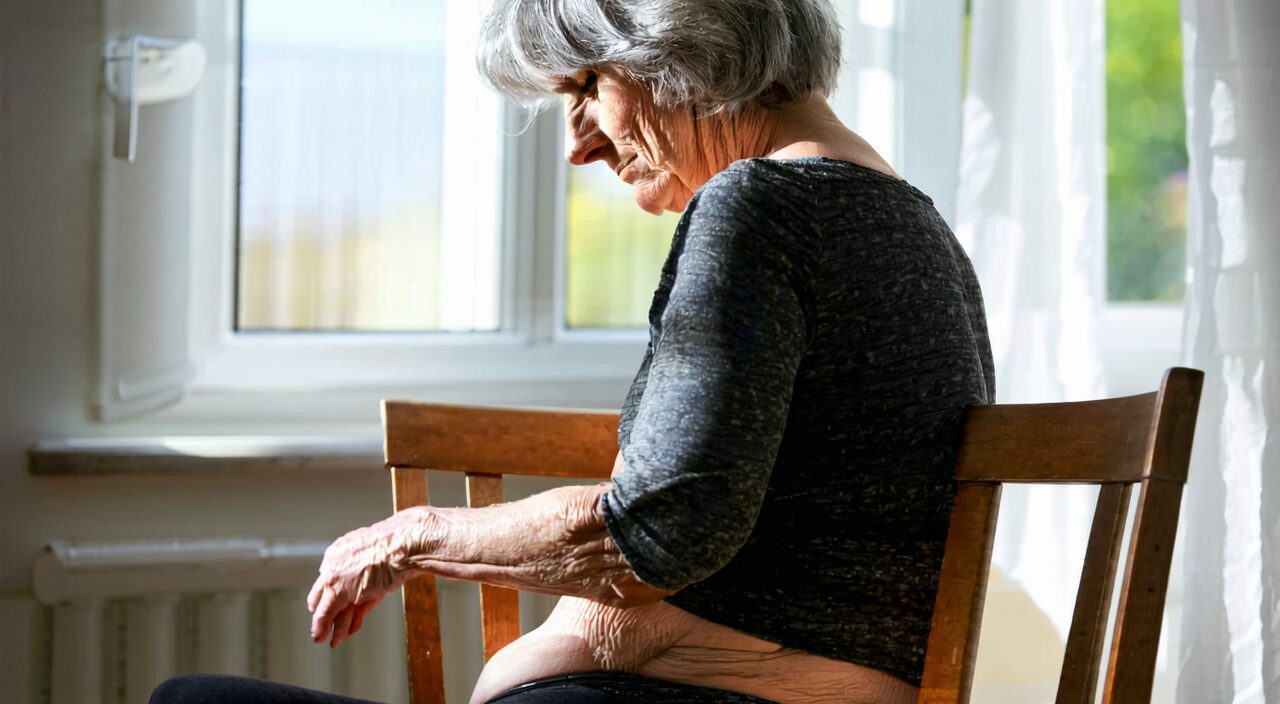
The application scope of Qibao Meiran Wan is very clear, mainly targeting patterns of liver and kidney deficiency and essence-blood depletion. You can use the following aspects to self-assess whether you roughly fit this pattern. Please note that this is only a preliminary self-understanding guide and cannot replace professional pattern differentiation.
Hair Manifestations
Hair is dry, dull, and lusterless, with a tendency toward gray hair, which may predominantly appear on the crown or temples. Or the hair is generally thin and shed in increasing amounts. The scalp often has no obvious greasiness or itching, more characteristic of dry-type hair loss.
Accompanying Body Manifestations
- Soreness and weakness of the lower back and knees: often feeling weak in the lower back and knees, more pronounced after standing or walking for a long time.
- Dizziness and tinnitus: may have a fuzzy head or a cicada-like ringing in the ears.
- Loosening of teeth: teeth feel not firm enough.
- Mental fatigue: forgetfulness, decreased energy, easily tired.
- Dull complexion: complexion tends to be dull or sallow, pale lips and nails.
Tongue and Pulse Reference
Tongue body is pale or pale red, with a thin white or scanty coating; pulse is thin and weak or deep and thin.
If most of the above manifestations match you, you may belong to what Chinese medicine calls the liver and kidney deficiency type. However, even if you think you fit well, it is best to have a TCM practitioner make the final confirmation based on tongue, pulse, and overall condition before using any formula or patent medicine.
Situations Where Qibao Meiran Wan Is Not Suitable
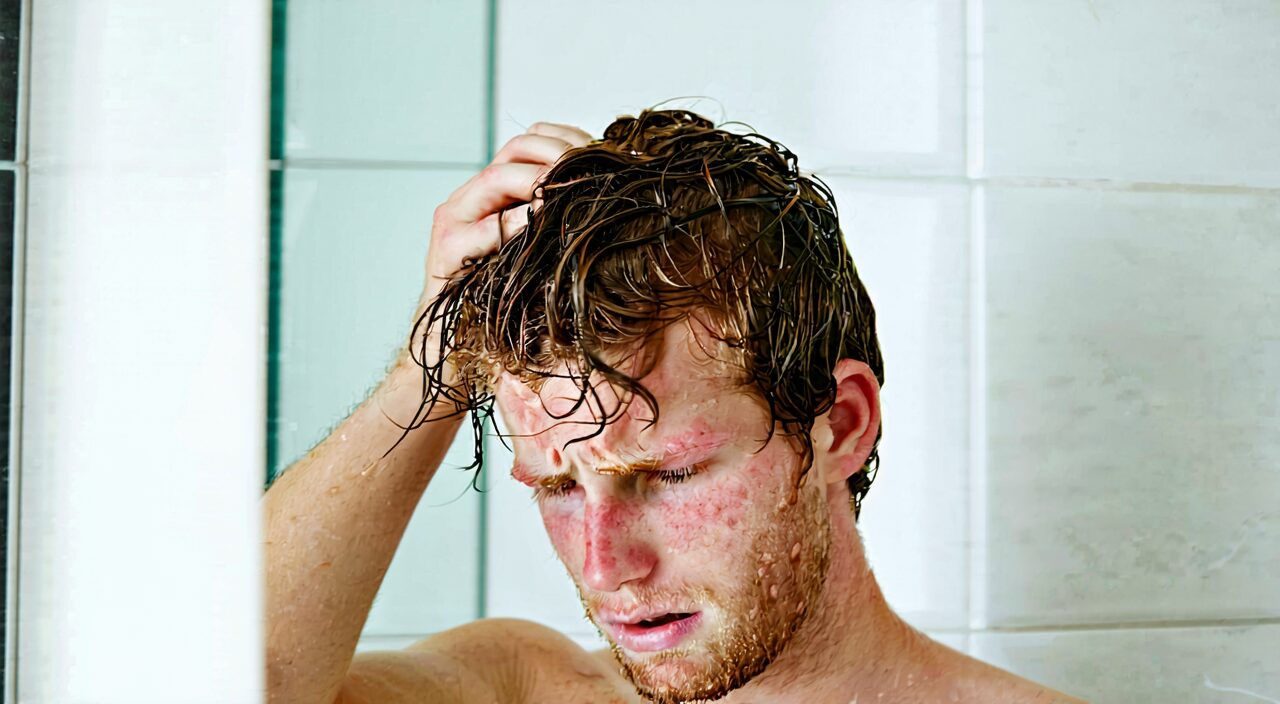
Although Qibao Meiran Wan is famous in traditional use, it is not suitable for everyone with hair loss or gray hair. Improper use may worsen bodily discomfort. The following constitutions or situations are generally not suitable:
Damp-Heat or Phlegm-Damp Constitution
If the scalp is very oily, the hair tends to be sticky, hair loss is accompanied by scalp itching and dandruff, there is frequent bodily heaviness, bitter and sticky taste in the mouth, and sticky, unsatisfactory bowel movements, with a yellow greasy or white greasy tongue coating, this mostly belongs to damp-heat or phlegm-damp type hair loss. These conditions require clearing heat, dispelling dampness, and resolving turbidity. Using the rich and cloying Qibao Meiran Wan would not only fail to improve hair loss but might even aggravate dampness and generate heat, making the scalp oilier and hair loss worse.
Qi Stagnation and Blood Stasis or Exuberant Liver Fire
If hair loss is accompanied by prickling scalp pain, distending pain in the chest and hypochondrium, irritability and quick temper, fullness in the flanks, and a dark purple tongue or ecchymoses, this is often related to qi stagnation and blood stasis, requiring treatment with methods to invigorate blood, resolve stasis, soothe the liver, and regulate qi. In addition, internal heat and irritability, dry mouth with bitter taste, insomnia with dream-disturbed sleep, and red eyes caused by exuberant liver fire should first be treated by clearing liver fire; direct tonification is not suitable.
Spleen and Stomach Deficiency with Obvious Dampness
If appetite is very poor, with bloating after eating only a little, loose stools, and a swollen tongue with teeth marks, this indicates a significant insufficiency of the spleen and stomach’s transportation function. Although the formula contains Fu Ling, most of its main herbs are nourishing. People with very weak spleen and stomach may be unable to transform these tonifying ingredients, easily leading to bloating, diarrhea, or “rising fire.”
Pregnant Women, Breastfeeding Women, and Children
Without clear guidance from a professional physician, people in these special physiological stages should not take it on their own.
During Colds, Fever, or Acute Illnesses
When the body has an external pathogenic factor, it is generally not recommended to use tonifying herbs, so as not to “lock the enemy inside” and slow recovery.
Safety Reminders About He Shou Wu
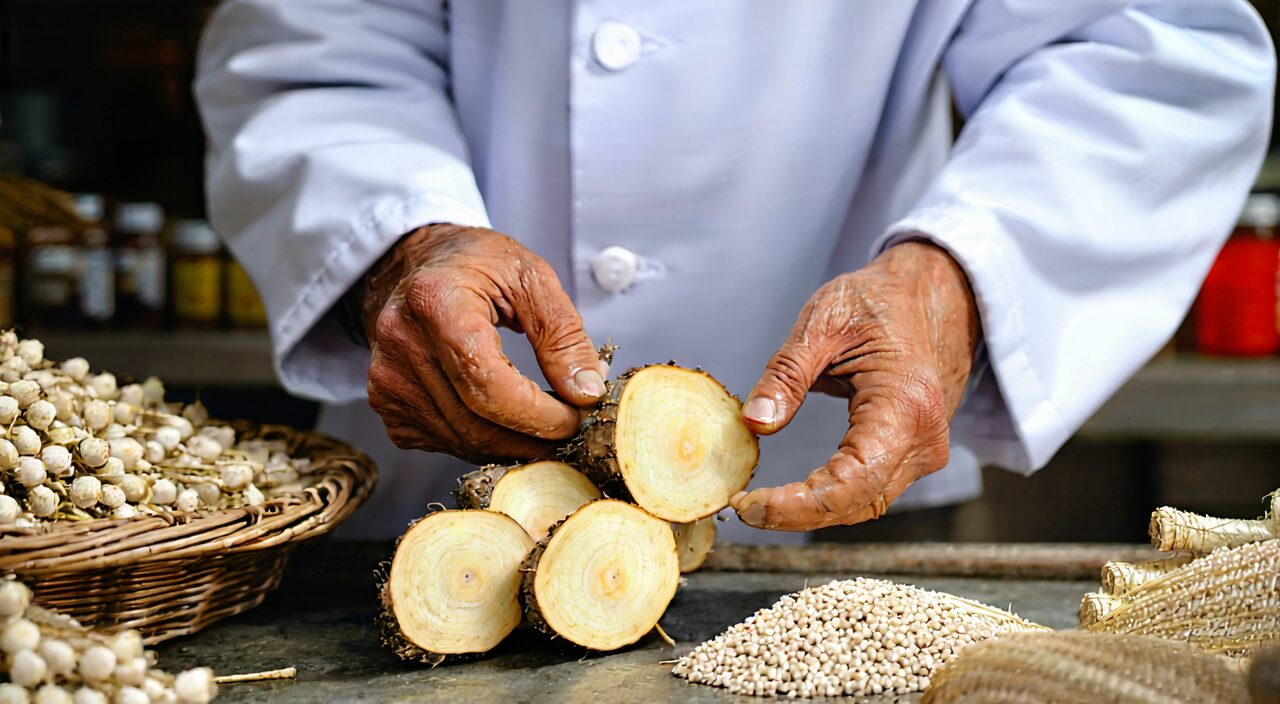
The ingredient that requires the most caution in Qibao Meiran Wan is He Shou Wu. In recent years, both domestic and international reports have indicated that He Shou Wu and its preparations may cause drug-induced liver injury, and some cases have been serious. Hence, it must be approached rationally.
Distinguish Between Prepared He Shou Wu and Raw He Shou Wu
In traditional usage, it is the strictly processed prepared He Shou Wu that is used to tonify the liver and kidneys and nourish essence and blood. Raw He Shou Wu is mainly used to resolve toxins and moisten the intestines to relieve constipation; its effects are different and require even greater caution. Even for the prepared form, the processing must be standardized, and it should only be used under professional guidance on a short-term basis based on pattern differentiation; long-term self-administration is not recommended.
Avoid Long-Term Self-Administration
Even a classic formula like Qibao Meiran Wan should not be taken as a long-term dietary supplement. Traditional use is typically conducted in courses; after a period, it should be discontinued or evaluated by a TCM practitioner to decide whether to continue. Under all circumstances, if signals possibly related to liver dysfunction appear—such as fatigue, loss of appetite, nausea, darkening of urine color, or yellowing of the skin or eyes—its use should be stopped immediately, and a medical check-up for liver function should be sought without delay.
Potential Interactions with Western Medications
He Shou Wu and formulas containing He Shou Wu may interact with certain medications, especially those metabolized by the liver. If you are taking Western medications, you should inform your doctor to assess the safety of combined use.
In summary, it is very important to fully understand the product’s ingredients, dosage instructions, and seek professional guidance. There is no need to blindly follow the trend just because of its traditional reputation.
Lifestyle Details to Complement the Regulation Process
Whether or not you use Qibao Meiran Wan or other formulas, for hair problems related to liver and kidney deficiency, lifestyle adjustments are often the foundation for long-term benefits.
Regular Routine to Reduce Consumption
Nighttime is a crucial period for liver blood to return and for kidney essence to repair. Chronic late nights directly deplete yin blood, aggravating liver and kidney deficiency. Try to fall asleep before 11 p.m. and ensure adequate, effective sleep; this is fundamentally helpful for reducing hair loss and gray hair.
Dietary Choices
You can moderately increase some black-colored or kidney-nourishing foods, such as black sesame, black beans, black rice, mulberry, and walnuts, but pay attention to cooking methods and avoid excessive greasiness. At the same time, reduce spicy, fried, and sweet rich foods, as they tend to promote dampness and generate heat, damaging yin and consuming blood.
Emotions and Exercise
Excessive mental stress and anxiety can deplete liver blood and affect the circulation of qi and blood. Moderate relaxation practices such as sitting quietly, deep breathing, and walking help the qi mechanism flow smoothly. For exercise, it is advisable to choose gentle aerobic activities like tai chi, yoga, and brisk walking, avoiding profuse sweating and overexertion.
Scalp and Hair Care
Gently comb or massage the scalp with your fingertips every day to promote local qi and blood circulation. Keep the hair clean but do not over-wash, and avoid using strong, irritating shampoo products.
These lifestyle adjustments target the underlying state of liver and kidney deficiency, and can serve as a basic complement whether or not Chinese herbal formulas are used.
Summary
Qibao Meiran Wan is one of the classic formulas commonly used in Chinese medicine to address premature graying and hair loss caused by liver and kidney deficiency and essence-blood depletion. Its combination centers on core ingredients like prepared He Shou Wu, Gou Qi Zi, and Tu Si Zi, embodying the approach of tonifying the liver and kidneys and nourishing essence and blood. People with dry, prematurely gray hair, soreness of the lower back and knees, dizziness, tinnitus, etc., may fall within the formula’s indication range, but it is not suitable for constitutions of damp-heat, phlegm-damp, or qi stagnation and blood stasis.
It is especially important to emphasize that He Shou Wu carries a risk of liver injury; only properly prepared He Shou Wu should be used, and it must not be taken long-term without supervision. The use of any formula should be based on accurate pattern differentiation and a full understanding of its applicable boundaries and safety precautions. The final decision on whether to use it should be made in consultation with a professional TCM practitioner after differentiation and in consideration of individual circumstances. At the same time, as a reminder, this article is for informational reference only and cannot replace professional diagnosis or treatment advice.