
What to Do About Increased Hair Loss? A TCM Perspective on Daily Hair Shedding Increase

When you comb your hair in the morning and find a small clump of hair tangled in the brush, notice hair collecting around the shower drain after washing, or simply run your fingers through your hair and pull out several strands—when these scenes become frequent, many people’s hearts skip a beat: Is something wrong with my body? At what point does increased hair loss need serious attention? Going to the hospital may feel like overkill, yet ignoring it leaves you uneasy.
Actually, hair loss itself is part of the normal hair life cycle, but “a noticeable increase in hair shedding” is often a signal from the body. When looking at increased hair loss, TCM does not focus solely on the hair itself but rather views hair as an outward manifestation of the state of Qi, Blood, and the internal organs. This article aims to follow this line of thought and sort out with you: how to distinguish ordinary physiological hair loss from the kind that deserves attention, the common angles TCM uses to understand the causes of increased hair loss, and the directions for daily observation and care.
How Much Shedding Is “Increased”? First Distinguish Physiological from Pathological Hair Loss
To judge whether your hair loss is abnormal, there is a very simple standard: look at trends and comparisons.
General Range of Physiological Hair Loss
A normal scalp has about 100,000 hairs, with hair follicles cycling through growth, regression, and resting phases in a certain proportion. Losing 50 to 100 hairs per day is generally considered within the range of physiological shedding.
This number doesn’t sound like a lot, but counting each strand is unrealistic. You can use a simple method to get a sense: gently grasp a small bunch of hair with your fingers and slowly pull from the roots to the ends. If only one or two strands come out, there’s usually no need to worry; if you can easily pull out three or more each time and this persists, it warrants more attention.
In addition, seasonal changes can affect hair loss. Many people notice more shedding in autumn than in summer, which is somewhat similar to the underlying rhythm of animal molting and is a normal physiological fluctuation. Postpartum hair loss is also common and usually recovers gradually over a few months. These temporary increases in hair loss, if not prolonged and unaccompanied by other discomforts, are more a sign of the body regulating and adjusting.
Signals of Hair Loss That Need Further Attention
Rather than obsessing over a single day’s count, it’s more important to pay attention to “longer-term trends”. If hair shedding significantly exceeds your usual level and persists for weeks or even months without relief, or if you can visually notice overall thinning, a widening part line, or a receding hairline, this suggests it may be more than just physiological hair loss.
At the same time, it is helpful to consider accompanying symptoms for a comprehensive assessment:
- Whether hair loss is accompanied by marked fatigue, dizziness, or a pale complexion
- Unusually oily or flaky scalp, scalp itching, or pain
- Menstrual irregularities
- Persistent low mood
This information can help paint a more complete picture of your body’s condition and often serve as the clues TCM practitioners look for during pattern differentiation.
TCM Does Not Treat “Hair” but Looks at the Person Behind It
In TCM understanding, hair is called “the surplus of Blood,” meaning only when Blood is abundant enough can it nourish the hair and keep it lustrous. And “hair is the flourishing of the Kidney,” meaning the health of hair is closely related to the Kidney’s essence. Additionally, the Liver stores Blood, the Spleen governs Blood, and the Heart dominates Blood and vessels; the production and circulation of Qi and Blood involve multiple organs.
Therefore, when hair loss becomes noticeably increased, TCM does not focus solely on the scalp but traces back to the state of Qi and Blood, organ functions, and the influence of pathogenic factors. Below are several common angles TCM uses to understand increased hair loss.
Qi and Blood Deficiency: Hair Like a Plant Lacking Water
TCM often says, “Qi deficiency causes hair to fall, Blood deficiency causes hair to wither.” If you have chronic fatigue, excessive worrying, irregular eating habits, or for women, heavy or prolonged menstruation, these can easily deplete Qi and Blood. When Qi and Blood are insufficient, the body prioritizes the limited supply to vital organs such as the heart and brain; hair, being relatively “less essential,” is the first to suffer insufficient distribution, leading to increased hair loss, dry and brittle hair, and a yellowish tinge.
This pattern often presents not only hair loss but also:
- Fatigue and weakness, easily becoming short of breath or palpitations with light activity
- Pale or sallow complexion
- Dizziness and blurred vision
- Difficulty falling asleep or dream-disturbed sleep
- Diminished memory compared to before
If you notice this combination, it is not advisable to rely solely on topical hair regrowth products; instead, it makes more sense to think in terms of overall nourishing and regulating Qi and Blood.
Liver and Kidney Depletion: Unstable Foundation, Hair Lacking Nourishment
“The Liver and Kidney share the same source” is an important concept in TCM. The Liver stores Blood, the Kidney stores essence, and essence and Blood mutually generate and transform. Chronic staying up late, excessive eye strain, overindulgence in sexual activity, and natural decline with age can all lead to Liver-Kidney depletion.
In this state, increased hair loss often manifests as thin, soft hair, possibly accompanied by soreness and weakness of the lower back and knees, dizziness, tinnitus, loosening of teeth, and dry eyes. In some young and middle-aged people, high work stress and chronic insufficient sleep can cause “deficiency fire to flare up,” leading to increased scalp oil secretion and greasy but rootless hair on top of Liver-Kidney deficiency, forming a mixed condition of root deficiency and branch excess. Regulating this type of hair loss requires more patience because it involves a deeper level of essence rather than just Qi and Blood.
Damp-Heat Steaming Upward: The Scalp Environment Disrupted
Not all increased hair loss is caused by “deficiency.” A long-standing preference for rich, fatty, sweet, spicy, and greasy foods, or frequent alcohol consumption, can impair the Spleen and Stomach’s transportation and transformation, generating internal Dampness that over time turns into Heat. Damp-Heat then steams upward along the meridians to the head, disrupting the scalp environment.
People with this pattern typically have a very oily scalp, with hair that easily clumps together in strands. They may also experience scalp itching, folliculitis, and increased dandruff. From the TCM perspective, hair loss caused by Damp-Heat is not directly due to “insufficient nutrition”; rather, it is the accumulation of metabolic wastes and obstruction of hair follicles by turbid Qi that weakens the hair roots.
This type is relatively more common in young men, but it also occurs in women, especially when accompanied by facial oiliness, acne, bitter taste in the mouth, bad breath, and sticky, difficult bowel movements—suggesting that Damp-Heat factors may be involved.
Emotional Factors: How Stress Drives Hair Loss
The impact of emotional factors such as mental stress, chronic anxiety, and depression on hair loss is often underestimated. TCM holds that “overthinking causes Qi to knot” and “repressed anger damages the Liver”; excessive mental stress affects the movement of Qi, preventing Qi and Blood from smoothly ascending to nourish the hair. Long-term Liver Qi stagnation may also generate fire and wind, leading to scalp itching, increased hair loss, or even alopecia areata.
Stress-induced hair loss often shows a temporal correlation: after a period of intense work, going through major life events, or long-term low mood. While such hair loss is distressing, if the stressor can gradually be resolved, combined with appropriate methods to soothe the Liver, regulate Qi, and smooth Blood and Qi, there is often good hope for recovery.
If hair loss is accompanied by significant difficulty falling asleep, early waking, irritability, or very low mood that is affecting daily life, it is advisable to consult a healthcare professional promptly.
Key Daily Observations: More Than Just Counting Hairs
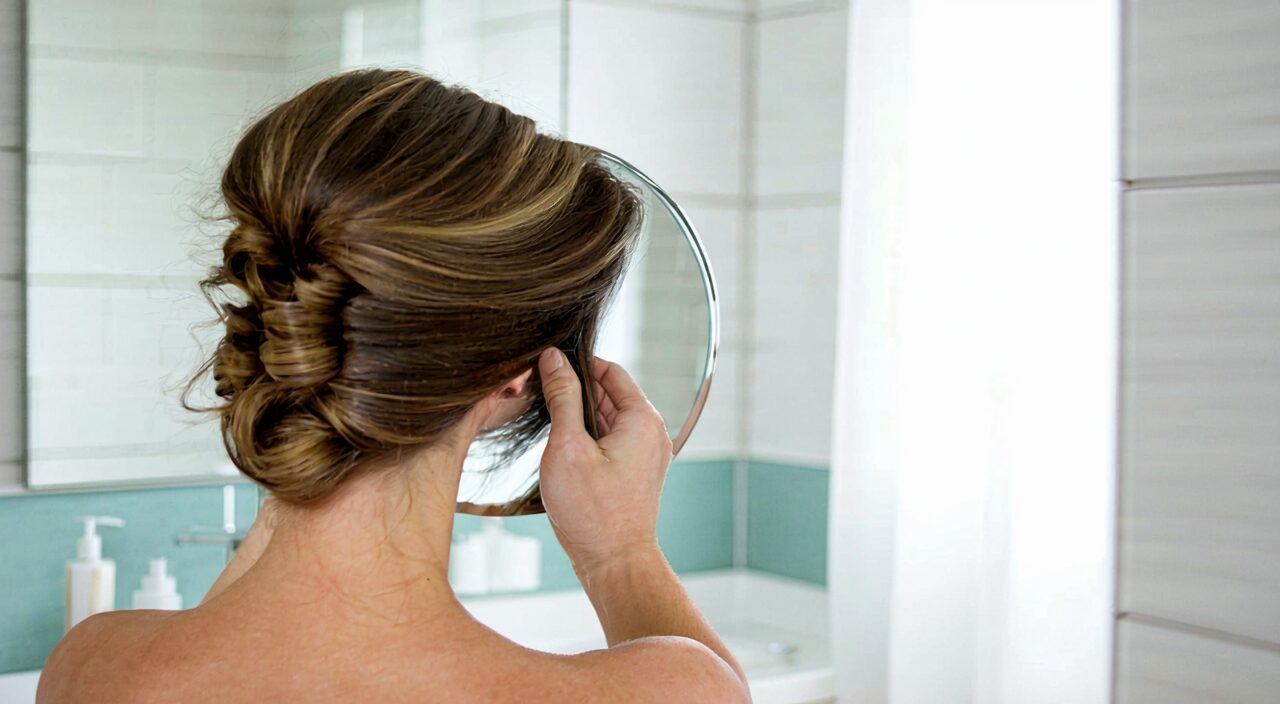
Whether increased hair loss warrants further attention depends not only on the amount of shedding but also on changes in the hair itself and accompanying bodily sensations. These daily observations can help clarify the situation and provide useful information when describing your condition to a professional.
Observe the Scalp and Hair Root Condition
Periodically observe whether the scalp becomes oily too quickly, whether there is obvious dandruff or redness, and whether the hair follicle openings are clearly visible. Gently tug on fallen hairs to check if the root end has a white or granular-like tissue, which usually indicates that the hair sheds naturally during the resting phase. If the fallen hairs have roots that are thinner, shorter, and very light in color, it may point to a shortened growth phase.
Note that these observations cannot replace professional scalp examination and serve only as a reference for self-monitoring at home.
Monitor Changes in Energy and Sleep
If during the same period of increased hair loss, your energy levels decline noticeably—tasks that were once easy become difficult—or your sleep becomes unstable, with trouble falling asleep, frequent waking, or waking up still tired, these signals are likely different manifestations of the same body imbalance. Recording these changes is very helpful for overall assessment.
Observe Appetite and Digestion
How is your appetite? Do you experience bloating after meals? Is your stool well-formed or sticky? These daily indicators of Spleen-Stomach function are closely related to Qi and Blood production. If increased hair loss is accompanied by indigestion, diarrhea, or constipation, it indicates that the problem may not just be with the hair.
What Aspects Can Be Addressed for Care

TCM’s approach to managing increased hair loss is not to “stop shedding” directly but to restore balance according to the body’s state. Without professional pattern differentiation, it is not advisable to simply adopt herbal formulas or patent Chinese medicines as a treatment plan. The following care directions are more suitable as knowledge and awareness for daily life.
Avoid Two Extremes in Diet
- Avoid insufficient intake: Extreme dieting, inadequate protein and staple food intake can deprive the body of sources for Qi and Blood production.
- Avoid overburdening the body: Reduce excessive consumption of rich, greasy, high-sugar, and spicy foods to prevent fostering Dampness and generating Heat.
In daily life, you can appropriately choose ingredients traditionally believed to help nourish Blood, tonify the Liver and Kidney, and strengthen the Spleen and Stomach, such as black sesame, black beans, mulberries, goji berries, Chinese yam, and red dates. However, adjust according to your constitution. For example, if Damp-Heat is pronounced, heavy and cloying foods should be avoided.
Sleep Is the Simplest Way to Nourish Qi and Blood
TCM emphasizes that at night, Blood returns to the Liver; a good sleep window is the key time for body repair and Qi-Blood generation. Try to go to sleep before 11 p.m., ensuring sufficient and regular sleep, which has tangible significance for reducing hair loss caused by deficiency. Even if work pressure is high and time is tight, prioritizing sleep often has a longer-lasting effect than taking many supplements.
Regulate Emotions, Give “Qi” an Outlet
For hair loss clearly linked to emotional factors, consciously relieving stress and adjusting the pace of life is crucial. Moderate exercise, breathing practices, outdoor walks, or journaling worries can all help improve Qi stagnation to some degree. The important thing is to acknowledge the existence of stress and allow your body to use hair loss as a signal of warning.
If self-regulation is insufficient and emotional issues are affecting diet and sleep, seeking psychological or medical support is a very rational choice.
Understanding Herbal Formulas and Patent Chinese Medicines
In the TCM approach to increased hair loss, some classic formulas and patent Chinese medicines are often mentioned. The following two are common reference options, but their applicability differs:
| Name | Common Direction | Applicable Reference Manifestations | Precautions |
|---|---|---|---|
| Ba Zhen Wan | Qi and Blood deficiency | Pale complexion, dizziness, blurred vision, shortness of breath, reluctance to speak, increased hair loss accompanied by marked fatigue | Primarily benefits Qi and nourishes Blood; not suitable for self-use when there is internal Damp-Heat with a very oily, sticky scalp |
| Gui Pi Wan | Heart and Spleen deficiency | Excessive worrying, insomnia, dream-disturbed sleep, accompanied by increased hair loss | Primarily tonifies the Heart and Spleen to calm the mind; may worsen stagnation when Damp-Heat is pronounced |
These Chinese patent medicines each have their own focus; whether they are suitable, when to use them, and how, still need comprehensive judgment based on individual constitution, specific symptoms, product instructions, and professional advice. They should not be used on your own simply because of “increased hair loss.”
When to Seek Professional Help

If increased hair loss lasts longer than one month and any of the following situations occur, it is advisable to consult a dermatologist or relevant professional promptly:
- Noticeable hair thinning with large areas of scalp visible
- Appearance of round or patchy hair loss areas
- Significant scalp redness, swelling, ulceration, intense itching, or pain
- Simultaneous systemic issues such as significant weight loss, severe fatigue, long-term menstrual irregularities, palpitations, or chest tightness
- Persistent low mood, anxiety, and restlessness affecting normal work and life
When faced with increased hair loss, do not panic excessively, nor delay indefinitely. A rational attitude is to treat it as a signal from the body, observe and adjust your lifestyle for a period of time, while monitoring the trends. If the trend improves, maintain it; if it remains unchanged or worsens, it is worth further investigation through professional channels.
Summary
Occasional fluctuations in hair loss are normal, but persistent, significant increases are often the body’s way of indicating that something has changed. TCM views increased hair loss not as an isolated scalp issue but from the perspectives of Qi and Blood, Liver and Kidney, Spleen and Stomach, and emotions to understand possible underlying imbalances. Qi and Blood deficiency, Liver-Kidney depletion, Damp-Heat steaming upward, and emotional stress are common traditional TCM perspectives used to explain increased hair loss.
The focus of daily care is not on pursuing “rapid hair growth” but on returning as much as possible to a baseline state of moderate diet, adequate sleep, and emotional stability. If you wish to learn more about the applicability of traditional Chinese patent medicines like Ba Zhen Wan and Gui Pi Wan, you need to make a comprehensive judgment based on a clear understanding of your own constitution and symptoms, combined with product instructions and professional advice.
This article is for informational reference only and cannot replace professional diagnosis or treatment advice. If increased hair loss persists or is accompanied by other discomforts, please seek evaluation from a doctor or relevant professional in a timely manner.