
Who Is Qing Wei San Suitable For? Composition, Effects, and Contraindications

When gum swelling and pain, heavy breath, dry mouth, and a desire for cold drinks occur, many people familiar with Chinese medicine think of the term “stomach fire.”
In traditional formulas, Qing Wei San (Stomach-Clearing Powder) is often mentioned in connection with such problems. However, it is not suitable for all oral discomforts; applying it in the right direction and distinguishing cold from heat is very important.
This article reviews the composition of Qing Wei San, its traditional understanding, presentations that may be suitable, and situations requiring caution. It also compares it with several easily confused formulas to help form a clearer understanding.
Traditional Positioning and Approach of Qing Wei San
Qing Wei San originates from the Pi Wei Lun (Treatise on the Spleen and Stomach) and, under the authorship of Li Dongyuan during the Jin-Yuan period, is a representative formula for clearing stomach heat and cooling blood.
According to traditional theory, the stomach meridian connects to the gums. When accumulated heat in the stomach attacks upward along the meridian, it may cause red, swollen, painful gums, hot and foul breath, dry mouth, and a preference for cold drinks. The approach of Qing Wei San is to clear stomach heat while simultaneously cooling blood and nourishing yin, allowing the floating fire to descend rather than simply “extinguishing fire” locally.
Therefore, it differs from formulas that purely clear heat and drain fire; it focuses more on regulating the condition after deep stomach fire affects the blood level. This also explains why it is often used for recurrent, stubborn oral discomforts, provided the condition truly belongs to stomach fire excess or presentations accompanied by blood heat.
Composition of Qing Wei San and the Role of Each Herb
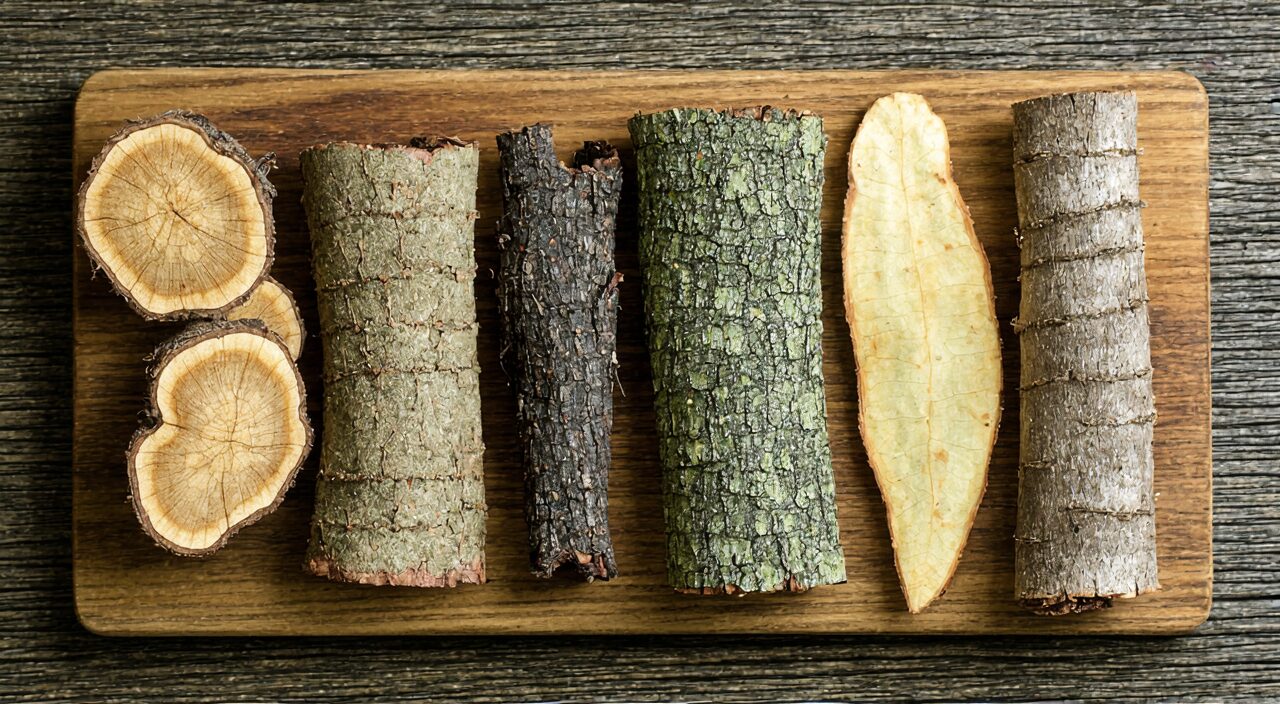
The classic composition of Qing Wei San is relatively simple but clearly structured. The table below lists its common herbs and their traditional understanding in the formula for reference:
| Herb | Traditional Understanding |
|---|---|
| Huang Lian (Coptidis Rhizoma) | Bitter and cold, directly reducing and clearing excess stomach fire; serves as the chief herb in the formula. |
| Sheng Di Huang (Rehmanniae Radix) | Cools blood and nourishes yin, addressing the yin damage after stomach fire affects the blood level. |
| Mu Dan Pi (Moutan Cortex) | Cools blood and disperses stasis, helping to clear lurking fire in the blood. |
| Dang Gui (Angelicae Sinensis Radix) | Nourishes and moves blood, reducing the stagnation caused by cold medicinals on blood circulation, and also takes care of pain relief. |
| Sheng Ma (Cimicifugae Rhizoma) | Guides the medicinals into the Yangming meridian, also has heat-clearing, toxin-resolving, and dispersing properties, helping to diffuse constrained fire. |
In some variations, Shi Gao (Gypsum Fibrosum) may be added to enhance the heat-clearing power. Overall, this combination clears while dispersing, descends while lifting, is cold without causing stagnation, and takes into account both excess fire and yin-blood disturbance during intense stomach fire.
Body Presentations Potentially Suitable for the Qing Wei San Approach
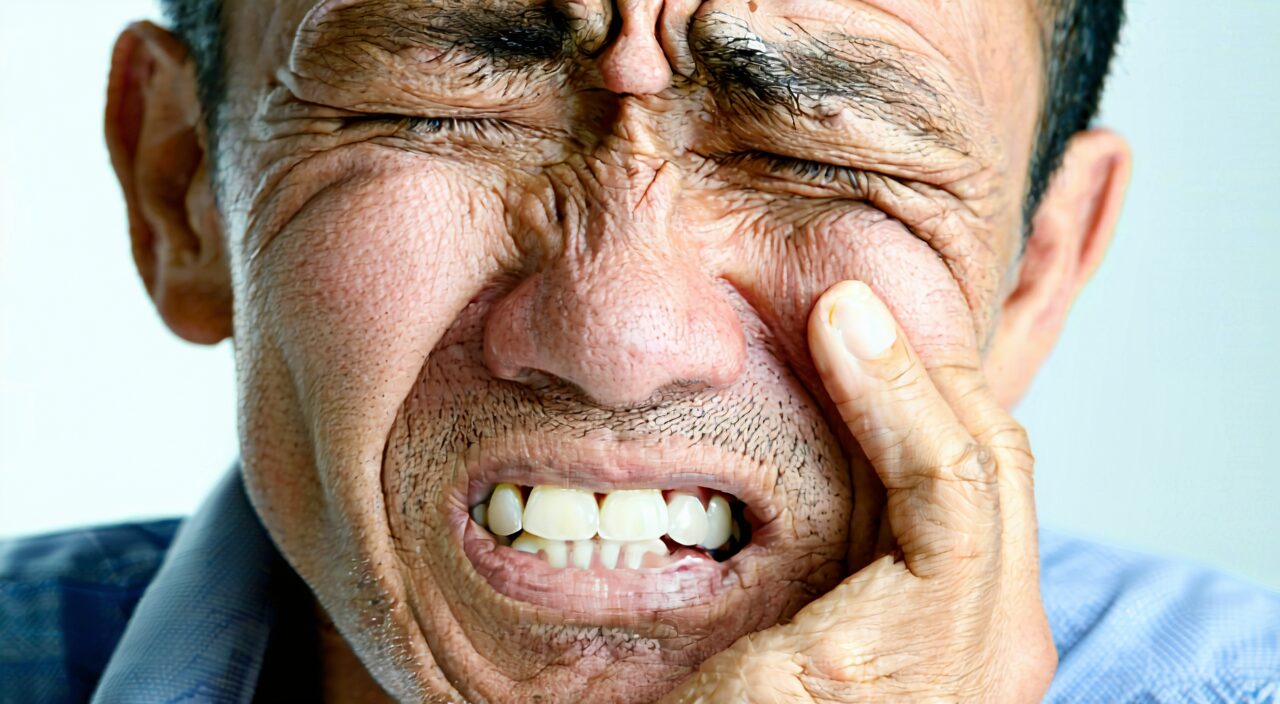
In traditional Chinese medicine, the use of Qing Wei San typically considers a group of stomach-fire-related manifestations rather than a single symptom. The following aspects are often used as reference conditions, but still need to be assessed based on the individual’s overall situation.
Gum Swelling, Pain, and Toothache
- Characterized by red, swollen gums with a burning sensation and a tendency to bleed easily upon contact.
- The pain tends to be burning or throbbing, slightly relieved by cold and aggravated by heat.
- This type of toothache is often not caused by cavities but is a problem of the gums themselves, traditionally considered closely related to stomach fire ascending along the meridian.
Bad Breath and Dry Mouth
- Hot and foul breath that is difficult to improve significantly even with careful oral hygiene.
- Dry mouth with a desire to drink cold water; lips tend to be red and dry.
- This bad breath is often accompanied by a burning sensation in the stomach, more noticeable after meals or when hungry.
Stomach Burning and Abnormal Appetite
- Some people experience epigastric burning and noisy sensations.
- Or excessive appetite, easy hunger, but possibly accompanied by bloating and discomfort after eating.
- If this stomach heat manifestation flares upward, it easily triggers oral problems concurrently.
Constipation Tendency
- Stomach fire transmitted downward to the large intestine may lead to dry, hard stools and difficult defecation.
- Often accompanied by yellowish urine with a stronger smell.
- This type of constipation is mostly heat accumulation rather than qi deficiency failing to propel.
It should be emphasized that the above presentations should be understood as part of an overall pattern. It is not that Qing Wei San is suitable just because there is gum swelling and pain. When these conditions appear together, and the tongue coating is yellowish and the tongue body is reddish, it is closer to the traditional direction of use.
Situations Where It Is Not Suitable or Caution Is Needed
Qing Wei San is overall cold in nature. Using it casually without a correct direction may instead cause discomfort. The following situations are generally not prioritized for its use:
Those with Spleen-Stomach Deficiency Cold
- Usually have a stomach that fears cold, prefers warmth and pressure.
- Easily develop diarrhea and poor appetite.
- Tongue body is pale, puffy, and the coating is white and slippery.
These presentations point to spleen-stomach deficiency cold. The bitter-cold herbs in Qing Wei San may further damage spleen-stomach yang qi and worsen discomfort. Even if oral problems exist, approaches such as warming the spleen and stomach or drawing fire back to its source should be considered.
Oral Discomfort Caused by Yin Deficiency and Deficiency Fire
- Recurrent oral ulcers or gum discomfort.
- Dry mouth but no desire to drink, or only wanting to moisten the mouth without swallowing.
- Accompanied by heat sensations in the palms and soles, night sweats, red tongue with little coating.
This mostly belongs to yin deficiency with fire effulgence, rather than excess stomach fire. Qing Wei San may not correspond to the pattern and could even make deficiency fire more buoyant due to its bitter-drying effect harming yin.
Cold-Type Oral Problems
- Oral pain aggravated by cold and relieved by warmth.
- Gums are pale rather than red, with clear, thin secretions.
- This is often related to cold pathogens or qi and blood deficiency.
Such situations clearly do not align with the direction of Qing Wei San.
Special Physiological Stages
During pregnancy, breastfeeding, childhood, and for those who are physically weak, tolerance to bitter-cold medicinals is lower, and use should be evaluated more cautiously. Usually, selection should be made under the guidance of a professional who can comprehensively judge the overall condition.
Additionally, if gum problems recur without healing, or are accompanied by significant tooth looseness, persistent bleeding, facial swelling, fever, or other signs, it may not be simple stomach fire. Medical attention should be sought promptly to clarify the cause, rather than attempting any formula on one’s own.
Differences Between Qing Wei San and Several Similar Formulas
Many people comparing Qing Wei San often consider it alongside Huang Lian Jie Du Tang, Zuo Jin Wan, Bai Hu Tang, and Dao Chi San. Although all these formulas have heat-clearing tendencies, their levels of action and targeted pathomechanisms differ.
Difference from Huang Lian Jie Du Tang (Coptis Toxin-Resolving Decoction)
- Huang Lian Jie Du Tang: Combines Huang Lian, Huang Qin, Huang Bai, and Zhi Zi. Its direction is to drain excess fire from the Triple Burner, with stronger heat-clearing, dampness-drying, and toxin-resolving power. It is often used for fever, restlessness, dry mouth and throat, sores, and swellings where heat toxin is exuberant and systemic heat signs are prominent.
- Qing Wei San: More focused on the stomach and blood level, its scope is relatively concentrated in the middle burner and oral cavity, additionally taking care of cooling blood and nourishing yin.
Although both contain Huang Lian, the overall approach and applicable scope are distinctly different.
Difference from Zuo Jin Wan (Left Metal Pill)
- Zuo Jin Wan: Composed only of Huang Lian and Wu Zhu Yu, pairing bitter-cold with acrid-warm. It mainly clears liver fire and descends rebellious qi to stop vomiting, often used for rib-side pain, acid swallowing, belching, and bitter taste due to liver fire invading the stomach.
- Qing Wei San: The focus is on stomach fire itself, whereas Zuo Jin Wan addresses a disharmony between the liver and stomach, where emotional factors are often more prominent.
Gum swelling and pain are not the main indication for Zuo Jin Wan.
Difference from Bai Hu Tang (White Tiger Decoction)
- Bai Hu Tang: Primarily uses Shi Gao and Zhi Mu to clear intense heat at the qi level. Traditionally used for high fever, red face, great thirst with copious drinking, and a flooding large pulse, belonging to Yangming qi-level intense heat.
- Qing Wei San: Tends more toward localized stomach fire affecting the blood level, manifesting as chronic or subacute oral presentations.
Although both involve the Yangming aspect, Bai Hu Tang targets systemic qi-level high fever. The two operate on different levels and should not be used interchangeably.
Difference from Dao Chi San (Red-Guiding Powder)
- Dao Chi San: Uses Sheng Di Huang, Mu Tong, Zhu Ye, etc., to clear the heart and promote urination. Often used for mouth and tongue sores, scanty, dark urine with painful urination caused by heart channel fire transmitting downward to the small intestine.
- Qing Wei San: The core is in the stomach meridian, manifesting more as gum problems and hot, foul breath.
The oral sores in Dao Chi San are often due to heart channel fire flourishing, accompanied by urinary abnormalities, whereas Qing Wei San features gum and breath issues more prominently.
From these comparisons, it can be seen that even for conditions involving “heat,” different formulas have significantly different emphases and applicable characteristics. In real life, the most important factor in determining whether the Qing Wei San direction is suitable is to see if stomach fire and blood heat are present simultaneously, and whether there is an underlying condition of spleen-stomach deficiency cold or yin deficiency.
Summary
As a classic formula for clearing stomach heat and cooling blood, Qing Wei San is traditionally used for gum swelling, pain, bad breath, dry mouth, burning sensation in the stomach, and heat-accumulation constipation caused by stomach fire flaring upward. It is often considered as a reference direction especially when the tongue is red with a yellow coating and stomach heat is evident.
However, it is biased toward bitter cold and is not suitable for spleen-stomach deficiency cold, yin-deficiency deficiency fire, or cold-type oral discomfort. Even greater caution is needed during special physiological stages. Although Qing Wei San shares heat-clearing effects with Huang Lian Jie Du Tang, Zuo Jin Wan, Bai Hu Tang, and Dao Chi San, their disease locations and pathomechanisms each have different emphases and should not replace one another.
The content of this article is only a review of traditional knowledge. Whether it is actually suitable must be combined with individual constitution, specific presentations, and professional judgment. For persistent or worsening gum problems, it is recommended to seek medical evaluation promptly to avoid delay.