
Who Is Sheng Mai San Suitable For? Composition, Benefits, and Contraindications

Many overseas users interested in TCM health maintenance have heard of “Sheng Mai San.” The formula is often mentioned during hot summer days or when someone experiences profuse sweating, shortness of breath, or a dry mouth. But who is it actually suitable for? What is it made of? And how does it differ from other common formulas like Mai Wei Di Huang Wan and Yu Ping Feng San? This article provides a systematic and restrained analysis from a traditional Chinese medicine perspective.
What Is Sheng Mai San? Starting with Dual Supplementation of Qi and Yin
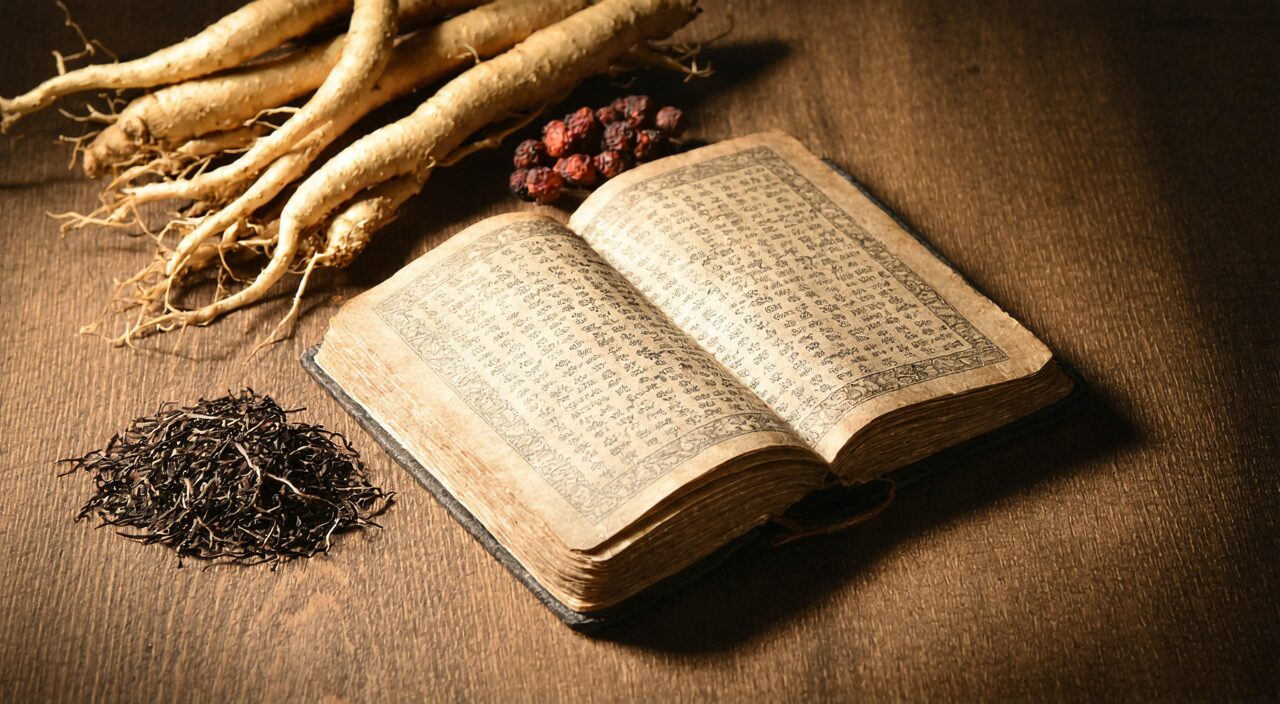
Sheng Mai San first appeared in Zhang Yuansu’s The Origins of Medicine during the Jin dynasty. It is a classic representative formula for boosting qi, nourishing yin, generating fluids, and astringing sweat.
Traditional Chinese medicine does not view “deficiency” in isolation; it differentiates among qi deficiency, yin deficiency, yang deficiency, and other patterns. Sheng Mai San primarily addresses dual deficiency of qi and yin—a state in which both qi is insufficient and yin fluids are depleted.
When qi and body fluids are consumed by summer heat, prolonged illness, or excessive exertion, symptoms such as fatigue, dry mouth, vexing heat, and unstoppable sweating may arise. In such cases, supplementing qi alone can easily stir up fire, while solely nourishing yin may encumber the spleen.
The design of Sheng Mai San combines qi supplementation with yin nourishment, astringing and securing, so that qi is restored, fluids return, and the pulse is replenished. Hence the name “Sheng Mai” (Generate the Pulse).
Composition and Combining Characteristics of Sheng Mai San
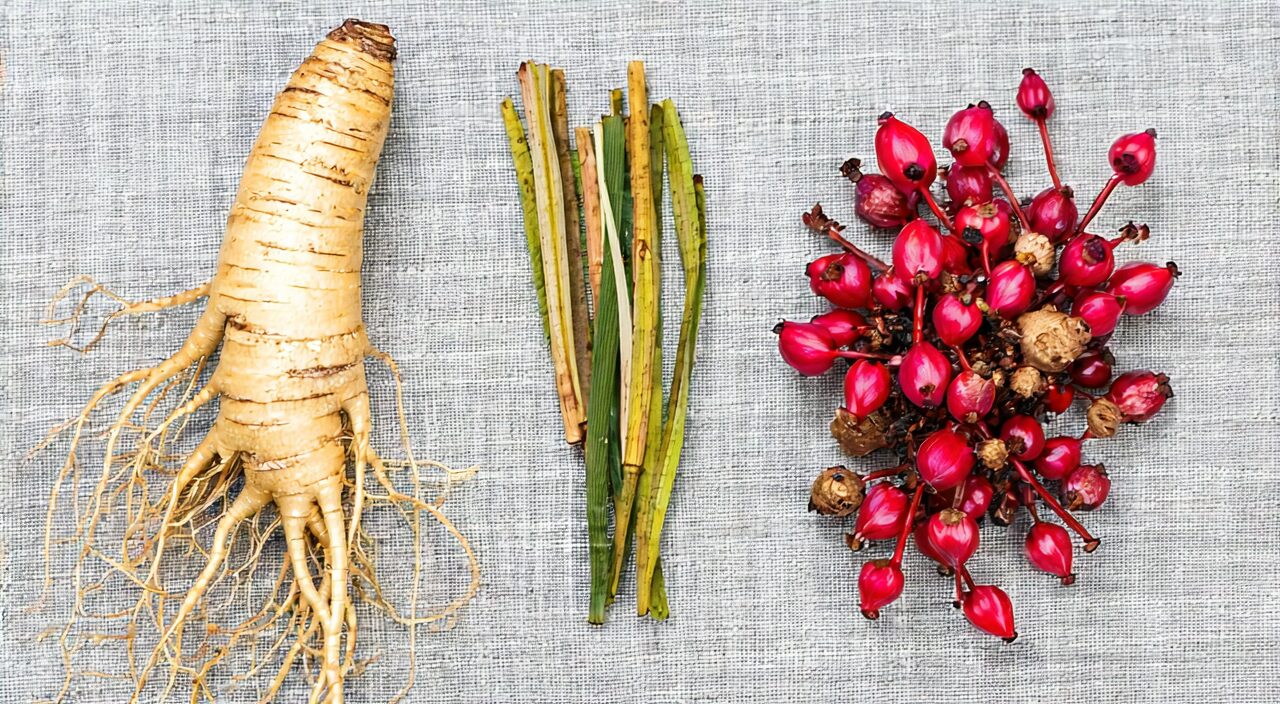
The composition of Sheng Mai San is remarkably concise: only three herbs, yet they form a relatively complete regulatory structure.
| Herb | Traditional function | Role in this formula |
|---|---|---|
| Ren Shen (Ginseng) | Greatly tonifies original qi, generates fluids and stops thirst | Supplements qi and consolidates the root; the main driving force of the formula |
| Mai Dong (Ophiopogon) | Nourishes yin, clears heat, moistens the lungs and generates fluids | Nourishes yin fluids, directly relieving dry mouth and vexing heat |
| Wu Wei Zi (Schisandra) | Astringes, secures, boosts qi and generates fluids, calms the heart and spirit | Restrains sweat and dissipated qi and fluids, preventing further loss |
The three herbs work together—one supplements, one moistens, one astringes—so that qi does not leak out and yin is not drained away. This is the key feature that sets Sheng Mai San apart from conventional qi-tonifying or yin-nourishing formulas. Depending on the specific situation, Ren Shen can be replaced with Dang Shen (Codonopsis) to moderate the tonic strength, making it suitable for gentler, daily regulation.
Traditional Functions and Direction of Action of Sheng Mai San
From the perspective of traditional herbal and formulary understanding, the directions of action of Sheng Mai San are mainly concentrated in the following areas:
- Boosting qi and nourishing yin: Improves qi deficiency manifestations such as shortness of breath, fatigue, low and weak voice, and lack of vitality, while moistening conditions like dry mouth, parched throat, and dry skin caused by insufficient yin fluids.
- Generating fluids and astringing sweat: For excessive sweating without apparent external contraction, especially spontaneous sweating or night sweats, or palpitations and thirst after profuse sweating in hot weather, Sheng Mai San is often used as a strategy to astringe sweat, stop perspiration, and replenish fluids.
- Restoring the pulse and stemming collapse: In ancient experience, when gross deficiency of qi and yin leads to palpitations and a weak, scattered pulse, Sheng Mai San can be employed to astringe heart qi and stabilize the pulse. However, this is more of an academic discussion in critical situations, and daily maintenance should still be approached with caution.
It is important to note that the above are merely some traditional directions of use. Whether the formula is appropriate still needs to be determined based on an individual’s actual constitution and symptom presentation; it cannot be equated with “it can be used whenever these conditions are present.”
Who Might Be Suitable for Sheng Mai San?

In TCM health maintenance practice, Sheng Mai San is more commonly considered for people with the following qi and yin deficiency tendencies:
- Easily short of breath and speaking feels taxing: Office workers or people in recovery who become breathless with the slightest activity and constantly want to drink water while their throat feels dry.
- Profuse sweating accompanied by vexing heat: Whether sweating on slight exertion during the day or experiencing night sweats on the back and chest, along with irritability and hot palms.
- Palpitations and a racing heart: Especially when the heartbeat becomes noticeably pronounced after fatigue or sweating, yet with no clear organic problem found on examination. Traditionally this is understood as qi and yin insufficiency failing to nourish the heart.
- Persistent weakness after summer heat: Fatigue lingering after the hot season, with decreased appetite, a sticky dry mouth, and vexing heat that refuses to abate, making it difficult to recover.
- Hoarseness and dry throat after excessive voice use: For professions such as teachers or broadcasters, the formula is sometimes incorporated into a comprehensive restorative approach.
A special reminder here: Not all “fatigue” and “sweating” are indications for Sheng Mai San. If the body feels heavy, the tongue coating is thick and greasy, and the stools are sticky, it is likely a pattern of phlegm-dampness or damp-heat. In such cases using Sheng Mai San may actually worsen discomfort. It is therefore advisable to have a TCM professional identify the constitution before making a choice.
Contraindications for Sheng Mai San
The following situations are generally not regarded as suitable directions for Sheng Mai San, and special caution is required:
- Predominant phlegm-dampness: A heavier body type, frequent sensation of phlegm in the throat, a thick white or slippery greasy tongue coating, and loose, sticky stools. The yin-nourishing and astringent nature of Sheng Mai San may promote dampness and generate phlegm, making it harder to transform.
- Retained damp-heat in the interior: Bitter taste in the mouth, yellow urine, oily skin prone to acne and rashes, and a yellow greasy tongue coating. Here damp-heat should be cleared and drained, and using a tonifying astringent formula is inadvisable.
- Unresolved external contracture: Still in the stage of a cold with fever, chills, sore, swollen throat, or just after a cold with residual pathogens remaining. It is not suitable to take astringent formulas during this period, as they may trap the pathogenic factor inside the body.
- Spleen-stomach deficiency cold with easy diarrhea: Mai Dong in the formula is cool and moistening. If one normally fears cold, has a poor appetite, and tends to get diarrhea after eating cold foods, the formula may need adjustment or may be temporarily unsuitable.
- Special populations such as pregnant women and children: It is generally not advised to self-prescribe without the guidance of an experienced TCM practitioner.
If symptoms of qi and yin deficiency are severe, or accompanied by pronounced palpitations, chest tightness, persistent fever, or emaciation, one should first seek medical evaluation rather than self-select a formula for regulation.
Differences Between Sheng Mai San and Mai Wei Di Huang Wan, Yu Ping Feng San, Bu Zhong Yi Qi Tang, and Tian Wang Bu Xin Dan
Involving the regulation of “deficiency” and “sweating,” Sheng Mai San is often compared with a few other formulas. Clarifying their differences helps more accurately understand the applicable scope of each.
| Formula | Core compositional features | Main direction of action | Key difference from Sheng Mai San |
|---|---|---|---|
| Mai Wei Di Huang Wan | Liu Wei Di Huang Wan plus Mai Dong and Wu Wei Zi | Leans toward lung and kidney yin deficiency; commonly seen with dry cough with little phlegm, lower back and knee soreness, tidal heat and night sweating | Focuses on yin deficiency; lower back and knee symptoms are prominent; Sheng Mai San focuses on dual qi and yin deficiency, where shortness of breath and sweating on exertion are more salient |
| Yu Ping Feng San | Huang Qi, Bai Zhu, Fang Feng | Boosts qi and stabilizes the exterior; used for exterior deficiency with failure to secure, tendency to catch colds, spontaneous sweating, and aversion to wind | Mainly targets qi deficiency; virtually no yin-nourishing action; Sheng Mai San also replenishes yin fluids |
| Bu Zhong Yi Qi Tang | Supplements the center, boosts qi, and raises yang to lift sunken qi | Visceral prolapse, chronic diarrhea, rectal prolapse, fatigue and poor appetite due to spleen-stomach qi deficiency | Its direction is primarily lifting and raising, whereas Sheng Mai San is primarily astringing |
| Tian Wang Bu Xin Dan | Nourishes yin and blood, supplements the heart and calms the spirit | Palpitations and insomnia, vexing restlessness and forgetfulness caused by yin-blood insufficiency; emphasis on “heart” and “spirit” | Sedative, tranquilizing, and blood-nourishing actions are more pronounced; Sheng Mai San mainly dual-supplements qi and yin and astringes heart qi |
These differences are only drawn from formula theory and traditional directions of use. Each person’s constitution is complex, and in real practice modifications and tailoring are often necessary. Do not self-prescribe based on a single symptom match.
Summary
Sheng Mai San is a very classic formula for dual supplementation of qi and yin, with a simple composition. Traditionally, it is used for directions such as shortness of breath and fatigue, dry mouth and profuse sweating, palpitations, and damage to both qi and yin after summer heat. However, it is not suitable for everyone. Those with phlegm-dampness, damp-heat, unresolved external contraction, or spleen-stomach deficiency cold need to be especially careful.
When considering whether Sheng Mai San is appropriate, the most important step is not to simply match symptoms, but to have a professional assess the tongue, pulse, and overall condition. This article is for informational reference only and cannot replace professional diagnosis or treatment advice. If you are dealing with a more complicated health situation, it is recommended to consult a qualified TCM physician first, and after a comprehensive evaluation see whether it is appropriate to incorporate this formula into your health strategy.