
Who Is Sini Decoction Suitable For? Composition, Effects, and Contraindications Explained

When someone experiences severe chills, ice-cold limbs, and even listlessness and unrelenting diarrhea, many who know a little about Chinese medicine will think of the concept of “Sini” (cold extremities), and then the classic formula Sini Decoction. But Sini Decoction is not an ordinary warming tonic. Its therapeutic direction, suitable population, and potential risks all deserve careful examination. From the traditional TCM perspective of reviving yang to rescue from collapse and warming the middle to dispel cold, this article will explain the composition of Sini Decoction, its traditional effects, who it may or may not suit, and how it differs from several easily confused formulas, for your general understanding.
How Traditional Chinese Medicine Understands Sini Decoction

Sini Decoction first appeared in Treatise on Cold Damage (Shang Han Lun). It is a formula specifically designed for severe interior deficiency-cold patterns of “Shaoyin disease.” According to traditional TCM theory, when the body’s yang qi is extremely debilitated and yin-cold prevails internally, signs such as cold extremities (the coldness extending from hands and feet upward past the elbows and knees), extreme mental fatigue, and diarrhea with undigested food (“xia li qing gu”) may appear. At this stage, the body seems to lack any internal fire, and the distal limbs lose warmth first.
The strategy of Sini Decoction is to urgently use acrid-hot medicinals to reignite the declining yang qi and restore warmth and normal qi transformation throughout the body. Therefore, it is traditionally classified as a representative formula for “reviving yang and rescuing from collapse,” possessing a life-saving nature in relevant therapeutic directions, and is not suitable as a daily health maintenance formula.
Composition of Sini Decoction and the Role of Each Herb
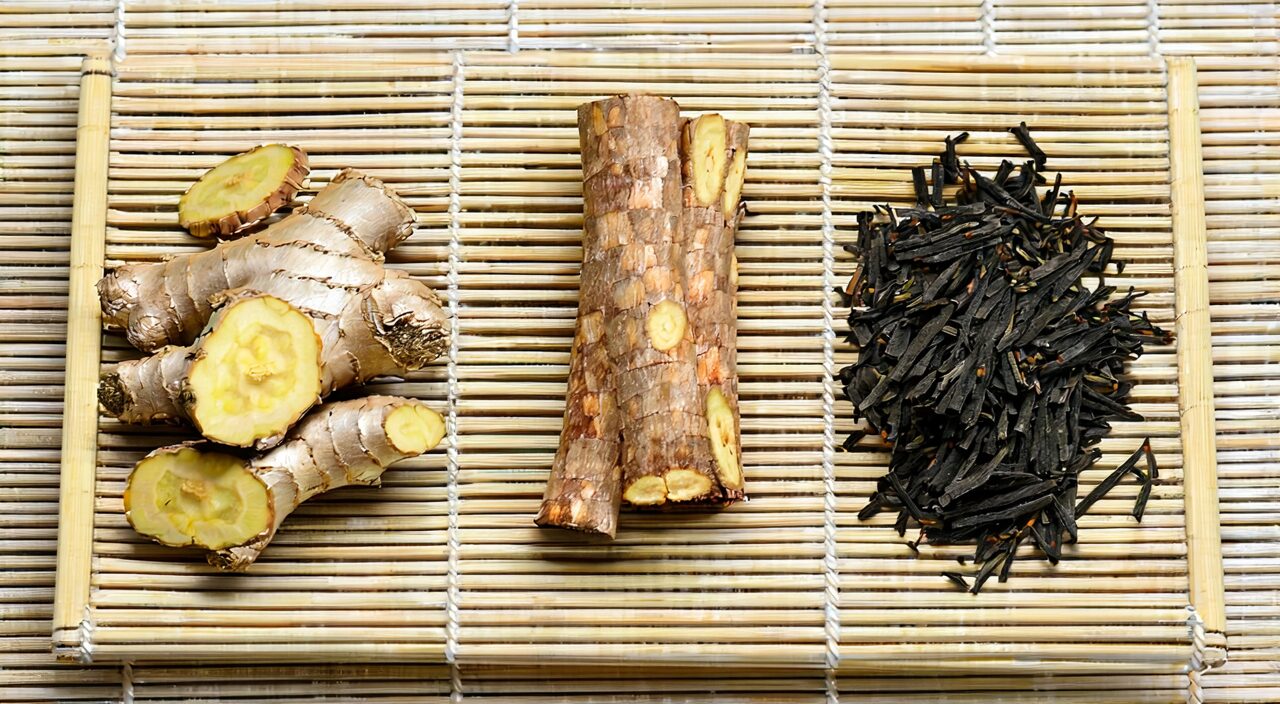
The composition of Sini Decoction consists of only three herbs, yet the combination is highly precise. The traditional reference composition is:
| Medicinal | Traditional Dosage Reference | Main Action |
|---|---|---|
| Fu Zi (processed aconite, 炮) | One piece (broken into eight) | Intensely acrid and hot; warms the kidney and revives yang; assists the fire of the life gate; dispels yin-cold |
| Gan Jiang (dried ginger) | One and a half liang | Warms the middle and disperses cold; assists Fu Zi in spreading yang qi; guards the middle burner |
| Zhi Gan Cao (honey-fried licorice root) | Two liang | Moderates the harsh, drastic nature of Fu Zi and Gan Jiang; simultaneously supplements the middle and boosts qi; harmonizes the middle qi |
In the formula, Fu Zi is the core. However, raw aconite is toxic; traditionally, it must undergo proper processing and strict dosage control. Individuals must not use it casually on their own.
Gan Jiang paired with Fu Zi is like adding both kindling and dry firewood to a dying fire—it not only rescues the yang but also provides sustained warmth. Zhi Gan Cao on the one hand restrains Fu Zi’s volatile, forceful nature, allowing the warming power to endure without becoming too fierce; on the other hand, it protects the stomach qi of the middle burner. The three herbs work together with focused direction and concentrated strength.
Symptom Presentations That Sini Decoction May Be Suitable For

From the perspective of yang deficiency with cold extremities, the following conditions are traditionally taken as potential directions for Sini Decoction, but whether it is truly appropriate must still be determined through a comprehensive assessment of tongue, pulse, medical history, etc.:
- Marked aversion to cold with ice-cold limbs, the coldness extending past the wrists and ankles, even up to the elbows and knees, and difficulty warming up even with thick clothing and blankets
- Listlessness, desire to lie still, indifferent expression, weak low voice
- Cold feeling in the abdomen, tendency to diarrhea, loose watery stool possibly containing undigested food
- Clear and copious urination, no thirst, or if thirsty, preferring hot drinks
- Pulse deep, faint, and fine, or deep, slow and forceless; tongue body pale and puffy with a white slippery coating
These manifestations often appear in those with a severely yang-deficient constitution, or after prolonged illness or critical disease has consumed yang qi.
A special reminder: Some people only have slightly cool extremities when tired or when the weather turns cold, without deeper signs such as listlessness or diarrhea with undigested food. In most cases, this does not belong to the typical indication direction of Sini Decoction, and one should not try it on their own.
Situations Where Sini Decoction Is Not Suitable
The yang-warming power of Sini Decoction is drastic. When used in the wrong direction, it can actually increase burden on the body. The following situations are traditionally considered unsuitable:
- Yin deficiency with fire effulgence: Common signs include warm palms and soles, malar flushing, night sweats, dry mouth and throat, red tongue with little coating. The body already lacks yin fluids; using a greatly heating formula may easily stir fire and damage yin.
- Excess heat syndrome or intense heat: High fever, irritability, thirst with desire for cold drinks, constipation, red tongue with yellow coating. Using Sini Decoction may aggravate internal heat and even lead to adverse consequences.
- Yang constraint, not yang deficiency: For example, the cold extremities addressed by Sini Powder are due to constrained yang qi failing to reach the limbs, not genuine yang debilitation. Misusing Sini Decoction may conversely add constrained heat, causing qi movement to become even more obstructed.
- Special periods or special constitutions: Pregnant women, breastfeeding women, children, and those with bleeding tendencies or other serious underlying diseases should not consider using it on their own; the risks are relatively higher.
- Without professional assessment: Sini Decoction is a formula requiring strict pattern differentiation. Self-assessment is extremely prone to misjudgment. It is strongly recommended to proceed only under professional guidance, combining complete information from the four diagnostic methods before determining the approach.
Differences Between Sini Decoction and Several Similar Formulas
Even among formulas that warm the interior or regulate and harmonize, Sini Decoction differs significantly in direction from Sini Powder, Fuzi Lizhong Wan, Jinkui Shenqi Wan, and Xiao Jianzhong Tang. Comparing these formulas side by side helps to understand their respective boundaries.
Sini Decoction vs. Sini Powder
- Sini Powder: Composed of Chai Hu, Shao Yao, Zhi Shi, and Zhi Gan Cao. Traditionally used for yang constraint causing cold extremities. Here, the cold extremities arise because yang qi is constrained and cannot reach the limbs, often accompanied by distention and pain in the epigastrium, abdomen, chest and hypochondrium, emotional blockages, and other signs of qi stagnation; the pulse is often wiry.
- Sini Decoction: Belongs to yang debilitation with cold extremities; the pulse is deep, faint, and fine. Cold limbs tend to be more severe, and without qi stagnation signs such as chest and hypochondriac distention.
One is cold, the other is constraint—the directions are completely different. Never mistake yang constraint for yang deficiency and apply warming supplementation.
Sini Decoction vs. Fuzi Lizhong Wan
- Fuzi Lizhong Wan: Adds Fu Zi to the Lizhong Wan base. Its warming yang and fortifying the spleen strength is stronger, mainly focusing on spleen-stomach deficiency cold. Manifestations include cold pain in the epigastrium and abdomen, vomiting clear fluids, loose stools, but not necessarily cold extremities.
- Sini Decoction: Focuses on heart-kidney yang deficiency at the Shaoyin level, with generalized debilitation of yang qi. Cold extremities and listlessness are more prominent.
If the problem mainly lies in spleen-stomach deficiency cold, traditionally Lizhong-type formulas are considered first, rather than directly using a formula with stronger life-saving strength like Sini Decoction.
Sini Decoction vs. Jinkui Shenqi Wan
- Jinkui Shenqi Wan: Contains Fu Zi, Gui Zhi, Di Huang, Shan Zhu Yu, Shan Yao, etc. It emphasizes warming and supplementing kidney yang, transforming qi, and promoting urination. It is commonly used for edema, soreness and weakness of the lower back and knees, and difficult urination due to kidney yang insufficiency. Its characteristic is gently generating fire on a foundation of supplementing yin, making it a mild supplement and slow regulating formula.
- Sini Decoction: Entirely directed toward urgent, severe yang revival and rescue from collapse, suitable for situations where yang qi is debilitated or tends toward collapse.
The strength and applicable stage differ greatly between the two—one slow, one urgent—and they cannot replace each other.
Sini Decoction vs. Xiao Jianzhong Tang
- Xiao Jianzhong Tang: Derived from Guizhi Tang, doubling Shao Yao and adding Yi Tang. Traditionally used for deficiency-cold abdominal pain of the middle burner, characterized by intermittent abdominal pain that likes warmth and pressure, and a lusterless complexion. It leans toward supplementing deficiency, harmonizing the interior, and relaxing urgency.
- Sini Decoction: Targets a critical state where yang qi is about to collapse, not simply deficiency taxation with interior urgency.
Although both pertain to cold patterns, Xiao Jianzhong Tang pattern is slow regulation, while Sini Decoction pattern is emergency rescue. Recognizing the gradient of change between the two is an important part of TCM pattern differentiation.
Key Points to Note Before Using Sini Decoction-Type Formulas
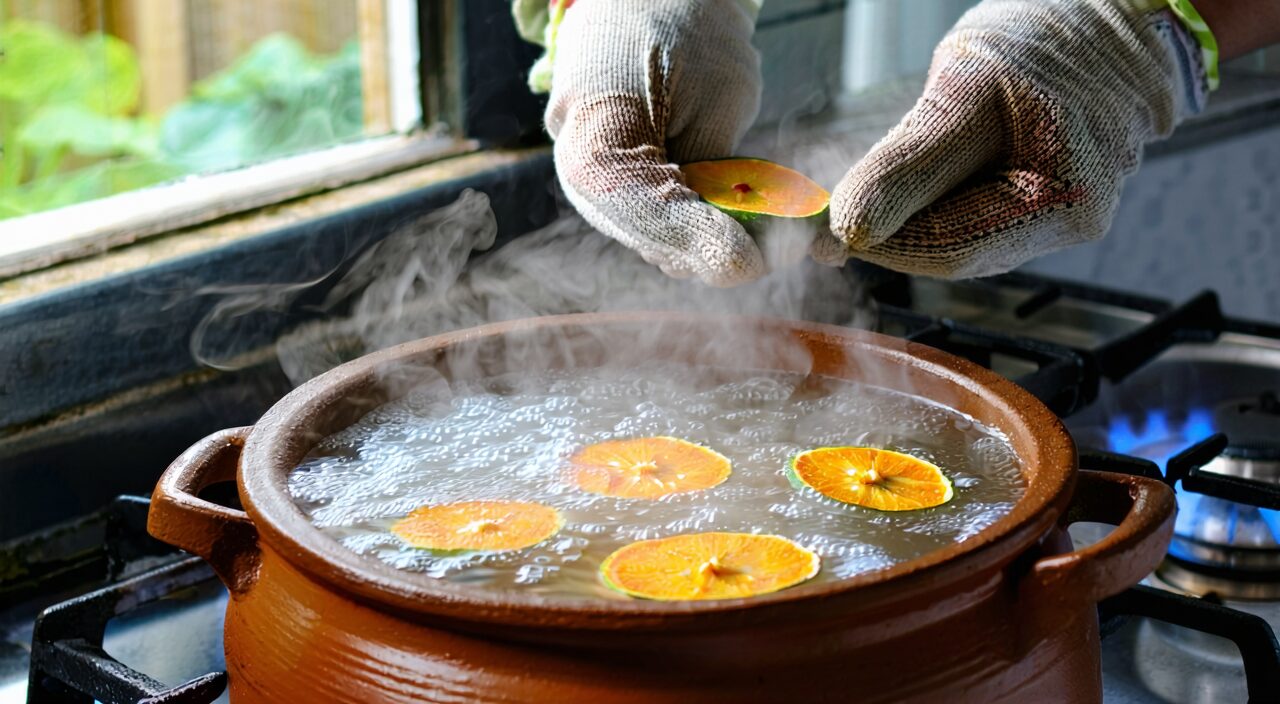
Whether using Sini Decoction or other formulas containing Fu Zi, the following principles deserve attention:
- Distinguish true cold with false heat: In some cases of floating yang due to internal debilitation, the surface appears like a heat pattern while the body is actually extremely cold inside. Only a professional can accurately judge this based on the tongue, pulse, and experience; self-identification is highly prone to error.
- Fu Zi must be properly processed: Traditionally, Fu Zi must be processed and then decocted for a prolonged time to reduce toxicity. Handling raw aconite on your own poses a serious safety risk and should never be attempted.
- Not suitable for long-term casual use: The direction of Sini Decoction is emergency correction, not a long-term regulating formula. Once yang qi recovers, the pattern must be reassessed, and the herbal strategy adjusted accordingly. It is not appropriate to maintain the original formula long-term.
- Seek medical attention if discomfort persists or worsens: If severe, prolonged, or recurrent cold sensations occur, along with significant palpitations, chest tightness, intense abdominal pain, persistent vomiting, black stool, noticeable weight loss, etc., consult a doctor promptly rather than self-applying herbal formulas.
Summary
Sini Decoction is a representative TCM formula for addressing yang deficiency with cold extremities and reviving yang to rescue from collapse. Its core strategy uses the combination of Fu Zi, Gan Jiang, and Zhi Gan Cao to rapidly recover declining yang qi. It may be suitable for presentations such as severe aversion to cold with ice-cold limbs, listlessness, and diarrhea with undigested food where yang debilitation and cold exuberance predominate, but only under standardized pattern differentiation and professional supervision.
Those with yin deficiency and fire effulgence, excess heat patterns, cold extremities from yang constraint, and special populations such as pregnant women and children are generally unsuitable. In daily life, many people’s cold hands and feet do not reach the indication threshold of Sini Decoction. Most importantly, Sini Decoction should never be casually tried as an ordinary warming tonic.
While understanding Sini Decoction, clarifying its different direction compared with formulas like Sini Powder, Fuzi Lizhong Wan, Jinkui Shenqi Wan, and Xiao Jianzhong Tang also helps establish a more complete cognitive framework for differentiating cold and heat, as well as deficiency and excess.
This article is for informational reference on traditional formula knowledge only and cannot replace professional diagnosis or treatment advice. Whether any formula is suitable must be determined through professional assessment, taking into account individual constitution, specific symptoms, and the specific dosage form of the product. Do not self-apply based on this information.