
Who Is Si Wu Tang Suitable For? Composition, Benefits and Precautions

Among the many formulas in traditional Chinese medicine, Si Wu Tang is frequently mentioned as a foundational prescription for nourishing and regulating blood. Many people interested in TCM-based health maintenance have heard of it and wonder whether they fall into the suitable group. This article will sort out its composition, traditional actions, suitable indications, contraindications, and differences from similar formulas, helping readers build a clearer understanding.
Basic Composition of Si Wu Tang
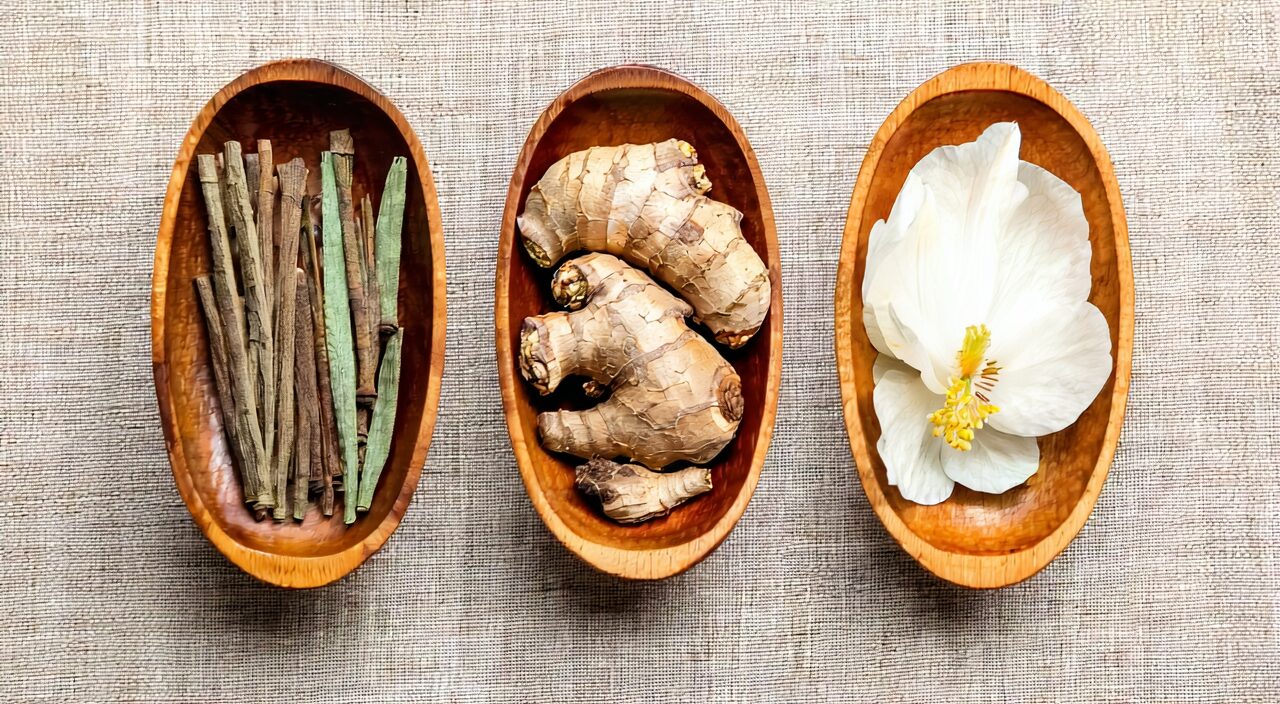
Si Wu Tang consists of four medicinal ingredients, each with its own emphasis in traditional understanding, working together around the direction of nourishing and regulating blood.
| Herb | Traditional Action Direction |
|---|---|
| Dang Gui (Angelica sinensis) | Nourishes blood, invigorates blood, also harmonizes blood |
| Chuan Xiong (Ligusticum chuanxiong) | Invigorates blood and moves qi, helps the flow of qi and blood |
| Bai Shao (Paeonia lactiflora) | Nourishes blood, astringes yin, softens the liver |
| Shu Di Huang (Rehmannia glutinosa prepared) | Enriches yin, nourishes blood, replenishes essence and marrow |
Viewed as a whole, this formula is not simply about supplementation; it also takes into account the smoothness of blood circulation while nourishing blood, preventing excessive stagnation.
Therefore, in traditional pattern differentiation, more emphasis is placed on the state of “blood deficiency with blood stagnation,” rather than applying it directly to all blood-related issues.
How Traditional Chinese Medicine Understands Si Wu Tang
In traditional theory, Si Wu Tang is often categorized as a blood-nourishing formula, mainly used for some common manifestations caused by blood deficiency and blood stagnation. The blood deficiency referred to here is not a modern medical diagnosis of anemia, but rather a generalized assessment of condition based on facial complexion, lip and nail color, dizziness, palpitations, and female cycles.
Traditionally, it is believed that only when blood is sufficient and circulates smoothly can the face and extremities be properly nourished and the mind be calm. If blood deficiency is more pronounced, the complexion, lip color, and tongue body may appear pale or relatively dry, along with easy fatigue, difficulty concentrating, and possibly lighter sleep. In such cases, some herbal combinations aimed at nourishing and enriching blood come into consideration, and Si Wu Tang is one of them.
It should be noted, however, that manifestations of blood deficiency are often related to an individual’s overall constitution, lifestyle habits, and chronic consumption factors, and are not necessarily a single issue of blood supplementation. Therefore, whether Si Wu Tang is suitable still needs to be combined with specific manifestations and the judgment of a professional.
Directions Where Si Wu Tang May Be Suitable
In traditional applications, Si Wu Tang is often used as a reference for the following conditioning directions. These manifestations are not equivalent to modern medical diseases but are descriptions of states from the TCM perspective.
Dull and lusterless complexion, pale lips and nails
- Long-term sallow or pale complexion lacking natural luster
- Lips and fingernails tending toward pale color
- No obvious heat signs
If the above manifestations are present, traditional thinking may consider a blood-deficiency-related regulating approach, and Si Wu Tang is one of the common choices.
Dizziness and palpitations
- Mild dizziness, sometimes seeing blackness before the eyes
- Occasional sensation of heart fluttering or unsteady heartbeat
- Manifestations linked to fatigue or blood loss during the female cycle
When blood deficiency cannot ascend to nourish the head and eyes or nourish the heart vessels, such discomforts may arise. Traditionally, attempts may be made from the direction of nourishing blood.
Numbness of hands and feet or dryness at the extremities
- Frequent tingling or numbness in hands and feet without clear nerve compression
- Skin tending toward dryness and easy desquamation
Traditionally, this type of situation may be related to blood deficiency failing to nourish the limbs. Dang Gui and Chuan Xiong in Si Wu Tang assist blood circulation and are often referenced in these circumstances.
Blood deficiency manifestations related to the female cycle
- Menstrual cycle tending to be long, menstrual flow scanty, menstrual color pale
- Easy fatigue, lower back soreness, dizziness after periods, predominantly deficiency patterns
Traditionally, Si Wu Tang is often used as a basic formula for regulating menstruation. However, the prerequisite is that the overall state is mainly deficiency, without obvious blood stasis signs such as clots, abdominal pain that is worse with pressure, or clotted menstrual blood.
Situations Where Si Wu Tang Is Unsuitable or Requires Caution
Any herbal combination has a certain scope of applicability, and Si Wu Tang is no exception. The following types of situations are generally considered unsuitable, or require adjustment before considering use.
Damp-heat or excess-heat constitution
- Prone to bitter taste in the mouth and acne
- Tongue coating yellow and greasy
- Sticky and incomplete bowel movements, dark yellow urine
Such constitutions leaning toward damp-heat or excess heat are generally not suitable for using heavily nourishing formulas alone, otherwise it may aggravate the feeling of oppressive discomfort.
Those with relatively heavy phlegm-dampness
- Body tending to be overweight, easy to have edema
- Tongue coating thick and greasy, abdomen soft and flabby
- Abundant phlegm
Traditionally addressed from the angle of phlegm-dampness, simple blood supplementation may instead encourage dampness and produce phlegm, which is not beneficial for improving the overall state.
Acute illness stage
During colds, fevers, acute gastroenteritis, or other infectious discomfort stages, the body’s righteous qi is fighting external pathogens. At this time, tonifying and nourishing medicines are generally not added so as not to interfere with the recovery process.
Special physiological stages and pregnancy preparation, pregnancy
Pregnant women, breastfeeding women, and those planning pregnancy should consult qualified professionals before using any herbal formula. Although Si Wu Tang has a historical use in regulating menstruation, this does not mean it can be used casually during these stages.
If there are long-term, recurrent obvious abnormalities, such as severe palpitations, chest tightness, persistent dizziness, abnormal bleeding, or unexplained weight loss, priority should be given to seeking medical diagnosis rather than self-attempting conditioning.
Differences Between Si Wu Tang and Similar Formulas
Many people confuse Si Wu Tang with other formulas for nourishing blood, regulating menstruation, or regulating qi. The following briefly compares the different emphases of several common formulas.
| Formula | Core Direction | Typical Indication Reference | Main Difference from Si Wu Tang |
|---|---|---|---|
| Ba Zhen Tang | Dual supplementation of qi and blood (Si Wu Tang + Si Jun Zi Tang) | Both qi and blood deficiency: blood deficiency signs like pale complexion and dizziness, plus qi deficiency signs like shortness of breath, fatigue, low voice | Stronger supplementation, more cloying; need more caution in those with heavy phlegm-dampness or weak spleen-stomach transformation |
| Gui Pi Tang | Nourish heart and spleen, calm the mind | Heart and spleen deficiency due to excessive thinking: palpitations, insomnia, forgetfulness, poor appetite | Focuses on calming the mind and fortifying the spleen and replenishing qi, rather than directly nourishing and regulating blood; Si Wu Tang more direct for pure blood deficiency without heart-spleen symptoms |
| Dang Gui Bu Xue Tang | Nourish qi to produce blood | Blood deficiency with marked qi deficiency fever, spontaneous sweating, obvious fatigue | Huang Qi dosage much larger than Dang Gui, with nourishing qi as the leading direction, not directly nourishing and regulating blood |
| Xiao Yao San | Soothe liver and relieve depression, nourish blood and strengthen spleen | Liver depression and spleen deficiency with blood deficiency: low mood, hypochondriac distension and pain, irregular menstruation, reduced appetite | Core is regulating qi and soothing liver, adding Chai Hu, Bo He etc., not purely nourishing blood |
Which formula to choose is not determined by a single symptom, but requires comprehensive analysis of tongue appearance, pulse presentation, constitution, and overall state. The above comparison only helps understand directional differences; specific use should be judged according to individual circumstances.
Summary
Si Wu Tang, as a traditional foundational formula for nourishing and regulating blood, holds a unique position in the history of TCM health maintenance. Centered on the four herbs Dang Gui, Chuan Xiong, Bai Shao, and Shu Di Huang, it starts from the combination of blood nourishment and blood invigoration, suitable for several common manifestations with blood deficiency and blood stagnation as the main direction, such as dull complexion, dizziness and palpitations, numbness of hands and feet, and female-cycle-related deficiency conditions.
At the same time, this formula is not suitable for everyone. Those with damp-heat, excess heat, relatively heavy phlegm-dampness, as well as during acute illness stages and special physiological periods, are generally not recommended for use. When compared with formulas such as Ba Zhen Tang, Gui Pi Tang, Dang Gui Bu Xue Tang, and Xiao Yao San, the differences in their respective focuses become clearer. The use of any herbal combination must be based on a full understanding of one’s own constitution and condition, combined with professional advice; it should not be self-prescribed simply by matching symptoms on one’s own. This article is for popular science reference only and cannot replace professional diagnosis or health maintenance advice.