
Who is Xiao Qing Long Tang Suitable For? Composition, Effects and Contraindications

When learning about traditional classical formulas, many people hear about “Xiao Qing Long Tang“. Especially when the weather turns cold and someone around them develops coughing, wheezing, and copious thin clear sputum after being exposed to cold, this formula is often mentioned.
For readers unfamiliar with the TCM pattern differentiation approach, the most common concerns tend to focus on: Who exactly is Xiao Qing Long Tang suitable for? What herbs make up the formula? And what precautions should be taken when using it? This article will elaborate from the perspective of traditional understanding, to help build a relatively clear picture.
Understanding the Traditional Action of Xiao Qing Long Tang from “External Cold and Internal Phlegm-Fluid”
In TCM classics, Xiao Qing Long Tang is primarily classified as a formula that releases the exterior, dissipates cold, warms the lungs, and transforms phlegm-fluid.
- “External Cold”: Refers to external pathogenic cold attacking the body surface, often causing aversion to cold, fever, absence of sweating, etc.
- “Internal Phlegm-Fluid”: Refers to abnormal fluid metabolism in the body, leading to cold phlegm-fluid lodging in the lungs, presenting as cough, wheezing, profuse thin clear sputum, and a cold sensation in the back.
Traditional Chinese medicine does not view these manifestations as isolated lung problems but understands them through the interplay of “wind-cold fettering the exterior” and “cold phlegm-fluid retained in the interior”: external cold pathogen easily stirs up internal cold phlegm-fluid, and the two intertwine, making the cough linger and difficult to resolve.
Therefore, the traditional application of Xiao Qing Long Tang is not for all types of cough, but is relatively concentrated on the “external cold and internal phlegm-fluid” pattern. Only when the symptoms present characteristics of both external cold and internal cold phlegm-fluid can it be considered a reference option. This also explains why, for the same symptom of cough, some people feel improvement after using it while others may not match the pattern.
Composition of Xiao Qing Long Tang and the Role of Each Herb
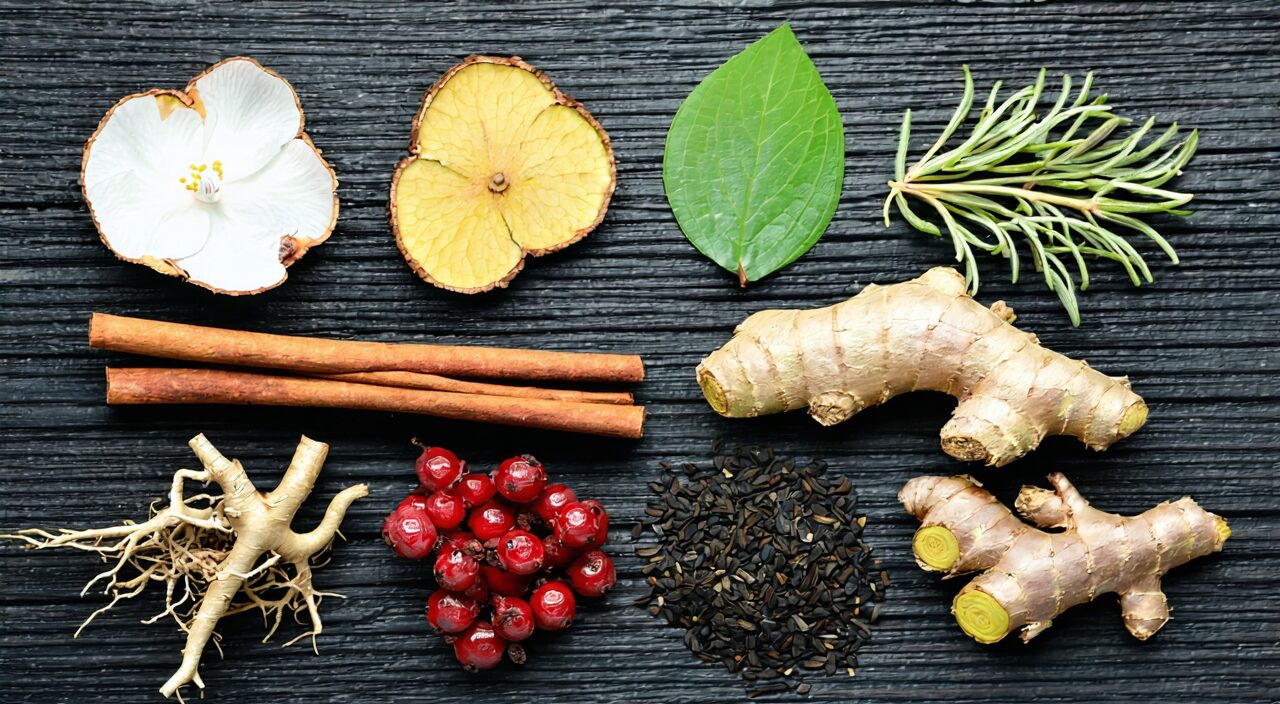
Xiao Qing Long Tang is composed of several Chinese herbs, each with a relatively clear traditional role in the formula. Below is a brief summary using a table:
| Herb | Traditional Action | Primary Role in the Formula |
|---|---|---|
| Ephedra | Induce sweating to release exterior, diffuse lungs to relieve asthma | Assists Cinnamon Twig in dispersing exterior cold, opens and diffuses lung qi |
| Cinnamon Twig | Induce sweating to release muscle layer, warm and unblock channels | Assists Ephedra in releasing exterior, also warms yang and transforms qi |
| Dried Ginger | Warm middle and dispel cold, warm lungs and transform phlegm-fluid | Targets internal cold phlegm-fluid, warms and transforms water-dampness |
| Asarum | Dispel wind and dissipate cold, warm lungs and transform phlegm-fluid | Cooperates with Dried Ginger to strengthen the power of transforming phlegm-fluid |
| Schisandra | Astringe lung qi, stop cough and relieve asthma | Prevents excessive dispersion of acrid herbs, while preserving lung qi from dissipation |
| White Peony Root | Nourish blood and astringe yin, soften liver and relieve urgency | Combined with Cinnamon Twig to harmonize ying and wei, and restrain acrid dryness |
| Pinellia | Dry dampness and transform phlegm, direct rebellious qi downward to stop vomiting | Resolves already formed phlegm-dampness |
| Honey-fried Licorice | Tonify spleen and harmonize middle, harmonize all herbs | Protects spleen and stomach, coordinates actions of all herbs |
As can be seen from the table, Xiao Qing Long Tang does not simply stop coughing. It works simultaneously through two pathways: dispersing external cold and warmly transforming internal phlegm-fluid, supplemented by astringing and harmonizing herbs, so that the whole formula combines acrid dispersion with astringency, and dries dampness while providing moisture. This combination reflects the TCM principles of “combining dispersion and astringency” and “applying both attack and supplementation.”
Who Might Be Suitable for Xiao Qing Long Tang

It should be noted in advance that the following descriptions are based only on traditional TCM understanding of symptom presentations. Whether it is suitable for a specific individual still needs to be determined by an experienced TCM professional, taking into account the tongue appearance, pulse patterns, and overall constitution. Generally speaking, the types of people for whom Xiao Qing Long Tang is often discussed include:
- Marked aversion to cold and fever, accompanied by cough and wheezing: Especially when the condition suddenly worsens after exposure to cold, the body feels chilled, there is fever with little or no sweating, a cold sensation in the back, and a heavy, muffled cough sound.
- Thin, clear, profuse, and white sputum: This is a key feature. The sputum is as thin as water, easily coughed up, or there is gurgling of thin phlegm in the throat, with a white, slippery tongue coating.
- Clear nasal discharge, or accompanied by a cold sensation in the back: In some individuals, the symptoms are not limited to the lungs; they may also have copious clear, thin nasal discharge, and even feel as if they are carrying cold water on their back.
- Absence of obvious heat signs: The throat is not red, swollen or painful; sputum is not yellow or thick; there is no dry mouth or tongue; no irritability or high fever.
The reason for emphasizing the “cold phlegm-fluid” characteristics is that if the cold phlegm-fluid is not obvious, or if there is already a tendency toward heat transformation, the applicability of the entire formula needs to be re-evaluated. This serves as a reminder that you should not self-match based solely on the presence of cough or wheezing. Especially when the sputum turns yellow and sticky, or symptoms such as sore and swollen throat, fever with sweating that does not resolve appear, it is necessary to consider other intervention approaches rather than continuing to try warm and dispersing strategies.
Who Might Not Be Suitable for Xiao Qing Long Tang
Xiao Qing Long Tang has relatively strong acrid, dispersing, warm and drying actions; therefore, in traditional experience, certain conditions are listed as contraindications or require caution, mainly including:
- Wind-heat cough: Loud, harsh cough, yellow and sticky sputum, red, swollen and sore throat, dry mouth with desire to drink, red tongue with yellow coating. These signs usually indicate heat, which is contrary to the warm, dispersing direction of Xiao Qing Long Tang.
- Yin deficiency dry cough: Dry cough without sputum or with scanty sticky sputum, dry throat and nose, warm palms, red tongue with little coating. This type of cough is often related to insufficient body fluids; the warm, drying nature of Xiao Qing Long Tang may worsen the dryness condition.
- Phlegm-heat obstructing the lungs: Coarse breathing cough, yellow purulent sputum or blood-streaked sputum, chest pain, labored breathing, high fever with irritability and thirst. These are relatively complex and severe situations requiring prompt medical attention, and you should not rely on self-care with a single approach.
- Special physiological stages or constitutions: Such as pregnant women, breastfeeding women, infants, the elderly and weak with obvious qi deficiency, and individuals with severe hypertension or heart problems – they are not suitable for self-use of formulas containing Ephedra (Ma Huang). They must be evaluated by a professional physician.
- Long-term recurrent cough and wheezing accompanied by other serious symptoms: If the cough persists without resolution, accompanied by noticeable chest pain, chest tightness, difficulty breathing, weight loss, or inability to lie flat at night, priority should be given to seeking medical care to rule out deeper health issues.
Once again, the above categorization is only a general guide; actual differentiation is far more complex than a list of symptoms. TCM emphasizes “using a formula when the pattern matches,” not “using a formula for a disease name.” The same Western medical diagnosis can correspond to completely different TCM patterns in different individuals. Therefore, Xiao Qing Long Tang should not be used solely based on a disease name or a single symptom.
Differences between Xiao Qing Long Tang and Zhi Sou San, Er Chen Tang, Gui Zhi Tang, and Ma Huang Tang
There are many formulas related to cough. A horizontal comparison can help understand the focus of each. Below is a brief comparison from the perspective of traditional pattern differentiation:
| Formula | Main Direction | Exterior-Releasing Characteristics | Common Cough/Sputum Presentation | Key Difference from Xiao Qing Long Tang |
|---|---|---|---|---|
| Zhi Sou San | Dispel wind and benefit lungs, stop cough and transform phlegm | Does not emphasize dispersing severe cold | Cough with itchy throat, difficult expectoration, exterior pathogen not obvious | Relatively gentle nature, does not specifically warm and transform cold phlegm-fluid |
| Er Chen Tang | Dry dampness and transform phlegm, regulate qi and harmonize the middle | No exterior-releasing function | Cough with profuse sputum, easy nausea, chest oppression (internal phlegm-dampness exuberance) | Does not primarily address external contraction of cold pathogen |
| Gui Zhi Tang | Release muscle layer and exterior, harmonize ying and wei | Acrid-warm to release muscle layer | Mainly aversion to wind, sweating, fever, headache; cough is often not prominent | Focuses on disharmony between ying and wei, not specifically targeting cold phlegm-fluid in the lungs |
| Ma Huang Tang | Induce sweating to release exterior, diffuse lungs to relieve asthma | Disperse wind-cold | Aversion to cold, fever, absence of sweating, and dyspnea; internal cold phlegm-fluid is not prominent | Lacks herbs like Dried Ginger and Asarum that warmly transform internal phlegm-fluid; tends more toward exterior cold fettering the lungs |
| Xiao Qing Long Tang | Release exterior and dissipate cold, warm lungs and transform phlegm-fluid | Disperse exterior cold | Cough and wheezing, thin clear profuse sputum, cold back | Integrates exterior release, lung warming, and phlegm-fluid transformation in one, with relatively strong actions |
Through comparison, it can be seen that Xiao Qing Long Tang is relatively distinctive because it is one of the few classic formulas that integrates exterior release, lung warming, and phlegm-fluid transformation in one, with relatively strong medicinal actions. Therefore, for individuals who tend to have a cold phlegm-fluid constitution – characterized by frequent recurrence of white, thin sputum, aversion to cold, and a cold sensation in the back – when triggered by external cold, this direction may traditionally be considered. However, this still needs to be combined with the specific situation and cannot be equated with mild, daily health-care formulas.
Summary
As a traditional classical formula, Xiao Qing Long Tang mainly intervenes around “external cold and internal phlegm-fluid.” Traditionally, it is used for prominent presentations such as aversion to cold with fever, cough and dyspnea, profuse thin clear sputum, and clear nasal discharge. Its combination reflects simultaneous dispersion and warm transformation, and the coexistence of acrid opening and astringing. Its medicinal actions are relatively strong. It is not suitable for heat-type or dry-type coughs such as wind-heat, yin deficiency, or phlegm-heat, nor for self-use by individuals with extremely weak constitutions or those in special physiological stages.
While understanding Xiao Qing Long Tang, comparing it horizontally with Zhi Sou San, Er Chen Tang, Gui Zhi Tang, and Ma Huang Tang makes it easier to grasp the pattern direction each formula targets, avoiding blind application. The content of this article is for TCM knowledge education only and does not replace professional diagnosis or treatment advice. For cough problems that persist or present complex symptoms, it is recommended to consult a TCM practitioner or relevant medical professional in a timely manner to ensure safety.