
Who Is Xiao Yao San Suitable For? Composition, Functions and Contraindications

In the world of traditional Chinese herbal formulas, Xiao Yao San is a frequently mentioned name, especially when discussing the interplay between emotions and digestion. Many women may hear about it around menstruation or during stressful periods, yet often wonder: who is Xiao Yao San actually suitable for? What is its composition? And what contraindications should be noted? This article will start from the perspective of soothing the liver and strengthening the spleen, nourishing blood and harmonizing the body, to sort out the traditional understanding of Xiao Yao San and help you build a clear cognitive framework.
Traditional Positioning of Xiao Yao San: Soothing Liver Depression and Strengthening the Spleen to Nourish Blood
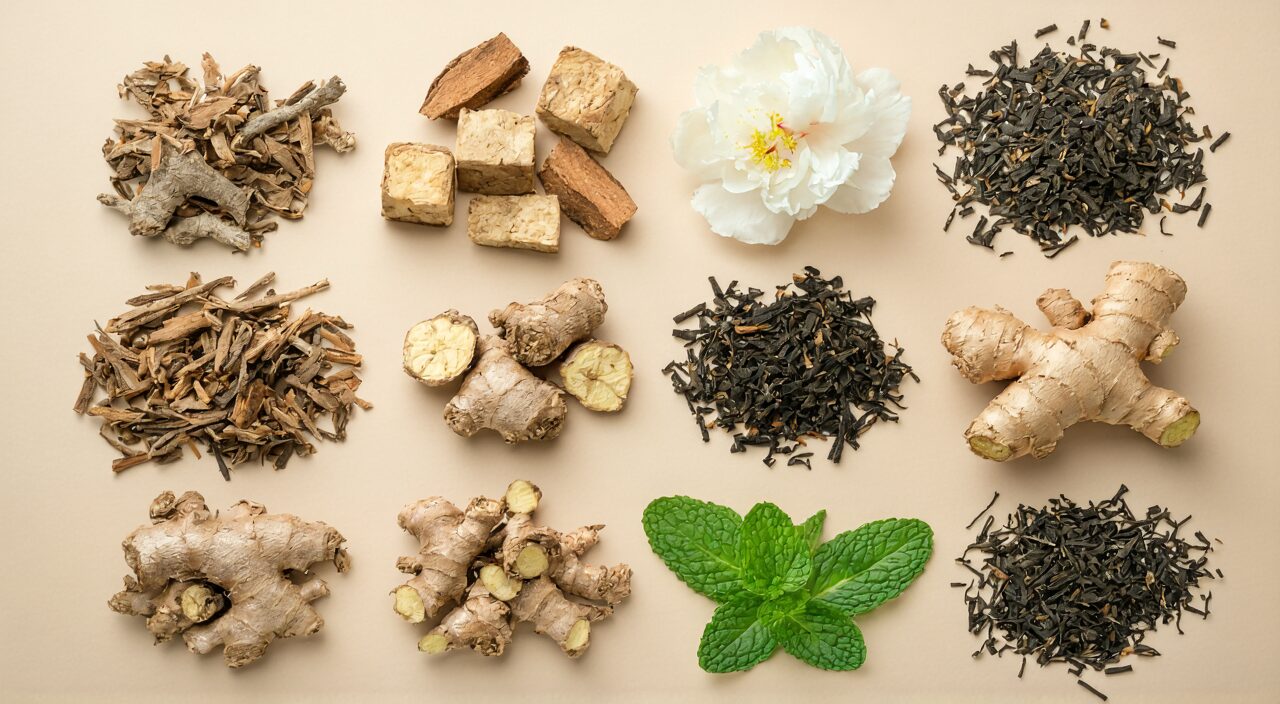
Xiao Yao San originates from the Song Dynasty text Taiping Huimin Heji Ju Fang and is traditionally used around the pattern of “liver depression with blood deficiency and spleen failing to transport.”
According to traditional Chinese medicine theory, the liver governs the free flow of qi, and smooth qi movement aids emotional stability and the spleen-stomach’s transformation and transportation. When emotional fluctuations or prolonged stress accumulate, they can easily lead to liver qi stagnation, which in turn impairs the spleen’s transporting function, resulting in symptoms such as distension and fullness in the chest and hypochondrium, reduced appetite, and fatigue. The composition of Xiao Yao San is precisely designed to address soothing the liver, nourishing the blood, and strengthening the spleen.
Composition and the Role of Each Herb
The traditional formulation of Xiao Yao San consists of eight herbal ingredients. As shown in the table below, each herb has a specific directional role within the formula:
| Herb | Traditional Direction of Action |
|---|---|
| Chai Hu (Bupleurum) | Soothes the liver and relieves depression, raises clear yang |
| Dang Gui (Angelica Sinensis) | Nourishes and harmonizes the blood, regulates menstruation and alleviates pain |
| Bai Shao (White Peony Root) | Nourishes the blood and softens the liver, relaxes tension and stops pain |
| Bai Zhu (White Atractylodes) | Strengthens the spleen and boosts qi, dries dampness and harmonizes the middle |
| Fu Ling (Poria) | Strengthens the spleen and leaches out dampness, calms the heart and settles the spirit |
| Zhi Gan Cao (Honey-fried Licorice Root) | Supplements the spleen and benefits qi, harmonizes all the herbs |
| Bo He (Mint) | Disperses constrained qi, assists Chai Hu in soothing and resolving |
| Wei Sheng Jiang (Roasted Ginger) | Warms the middle and harmonizes the stomach, redirects rebellious qi and stops vomiting |
This formula does not simply “soothe the liver,” but integrates nourishing the blood and strengthening the spleen so that liver qi can flow freely without consuming yin and blood or harming the spleen and stomach. Therefore, it more specifically targets the mixed deficiency-excess state of “liver depression and spleen deficiency” rather than pure liver qi stagnation.
Who Might Xiao Yao San Be Suitable For?

Traditionally, when a person presents with a pattern of liver depression and spleen deficiency, with blood weakness and qi stagnation, Xiao Yao San is often considered a direction for potential regulation. The following manifestations may suggest the presence of such a situation, but it must be emphasized that individual differences are substantial, and suitability must be determined based on specific constitution and professional judgment.
Chronic Low Mood or High Stress
- Continuously feeling gloomy in daily life, sighing frequently, emotionally sensitive, yet without obvious signs of liver fire flaring (such as bitter taste in the mouth or red eyes).
- This state may belong to “wood depression with earth deficiency,” where obstructed qi movement affects the spleen and stomach.
- Notably, depression easily forms a vicious cycle: low mood affects appetite, and a weak spleen and stomach leads to insufficient production of qi and blood, further aggravating low mood and physical fatigue.
- The formulation concept of Xiao Yao San seeks to break this cycle by addressing both soothing the liver and strengthening the spleen.
Distension and Fullness in the Chest and Hypochondrium, Breast Distension
- The liver meridian traverses the chest, hypochondrium, and breasts. When liver qi is not free-flowing, these areas are prone to distension and fullness, often more noticeable before menstruation.
- Chai Hu and Bo He in Xiao Yao San have dispersing and resolving actions, while Dang Gui and Bai Shao can nourish the blood and soften the liver. For premenstrual syndromes predominated by distension and pain, it is often considered one of the traditional options.
- If the distension or pain extends below the ribs, feels soft on palpation without nodules, qi stagnation factors may dominate; however, if a hard lump is felt or pain persists without resolution, medical evaluation should be sought promptly, and self-medication should be avoided.
Reduced Appetite, Abdominal Bloating, Irregular Bowel Movements
- Liver wood insults the spleen earth; qi depression is often accompanied by weakened digestive function.
- If there is concurrent poor appetite, post-meal bloating, loose or unformed stools, or even alternating diarrhea and constipation without obvious heat signs or excess stagnation, the Bai Zhu and Fu Ling in Xiao Yao San can strengthen the spleen and assist transportation. Combined with the liver-soothing herbs, they may help restore the spleen and stomach’s transformative ability.
- Traditionally, this kind of bowel irregularity is also regarded as one of the typical manifestations of “liver-spleen disharmony.”
Easily Fatigued, Pale Complexion
- Because blood deficiency and spleen deficiency often coexist, these individuals, in addition to emotional stress, frequently feel physically drained and mentally weary.
- Even with adequate sleep, there is an unresolved sense of fatigue that worsens during low mood, and the complexion lacks a healthy rosy color.
- Dang Gui and Bai Shao nourish the blood, while Bai Zhu and Fu Ling strengthen the spleen in Xiao Yao San, aiding the generation of qi and blood. Therefore, it is traditionally used to address the fatigue sensation stemming from liver depression and spleen deficiency.
Discomforts Related to the Female Cycle
- For menstrual irregularities, premenstrual irritability, breast distension, dysmenorrhea, and other issues related to liver qi stagnation and blood deficiency, Xiao Yao San is often regarded as a classic direction.
- However, it should be noted that if menstrual flow is heavy, bright red, or accompanied by obvious heat signs, it may not be suitable for singular use and requires professional pattern differentiation.
- Additionally, cold-type dysmenorrhea with lower abdominal cold pain relieved by warmth falls outside the primary scope of Xiao Yao San.
Unsuitable Conditions: Contraindications and Cautions for Xiao Yao San
“Supplement what is deficient, drain what is excessive.” Xiao Yao San overall tends to be warming, supplementing, and regulating, and is not suitable for everyone. The following situations are traditionally considered not advisable or unsuitable for self-administration of Xiao Yao San, and consultation with a professional TCM practitioner should be prioritized:
Liver Fire Flaring or Obvious Heat Signs
- If emotional issues manifest as irritability and quick temper, bitter taste and dry throat, headache with red eyes, red tongue with yellow coating, this may indicate liver depression transforming into fire rather than simple liver depression.
- In such cases, the original Xiao Yao San formula’s warm and drying properties may aggravate the heat and worsen discomfort.
- For these situations, Jia Wei Xiao Yao San (Dan Zhi Xiao Yao San) might be more suitable, but professional judgment is still required.
Internal Abundance of Damp-Heat or Phlegm-Heat Constitution
- When the body is accompanied by sensations of heaviness, greasy facial skin, sticky mouth and halitosis, thick yellow vaginal discharge, sticky and difficult bowel movements, yellow greasy tongue coating, and other damp-heat signs, Xiao Yao San’s supplementing and middle-warming characteristics may cause damp-heat to become more entrenched, and it should not be used blindly.
- For such individuals, damp-heat usually needs to be cleared before using any tonifying or regulating formulas.
Predominant Yin Deficiency with Fire Rising or Yin and Blood Deficiency
- Although Xiao Yao San contains softening and nourishing herbs like Dang Gui and Bai Shao, it remains primarily a formula for regulating the qi aspect.
- If yin deficiency is predominant, presenting with hot palms, night sweats, dry mouth with preference for drinking, red tongue with scanty coating, using it alone may be unsuitable and could further stir up deficient fire.
- Here, the priority should be nourishing yin and blood rather than soothing the liver and rectifying qi.
Acute Gastrointestinal Discomfort
- In cases of acute abdominal pain, diarrhea, vomiting, or infectious enteritis, Xiao Yao San is not the direction for emergency management; timely medical attention should be sought to clarify the cause.
Special Physiological Stages and Populations
- Pregnant women, breastfeeding women, children, and those with chronic medical histories or taking other medications must be evaluated under the guidance of a doctor or qualified professional.
- The blood-moving and qi-regulating components in the formula may interfere with pregnancy stability; self-medication is not advisable.
Comparisons with Similar Formulas: Xiao Yao San, Jia Wei Xiao Yao San, Chai Hu Shu Gan San, Gui Pi Tang, Si Ni San
Many formula names contain “Xiao Yao” or “Chai Hu,” which can easily cause confusion. Understanding their differences helps avoid misuse.
Xiao Yao San vs. Jia Wei Xiao Yao San (Dan Zhi Xiao Yao San)
- Jia Wei Xiao Yao San adds Mu Dan Pi (Tree Peony Bark) and Zhi Zi (Gardenia) to the base of Xiao Yao San, enhancing its heat-clearing and blood-cooling effects.
- When liver depression transforms into fire, with symptoms like vexation, irritability, dry mouth, insomnia, early and heavy bright-red menstruation, Jia Wei Xiao Yao San is more frequently considered.
- Xiao Yao San is inclined toward soothing the liver and strengthening the spleen and is relatively gentler; Jia Wei Xiao Yao San leans more toward soothing the liver and clearing heat.
- Those with a cold constitution and no heat signs should not arbitrarily switch to the Jia Wei version.
- When liver qi stagnation coexists with prominent vexation, insomnia, and dry mouth, but with little aversion to cold or loose stools, Jia Wei Xiao Yao San is more likely to be mentioned.
Xiao Yao San vs. Chai Hu Shu Gan San
- Chai Hu Shu Gan San consists of Chai Hu, Chen Pi, Chuan Xiong, Xiang Fu, Zhi Qiao, Shao Yao, and Gan Cao, emphasizing soothing the liver, rectifying qi, and stopping pain.
- For chest and hypochondrium pain, epigastric and abdominal distension, and belching caused by liver qi stagnation, its action is more direct.
- Xiao Yao San additionally addresses nourishing the blood and strengthening the spleen, making it more suitable for those with mixed deficiency and excess and insufficient qi and blood.
- If it is purely an excess pattern of qi stagnation with pronounced distension and pain and no obvious blood deficiency, Chai Hu Shu Gan San may be more appropriate.
Xiao Yao San vs. Gui Pi Tang
- Gui Pi Tang is composed of Bai Zhu, Dang Gui, Fu Ling, Huang Qi, Yuan Zhi, Long Yan Rou, Suan Zao Ren, Mu Xiang, and Gan Cao, with its core function being to supplement the heart and spleen and replenish both qi and blood.
- It is commonly used for palpitations, insomnia, forgetfulness, and physical fatigue due to heart-spleen dual deficiency.
- Both it and Xiao Yao San involve spleen deficiency, but Gui Pi Tang focuses on the insufficient generation of qi and blood, whereas Xiao Yao San focuses on the spleen deficiency with concomitant blood deficiency caused by qi depression.
- Emotionally, Gui Pi Tang is often used for mental exhaustion and heart blood consumption from excessive thinking; Xiao Yao San is more for emotional constraint and liver qi stagnation.
- If fatigue, insomnia, and palpitations are more prominent while distension is minimal, the Gui Pi Tang direction may be more worth understanding.
Xiao Yao San vs. Si Ni San
- Si Ni San is composed of only four herbs—Chai Hu, Zhi Shi, Shao Yao, and Gan Cao—mainly regulating internal depression of yang qi and liver-spleen disharmony, presenting with cold extremities, epigastric and abdominal pain, and diarrhea with tenesmus.
- It emphasizes venting depressed heat and harmonizing the liver and spleen, with a concise composition that lacks blood-nourishing Dang Gui and has relatively weaker spleen-strengthening power.
- Si Ni San commonly presents with cold hands and feet yet a warm body, abdominal distension and pain, and diarrhea often accompanied by urgency or abdominal pain.
- Xiao Yao San is more comprehensive in soothing the liver, strengthening the spleen, and nourishing the blood, covering a wider range of applications.
- For simple qi stagnation with yang depression and no significant blood or spleen deficiency, Si Ni San may be more suitable.
When choosing among these formulas, it is essential to integrate specific symptoms, tongue, pulse, and other comprehensive information. No single formula is inherently “better” than another; what matters is which better matches the current body condition. If self-differentiation is difficult, seeking pattern differentiation from a professional TCM practitioner is the more prudent approach.
Summary
As a traditional formula, Xiao Yao San is primarily designed for patterns of liver depression and spleen deficiency, blood deficiency and qi stagnation. Its composition, through the combination of soothing the liver, nourishing the blood, and strengthening the spleen, facilitates smooth qi movement and harmonized qi and blood. It is not suitable for all emotional or digestive issues. Situations involving liver fire, damp-heat excess, yin deficiency with fire, acute diseases, and special populations all require caution or avoidance.
Understanding the distinctions between Xiao Yao San and formulas like Jia Wei Xiao Yao San, Chai Hu Shu Gan San, Gui Pi Tang, and Si Ni San can help us more precisely view different bodily presentations from the perspective of traditional Chinese medicine. The selection of any Chinese herbal formula should be based on pattern differentiation, and consulting a professional TCM practitioner before use is recommended to avoid self-diagnosis.
This article is for informational and educational reference only and cannot replace professional diagnosis or treatment advice.