
Post-Meal Bloating from a TCM Perspective: Qi Stagnation, Spleen Deficiency, or Dampness Trapping?

Many people have experienced this: right after eating, even though they haven’t eaten much, their belly feels as if it’s being inflated, uncomfortably bloated; sometimes they keep belching, or only feel relief after passing gas.
An occasional episode may be related to improper diet, but if upper abdominal or whole-abdominal distension recurs after every meal, you’ll want to find out what’s wrong with your body. From the perspective of traditional Chinese medicine, post-meal bloating is rarely caused by a single factor; it is more like the result of a coordinated dysfunction in spleen and stomach transportation, the ascending and descending of qi, and water-dampness metabolism.
This article explores post-meal bloating from several angles commonly used in TCM, clarifying the differences and connections among spleen deficiency, qi stagnation, and dampness encumbrance, helping readers build initial awareness and avoid blindly choosing remedies without differentiating the conditions.
From which perspectives does TCM typically view post-meal bloating?
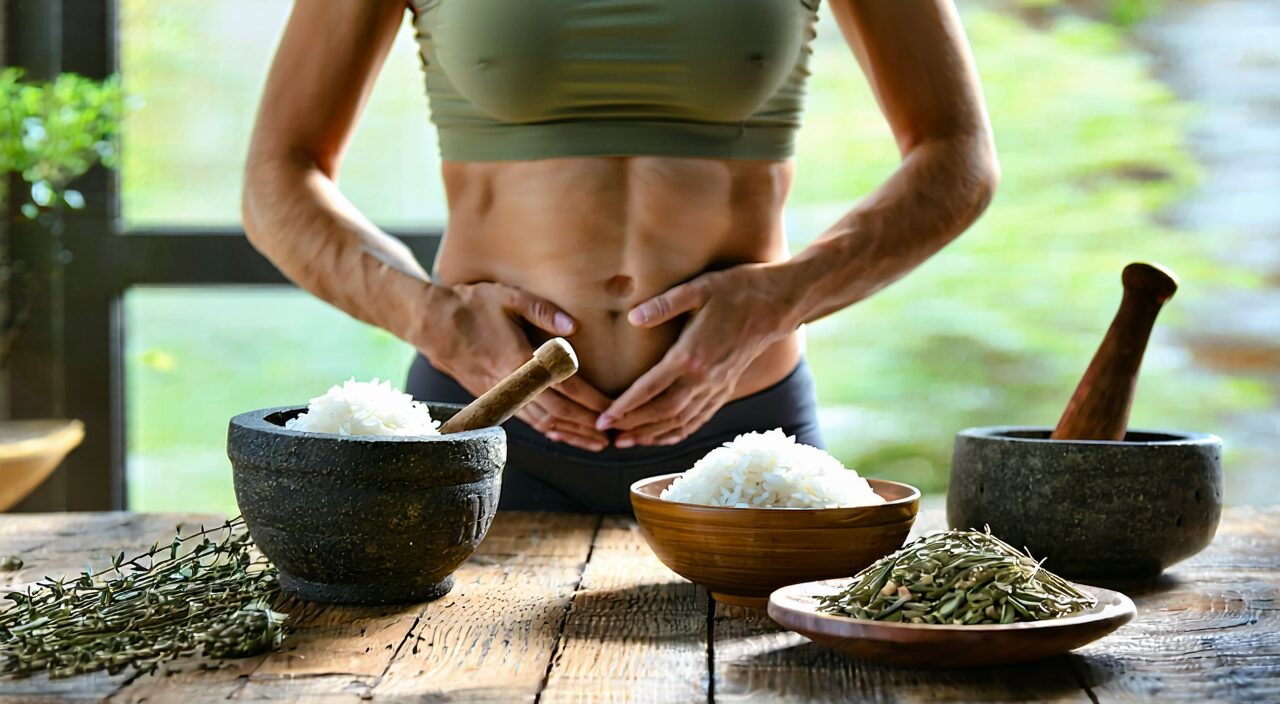
Traditional Chinese medicine doesn’t view post-meal bloating as an isolated symptom but observes it within the entire digestive process. After food enters the stomach, it needs the spleen and stomach’s transportation and transformation function to convert it into refined essence, and qi movement drives it downward. If any link in this process is stuck, a feeling of distension and discomfort may occur.
The three commonly observed patterns are: spleen qi deficiency causing weak propulsion, impaired qi movement leading to stagnation, and retention of dampness turbidity obstructing normal ascending and descending.
Spleen deficiency and weak transportation: like a millstone without enough power
The spleen and stomach are often likened to the “foundation of acquired constitution,” responsible for processing and distributing food and drink. If spleen qi is relatively weak, it’s like a millstone lacking power—food cannot be transformed and moved in time, stays longer in the stomach, and naturally leads to a sensation of bloating.
The post-meal bloating in such cases has several typical features:
- The bloating sensation may not be very intense but lasts a long time—often a dull, stuffy feeling in the abdomen throughout the afternoon;
- Appetite might be normal, but bloating occurs easily after eating;
- The person tends to feel fatigued and lacks motivation to move;
- Stools are often soft and unformed.
Tongue signs often include a pale tongue body with tooth marks on the edges and a thin white coating.
For this “lack of power” state, the traditional regulation approach often starts with fortifying the spleen and replenishing qi, aiming to strengthen transportation and transformation while restoring the normal propulsion of qi. Xiangsha Liujun Wan is a traditional formula frequently mentioned in this direction; it adds Mu Xiang (costus root) and Sha Ren (Amomum) to the base Liu Jun Zi Tang (Six Gentlemen Decoction), addressing both spleen and stomach qi and promoting qi movement to resolve stagnation. Of course, whether it suits an individual requires a comprehensive assessment based on constitution and current symptoms.
Disrupted qi ascending and descending: stagnant qi needs an outlet
Mood swings, irregular eating, or too much cold and raw food can all disturb the normal flow of qi. When qi stagnates in the epigastric and abdominal region, post-meal bloating often presents as a wandering pain or stuffy distension; the location of the distension can shift, and belching or passing gas significantly relieves it.
Some people even experience aggravation when emotionally stressed and relief after relaxing. This type of person may have a normal appetite but is prone to hiccups and acid reflux after meals, with abdominal distension like a drum and a tympanic sound on percussion. Tongue signs often show a relatively dark tongue body or slight purple spots on the edges, with a coating that may be thin white or slightly greasy.
To regulate this “blocked qi” state, TCM traditionally employs methods to move qi and remove stagnation, helping qi flow smoothly again. Muxiang Shunqi Wan is a well-known formula in this regard, focusing on moving qi, transforming dampness, and harmonizing the stomach. It is traditionally used for epigastric and abdominal distension, belching, and similar conditions caused by dampness turbidity obstructing the middle burner and qi movement failing. However, it is important to note that formulas of this type have strong dispersing and moving effects; if a person has an obvious qi deficiency constitution, it may not be suitable. One should not use it simply because of the term “shun qi” (smooth qi) without proper consideration.
Dampness turbidity encumbering the spleen: the body feels as if immersed in fog
When external dampness or internal dampness obstructs the spleen’s transportation, the middle burner is as if shrouded in fog—clear qi cannot ascend and turbid qi cannot descend, resulting in post-meal bloating often accompanied by a heavy bodily sensation.
This distension tends to persist; there may be a dull bloating even without eating, which becomes more pronounced after meals. Patients often feel a sticky sensation in the mouth, no desire to drink water, heavy limbs, and sticky, unsatisfactory bowel movements. A thick greasy tongue coating is a key diagnostic clue.
This pattern is more commonly seen in seasons or environments with pronounced dampness, or in people who habitually consume sweet, greasy, or cold raw foods. Commonly used formulas include Erchen Wan, which emphasizes drying dampness and transforming phlegm while regulating qi and harmonizing the stomach. It is traditionally referenced for epigastric bloating, nausea, and urge to vomit caused by internal retention of damp-phlegm. Huoxiang Zhengqi Wan, on the other hand, combines the properties of transforming dampness and harmonizing the middle, and is traditionally more mentioned for abdominal distension, nausea, and reduced appetite arising from external wind-cold with internal dampness stagnation or summer-heat dampness. Although both dispel dampness, their application scenarios differ, and careful differentiation based on accompanying symptoms and tongue signs is required.
How to initially determine if it’s “lack of power” or “blocked qi movement”?
Distinguishing whether spleen deficiency or qi stagnation predominates is important for choosing the direction of daily regulation. You can observe yourself from the following dimensions, also taking into account the characteristics of dampness encumbrance:
| Pattern tendency | Duration and degree of bloating | Accompanying symptoms | Tongue signs |
|---|---|---|---|
| Spleen deficiency dominant | Persistent dull distension, gradually worsening after meals, may still not feel hungry before the next meal | Fatigue, reluctance to speak, soft or loose stools | Pale, puffy tongue with tooth marks, thin white coating |
| Qi stagnation dominant | Paroxysmal, fluctuating, often related to emotions or hurried eating; relieved after belching or passing gas | Chest oppression, sighing, frequent belching; stools mostly normal or slightly dry, or with tenesmus | Somewhat dark tongue body, thin white or slightly greasy coating |
| Dampness encumbrance prominent | Persistent distension, more obvious after meals, body feels heavy | Sticky mouth, no desire to drink water, heavy limbs, sticky and unsatisfying stools | Thick greasy tongue coating, especially in the middle and rear parts |
Of course, in reality it is rare to have only one pure pattern; many people have deficiency with stagnation, or stagnation mixed with dampness. Therefore, the above classification is only for ease of understanding and is not an absolute categorization.
Traditional usage directions and precautions for related patent medicines
In the TCM system, patent medicines are often used as a convenient dosage form to address different pattern regulation approaches. The following formulas are frequently mentioned in the context of post-meal bloating, but each has a different emphasis, and choices should be made based on understanding one’s own constitution.
- Xiangsha Liujun Wan: Its core direction is supplementing qi and fortifying the spleen, moving qi and resolving stagnation. Traditionally used for indigestion, post-meal distension, unformed stools, and mental fatigue due to spleen deficiency with qi stagnation. If the tongue is pale, puffy with tooth marks, and bloating is accompanied by marked fatigue, this may be a consideration.
- Muxiang Shunqi Wan: Emphasizes moving qi, transforming dampness, and harmonizing the stomach. Traditionally used for epigastric and abdominal distension, belching, nausea, and chest oppression caused by dampness turbidity obstructing qi movement. When the tongue coating is white and greasy, and distension is characterized by a moving sensation relieved by passing gas, it may receive attention.
- Erchen Wan: Its main direction is drying dampness and transforming phlegm, regulating qi and harmonizing the stomach. Applicable to epigastric and abdominal fullness, nausea, and heavy limbs due to internal retention of damp-phlegm. A thick greasy tongue coating is an important reference.
- Huoxiang Zhengqi Wan: Has the functions of releasing the exterior, transforming dampness, regulating qi and harmonizing the middle. Traditionally mentioned for abdominal distension, vomiting, diarrhea caused by external wind-cold with internal dampness stagnation or summer-heat dampness, especially when accompanied by general heaviness and a white greasy tongue coating.
It must be especially noted that these formulas have their own indications and contraindications, and are not suitable for all types of post-meal bloating. For example, Muxiang Shunqi Wan is aromatic and dispersing; prolonged or excessive use may consume qi. Some dosage forms of Huoxiang Zhengqi Wan contain alcohol and require caution. Whether an individual can use them should follow the product instructions, and when necessary, consult a professional and make a comprehensive judgment combining constitution, symptoms, and medical history.
Adjustment ideas in diet and lifestyle habits
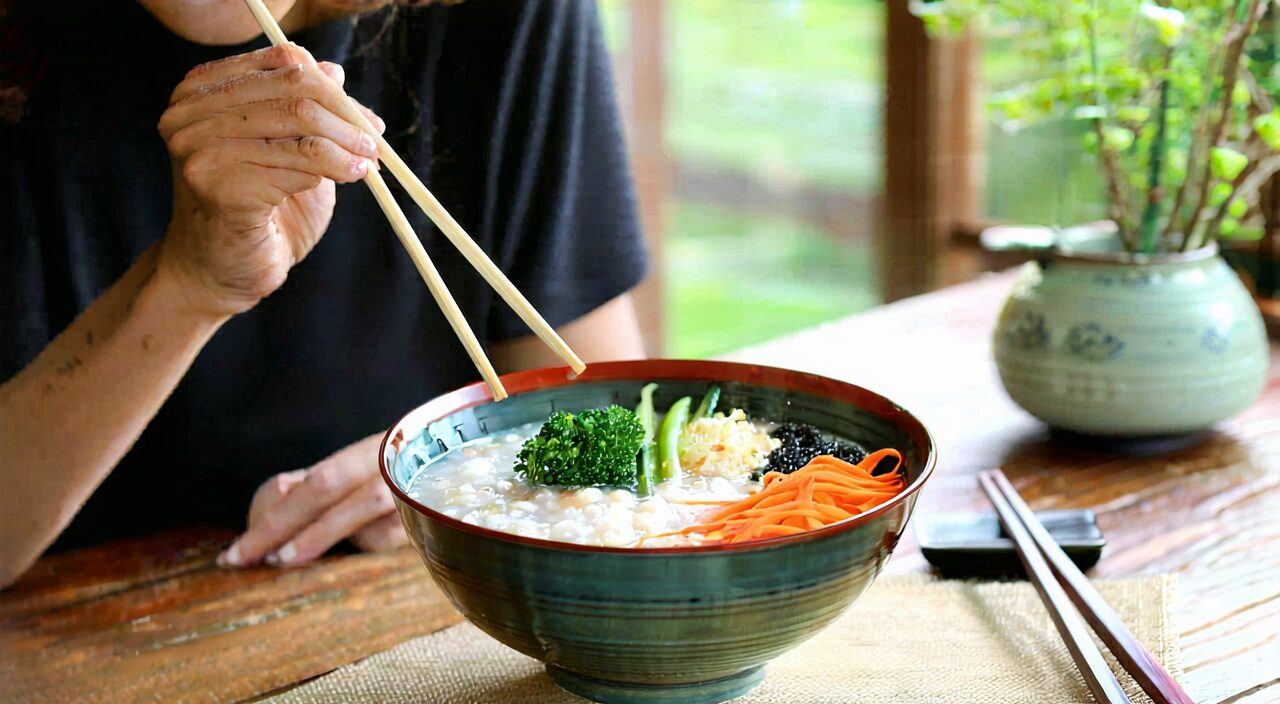
In addition to choosing different regulation tools based on pattern types, daily dietary details often directly help relieve post-meal bloating.
- Slow down eating, chew thoroughly: Eating hurriedly causes swallowing of air and increases the burden on the spleen and stomach. Chew each mouthful more than twenty times to mix food well with saliva—this is fundamental to reducing bloating.
- Adjust food texture and temperature: Cold, raw, greasy, overly sweet foods, and gas-producing foods (such as sweet potatoes, beans, onions, etc.) can easily trigger or worsen bloating; reduce intake appropriately. Warm, softly cooked foods are more friendly to the stomach.
- Manage emotions during meals: TCM emphasizes “do not speak while eating” and “excessive eating injures the intestines and stomach.” Stay attentive and relaxed when eating, avoid dealing with troubling matters or arguing while eating, which helps qi descend smoothly.
- Gentle movement after meals, do not lie down immediately: Take a leisurely walk for about ten minutes after meals to promote gastrointestinal motility, but avoid vigorous exercise. Also, do not take a nap or lie flat immediately, as this interferes with gastric emptying.
- Keep a food diary: Record which foods or meals most easily trigger bloating; you may discover individual intolerance patterns, allowing more targeted adjustments.
These dietary habit adjustments apply regardless of the pattern type. If bloating does not significantly improve after long-term adherence, or if bloating is accompanied by significant pain, weight loss, black stools, difficulty swallowing, etc., there may be an organic problem, and you should seek evaluation from a gastroenterology specialist as soon as possible rather than continuing with self-regulation.
Summary
From a TCM perspective, post-meal bloating is usually related to three core pathomechanisms: spleen deficiency with weak transportation, impaired ascending and descending of qi, and dampness turbidity encumbering. Bloating due to spleen deficiency focuses on “lack of power,” with the regulation approach centered on supplementing qi and fortifying the spleen, accompanied by moving qi. Bloating due to qi stagnation has its crux in “blocked qi movement,” requiring moving qi and removing stagnation to harmonize the middle burner. Bloating due to dampness encumbrance results from “turbid yin not descending,” and should be addressed by drying dampness or aromatic dampness transformation.
In daily life, you can form a preliminary tendency judgment based on the timing patterns of bloating, accompanying symptoms, and tongue signs, but still need to be aware of pattern combinations and changes. Although the patent medicines mentioned—Xiangsha Liujun Wan, Muxiang Shunqi Wan, Erchen Wan, and Huoxiang Zhengqi Wan—are frequently used as corresponding regulation options in traditional Chinese medicine, each formula has its own scope of application and cautions. They should not be used on one’s own based solely on a single symptom.
If post-meal bloating recurs persistently, or is accompanied by other warning signs of the digestive system, the most prudent approach is to promptly consult a doctor or professional for targeted diagnosis and guidance.