
Who Is Qing Zao Jiu Fei Tang Suitable For? Composition, Effects, and Contraindications

After the beginning of autumn, many people begin to experience dry cough, itchy throat, nasal dryness, and tight skin. From the perspective of traditional Chinese medicine, these manifestations are often related to “dryness evil.” When the dryness evil is warm in nature and damages the lung, a commonly used formula is often mentioned—Qing Zao Jiu Fei Tang.
When overseas users want to learn about this formula, the most common questions are: Who is Qing Zao Jiu Fei Tang suitable for? What is its composition? What are the differences from Sang Ju Yin and Bai He Gu Jin Tang? This article breaks down these practical questions one by one.
How to Understand Qing Zao Jiu Fei Tang
In TCM theory, the lung is a “tender organ” that prefers moisture and dislikes dryness. When the external climate tends to be warm and dry, or when there is insufficient yin fluid in the body with internal deficiency heat, a state of “warm-dryness damaging the lung” may arise.
Qing Zao Jiu Fei Tang addresses this from two main directions: clearing dryness and moistening the lung, and supplementing qi and nourishing yin. It helps restore the lung’s moistening function. This approach is not simply about “moistening”; it simultaneously supplements qi while moistening dryness, enabling body fluids to be transformed and distributed rather than accumulating in one place as a burden.
Therefore, Qing Zao Jiu Fei Tang has a certain dynamic regulating characteristic among many lung-moistening formulas.
Composition of Qing Zao Jiu Fei Tang and the Role of Each Herb
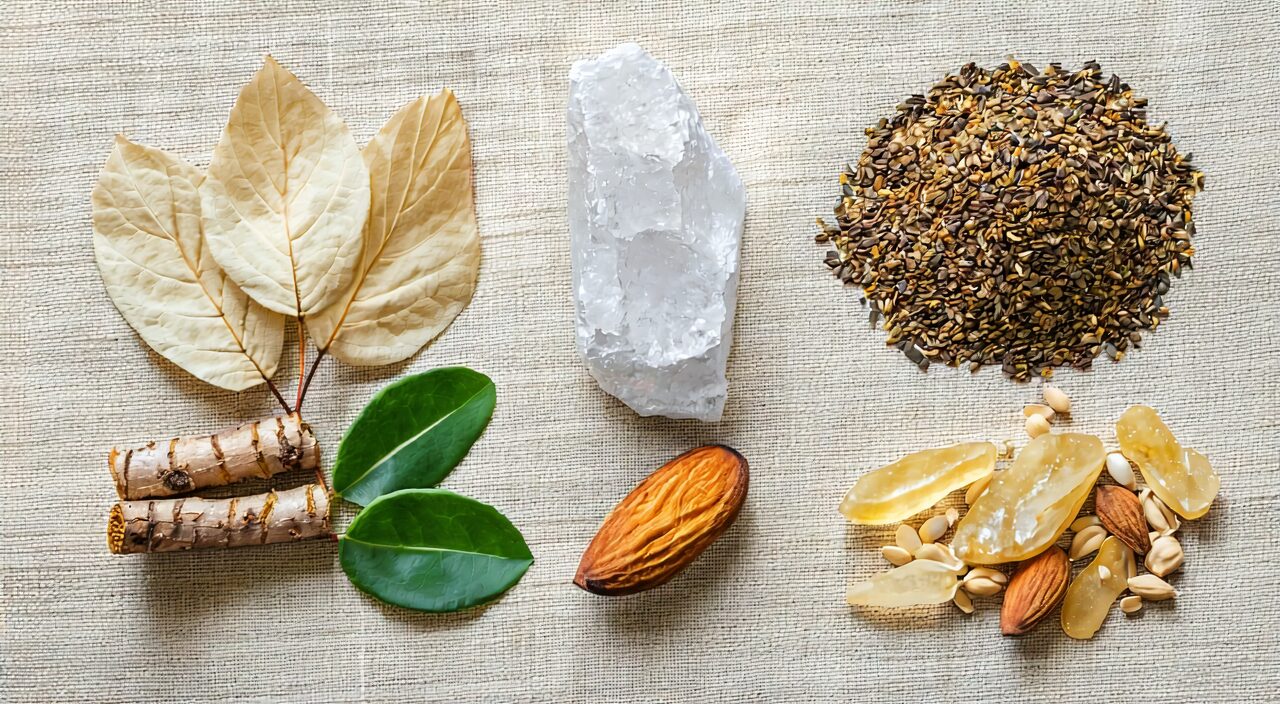
Qing Zao Jiu Fei Tang comes from the classic “Yi Men Fa Lü” (Precepts for Physicians). The original composition is as follows. Each herb has its own emphasis in traditional usage, collectively working to clear dryness, moisten the lung, nourish yin, and supplement qi.
| Herb | Traditional Function |
|---|---|
| Mulberry Leaf (Sang Ye) | Clears and disperses dryness-heat from the lung, vents external pathogens |
| Gypsum (Shi Gao) | Clears and drains heat from the lung and stomach, relieves irritability, heat, and thirst |
| Ophiopogon (Mai Dong) | Nourishes lung and stomach yin, moistens dryness and generates fluids |
| Donkey-hide Gelatin (E Jiao) | Tonifies blood, nourishes yin, and moistens the lung, targeting deficiency dryness |
| Sesame Seed (Hu Ma Ren) | Moistens dryness and lubricates the intestines, with nourishing properties |
| Apricot Kernel (Xing Ren) | Diffuses and descends lung qi, stops coughing and relieves wheezing |
| Loquat Leaf (Pi Pa Ye) | Clears lung and directs qi downward, harmonizes the stomach and stops rebellious qi |
| Ginseng (Ren Shen) | Tonifies lung and spleen qi, enabling the distribution of body fluids |
| Licorice (Gan Cao) | Harmonizes all herbs, and supplements spleen qi |
From the composition, we can see that this formula does not simply use a large amount of yin-nourishing and dryness-moistening substances. Instead, it uses Mulberry Leaf and Gypsum to clear and vent dryness-heat, combined with Ginseng and Licorice to tonify qi, and Ophiopogon, Donkey-hide Gelatin, Sesame Seed, etc., to nourish yin. This gives it a clear indication for situations where both qi and yin are damaged while dryness-heat is not yet cleared.
Who Is Qing Zao Jiu Fei Tang Suitable For?
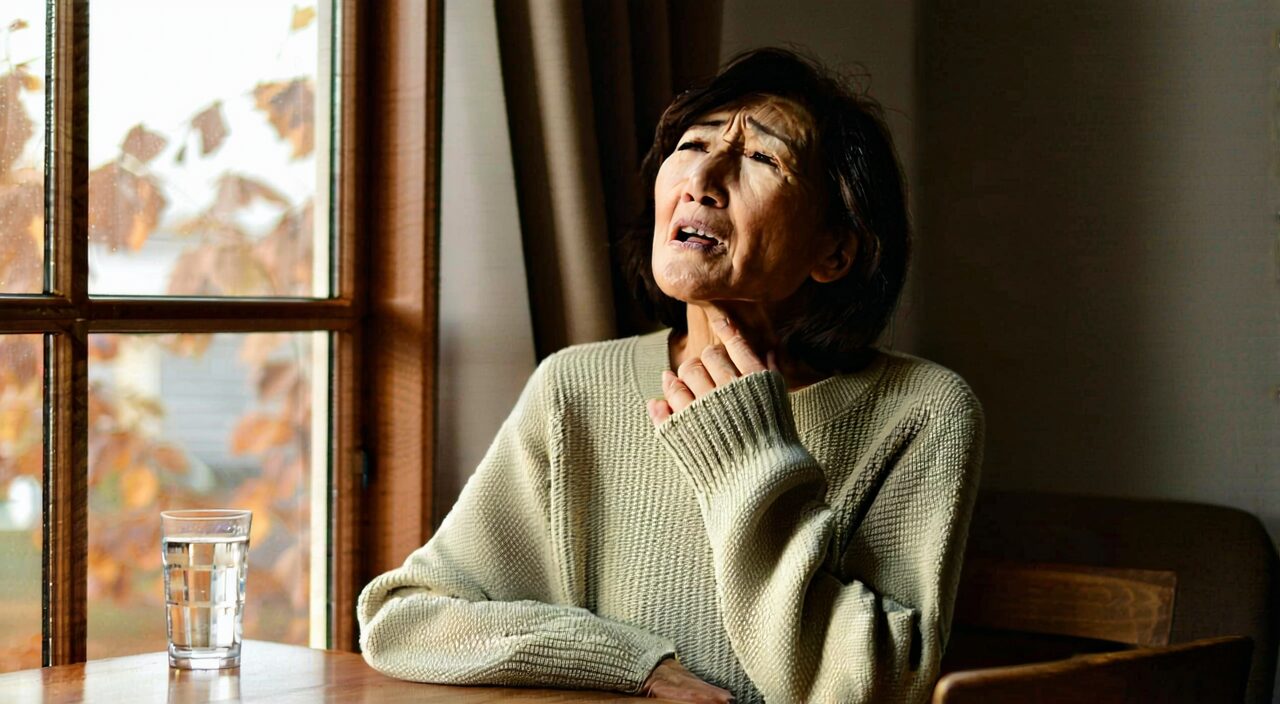
Based on traditional application experience, Qing Zao Jiu Fei Tang mainly corresponds to manifestations of warm-dryness damaging the lung and dual deficiency of qi and yin. The following conditions can serve as a guide, but suitability must still be determined based on individual constitution and professional judgment.
Typical Manifestations of Dryness Evil Damaging the Lung
- Dry cough with little or no phlegm: Coughing is strenuous, with scanty sticky phlegm, sometimes even blood-streaked sputum.
- Dry throat and nasal dryness: Dry throat, dry nose, chapped lips.
- Thirst: A constant desire to drink water, but still feeling dry mouth after drinking.
- Qi counterflow: A sensation of qi rushing upward during coughing, possibly with discomfort in the chest and hypochondrium.
- Tongue appearance: Tongue body tends to be red, with little coating or a thin yellow dry coating.
- Accompanying signs: May also include irritability, dry skin, dry stools, etc.
When the above manifestations occur in dry or warm climates, or during the recovery period of febrile diseases, traditional Chinese medicine may consider the approach of Qing Zao Jiu Fei Tang for regulation. However, there are significant individual differences in constitution, and whether it is specifically suitable still requires detailed pattern differentiation.
Situations Requiring Caution
Qing Zao Jiu Fei Tang is not suitable for all cough or dryness problems. The following types of people and conditions are generally not suitable, or require careful consideration under strict professional guidance:
- Cold-phlegm cough: Cough with profuse thin clear sputum, aggravated by cold, no thirst, pale tongue with white slippery coating. This belongs to cold-fluid retention in the lung or wind-cold cough, and this formula is not suitable.
- Phlegm-dampness cough: Cough with profuse sticky sputum, chest tightness, poor appetite, loose stools, thick greasy tongue coating. This is internal exuberance of phlegm-dampness; misuse may aggravate dampness stagnation.
- Spleen deficiency with heavy dampness: People prone to abdominal bloating, unformed stools, heavy limbs. Yin-nourishing and dryness-moistening herbs may further burden the spleen and stomach.
- Early stage of external contraction: If there are obvious exterior symptoms such as aversion to cold, fever, nasal congestion and runny nose, and dryness signs are not yet prominent, it should not be used too early.
- Special populations: Pregnant women, lactating women, children, and those with severe chronic diseases should consult a doctor or professional TCM practitioner before using any formula.
It must be emphasized that if a cough persists for more than two weeks without improvement, or is accompanied by chest pain, difficulty breathing, persistent fever, significant weight loss, etc., seek medical evaluation promptly and avoid solely relying on dietary therapy or self-selecting formulas.
Differences Between Qing Zao Jiu Fei Tang and Sang Ju Yin
Both Sang Ju Yin and Qing Zao Jiu Fei Tang contain Mulberry Leaf and Apricot Kernel, but their therapeutic directions are fundamentally different.
| Comparison Dimension | Sang Ju Yin | Qing Zao Jiu Fei Tang |
|---|---|---|
| Main Direction | Acrid-cool releasing exterior, dispersing wind and ventilating the lung | Clearing dryness and moistening lung, supplementing qi and nourishing yin |
| Applicable Stage | Early stage of external wind-heat, pathogen in the lung-defense | Warm-dryness damaging lung, qi and yin already deficient |
| Typical Manifestations | Cough, slight fever, slight thirst, sore throat | Dry cough, dry throat and nose, thirst and qi counterflow, irritability |
| Medicinal Characteristics | Mainly light, clear and dispersing | Combination of clearing and supplementing, with Gypsum, Donkey-hide Gelatin, Ginseng, etc. |
In simple terms, Sang Ju Yin leans towards “expelling pathogens,” while Qing Zao Jiu Fei Tang leans towards “combining clearing, moistening, and supplementing.”
Differences Between Qing Zao Jiu Fei Tang and Bai He Gu Jin Tang
Bai He Gu Jin Tang is commonly used for cough caused by lung-kidney yin deficiency and deficiency-fire flaring upward. Its regulatory direction is to nourish kidney and moisten lung, stop cough and transform phlegm, focusing on “consolidation.” Qing Zao Jiu Fei Tang focuses more on clearing and draining dryness-heat, supplementing qi and nourishing yin.
| Comparison Dimension | Bai He Gu Jin Tang | Qing Zao Jiu Fei Tang |
|---|---|---|
| Main Direction | Nourishing kidney and moistening lung, stopping cough and transforming phlegm | Clearing dryness and moistening lung, supplementing qi and nourishing yin |
| Disease Location Emphasis | Lung-kidney yin deficiency, deficiency-fire flaring upward | Lung-stomach dryness-heat, both qi and yin damaged |
| Typical Manifestations | Dry cough with scanty phlegm, dry throat and sore throat, afternoon tidal fever, heat in palms and soles, blood-streaked sputum | Dry mouth and nose, thirst and qi counterflow, irritability, prominent dryness-heat sensation |
| Regulatory Approach | Tends to supplement and astringe | Tends to clear/drain and supplement simultaneously |
Although both are used for dry cough, Bai He Gu Jin Tang involves a deeper disease location involving kidney yin deficiency, while Qing Zao Jiu Fei Tang mainly focuses on lung-stomach dryness-heat and dual damage of qi and yin.
Differences Between Qing Zao Jiu Fei Tang and Yang Yin Qing Fei Tang
Yang Yin Qing Fei Tang emphasizes nourishing yin, clearing the lung, resolving toxins, and benefiting the throat. It is traditionally used for yin deficiency with lung dryness combined with heat-toxin accumulation, highlighting the combination of “nourishing yin” and “clearing/resolving.”
| Comparison Dimension | Yang Yin Qing Fei Tang | Qing Zao Jiu Fei Tang |
|---|---|---|
| Main Direction | Nourishing yin and clearing the lung, resolving toxins and benefiting the throat | Clearing dryness and moistening lung, supplementing qi and nourishing yin |
| Applicable Focus | Yin deficiency and lung dryness with heat-toxin accumulation (e.g., sore throat, diphtheria, etc.) | More severe dryness-heat with qi and yin damaged |
| Dryness-Clearing Strength | Relatively gentle | Stronger dryness-clearing power, plus Ginseng to supplement qi |
The two formulas address dryness at different levels and emphases; differentiation should be based on the specific degree of dryness-heat and yin damage.
Differences Between Qing Zao Jiu Fei Tang and Mai Wei Di Huang Wan
Mai Wei Di Huang Wan is based on Liu Wei Di Huang Wan with the addition of Ophiopogon and Schisandra. It mainly targets chronic deficiency states caused by lung-kidney yin deficiency, tending to tonify and astringe, with a relatively slow onset. Qing Zao Jiu Fei Tang is suitable for a relatively acute stage of dryness-heat damaging the lung, with actions more focused on clearing and moistening, supplementing without causing stagnation.
| Comparison Dimension | Mai Wei Di Huang Wan | Qing Zao Jiu Fei Tang |
|---|---|---|
| Main Direction | Nourishing kidney and lung, tonifying and astringing | Clearing dryness and moistening lung, supplementing qi and nourishing yin |
| Applicable Stage | Chronic deficiency, lung-kidney yin deficiency | Relatively acute dryness-heat damaging the lung |
| Typical Manifestations | Dry cough, dry throat, soreness and weakness of lower back and knees, night sweats | Dry cough, dry mouth and nose, thirst and qi counterflow, irritability |
| Onset Characteristics | Slower, suitable for long-term regulation | Leans towards clearing and moistening, targeting recent dryness-heat |
If the constitution tends toward yin deficiency but without obvious dryness-heat signs, Mai Wei Di Huang Wan may be a more commonly considered direction.
How to Rationally View the Application of Qing Zao Jiu Fei Tang
As a classic formula, the approach of Qing Zao Jiu Fei Tang is very helpful for understanding the treatment of warm-dryness damaging the lung, but it is not a universal lung-moistening formula.
Whether it is actually suitable requires comprehensive judgment based on specific symptoms, tongue and pulse signs, disease stage, and individual constitution. When overseas users access information on such traditional formulas, it is recommended to treat it as a starting point for further understanding rather than a direct basis for self-selection.
Summary
In traditional Chinese medicine, Qing Zao Jiu Fei Tang is used for conditions of warm-dryness damaging the lung with dual deficiency of qi and yin. Common suitable presentations include dry cough with little or no phlegm, dry throat and nose, thirst, and qi counterflow, while cold-fluid cough, phlegm-dampness cough, and spleen deficiency with heavy dampness are generally not suitable.
Although it, along with Sang Ju Yin, Bai He Gu Jin Tang, Yang Yin Qing Fei Tang, and Mai Wei Di Huang Wan, may be used for cough or dryness-related conditions, there are significant differences in pattern differentiation direction, level of action, and scope of application.
The use of any formula should be based on a full understanding of one’s individual constitution and symptoms, combined with the pattern differentiation advice of a professional TCM practitioner. This article is for informational reference only and cannot replace professional diagnosis or treatment advice. If a cough persists or is accompanied by other complex symptoms, seek medical help promptly.