
Who is Suzi Jiangqi Tang Suitable For? Composition, Effects, and Contraindications

Many people, upon experiencing cough, asthma, and abundant phlegm, easily think of various traditional formulas for stopping cough and resolving phlegm. However, not all cough and asthma conditions are suitable for the same approach.
In Chinese medicine, Suzi Jiangqi Tang is often used to address a relatively special situation—where there is both an “excess” pattern of phlegm qi rising counterflow and a “deficiency” pattern such as soreness and weakness of the lower back and knees, and more exhalation than inhalation. This article starts with its composition, traditional effects, suitable directions, contraindications, and distinctions from several common formulas, helping interested users establish a relatively clear cognitive framework.
Whether it is specifically suitable still needs to be judged based on individual conditions; one should not simply use medicines based on the information in this article.
Composition and Action Direction of Suzi Jiangqi Tang
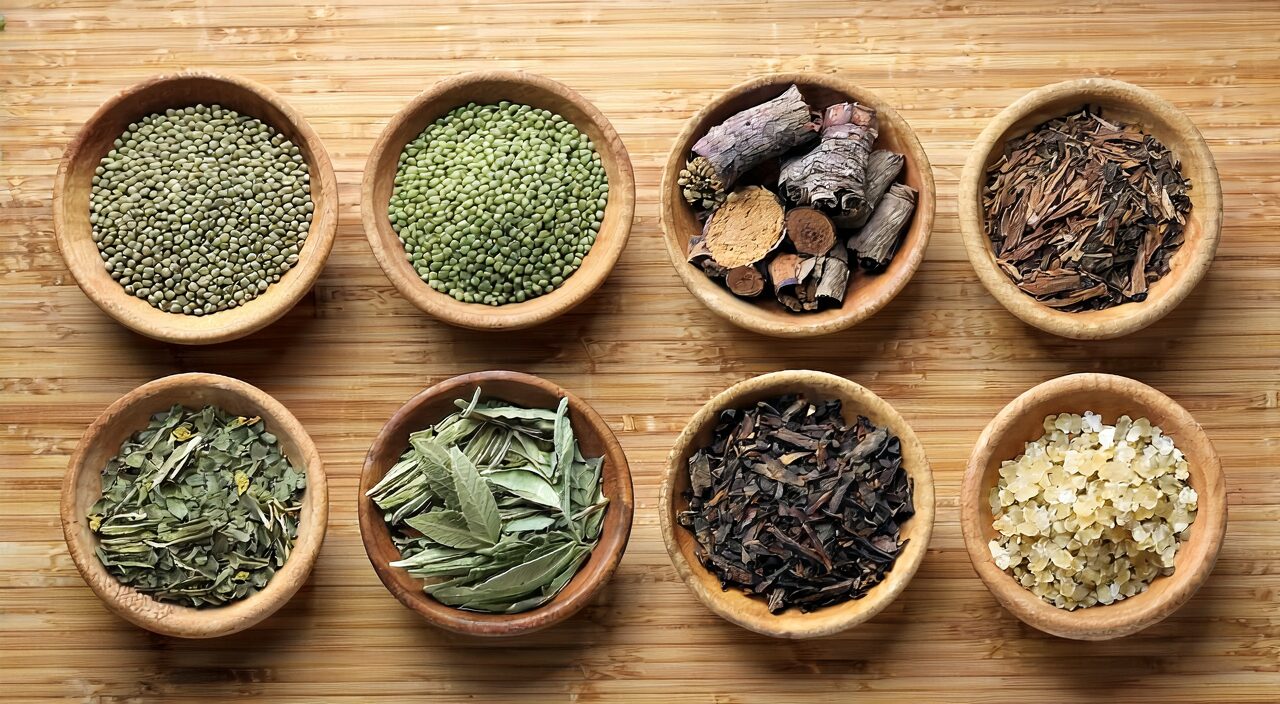
Suzi Jiangqi Tang originates from the Taiping Huimin Hejiju Fang (Formulas of the Peaceful Benevolent Dispensary). Traditionally, it is mostly used for cough and asthma conditions characterized by profuse phlegm-saliva congestion and qi failing to descend, combined with deficiency of the lower origin. From a Chinese medicine perspective, its composition mainly revolves around “descending qi to calm panting and dispelling phlegm to stop cough,” while also taking into account the intention of warming the kidney and grasping qi.
Common Composition
Below is the relatively common compositional structure of Suzi Jiangqi Tang. Dose differences may exist in records from different periods and regions. Here, only the common ingredients and their roughly understood traditional roles are listed to facilitate understanding of the formula’s composition ideas:
| Herb | Brief Understanding of Traditional Role |
|---|---|
| Zi Su Zi (Perilla Fruit) | Descends qi and eliminates phlegm, calms panting; serves as the main direction in the formula |
| Ban Xia (Pinellia Rhizome) | Dries dampness and transforms phlegm, descends counterflow and stops nausea; assists in eliminating phlegm-dampness |
| Qian Hu (Peucedanum Root) | Descends qi and transforms phlegm, diffuses and disperses wind-heat phlegm |
| Hou Po (Magnolia Bark) | Moves qi and dries dampness, reduces distension and descends counterflow |
| Rou Gui (Cinnamon Bark) | Warms the kidney and grasps qi; targets deficiency of the lower origin and deficiency-type panting |
| Dang Gui (Chinese Angelica Root) | Nourishes and harmonizes blood, regulates qi and blood, prevents excessive drying and scattering |
| Sheng Jiang (Fresh Ginger) | Warms and disperses water qi, assists Ban Xia in transforming phlegm and descending counterflow |
| Da Zao (Chinese Date) | Harmonizes the spleen and stomach |
| Zhi Gan Cao (Honey-Fried Licorice Root) | Harmonizes all herbs, simultaneously benefits middle qi |
From the perspective of formula combination, the prescription includes a group of herbs that descend qi and transform phlegm, along with Rou Gui, which warms and assists the lower origin, and Dang Gui and Gan Cao that nourish blood and harmonize the middle. The overall direction is relatively clear: it mainly targets cough and asthma characterized by “excess above and deficiency below.”
Common Suitable Directions for Suzi Jiangqi Tang
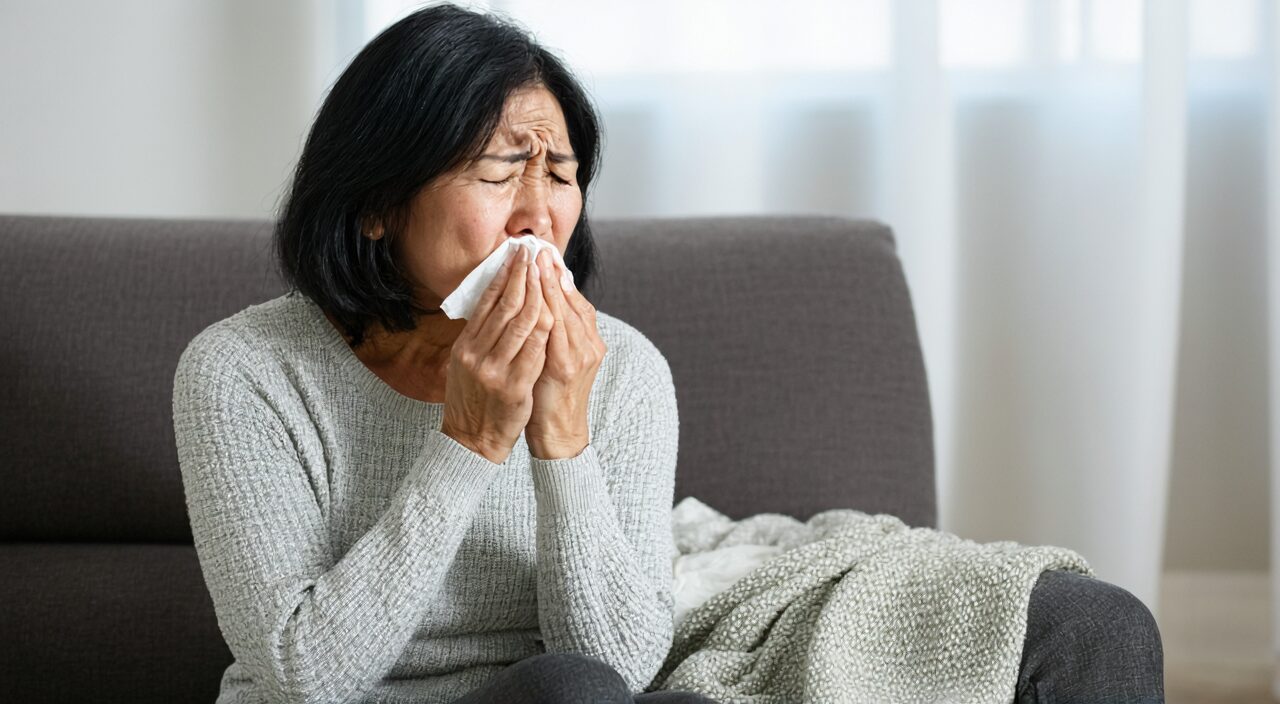
In traditional usage, Suzi Jiangqi Tang is often more suitable for populations exhibiting phlegm qi rising counterflow along with lower origin deficiency. This does not mean everyone will have identical symptoms, but rather there is a general tendency in constitution and symptoms.
The following types of conditions may be more appropriate for considering Suzi Jiangqi Tang as a direction for understanding:
1. Cough and Asthma with Profuse Phlegm, Chest and Diaphragm Fullness and Oppression
These individuals often feel congestion and oppression in the chest, feeling that phlegm is blocking the airway, and only feel somewhat better after coughing it out.
- Phlegm is mostly white or relatively thin and clear, with a relatively large amount
- Cough and asthma worsen especially in the morning and evening, or after exposure to cold or exertion
Traditionally, this is considered a manifestation of phlegm-dampness congesting the lung and qi counterflow failing to descend. Suzi Jiangqi Tang may be helpful for such cough and asthma dominated by phlegm qi rising counterflow.
2. Qi Counterflow, Panting and Urgency, Sensation of Heaviness Above and Lightness Below
Some people, during coughing and asthma attacks, clearly feel qi rushing upward, experience more difficulty inhaling, and simultaneously have a weak sensation in the lower body.
- Weakness in the lower back and legs, cold sensation in the lower back, fatigue and weakness of the lower limbs
- Panting becomes more obvious after walking or activity
This characteristic of “upper excess and lower deficiency” is an important indication distinguishing Suzi Jiangqi Tang from ordinary phlegm-resolving and cough-stopping formulas. Traditional Chinese medicine holds that when the kidney fails to grasp qi, qi will float upward, and thus Rou Gui is included to warm the kidney and grasp qi.
3. Soreness and Weakness of the Lower Back and Knees, Aversion to Cold
Such people may normally have the following manifestations:
- Soreness and weakness of the lower back, lack of strength in the knees
- More sensitive to cold than peers, especially prone to coldness in the lower body
- Lower back and knee soreness and weakness become more evident during coughing and asthma attacks and after activity
This suggests the presence of kidney yang insufficiency. Herbs in Suzi Jiangqi Tang such as Rou Gui and Dang Gui are exactly intended to address this aspect of lower origin deficiency.
It must be specifically noted that the above are only common suitable directions in traditional usage. Whether it is truly suitable requires individual judgment integrating tongue appearance, pulse appearance, and overall constitutional state; one cannot self-match medicines based solely on one or two symptoms.
Unsuitable Populations and Contraindications for Use
Every formula has its applicable range, and Suzi Jiangqi Tang is no exception. The following types of situations are generally unsuitable, or require special caution in usage:
- Those with obvious yin deficiency dry cough
Cough with scant, sticky phlegm, or even no phlegm, accompanied by dry mouth and throat, heat sensation in the palms, night sweating, etc., traditionally belongs to yin deficiency dry cough. Using warm, drying herbs to transform phlegm at this time can easily worsen the consumption of yin fluids, and is not suitable for the Suzi Jiangqi Tang approach.
- Those with obvious phlegm-heat
Yellow, thick, sticky phlegm, fever, thirst, red and sore throat; this type of phlegm-heat cough leans towards heat signs. Suzi Jiangqi Tang overall leans warm and can easily assist heat, so it may not be applicable.
- Acute severe panting and urgency
Sudden severe difficulty breathing, or continuously worsening panting, accompanied by bluish lips, profuse sweating, etc., requires emergency medical treatment, and one should not self-choose any traditional formula.
- Populations in special physiological stages
Pregnant women, lactating women, infants and young children, and those with extreme physical weakness all require professional evaluation before using any compound formula; decisions should not be based solely on popular science information.
If cough and asthma recur over a long period, or are accompanied by obvious anxiety, depression, palpitations, chest tightness, pain, abnormal breathing, weight loss, etc., one should first consult a doctor to rule out other possible health problems before considering a regulation direction.
Differences from Several Other Formulas
Many people tend to mix Suzi Jiangqi Tang together with Erchen Tang, Xiao Qing Long Tang, Dingchuan Tang, Maiwei Dihuang Wan, etc., for comparison, because they are all more or less related to “cough, asthma, and phlegm.” However, the actual focuses vary greatly. Understanding these differences helps avoid directional misjudgments.
| Formula | Main Focus | Key Distinguishing Point | Example Suitable Direction |
|---|---|---|---|
| Erchen Tang | Dries dampness and transforms phlegm, regulates qi and harmonizes the middle | Largely treats phlegm-dampness obstructing the middle, without qi counterflow, panting, or lower deficiency manifestations | Damp-phlegm cough with profuse phlegm easily expectorated, chest and epigastric stuffiness |
| Xiao Qing Long Tang | Releases the exterior and disperses cold, warms and transforms internal retained fluid | Targets external cold and internal retained fluid, with aversion to cold, fever, and other exterior cold signs; dispersing power is relatively strong | Cough and asthma worsening after catching cold, thin white profuse phlegm, accompanied by exterior cold |
| Dingchuan Tang | Diffuses the lung and clears heat, calms panting and transforms phlegm | Treats phlegm-heat combined with external cold, emphasizes clearing heat, phlegm is often yellow and thick | Phlegm-heat cough and asthma, panting and urgent breathing, with heat signs |
| Suzi Jiangqi Tang | Descends qi and transforms phlegm, warms the kidney and grasps qi | Targets upper excess and lower deficiency, simultaneously addressing kidney failing to grasp qi, no obvious exterior signs or heat signs | Phlegm qi rising counterflow, chest and diaphragm fullness and oppression, lower back and knee soreness and weakness, aversion to cold |
| Maiwei Dihuang Wan | Nourishes kidney and enriches yin | Largely focuses on lung-kidney yin deficiency with dry cough and scant phlegm, tidal fever and night sweating | Deficiency panting and dry cough, mainly dominated by yin deficiency and fire effulgence |
It should be noted that these differences are only a directional overview. In reality, many people’s manifestations may not perfectly correspond to a single formula, and there may even be a mixture of several tendencies. Therefore, comprehensive analysis based on individual conditions is even more necessary.
Summary
As a traditional formula for descending qi and calming panting, Suzi Jiangqi Tang is mainly suitable for populations with phlegm qi rising counterflow, chest and diaphragm fullness and oppression, accompanied by manifestations of lower origin deficiency such as lower back and knee soreness and weakness, aversion to cold, and difficulty in inhaling—this is what Chinese medicine often calls the “upper excess and lower deficiency” type of cough and asthma.
Its composition features Zi Su Zi, Ban Xia, Qian Hu, and Hou Po for descending qi and transforming phlegm, combined with Rou Gui and Dang Gui to warm the kidney and grasp qi, with an overall tendency toward warming transformation.
However, conditions such as yin deficiency dry cough, phlegm-heat cough, and acute panting are not suitable for this direction. Furthermore, comparing it with several other commonly used formulas such as Erchen Tang, Xiao Qing Long Tang, Dingchuan Tang, and Maiwei Dihuang Wan reveals that each formula has a different emphasis and suitable populations.
This article is for popular science reference only and cannot replace professional diagnosis or treatment advice. Whether to choose a certain regulation direction should still be comprehensively evaluated based on one’s own constitution, actual manifestations, and professional opinions.