
Who Is Lizhong Tang Suitable For? Composition, Benefits, and Contraindications

Many people experience a cold-sensitive stomach, diarrhea after eating even slightly cool foods, poor appetite, and persistently cold limbs throughout the year. When exploring various approaches to address these issues, the name “Lizhong Tang” often appears in searches and discussions.
What kind of formula is it? Which signs may align with its use? What precautions should be taken when using it? This article will explore Lizhong Tang from a traditional Chinese medicine perspective, covering its composition, benefits, suitable individuals, contraindications, and how it differs from similar formulas, helping readers gain a clearer understanding of this classic remedy.
What Is Lizhong Tang? Its Origin
Lizhong Tang originates from the Shanghan Lun (Treatise on Cold Damage) and is a classic formula left by Zhang Zhongjing, the Sage of Medicine.
In traditional Chinese medical theory, it primarily addresses “middle jiao deficiency cold.” The “middle jiao” roughly corresponds to the spleen and stomach region. When spleen and stomach yang qi is insufficient and internal cold develops, their transformative and transport functions weaken, leading to a set of digestive symptoms characterized by cold and weakness.
Lizhong Tang works from this angle by warming the middle jiao to dispel cold, supplementing qi, and strengthening the spleen to restore normal function. It can be said that it does not target a single symptom but rather a holistic state closely related to spleen and stomach deficiency cold.
Composition and Core Design of Lizhong Tang
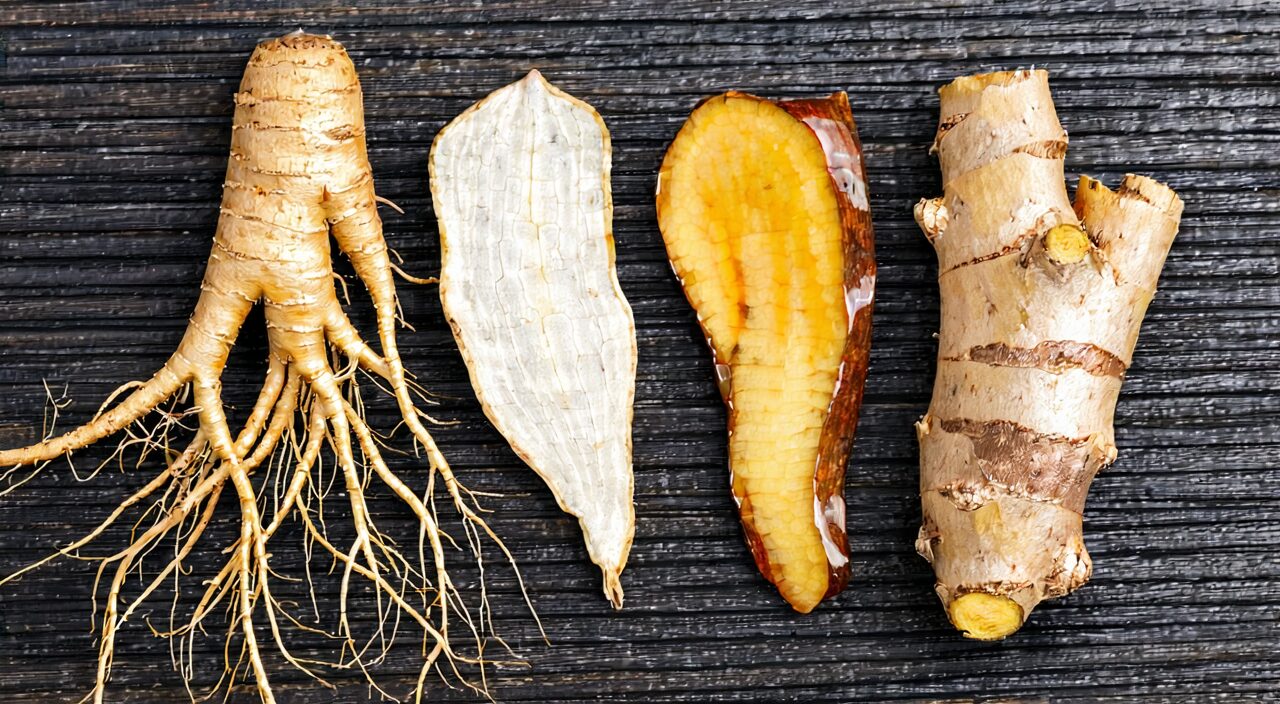
Lizhong Tang is remarkably concise, containing only four ingredients. Each herb plays a relatively clear role, working in coordination to warm the middle jiao and strengthen the spleen.
| Herb | Traditional Role and Direction of Action |
|---|---|
| Ginseng | Strongly tonifies original qi, supplements the spleen and lungs. In the formula, it mainly replenishes spleen and stomach qi, providing the material basis for warming and transformation. |
| Dried Ginger | Warms the middle jiao and disperses cold, restores yang and unblocks channels. It is the main force for warming the middle jiao, targeting the core mechanism of spleen and stomach deficiency cold. |
| White Atractylodes Rhizome | Strengthens the spleen and boosts qi, dries dampness and promotes water metabolism. It helps restore the spleen’s transformative function while addressing internal dampness generated by deficiency cold. |
| Honey-Fried Licorice | Tonifies the spleen and harmonizes the stomach, boosts qi and restores the pulse. It not only assists ginseng in supplementing qi but also harmonizes the other herbs, making the action more gentle and sustained. |
As seen from this table, Lizhong Tang’s approach is not simply about driving out cold. While warming yang and dispersing cold, it emphasizes supplementing spleen and stomach qi so that the organs have the strength to maintain normal function on their own. This combination of “warming” and “supplementing” is precisely why it is called “Li Zhong” (regulating the middle).
Traditional Benefits of Lizhong Tang: Warming the Middle, Dispersing Cold, Supplementing Qi, and Strengthening the Spleen
Traditionally, Lizhong Tang is categorized as a warming formula, with core benefits of warming the middle jiao to dispel cold, supplementing qi, and strengthening the spleen.
“Wen Zhong” (warming the middle) — “Wen” means warmth, “Zhong” refers to the middle jiao (spleen and stomach) — implies bringing warmth to the spleen and stomach area to dispel internal cold. “Bu qi jian pi” (supplementing qi and strengthening the spleen) means using sweet and warm herbs to fortify spleen and stomach qi, restoring their ability to transform food and fluids, ascend the clear, and descend the turbid.
In specific applications, it is not simply about warming whenever there is cold. When a person has middle jiao deficiency cold, a cascade of effects may follow, including reduced transformative capacity, internal water-dampness retention, and qi dynamic obstruction. Lizhong Tang’s design just accounts for these aspects:
- Dried Ginger: Enters the middle jiao directly, warming and resolving cold stagnation
- Ginseng, White Atractylodes Rhizome, Honey-Fried Licorice: Work together to supplement qi and assist the spleen in transforming dampness
Therefore, in traditional use, this formula is not limited to a specific symptom but focuses on the overall state of spleen and stomach deficiency cold.
Who Is Lizhong Tang Suitable For? Common Signs of Middle Jiao Deficiency Cold
Since Lizhong Tang targets middle jiao deficiency cold, those fitting this pattern often display cold and weak characteristics in the digestive system and body generally. The following signs may be noteworthy reference directions, but their presence does not mean one can directly choose this formula; an overall assessment is still needed.
Cold Abdomen with Desire for Warmth and Pressure
This is a relatively typical signal of middle jiao deficiency cold. Many people feel a cold sensation in the abdomen, especially around the navel, worse in cold weather. Using a hot water bottle or pressing on the abdomen brings relief, and discomfort worsens after eating raw or cold foods. This craving for warmth often indicates insufficient internal yang qi.
Vomiting Clear Fluid or Undigested Food
Repeated vomiting without obvious triggers, where the vomit consists mostly of thin, watery fluid or undigested food with little sour or putrid smell. In traditional understanding, this is often linked to spleen and stomach deficiency cold with stomach qi rebelling upward. Lizhong Tang’s warming, middle-calming, and counterflow-directing actions have traditionally been considered in management thinking for such issues.
Loose Stools and Increased Bowel Movements
Chronic unformed stools — loose, soft, or even watery, sometimes containing undigested food remnants — with vague abdominal pain and significant fatigue after defecation. If this is accompanied by aversion to cold and a pale tongue without thirst, it generally belongs to deficiency-cold type diarrhea, one of the traditional indication directions for Lizhong Tang.
Loss of Appetite, Eating Very Little
A persistent lack of hunger, no desire to eat at mealtimes, slight bloating after eating even a small amount, and easy fatigue. This is not due to food retention but weak spleen and stomach motility. Spleen deficiency with powerless transformation, combined with cold pathogen obstruction, further aggravates such manifestations.
Cold Extremities and Lack of Energy
Hands and feet that are cold year-round, especially hard to warm in autumn and winter, a tendency to feel cold generally, often low in energy, with possibly pale or sallow complexion — appearing “without fire.” These systemic signs often accompany middle jiao deficiency cold because the spleen and stomach are the source of qi and blood production. When the middle jiao is cold, qi and blood generation and distribution are affected.
The above symptoms may appear alone or in combination. Especially when abdominal pain, vomiting, diarrhea, etc., persist or recur, priority should be given to seeking professional medical evaluation to rule out organic problems rather than self-diagnosing and applying formulas.
Conditions Where Lizhong Tang Is Unsuitable or Requires Caution
Precisely because Lizhong Tang is overall warming and supplementing, there are clear boundaries for its use. The following conditions are generally unsuitable or require extreme caution:
Excess Heat Syndromes and Damp-Heat Syndromes
If the abdominal pain presents as follows, it generally belongs to excess heat or damp-heat, the exact opposite of middle jiao deficiency cold:
- Distending pain that refuses pressure
- Fever and thirst
- Dry, hard stools, or urgent, foul-smelling diarrhea
- Red tongue with yellow, greasy coating
Using warming and supplementing Lizhong Tang in such cases is like adding oil to fire and may worsen the condition.
Yin Deficiency Constitution
People who are thin, have a dry mouth and throat, feel heat in the palms and soles, sweat easily at night, and have a red tongue with little coating often belong to yin deficiency with internal heat. Lizhong Tang’s warm and drying nature may further consume yin fluids, making yin deficiency fire more prominent. Even if such individuals have mild digestive issues, they need to consider approaches from nourishing yin and strengthening the spleen separately.
Acute Abdomen and Unexplained Abdominal Pain
Sudden severe abdominal pain, rigid abdominal muscles, accompanying high fever, vomiting coffee-colored material, black stools, or complete cessation of gas and stool passage may indicate an acute abdomen and requires immediate medical attention. Any idea of using formulas for acute abdomen is extremely dangerous and not something that can be resolved by self-administering Lizhong Tang.
Pregnant Women and Special Populations
Pregnant women have a special constitution, and any medication or formula adjustments must be made under strict medical guidance. They must not take Lizhong Tang on their own. Infants, young children, and elderly frail individuals also require thorough professional evaluation before use.
Additionally, if long-term diarrhea is accompanied by significant weight loss, anemia, black stools, or frequent vomiting leading to dehydration and electrolyte imbalance, seek medical attention first, determine the diagnosis, then decide on the approach.
Differences Between Lizhong Tang and Similar Formulas
Many people confuse Lizhong Tang with other well-known formulas such as Fuzi Lizhong Wan, Xiao Jian Zhong Tang, Si Jun Zi Tang, and Wuzhuyu Tang. They may overlap in some symptoms, but their thinking and focus differ. Understanding the differences helps establish a clearer understanding.
Lizhong Tang vs. Fuzi Lizhong Wan
| Comparison Dimension | Lizhong Tang | Fuzi Lizhong Wan |
|---|---|---|
| Core Composition | Ginseng, Dried Ginger, White Atractylodes Rhizome, Honey-Fried Licorice | Lizhong Tang plus Aconite |
| Strength of Warming Yang | Warms the middle and disperses cold, with a gradual force | Aconite is intensely hot, giving it stronger cold-dispersing power |
| Disease Location Emphasis | Spleen and stomach deficiency cold (middle jiao) | Spleen and kidney yang deficiency, often extending to kidney yang |
| Common Reference Manifestations | Abdominal cold pain, desire for warmth and pressure, loose stools, cold extremities | Extremely cold limbs, mental fatigue, deep faint pulse, stubborn cold signs |
Traditionally, Lizhong Tang is suitable for pure spleen and stomach deficiency cold, while Fuzi Lizhong Wan is considered when the deficiency cold has affected kidney yang or when cold signs are very stubborn. Whether to choose and which to choose requires holistic pattern differentiation; one cannot decide based solely on the degree of cold sensation.
Lizhong Tang vs. Xiao Jian Zhong Tang
| Comparison Dimension | Lizhong Tang | Xiao Jian Zhong Tang |
|---|---|---|
| Composition Characteristics | Ginseng, Ginger, Atractylodes, Licorice | Cinnamon Twig, White Peony, Fresh Ginger, Jujube, Honey-Fried Licorice, Malt Sugar |
| Core Direction | Warms yang and transforms dampness, boosts qi and strengthens spleen to stop diarrhea | Warms the middle and tonifies deficiency, harmonizes the interior and relaxes tension to relieve pain |
| Prominent Manifestation | Loose stools, diarrhea with undigested food, abdominal distension | Abdominal pain that comes and goes, desire for warmth and pressure, spastic pain |
Lizhong Tang leans towards warming yang, transforming dampness, boosting qi, and stopping diarrhea, while Xiao Jian Zhong Tang leans more towards tonifying deficiency and relaxing tension. If the main complaint is abdominal pain — particularly dull pain that likes pressure — Xiao Jian Zhong Tang may be a more common traditional reference formula.
Lizhong Tang vs. Si Jun Zi Tang
| Comparison Dimension | Lizhong Tang | Si Jun Zi Tang |
|---|---|---|
| Composition | Ginseng, White Atractylodes, Dried Ginger, Honey-Fried Licorice | Ginseng, White Atractylodes, Poria, Honey-Fried Licorice |
| Nature | Warm supplementation, tending toward warmth | Neutral supplementation, without obvious warm bias |
| Key Applicable Points | Spleen deficiency + cold signs (chills, cold abdomen, cold extremities) | Pure spleen qi deficiency (pale complexion, shortness of breath, fatigue, poor appetite, loose stools without obvious cold signs) |
Si Jun Zi Tang is like a basic supplement, while Lizhong Tang adds a fire on top. If there is spleen deficiency plus marked cold signs, then the consideration shifts from Si Jun Zi Tang to Lizhong Tang.
Lizhong Tang vs. Wuzhuyu Tang
| Comparison Dimension | Lizhong Tang | Wuzhuyu Tang |
|---|---|---|
| Core Direction | Warms the middle and disperses cold, supplements qi and strengthens the spleen | Warms the liver and stomach, directs counterflow downward and stops vomiting |
| Cold Emphasis | Spleen and stomach deficiency cold, center primarily in middle jiao | Liver and stomach deficiency cold with pronounced liver channel uprising |
| Key Manifestations | Vomiting clear fluid, abdominal distension, loose stools, cold extremities | Vomiting, retching, vertex headache, spitting clear fluids, cold hands and feet |
Vomiting in Lizhong Tang is mostly due to spleen and stomach transformative weakness and cold congealing in the middle jiao, often with abdominal distension and diarrhea, and headache is not obvious. Wuzhuyu Tang’s vomiting, headache, and spitting clear fluids are more prominent. The channels involved and key symptom combinations differ between the two.
These comparisons illustrate that even among warming formulas, the states, main symptoms, and organ emphasis are different. No formula is universally applicable; all must be viewed comprehensively according to specific constitution and symptom combinations.
Summary
As a classic warming and cold-dispersing formula, Lizhong Tang is traditionally indicated for a group of signs caused by spleen and stomach deficiency cold, such as cold abdomen with desire for warmth, vomiting clear fluid, loose stools with poor appetite, and cold extremities. Its core approach is to restore middle jiao transformative function through combined warming and supplementing. At the same time, Lizhong Tang is unsuitable for excess heat, damp-heat, yin deficiency, and acute abdomen conditions; pregnant women and other special populations should also avoid self-administration.
When compared with similar formulas like Fuzi Lizhong Wan, Xiao Jian Zhong Tang, Si Jun Zi Tang, and Wuzhuyu Tang, the fine differentiation in Chinese medicine regarding the degree, location, and accompanying issues of “cold” becomes clearer. Lizhong Tang is more suitable for pure spleen and stomach deficiency cold with internal exuberance of cold-dampness; once the cold signs worsen or the symptom focus shifts, the approach also needs corresponding adjustment.
The information provided in this article is only a popular science introduction to traditional formulas and cannot replace professional diagnosis. If there is indeed long-term, recurring physical discomfort, it is recommended to seek medical attention first and, after clarifying your constitution and the nature of the problem, determine a more suitable approach for yourself.