
Who Is Yi Guan Jian Suitable For? Composition, Benefits, and Contraindications

Yi Guan Jian is a name repeatedly mentioned by many who follow traditional Chinese medicine formulas. Many people, troubled by rib-side discomfort, dry mouth and throat, or a tendency toward emotional depression, or having heard it can nourish yin and soothe the liver, wonder whether Yi Guan Jian is right for them.
Before deciding whether a formula suits you, the key is to return to its composition reasoning and scope of application. This article will objectively sort out the traditional understanding, composition, suitable populations, contraindications, and differences from common formulas like Xiao Yao San and Liu Wei Di Huang Wan, helping readers form a clearer judgment.
Origin and Core Concept of Yi Guan Jian
Yi Guan Jian comes from the Qing dynasty text Continuation of Classified Medical Cases and is often regarded as a representative formula for nourishing the liver and kidney and coursing liver qi.
In Chinese medicine theory, the liver governs free coursing; its constitution is yin and its function is yang. If liver yin is insufficient and the liver body is not moistened, liver qi can easily become constrained, forming a state of yin deficiency with liver qi stagnation. In this state, a person may have both signs of yin fluid depletion (such as rib-side distention, dry mouth and throat) and a tendency toward irritability, melancholy, and low mood.
The strategy of Yi Guan Jian precisely seizes upon the root of liver-kidney yin deficiency: by nourishing liver and kidney yin, the liver body is moistened, and liver qi naturally becomes soothed. Therefore, it is traditionally not simply equated with qi-moving medicinals; it leans more toward nourishing yin, moistening dryness, softening the liver, and relieving constraint.
Composition and Combination Characteristics of Yi Guan Jian
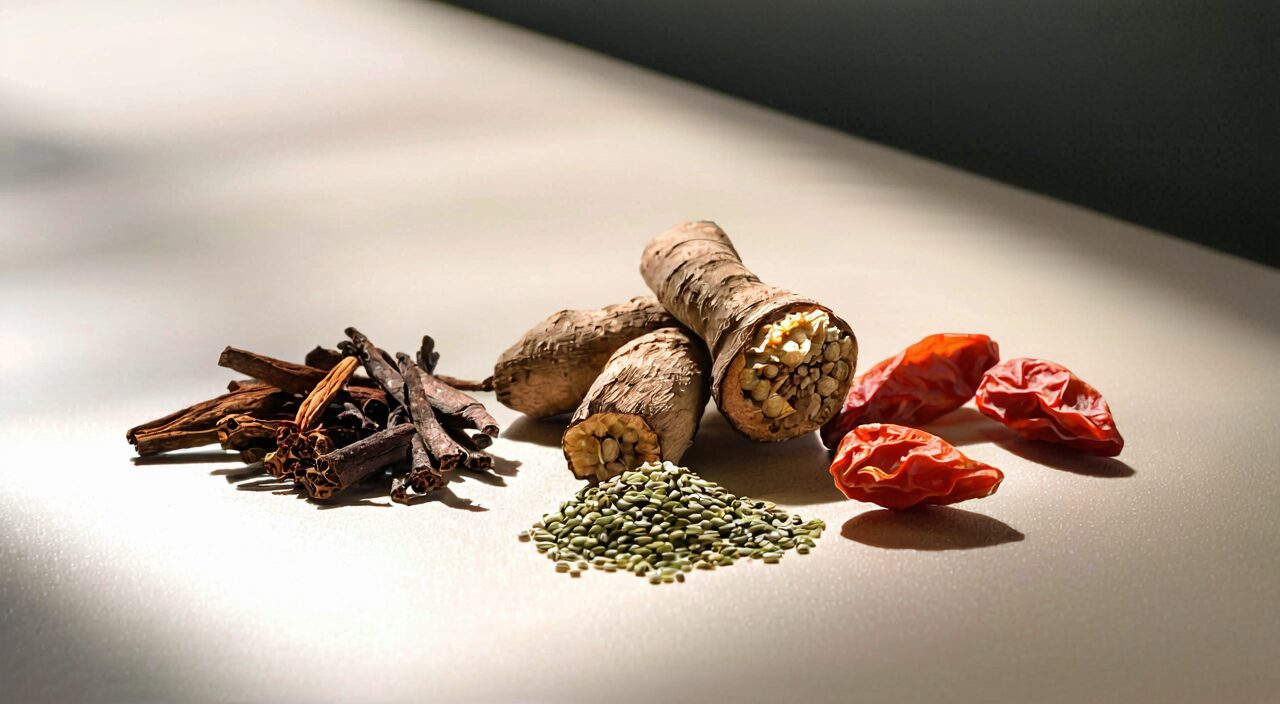
The combination of Yi Guan Jian emphasizes nourishing yin, assisted by a small amount of qi-moving herbs. Below are its commonly seen ingredients and their roles within the formula.
| Medicinal | Main Action Direction |
|---|---|
| Sheng Di Huang (Rehmanniae Radix) | Nourishes yin and enriches blood, supplements liver and kidney yin |
| Bei Sha Shen (Glehniae Radix) | Nourishes yin and clears the lung, benefits the stomach and generates fluids |
| Mai Dong (Ophiopogonis Radix) | Nourishes yin and moistens the lung, clears the heart and relieves vexation, benefits the stomach and generates fluids |
| Dang Gui Shen (Angelicae Sinensis Radix Corporis) | Nourishes and harmonizes the blood, tends more to supplementation without moving excessively |
| Gou Qi Zi (Lycii Fructus) | Nourishes and supplements liver and kidney, enriches essence and brightens the eyes |
| Chuan Lian Zi (Toosendan Fructus) | Soothes the liver and drains heat, moves qi and stops pain, but used in a relatively light dose |
From this, it can be seen that large doses of yin-rich, moistening, and nourishing medicinals are paired with a light amount of Chuan Lian Zi, which can both fill liver and kidney yin fluid and prevent cloying that obstructs qi, while guiding liver qi to course freely. Thus, in traditional application, Yi Guan Jian tends to be used for conditions where yin deficiency predominates and qi stagnation is secondary.
Who Is Yi Guan Jian Suitable For?
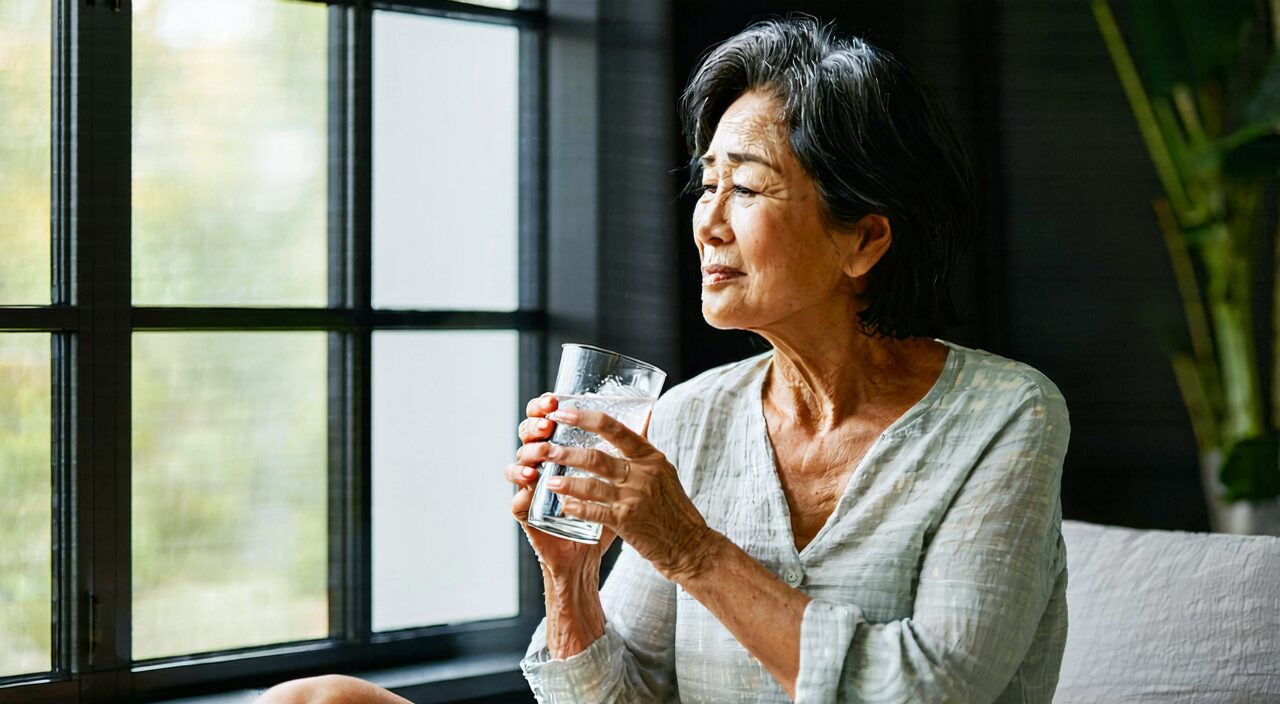
From the combination direction of Yi Guan Jian, it is not difficult to see that it is more suitable for people who show clear signs of liver-kidney yin deficiency accompanied by mild liver qi disharmony. Combining classic pattern differentiation experience, the following presentations can serve as reference points:
- Vague discomfort or lingering pain in the rib-side area, aggravated by fatigue or emotional fluctuations
- Dry mouth and throat, even so dry that one wants to drink water, but drinking does not bring obvious relief
- Tongue body tending toward red, with little coating or a dry tongue surface
- Emotionally prone to irritability and melancholy, frequent sighing, but not to the degree of severe depression
- Dry eyes, blurred vision, or easily fatigued eyes
- Heat sensation in the palms and soles, soreness and weakness of the lower back and knees, possibly low-grade fever in the afternoon
These presentations are not fixed criteria; they must be judged in combination with the overall picture. If there is only rib-side distention but a thick, greasy tongue coating and sticky mouth, Yi Guan Jian may not be suitable. People with a yin deficiency liver constraint constitution often tend to be slender, have dry skin, and dry stools — this is also part of the comprehensive assessment.
For long-term, recurring discomfort as described above, or when accompanied by significant palpitations, chest tightness, severe sleep difficulties, or marked weight loss, it is advisable to consult a Chinese medicine practitioner or professional physician rather than try to match a formula to symptoms on your own.
Who Should Not Use Yi Guan Jian?
Yi Guan Jian is overall relatively cloying and predominantly yin and soft; the following types of situations generally do not recommend blind use:
- Damp-heat brewing internally: Yellow, greasy tongue coating; bitter and sticky taste in the mouth; sticky, difficult, or incomplete stools; oily skin or acne tendency — Yi Guan Jian’s cloying nature may worsen damp-heat.
- Profuse phlegm-dampness: Heavy body sensation, tendency to edema, copious phlegm, white greasy or water-slippery tongue coating — these cases are not suitable for a formula primarily based on large doses of yin-nourishing medicinals like Yi Guan Jian.
- Spleen-stomach deficiency cold: Habitual aversion to cold, poor appetite, prone to abdominal bloating and diarrhea, loose stools or undigested food in stools — the cool, moistening nature of Yi Guan Jian may further damage spleen-stomach yang qi.
- During external contraction: While symptoms of cold, fever, or aversion to cold persist, it is generally unsuitable to use supplementing formulas.
- Special populations: Pregnant women, lactating women, children, etc., should not try it on their own without clear guidance from an experienced Chinese medicine practitioner.
Additionally, if there are no yin deficiency manifestations and one simply uses Yi Guan Jian because of poor mood or rib-side pain, it may not correspond to the pattern. Improper use might cause abdominal bloating, decreased appetite, or diarrhea. Please pay close attention.
Differences from Similar Formulas
Many people compare Yi Guan Jian with Xiao Yao San, Chai Hu Shu Gan San, Liu Wei Di Huang Wan, Zuo Gui Wan, and others. Clarifying the differences between them helps avoid using the wrong direction.
Yi Guan Jian vs. Xiao Yao San
Xiao Yao San is a classic formula for regulating the liver and nourishing the blood, characterized by soothing the liver, relieving constraint, strengthening the spleen, and nourishing the blood. It is often used for liver constraint, blood deficiency, and spleen weakness, presenting as distending pain in both rib-sides, irregular menstruation, headache, dizziness, mental fatigue, reduced appetite, pale-red tongue with thin white coating.
Xiao Yao San leans toward soothing the liver and strengthening the spleen, while Yi Guan Jian leans toward nourishing liver-kidney yin fluid and softening the liver to relieve constraint. Simply put, Yi Guan Jian emphasizes yin deficiency more, while Xiao Yao San concurrently addresses spleen deficiency and blood deficiency.
Yi Guan Jian vs. Chai Hu Shu Gan San
Chai Hu Shu Gan San primarily soothes the liver, moves qi, invigorates blood, and stops pain. It is suitable for pronounced liver qi stagnation excess patterns, commonly seen with chest and rib-side distending pain, wandering discomfort, belching, worsening with emotional fluctuation, and thin white tongue coating.
Yi Guan Jian’s liver qi disharmony is built on the foundation of yin-blood insufficiency, whereas the qi stagnation excess pattern of Chai Hu Shu Gan San does not necessarily involve yin fluid vacuity. If there is a picture of yin damage, using acrid-dispersing Bupleurum-type formulas may consume yin; if qi stagnation is obvious and one solely uses cloying Yi Guan Jian, the stagnation may be difficult to resolve.
Yi Guan Jian vs. Liu Wei Di Huang Wan
Liu Wei Di Huang Wan is a foundational formula for supplementing kidney yin, emphasizing filling kidney yin with almost no liver-soothing action. It is suitable for kidney yin depletion with dizziness, tinnitus, lower back and knee soreness, night sweats, seminal emission, and heat in the palms and soles.
Yi Guan Jian represents a modification of the Liu Wei Di Huang Wan direction, adding medicinals that nourish yin, soften the liver, soothe the liver, and drain heat. Hence, it is more suitable for combined liver-kidney yin deficiency with liver qi constraint. If there is only simple kidney yin deficiency without rib-side discomfort or emotional depression, Liu Wei Di Huang Wan may be more direct.
Yi Guan Jian vs. Zuo Gui Wan
Zuo Gui Wan is derived from Liu Wei Di Huang Wan. It purely supplements without draining, focusing on fiercely supplementing true yin. It is used for severe essence and marrow depletion with exhausted fluids, such as emaciation, dry mouth and throat, lumbar soreness and weak legs, dizziness, tinnitus, etc.
Zuo Gui Wan has stronger supplementation strength but completely disregards qi mechanism, while Yi Guan Jian includes movement within yin, able to supplement without causing stagnation, suitable for those with yin deficiency and mild liver constraint. If yin depletion is extreme and requires urgent filling with little qi stagnation, Zuo Gui Wan may be more highly regarded.
These comparisons serve merely to help readers understand the different emphases of various formulas at a conceptual level. For individual cases, a professional’s comprehensive pattern differentiation is still required to reach a conclusion.
What to Pay Attention to When Using Yi Guan Jian

As a classic prescription, Yi Guan Jian often requires modifications and additions based on individual circumstances in clinical application. In modern times, if it appears as a proprietary Chinese medicine or related preparation, its dosage and indications will be stated more clearly. However, even when used under professional guidance, the following points merit attention:
- Yi Guan Jian is a yin-nourishing preparation with a cool, moistening nature. Long-term use may affect spleen and stomach transportation and transformation; it is not advisable to use it continuously for extended periods without interruption.
- If symptoms like abdominal bloating, diarrhea, decreased appetite, or a thickened tongue coating appear, discontinue use promptly and inform the physician.
- For those with originally weak spleen-stomach function and loose stools, even if they wish to try it, it is advisable to first regulate the spleen and stomach or have the practitioner adjust the combination.
- Although Yi Guan Jian is commonly used for emotion-related rib-side discomfort, if emotional issues are severe — such as marked anxiety, depression, chest tightness, or palpitations — a single formula alone is rarely sufficient; professional mental health support and comprehensive Chinese medicine intervention should be sought.
In summary, Yi Guan Jian is one of many representative formulas for nourishing yin and soothing the liver, but it has a clear scope of application and is not a generalized formula for all rib-side discomfort or low mood.
Summary
The thinking behind Yi Guan Jian’s composition is to nourish liver-kidney yin and soften the liver to relieve constraint. It is more suitable for those with liver-kidney yin deficiency and concurrent mild liver qi stagnation, with common presentations including rib-side discomfort, dry mouth and throat, red tongue with little moisture, and emotional melancholy. People with damp-heat, phlegm-dampness, spleen-stomach deficiency cold, or those without yin deficiency signs are generally not suitable for use.
It differs in emphasis from formulas like Xiao Yao San, Chai Hu Shu Gan San, Liu Wei Di Huang Wan, and Zuo Gui Wan. Selection should be based on constitutional and symptomatic differences rather than simple analogy. The use of any formula must be grounded in individual pattern differentiation and professional guidance. This article is for educational reference only and cannot replace professional diagnosis or treatment advice.