
Who Is Xiao Yao Wan Suitable For? Composition, Effects, and Contraindications Explained

In modern life, emotional fluctuations, work stress, and changes in daily rhythm often leave people feeling chest and rib discomfort, loss of appetite, or unexplained fatigue. As a result, many have turned their attention to the regulating approaches in traditional Chinese medicine, and Xiao Yao Wan is one of the frequently mentioned options.
However, exactly who is Xiao Yao Wan suitable for? What is its composition? And under what circumstances should special caution be exercised? This article, starting from the classical formula concept behind this patent medicine, aims to help establish a relatively clear cognitive framework.
The Origin of Xiao Yao Wan’s Approach: Starting from Xiao Yao San
Most Xiao Yao Wan products commonly available today originate from Xiao Yao San, a formula recorded in the “Taiping Huimin Heji Ju Fang” (Formulary of the Bureau of Taiping People’s Welfare Pharmacy) during the Song Dynasty. Xiao Yao San itself is a traditional formula that regulates the liver and spleen while addressing both qi and blood; its design centers on the concept of “soothing the liver, relieving depression, strengthening the spleen, and nourishing blood.”
Xiao Yao Wan can be understood as a different dosage form following the same approach. The two are essentially identical in composition, differing only in dosage form, which leads to differences in absorption characteristics and convenience of use.
In traditional understanding, Xiao Yao San’s core focus is not on a specific disease but on a body constitution pattern related to liver depression, spleen weakness, and blood deficiency. Without understanding this background, directly treating it as some kind of “mood medication” or “digestive aid” can easily lead to deviation from its intended use.
The Composition of Xiao Yao Wan and the Traditional Roles of Each Ingredient
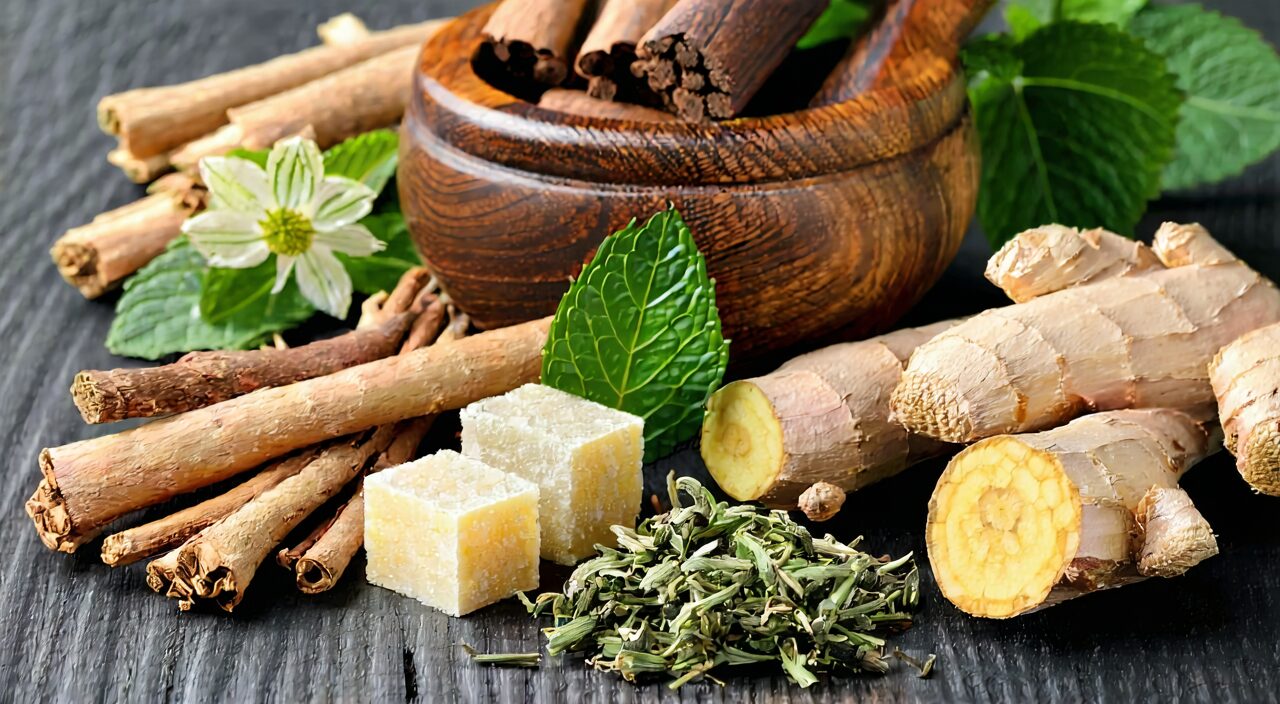
The composition of Xiao Yao Wan typically includes: Chai Hu (Bupleurum), Dang Gui (Angelica sinensis), Bai Shao (White Peony Root), Bai Zhu (Atractylodes macrocephala), Fu Ling (Poria), Zhi Gan Cao (Honey-fried Licorice Root), Bo He (Mint), and Sheng Jiang (Fresh Ginger). In traditional formulation, each of these herbs has its emphasis and works synergistically; the effect does not rely on just one or two herbs alone.
| Herb | Traditional Action |
|---|---|
| Chai Hu (Bupleurum) | Soothes the liver, relieves depression, dispels constrained heat; often serves as the chief herb to open up the qi dynamic |
| Dang Gui (Angelica sinensis) | Nourishes and harmonizes blood, cares for liver blood, allowing liver-soothing without damaging yin blood |
| Bai Shao (White Peony Root) | Nourishes blood, astringes yin, softens the liver and relieves spasm; used with Dang Gui to tonify the liver body and assist liver function |
| Bai Zhu (Atractylodes macrocephala) | Strengthens the spleen, boosts qi, dries dampness and aids transportation; reinforces the postnatal foundation |
| Fu Ling (Poria) | Strengthens the spleen, leaches out dampness, calms the heart and spirit; synergizes with Bai Zhu to support the spleen |
| Zhi Gan Cao (Honey-fried Licorice) | Tonics the spleen, boosts qi, harmonizes all herbs, while also easing spasm and harmonizing the center |
| Bo He (Mint) | Used in small amounts to help disperse constrained qi and simultaneously clear constrained heat |
| Sheng Jiang (Fresh Ginger) | Warms the center, harmonizes the stomach, promotes transformation and transportation, and assists the dispersing action |
As can be seen from the formulation, Xiao Yao Wan does not solely soothe the liver; it simultaneously cares for blood nourishment and strengthens the spleen while soothing the liver. This precisely matches the traditional pathological understanding that liver depression easily affects the spleen and stomach and consumes yin blood.
Traditional Effects and Potential Suitable Population

Traditional Chinese medicine often understands the use direction of Xiao Yao Wan from the perspective of “liver depression, spleen deficiency, blood weakness, and qi stagnation.” When a person has been in a state of emotional suppression, irritability, frequent sighing, chest and rib fullness and discomfort over a long period, accompanied by decreased appetite, fatigue and weakness, a somewhat sallow complexion, or menstrual irregularities, they may fit the presentation of liver depression and spleen deficiency.
Xiao Yao Wan is commonly used in the regulative approach for the following presentations:
- Emotional volatility, frequent feelings of vexation, depression, or easy sighing
- Distension, pain or migrating pain in the chest, rib, breast, or lateral lower abdomen
- Poor appetite, fullness after meals, loose or irregular bowel movements
- Noticeable overall fatigue, lack of energy, especially worsening before or after menstruation
- Irregular menstrual cycles, premenstrual irritability, breast distension and other manifestations related to emotional fluctuation
It must be specially noted that these presentations are not diagnostic criteria for insomnia, anxiety disorders, or depression; rather, they are summaries of experience based on traditional Chinese medicine pattern types.
If the above discomforts only occur occasionally, they may be relieved through adjustments in daily routine and emotional regulation. If the presentations persist, recur, or worsen, professional consultation should be prioritized to rule out other organic problems.
Unsuitable Situations and Contraindications
Although the approach of Xiao Yao Wan is largely harmonizing, it is not suitable for everyone. The following situations typically require caution or avoidance:
- Presentations of vigorous liver fire or damp-heat congestion
If symptoms such as bitter taste, dry throat, irritability and quick temper, constipation, dark scanty urine, and a red tongue with thick, yellow, greasy coating appear, these are typical patterns of excess heat or damp-heat. Xiao Yao Wan, being relatively warm and dispersing, may not be appropriate and could aggravate heat.
- Acute infection, fever, or obvious inflammatory phases
In the presence of high fever, severe pain, acute diarrhea, etc., the current acute condition should be addressed first; self-administration is not advised at that time.
- Special physiological stages
During pregnancy and breastfeeding, unless under clear professional guidance, it is generally not recommended to self-administer any formula or patent medicine. Children, the elderly, or those with weaker constitutions also require careful assessment based on body constitution.
- Clear organic diseases without medical evaluation
For example, chronic atrophic gastritis, ulcerative colitis, autoimmune diseases, etc., the direction of regulation must be determined by a professional physician in light of the overall situation.
- Long-term severe emotional issues
If accompanied by pronounced anxiety, depression, palpitations, chest tightness, loss of interest in daily activities, or even thoughts of self-harm, it is essential to seek professional psychological or psychiatric help; one must not rely solely on Chinese patent medicine for regulation.
The use of traditional Chinese medicine formulas emphasizes “use the formula when the pattern is present,” not universal use based on general discomforts. Any persistent discomfort that differs from the usual should first have its cause clearly identified, rather than hastily choosing a formula with a fixed set of ingredients.
Comparison of Xiao Yao Wan with Similar Formulas
To more precisely understand the positioning of Xiao Yao Wan, it can be compared with several commonly related formulas.
Xiao Yao San
Xiao Yao San and Xiao Yao Wan share the same fundamental approach, differing only in dosage form. The traditional decoction is absorbed faster and allows individualized dosage adjustments based on specific patterns, offering greater flexibility. The pill form is more convenient to use, but has a fixed composition, making it more suitable for relatively stable conditions requiring longer-term regulation.
Jia Wei Xiao Yao San (Dan Zhi Xiao Yao San)
Jia Wei Xiao Yao San adds Mu Dan Pi (Moutan Cortex) and Zhi Zi (Gardenia Fruit) to the base of Xiao Yao San, enhancing the actions of clearing heat, cooling blood, and resolving constrained heat. When liver depression transforms into heat over time, with manifestations such as vexation, irritability, dry mouth, facial flushing, red tongue with little coating – indicating internal heat – it may be more appropriate than Xiao Yao Wan.
Chai Hu Shu Gan San
Chai Hu Shu Gan San has a stronger action of soothing the liver and regulating qi, focusing on qi stagnation and distension pain. It is often used when chest and rib distension, epigastric distension and pain, and frequent belching are prominent, but its blood-nourishing and spleen-strengthening powers are relatively weaker. Compared with Xiao Yao Wan, it concentrates more on “qi” circulation.
Gui Pi Tang
Gui Pi Tang leans towards the principle of heart and spleen deficiency with insufficient qi and blood. It is often used for excessive thinking, palpitations, forgetfulness, insomnia with excessive dreaming, poor appetite, sallow complexion, and excessive menstrual bleeding, where the soothing liver and relieving depression effect is not obvious. If liver depression is not pronounced but heart and spleen qi and blood deficiency are more prominent, the Gui Pi Tang direction may be more appropriate.
These differences among the formulas illustrate that no single formula is universal. Whether to use Xiao Yao Wan or refer to another formula direction hinges on the judgment of the specific pattern; one cannot simply match symptom names to formulas.
Summary
Xiao Yao Wan takes soothing the liver, relieving depression, strengthening the spleen, and nourishing blood as its traditional core approach, and is commonly used in the regulation of liver depression and spleen deficiency type presentations – for example, chest and rib discomfort, decreased appetite, and fatigue related to emotional stress. However, its applicability is built on specific pattern analysis; conditions such as liver fire, damp-heat, excess heat, and other complex situations are often unsuitable.
The comparison with formulas such as Xiao Yao San, Jia Wei Xiao Yao San, Chai Hu Shu Gan San, and Gui Pi Tang also demonstrates that traditional Chinese medicine’s regulatory directions emphasize individual differences. Therefore, whether it is suitable still requires comprehensive judgment based on individual constitution, symptom characteristics, and professional advice.
This article is for informational reference only and cannot replace professional diagnosis or treatment advice.