
Who is Wan Dai Tang suitable for? Composition, Effects, and Contraindications Explained

Many women, when paying attention to vaginal discharge problems, come across the classic formula “Wan Dai Tang.” Traditional Chinese medicine does not simply regard increased vaginal discharge as a localized issue, but often understands it through the relationship between the spleen, liver, and dampness. Wan Dai Tang is precisely a formula developed based on this thinking. This article will discuss its composition, potentially suitable populations, contraindications, and differences from other common formulas from the perspective of supplementing the spleen, soothing the liver, and transforming dampness to stop discharge.
The Core Principle of Wan Dai Tang: Supplementing the Spleen, Soothing the Liver, Transforming Dampness, and Stopping Discharge

In traditional Chinese medicine, vaginal discharge issues are often discussed within the framework of “spleen deficiency with dampness exuberance” or “liver qi depression invading the spleen.” The approach of Wan Dai Tang is not simply astringing to stop discharge, but places emphasis on restoring the spleen’s transportation and transformation function and the liver’s free coursing function.
The spleen governs the transportation and transformation of water-dampness. If the spleen qi is deficient, water-dampness easily seeps downward, forming vaginal discharge. When depressed mood or high stress causes liver qi not to flow freely, it can also affect the spleen, making dampness and turbidity even harder to discharge. Wan Dai Tang is formulated along these lines: supplementing the spleen, soothing the liver, and transforming dampness.
Composition of Wan Dai Tang
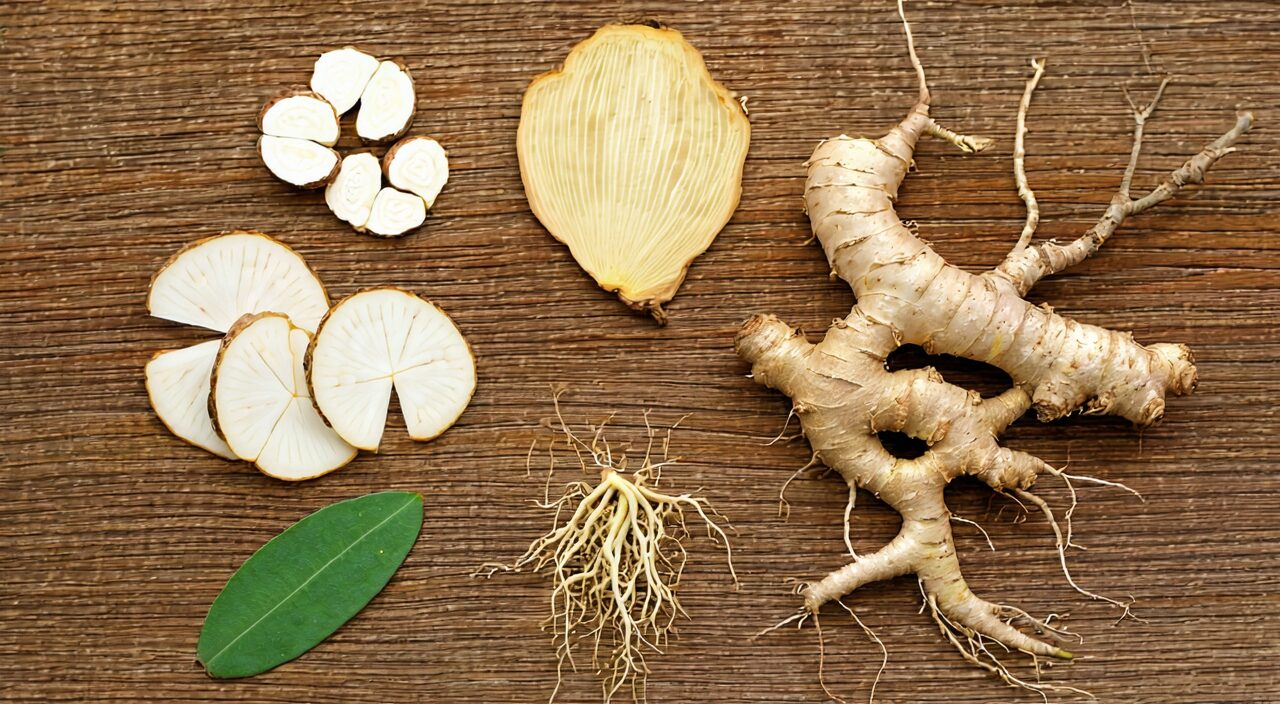
Wan Dai Tang comes from Fu Qing Zhu’s Gynecology and is a relatively gentle, tonifying formula. The traditional composition mainly includes the following medicinal ingredients:
| Medicinal Name | General Concept in the Formula |
|---|---|
| Bai Zhu (Atractylodes macrocephala) | Strengthens the spleen and dries dampness, helping restore the spleen’s transportation ability |
| Shan Yao (Chinese Yam) | Supplements the spleen and consolidates astringency, also benefits qi and nourishes yin |
| Ren Shen (Ginseng) | Greatly tonifies original qi, enhances spleen function |
| Bai Shao (White Peony Root) | Softens the liver and nourishes blood, alleviates the impact of liver qi depression on the spleen |
| Che Qian Zi (Plantain Seed) | Promotes urination to drain dampness, guiding damp pathogens out through urine |
| Cang Zhu (Atractylodes lancea) | Dries dampness and strengthens the spleen, targeting more pronounced damp turbidity |
| Chen Pi (Tangerine Peel) | Regulates qi and strengthens the spleen, prevents qi stagnation from excessive tonification |
| Chai Hu (Bupleurum) | Soothes the liver and relieves qi stagnation, restores the liver’s free coursing function |
| Hei Jie Sui (Schizonepeta Spike charcoal) | Astringes to stop vaginal discharge, and coordinates with liver-soothing medicinals |
| Gan Cao (Licorice) | Harmonizes all medicinals, supplements the spleen and regulates the center |
The overall direction of these combined ingredients is to tonify without causing stagnation and drain without harming the body, suitable for conditions that are biased toward deficiency and dampness, accompanied by qi stagnation.
Possible Indications For Wan Dai Tang
Wan Dai Tang is more biased toward managing the pattern of “spleen deficiency, liver qi depression, dampness pouring downward.” In traditional pattern differentiation, the following manifestations may be regarded as directional reference signals for this pattern:
- Increased vaginal discharge, color white or slightly light yellow, texture thin and watery or like mucus/saliva, without obvious foul odor
- Easily fatigued, heavy limbs, especially sleepy after meals and low energy
- Poor appetite, eating little, or easy bloating after meals
- Emotional tendency toward depression, frequent sighing, or easily feeling stressed and irritable
- Pale or sallow complexion, lacking luster, tongue body tends to be pale, tongue coating white or white and greasy
It should be emphasized that the above are only some directional references from traditional experience and are not diagnostic criteria. Whether it is suitable still needs to be comprehensively judged by a professional based on individual constitution and specific symptoms.
Contraindications of Wan Dai Tang

In the following situations, Wan Dai Tang is generally not a priority consideration:
- Increased vaginal discharge that is deep yellow, yellow-green, purulent, frothy, with obvious foul odor or external genital itching and burning sensation, which may suggest damp-heat or infectious issues. In such cases, the cause needs to be clarified first.
- During acute infection or fever
- Blood-streaked vaginal discharge, or accompanied by persistent lower abdominal pain, abnormal bleeding
- Pregnant, breastfeeding women, and those with special underlying diseases require extra caution
- Constitution tending toward excess heat or heavy damp-heat, with red tongue, yellow greasy coating, obvious dry mouth and bitter taste
If abnormal vaginal discharge persists, recurs, or is accompanied by obvious emotional depression, anxiety, palpitations, chest tightness, severe abdominal pain, irregular bleeding, significant weight loss, etc., it is recommended to consult a doctor promptly rather than relying solely on a specific formula to manage.
Differences Between Wan Dai Tang and Shen Ling Bai Zhu San
Both value strengthening the spleen and dispelling dampness, but their emphasis and applicable directions are distinctly different.
| Comparison Point | Wan Dai Tang | Shen Ling Bai Zhu San |
|---|---|---|
| Main Concept | Supplement spleen, transform dampness, soothe liver, stop discharge | Supplement spleen and lung, percolate dampness, stop diarrhea |
| Focus | Spleen deficiency with liver depression, dampness pouring downward | Spleen deficiency with dampness, impaired transportation |
| Liver-regulating effect | Present, Chai Hu and Bai Shao soothe liver and relieve depression | Not obvious |
| Common Reference Presentations | Copious white, thin, watery vaginal discharge, fatigue, poor appetite, depressed mood | Poor appetite, loose stools, shortness of breath, fatigue, sallow complexion |
Simply put, if the main issue is spleen and stomach weakness, poor digestion, and loose stools, Shen Ling Bai Zhu San’s approach is closer; when there is copious thin, white vaginal discharge and obvious emotional depression, Wan Dai Tang’s approach may be considered more often.
Differences Between Wan Dai Tang and Xiao Yao San
Xiao Yao San is a commonly used formula for soothing liver qi stagnation, nourishing blood, and strengthening the spleen, while Wan Dai Tang focuses on strengthening the spleen, transforming dampness, and stopping vaginal discharge. Their directions are not the same.
| Comparison Point | Wan Dai Tang | Xiao Yao San |
|---|---|---|
| Core Direction | Strengthen spleen, transform dampness primarily, supplemented by soothing liver and stopping discharge | Soothe liver, nourish blood primarily, supplemented by strengthening spleen |
| Suitable Focus | Vaginal discharge problems caused by spleen deficiency and liver depression | Emotional and menstrual problems caused by liver qi depression and blood deficiency |
| Effect on Vaginal Discharge | Directly targets copious thin vaginal discharge | Generally not considered a specific formula for vaginal discharge |
| Common Reference Presentations | Copious vaginal discharge, fatigue, poor appetite, depressed mood | Chest tightness, rib-side pain, irregular menstruation, premenstrual breast distension, poor appetite |
If it is only emotional depression, premenstrual breast distension, and irregular menstrual cycles, Xiao Yao San is more commonly mentioned; if emotional issues are also accompanied by obvious copious, thin, watery vaginal discharge, Wan Dai Tang’s approach may be more relevant.
Differences Between Wan Dai Tang and Long Dan Xie Gan Tang
Long Dan Xie Gan Tang is a representative formula for clearing and draining liver and gallbladder excess fire and clearing damp-heat, which is practically the opposite pole from Wan Dai Tang.
| Comparison Point | Wan Dai Tang | Long Dan Xie Gan Tang |
|---|---|---|
| Pathomechanism Direction | Spleen deficiency, liver depression, damp turbidity pouring downward | Damp-heat in the liver channel, excess fire |
| Discharge Characteristics | Copious, white or light yellow, thin or mucus-like, odorless | Copious, yellow and thick, or purulent, foul-smelling, possibly with vaginal itching |
| Tongue Appearance | Tongue body tends to be pale, coating white or white greasy | Red tongue, yellow greasy coating |
| Systemic Reference Presentations | Fatigue, poor appetite, depressed mood | Bitter taste, rib pain, headache, red eyes, painful urinary dripping |
If the indications of Long Dan Xie Gan Tang are mistakenly applied to a population with spleen deficiency and dampness exuberance, it may conversely worsen the discomfort. Therefore, distinguishing between the two is very critical in traditional Chinese medicine.
Differences Between Wan Dai Tang and Gu Chong Tang
Gu Chong Tang primarily stabilizes the Chong and Ren meridians, boosts qi, and contains blood. It and Wan Dai Tang have different emphases in tonification and astringency strength.
| Comparison Point | Wan Dai Tang | Gu Chong Tang |
|---|---|---|
| Core Concept | Supplement spleen, transform dampness, soothe liver, stop discharge | Stabilize and astringe Chong and Ren meridians, boost qi and contain blood |
| Suitable Focus | Spleen deficiency, liver depression, damp turbidity vaginal discharge | Unstable Chong and Ren, qi and blood deficiency causing flooding or vaginal discharge |
| Astringency Strength | Mild to moderate, Hei Jie Sui astringes to stop discharge | Stronger, emphasis on stabilizing and retaining |
| Common Reference Presentations | Thin white discharge, abdominal bloating, poor appetite, emotional constraint | Heavy menstruation, flooding, copious thin white vaginal discharge, obvious lower back soreness and bearing-down sensation |
If the core of the discharge problem is “insufficient retaining strength,” manifesting as copious thin white discharge, lower back soreness, fatigue, and obvious lower abdominal bearing-down sensation, Gu Chong Tang’s approach may be closer; if there are also characteristics like emotional constraint, bloating, and poor appetite, Wan Dai Tang’s approach may be more fitting.
Summary
Wan Dai Tang is one of the classic approaches in traditional Chinese medicine for managing the pattern of spleen deficiency, liver qi depression, and damp turbidity pouring downward causing vaginal discharge issues. Its characteristics of supplementing the spleen to transform dampness, soothing the liver, and stopping discharge make it frequently mentioned for presentations such as copious white vaginal discharge, fatigue, poor appetite, and depressed mood. However, it is not suitable for all types of vaginal discharge, especially those involving damp-heat, infection, or other organic problems, which require consideration from a completely different direction.
Behind every formula lies a corresponding type of constitution and pathomechanism direction. One must absolutely avoid self-prescribing based solely on one or two surface symptoms. If needed, it is recommended to choose the appropriate regulation direction cautiously under the guidance of a professional and in combination with one’s specific situation.
This article is only for traditional Chinese medicine popular science reference and cannot replace professional diagnosis or treatment advice.