
Who Is Cang Er Zi San Suitable For? Composition, Effects, and Contraindications

When we look for traditional approaches to address nasal congestion, runny nose, or a stuffy sensation in the forehead, Cang Er Zi San is a formula name that frequently comes up. Many people who are exploring Chinese medicine knowledge may wonder: What exactly does this formula consist of? It seems to be commonly used for nasal discomfort, but what kind of conditions is it suitable for, and which individuals are advised not to try it lightly?
This article will, from the perspective of traditional formula theory, outline the composition of Cang Er Zi San, its application directions, and the contraindications that need attention. It will also compare it with several formulas that have similar directions but different emphases, helping overseas readers who are interested in this topic to gain a more comprehensive understanding.
Overview of the Composition of Cang Er Zi San
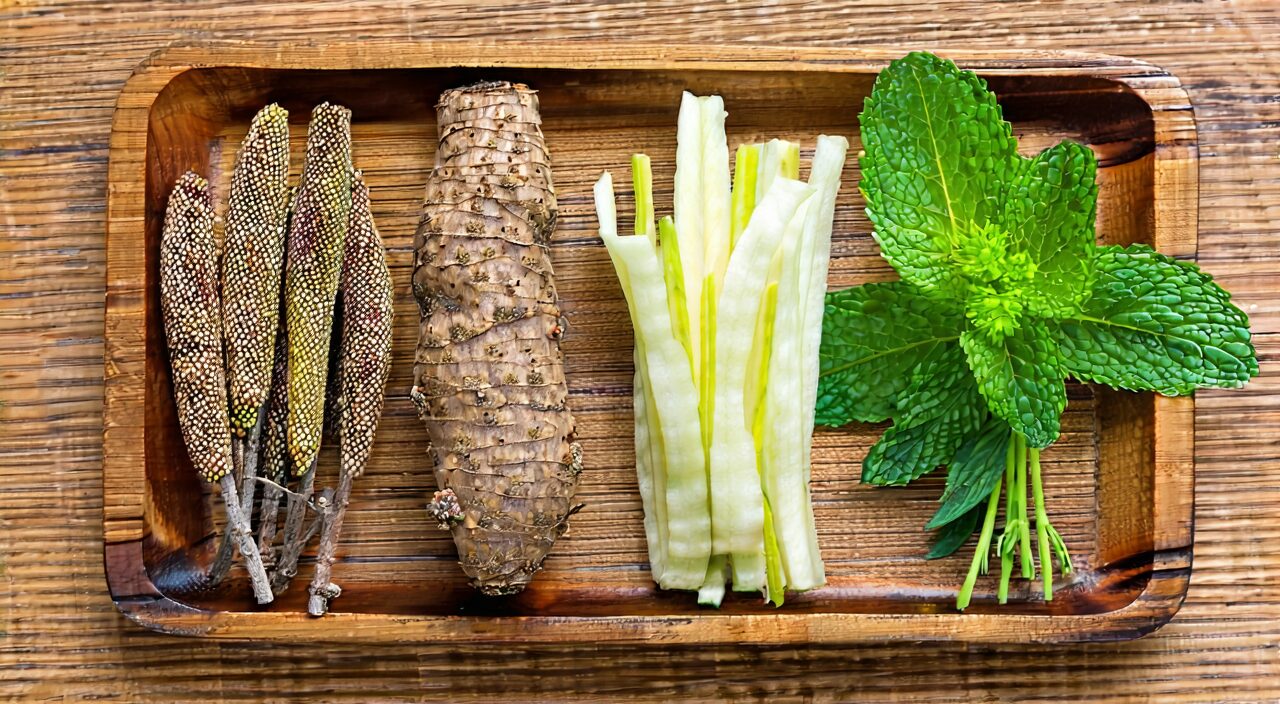
When learning about a formula, looking at its herbal composition is often more intuitive than just examining its effects. The basic composition of traditional Cang Er Zi San is as follows:
| Herb | Role in the Formula |
|---|---|
| Cang Er Zi | Disperses wind pathogen, opens nasal passages |
| Xin Yi | Disperses wind pathogen, opens nasal passages |
| Bai Zhi | Disperses wind and releases the exterior, opens passages and relieves pain |
| Bo He | Disperses wind-heat, clears the head and eyes |
This formula has a focused approach, centered tightly around “wind pathogen” and “obstruction of the nasal passages.” Among them:
- Cang Er Zi and Xin Yi are often combined for nasal concerns;
- Bai Zhi assists in opening passages while also addressing discomfort in the head and forehead;
- Bo He makes the entire formula’s acrid dispersing action more light and nimble.
The four herbs work synergistically, targeting the direction of wind pathogen harassing the upper body and obstruction of the nasal passages.
Traditional Effects and Perspectives for Understanding

Traditional Chinese medicine does not consider this formula from the perspective of what “disease” it treats, but rather from the relationship between the body and pathogenic factors. The core focus of Cang Er Zi San is: wind pathogen invading the upper body, obstruction of the nasal passages.
Here, “wind pathogen invading the upper body” can be understood as external wind pathogen disturbing the head and face, especially the nasal area, leading to impaired qi flow. When the nasal passages are blocked by wind pathogen, the following types of manifestations may appear:
- Noticeable nasal congestion, often feeling that breathing is not smooth;
- Clear nasal discharge or slightly turbid discharge;
- A feeling of stuffiness or discomfort in the forehead or brow bone area;
- Occasional dizziness or difficulty concentrating due to nasal obstruction.
Therefore, traditionally Cang Er Zi San is more often regarded as a formula for dispelling wind and opening the nasal passages, rather than simply “stopping a runny nose” or “unblocking the nose.” If the nasal discomfort is not caused by wind pathogen harassing the upper body but by other reasons, using such a formula blindly may not correspond to the syndrome.
Tip: To determine whether it belongs to “wind pathogen invading the upper body,” in addition to observing nasal symptoms, you can also pay attention to whether the symptoms worsen when exposed to wind or temperature changes. This is also a reference point in traditional syndrome differentiation.
Possible Direction of Suitable Candidates

In practical assessment, what kind of conditions are more easily categorized by traditional thinking into the general direction of Cang Er Zi San? It should be noted that this is only a reference for understanding, not a “use if it matches” checklist.
Generally speaking, the following pattern of manifestations may be closer to the scope of consideration for Cang Er Zi San:
- Nasal congestion that has persisted for some time, worsening when exposed to wind or temperature changes;
- Nasal discharge that is relatively clear-white or slightly sticky white, rather than purely yellow-thick indicating heat;
- Accompanied by a feeling of oppression or mild pain in the head and forehead area, but without severe headache, nausea, or vomiting;
- Overall condition without obvious signs of heat toxin such as pronounced fever, red swollen sore throat with ulceration;
- Tongue coating tends to be thin and white, pulse is not markedly overflowing-large or thin-rapid.
If an individual’s situation matches these to a large extent, traditionally Cang Er Zi San might be considered as one direction to explore. However, whether it is ultimately suitable still requires evaluation based on the complete individual constitution, duration of symptoms, and whether there are other underlying issues. A decision should not be made based on a single manifestation.
Contraindications: Who Is Not Suitable or Needs Caution

Although Cang Er Zi San is commonly seen in the nasal direction, not all nasal discomfort is suitable. In the following circumstances, traditional understanding often recommends caution or avoiding self-directed use:
- Individuals with an obvious tendency to nosebleeds
Most herbs in this formula are acrid and dispersing with a tendency to travel, which may exacerbate bleeding tendency. If you are prone to epistaxis or have blood-streaked nasal discharge, it is not advisable to try it casually.
- Those with yin deficiency causing fire hyperactivity or pronounced internal heat
Typical manifestations include dry mouth and throat, heat sensation in the palms and soles, red tongue with little coating, and obvious dryness or burning sensation inside the nose. For nasal discomfort caused by such deficiency-fire or excess-fire harassing the upper body, using acrid dispersing and orifice-opening products may instead consume yin fluids and make the discomfort more noticeable.
- Severe or undiagnosed nasal problems
If nasal congestion persists long-term without relief, is blocked only on one side, there is a sudden decrease in sense of smell, nasal discharge has a distinct foul odor or contains blood, or if there is suspicion of structural abnormalities such as nasal growths, then evaluation by a specialist such as an otolaryngologist should be sought first, rather than attempting herbal formula regulation.
- Special physiological periods or constitutions
Pregnant women, breastfeeding women, young children, the elderly and frail, as well as those with multiple chronic conditions often have more complex reactions to medications. They should not self-assess and need to be especially cautious.
Additionally, Cang Er Zi itself has some discussion regarding safety. Traditionally, Cang Er Zi is usually used after processing, the dosage should not be too large, and long-term use requires extra caution. If symptoms like nausea, upper abdominal discomfort, or other abnormalities occur after taking it, the use should be discontinued immediately and advice from a professional should be sought.
Brief Differences from Similar Formulas
Sometimes people get confused between Cang Er Zi San and other formulas such as Yin Qiao San, Sang Ju Yin, Chuan Xiong Cha Tiao San, and Yu Ping Feng San. Below is a brief differentiation from a traditional perspective, which does not constitute a recommendation for selection:
| Comparison Formula | Main Focus | Key Difference from Cang Er Zi San |
|---|---|---|
| Yin Qiao San | Disperses wind-heat, clears heat and resolves toxins | Emphasis on early-stage wind-heat with pronounced heat signs (sore throat, thirst, red tongue tip); Cang Er Zi San has almost no heat-clearing power |
| Sang Ju Yin | Diffuses the lung and stops cough, clears the head and eyes | Focuses on cough and dry mouth; its nasal passage-opening strength is not as concentrated as Cang Er Zi San |
| Chuan Xiong Cha Tiao San | Disperses wind and relieves pain | Targets headache caused by wind pathogen invading the upper body, with a more prominent pain-relieving purpose; Cang Er Zi San primarily opens the nasal passages |
| Yu Ping Feng San | Boosts qi and stabilizes the exterior | Leans toward long-term constitutional regulation for exterior deficiency and instability prone to recurrent colds; Cang Er Zi San is used more when excess pathogen is in the exterior |
From the above comparison, it can be seen that each formula has its relatively concentrated application scenario. For overseas readers, understanding these differences helps establish a cognitive habit of “first differentiating the direction, then screening formulas,” rather than selecting a formula based on just one symptom.
Summary
In the understanding of traditional Chinese medicine, Cang Er Zi San is a formula that emphasizes dispelling wind and opening the nasal passages. Its composition is concentrated, mainly addressing situations where wind pathogen harasses the upper body and the nasal passages are obstructed. It may be more suitable for a demographic whose main manifestations are nasal congestion, nasal discharge, and a stuffy heavy sensation in the head and forehead, without obvious signs of heat toxin or yin deficiency with internal heat. However, it is by no means suitable for all nasal discomfort.
When using it, one must be vigilant about the safety of Cang Er Zi and make a comprehensive judgment in combination with whether there is a bleeding tendency, heat signs, or possible organic problems. For complex, long-standing, or severe nasal problems, as well as situations where the syndrome type is uncertain, it is recommended to prioritize professional evaluation rather than attempting self-directed regulation.
This article is only a reference for overseas readers’ knowledge understanding and cannot replace individualized professional advice.