
Who Is Wu Mei Wan Suitable For? Composition, Effects, and Contraindications

Many friends interested in classical Chinese medicine formulas may notice that some formulas use both hot and cold herbs, which seems different from conventional pattern differentiation thinking. Wu Mei Wan is a typical example of this.
Traditional Chinese medicine often uses Wu Mei Wan to address some chronic gastrointestinal discomfort with mixed cold and heat manifestations. But which specific situations can refer to this direction? Who is not suitable? This article will discuss the composition, applicable scope, contraindications of Wu Mei Wan and its differences from similar formulas such as Ban Xia Xie Xin Tang, helping you build a relatively clear cognitive framework.
Composition and Traditional Understanding of Wu Mei Wan
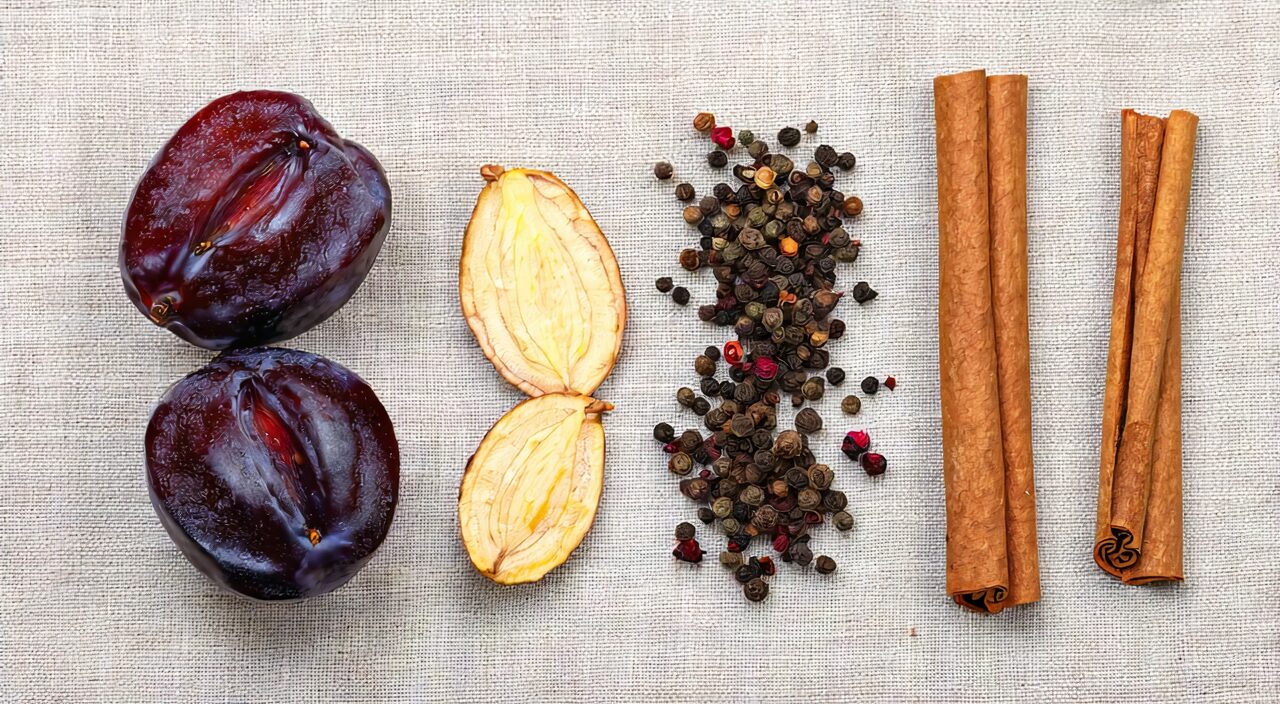
Wu Mei Wan originates from the Treatise on Cold Damage (Shang Han Lun). The original formula was used for “roundworm reversal” (hui jue) and Jueyin disease with mixed cold and heat. Nowadays it is more often re-understood from the perspective of harmonizing the stomach and intestines, and treating chronic diarrhea and dysentery. Its core features are the combined use of cold and hot medicinals, simultaneous supplementation and purgation, while also taking into account sour astringency and acrid dispersing.
The specific composition is as follows:
| Medicinal | Rough Action Direction in the Formula |
|---|---|
| Wu Mei (heavy dose) | Sour and astringent, astringes and generates fluids, calms roundworms |
| Huang Lian, Huang Bai | Bitter and cold, clear heat and dry dampness |
| Fu Zi, Gan Jiang, Gui Zhi, Xi Xin, Shu Jiao | Acrid and hot, warm the middle and disperse cold |
| Ren Shen, Dang Gui | Sweet and warm, tonify qi and nourish blood |
From the combination, it can be seen that this formula does not merely target single cold or heat, but attempts to simultaneously address the relationships of “upper heat” and “lower cold,” and “deficiency” and “excess” within a complex situation.
Traditionally, it is considered to be related to the Jueyin channel. Jueyin is where the two yins intersect and end, and where yin ends and yang arises. The disease condition easily manifests with alternating cold and heat, and disharmony between the upper and lower. Wu Mei Wan precisely corresponds to this state.
Possible Suitable Conditions for Wu Mei Wan

Wu Mei Wan is not suitable for all diarrhea or abdominal pain. Traditionally, it tends to be considered for people who show the following types of manifestations simultaneously, but the final suitability must be judged in combination with the tongue, pulse, and overall condition.
Typical Manifestations of Upper Heat and Lower Cold, Mixed Cold and Heat
- Upper heat: bitter taste, dry mouth, dry throat, irritability, tendency to get “fire,” flushed face or acne.
- Lower cold: abdomen fears cold, loose stools, cold hands and feet, even abdominal cold pain that is relieved by warmth.
These two seemingly contradictory manifestations occurring simultaneously in one person is an important reference indication for Wu Mei Wan.
Chronic Diarrhea, Protracted Diarrhea and Dysentery
For diarrhea or dysentery with a long disease course and recurrent attacks, especially when tenesmus is not obvious, stools are sometimes loose and sometimes sticky, even with a little mucus, along with weak digestive function and mental fatigue, Wu Mei Wan may traditionally be an optional direction.
It differs from the approach of simply astringing or clearing heat and draining dampness; instead, it attempts to find a balance between warming, tonifying, and clearing.
Some Pain Related to Jueyin
For example, recurrent abdominal cramping pain, periumbilical discomfort that worsens with cold, but with contradictory manifestations of irritability and heat sensation, are also often discussed within the scope of Wu Mei Wan. However, for such issues organic diseases must first be ruled out, and careful identification should be conducted under professional guidance.
Unsuitable Populations or Conditions for Wu Mei Wan
Every formula has its clear boundaries, and Wu Mei Wan is no exception. The following conditions are generally not considered suitable for referring to this formula, or at least require extremely careful evaluation:
- Pure cold pattern: If there is only abdominal cold pain, preference for warmth and pressure, clear and thin stools, without heat signs such as bitter taste or irritability, then a direction more inclined to warming the middle and dispersing cold should be considered. The bitter-cold medicinals in Wu Mei Wan could instead aggravate the discomfort.
- Pure heat pattern or acute damp-heat diarrhea/dysentery: For rapid onset, burning foul-smelling stools, obvious tenesmus, red tongue with yellow greasy coating, the traditional approach is mainly clearing heat and draining dampness. It is not suitable to use formulas like Wu Mei Wan that emphasize warming and supplementing and sour astringency.
- Acute infection or severe illness: When there is high fever, severe abdominal pain, frequent vomiting, obvious dehydration, or acute severe signs such as bloody stools, black stools, or severe tenesmus, priority should be given to seeking medical attention, rather than self-referencing formula regulation.
- Pregnant women, infants, young children, and those with special constitutions: For these populations, situations are special, and any formula must be decided after strict evaluation by a physician; self-judgment is not allowed.
- Those with other complex diseases: For example, severe heart disease, liver or kidney insufficiency, etc. The use of some acrid-hot or bitter-cold medicinals in Wu Mei Wan requires extra caution and must be comprehensively evaluated by a physician.
Differences Between Wu Mei Wan and Ban Xia Xie Xin Tang and Other Formulas
Many formulas involve issues of cold and heat disharmony in the stomach and intestines, which can easily cause confusion. Below is a directional comparison between Wu Mei Wan and several common formulas to help understand their different emphases.
| Formula | Emphasis and Characteristics |
|---|---|
| Wu Mei Wan | Tends towards Jueyin mixed cold and heat, with prominent upper heat and lower cold, often accompanied by chronic diarrhea and dysentery, abdominal pain that comes and goes, irritability and bitter taste; stronger sour astringency, tonifies deficiency while addressing both qi and blood. |
| Ban Xia Xie Xin Tang | Tends towards epigastric fullness and distension (stuffiness and blockage in the stomach area), accompanied by borborygmus and diarrhea; cold and heat bind in the middle burner, mainly using acrid opening and bitter descending, simultaneous attack and supplementation but not emphasizing astringency. |
| Huang Lian Tang | Emphasizes abdominal pain and desire to vomit due to upper heat and lower cold, pain mostly above the navel or in the epigastrium; heavier dosage of Huang Lian, with more focused power to clear upper heat. |
| Li Zhong Tang | Aims at pure deficiency-cold of spleen and stomach, mainly warming the middle, dispersing cold, tonifying qi and strengthening the spleen, with no bitter-cold medicinals. Suitable for aversion to cold, cold pain in the abdomen, loose stools, cold hands and feet, without heat signs. |
| Ge Gen Qin Lian Tang | Tends towards damp-heat diarrhea, with unresolved external pathogens and exuberant internal heat, manifesting as body heat, diarrhea, anal burning, thirst; method is clearing the interior and venting the exterior, which differs greatly from Wu Mei Wan’s combined cold and hot, sour astringency to calm the middle approach. |
In short, if mixed cold and heat is the core, Wu Mei Wan is more suitable for those with upper heat, lower cold, chronic diarrhea, abdominal pain, and obvious deficiency signs; if the main symptoms are epigastric fullness, borborygmus, and diarrhea, Ban Xia Xie Xin Tang may be the preferred direction. As for which specific formula to choose, it is still recommended to combine detailed four-diagnosis analysis, rather than self-matching based on just one or two symptoms.
If you wish to further understand related formulas, you can refer to the detailed analysis of Ban Xia Xie Xin Tang, Huang Lian Tang, Li Zhong Tang, and Ge Gen Qin Lian Tang. Comparing them together will better help understand their respective characteristics and applicable boundaries.
Summary
As a classical formula that uses both cold and hot medicinals, Wu Mei Wan is traditionally suitable for complex manifestation types such as Jueyin mixed cold and heat, upper heat and lower cold, chronic diarrhea and dysentery. Its composition integrates sour astringency, bitter-cold, acrid-hot, and sweet tonification, giving it a very clear direction, but this also raises the requirement for pattern differentiation.
Not all diarrhea and abdominal pain can use Wu Mei Wan. Pure cold patterns, pure heat patterns, as well as acute severe infections are outside its conventional scope of consideration. Compared with other formulas that regulate the stomach and intestines, Wu Mei Wan leans more towards sour astringency to calm roundworms, regulating cold and heat while supplementing deficiency, and needs to be differentiated based on specific constitution and symptoms.
This article is for informational reference only and cannot replace professional diagnosis or treatment advice. When persistent, recurrent, or severe symptoms exist, please be sure to consult a healthcare professional and make judgments based on individual conditions.