
Who Should Use Bao He Wan? Composition, Benefits, and Contraindications Explained

After holiday feasts, gatherings with friends, or simply eating a bit too much variety, many people experience bloating in the stomach and abdomen, continuous sour belching, and even speaking with a sour, putrid smell. In traditional Chinese medicine, this temporary digestive “stagnation” is often categorized as “food accumulation” or “food stagnation.” Bao He Wan is a classic formula designed precisely for food stagnation and failure of stomach qi to descend. Many overseas users wonder: what situations is it suitable for? Can it be used whenever there is indigestion? To understand Bao He Wan, it is best to first clarify its compositional direction, the typical manifestations it addresses, and the conditions in which it is actually not appropriate.
Origin and Composition of Bao He Wan
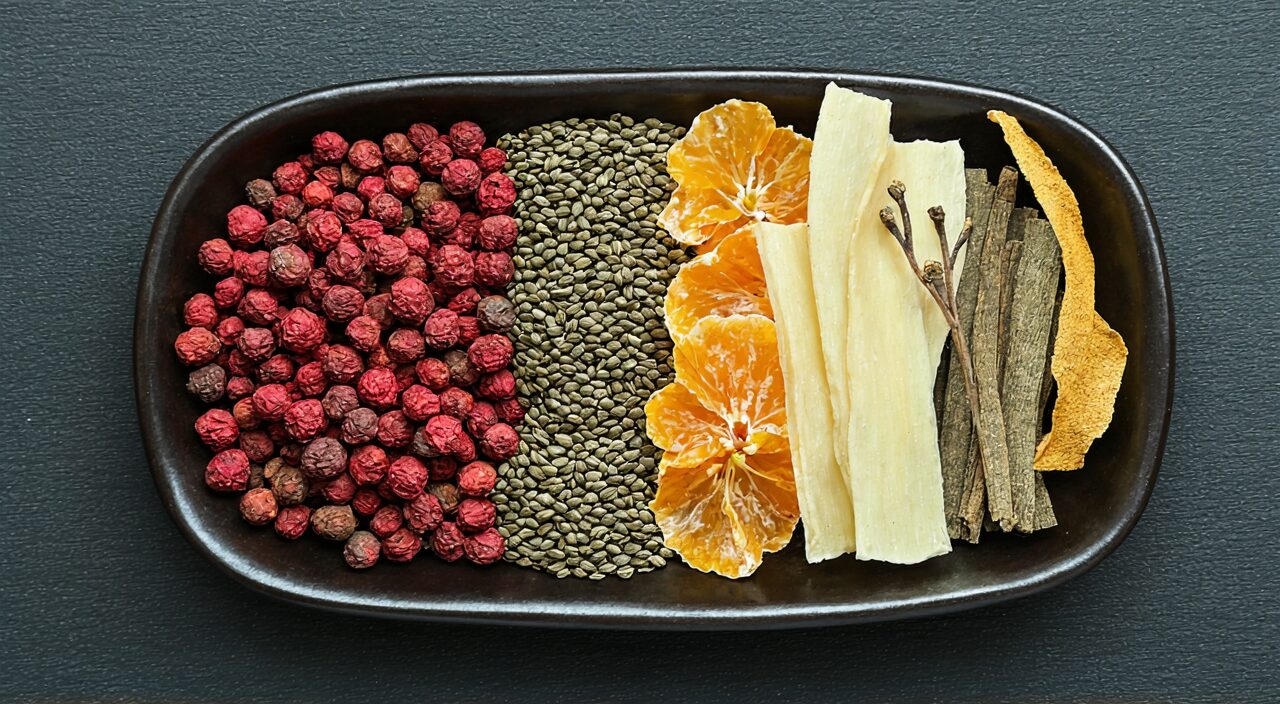
Bao He Wan originates from the Danxi Xin Fa by Zhu Zhenheng, a physician of the Yuan Dynasty, and remains a representative formula for resolving food stagnation in Chinese medicine. Its combination is not complicated, yet it addresses several aspects including digesting food accumulation, regulating qi, transforming dampness, and clearing stagnated heat. Its overall action tends toward “reducing” rather than “tonifying.”
| Herb Name | General Role in the Formula |
|---|---|
| Hawthorn (Shan Zha) | Resolves accumulation of meat and greasy foods; also moves blood and dissolves stasis |
| Medicated Leaven (Shen Qu) | Resolves accumulation from alcohol and old stale food; fortifies the spleen and harmonizes the stomach |
| Radish Seed (Lai Fu Zi) | Resolves accumulation of flour-based foods and phlegm; directs qi downward and relieves distension |
| Pinellia (Ban Xia) | Dries dampness and transforms phlegm; directs rebellious qi downward and stops vomiting |
| Tangerine Peel (Chen Pi) | Regulates qi and dries dampness; facilitates qi movement in the middle burner |
| Poria (Fu Ling) | Fortifies the spleen and leaches out dampness; calms the heart and settles the middle |
| Forsythia (Lian Qiao) | Clears heat and dissipates masses; resolves accumulated heat from food stagnation |
Hawthorn, Medicated Leaven, and Radish Seed respectively target accumulation from meat, alcohol, and flour-based foods, creating a fairly broad coverage for resolving food stagnation. Tangerine Peel, Pinellia, and Poria move qi and transform dampness, helping restore the normal downward flow of stomach qi. A small amount of Forsythia is intended to clear away the stagnated heat generated by prolonged food accumulation. As a whole, this formula is more about helping the body expel temporarily stagnant food and turbid qi, rather than adding power to a weak spleen and stomach.
How Traditional Chinese Medicine Understands the Effects of Bao He Wan
From the perspective of traditional Chinese medicine, the core function of Bao He Wan can be summarized as “resolving food stagnation, guiding out accumulations, and harmonizing the stomach to regulate the middle.” The emphasis on “resolving” here refers to helping break down and move accumulations downward, which is a completely different therapeutic approach from “tonifying.”
When food intake is excessive or too rich and greasy, exceeding the spleen and stomach’s temporary capacity for transformation and transportation, food is likely to become stagnant in the middle burner, forming food accumulation. Unresolved food accumulation will, on the one hand, obstruct the qi mechanism, causing abdominal distension and a feeling of fullness and oppression. On the other hand, if the accumulation lingers for a while, it may generate heat due to stagnation, which is reflected on the tongue coating as thick, greasy, or even yellowish fur, and in terms of odor as sour, foul breath and sour, smelly stools. Bao He Wan addresses this chain of interrelated changes precisely through its combination of digesting food accumulation, regulating qi, transforming dampness, and clearing heat.
However, it must be noted that it mainly plays a role during the “excess” phase of food accumulation. If an individual’s spleen and stomach function is chronically weak in itself, without a clear trigger of overindulgence, then it is likely not within the traditional scope of application for Bao He Wan. This point is crucial for understanding who is suitable and who is not.
Situations Where Bao He Wan May Be Considered
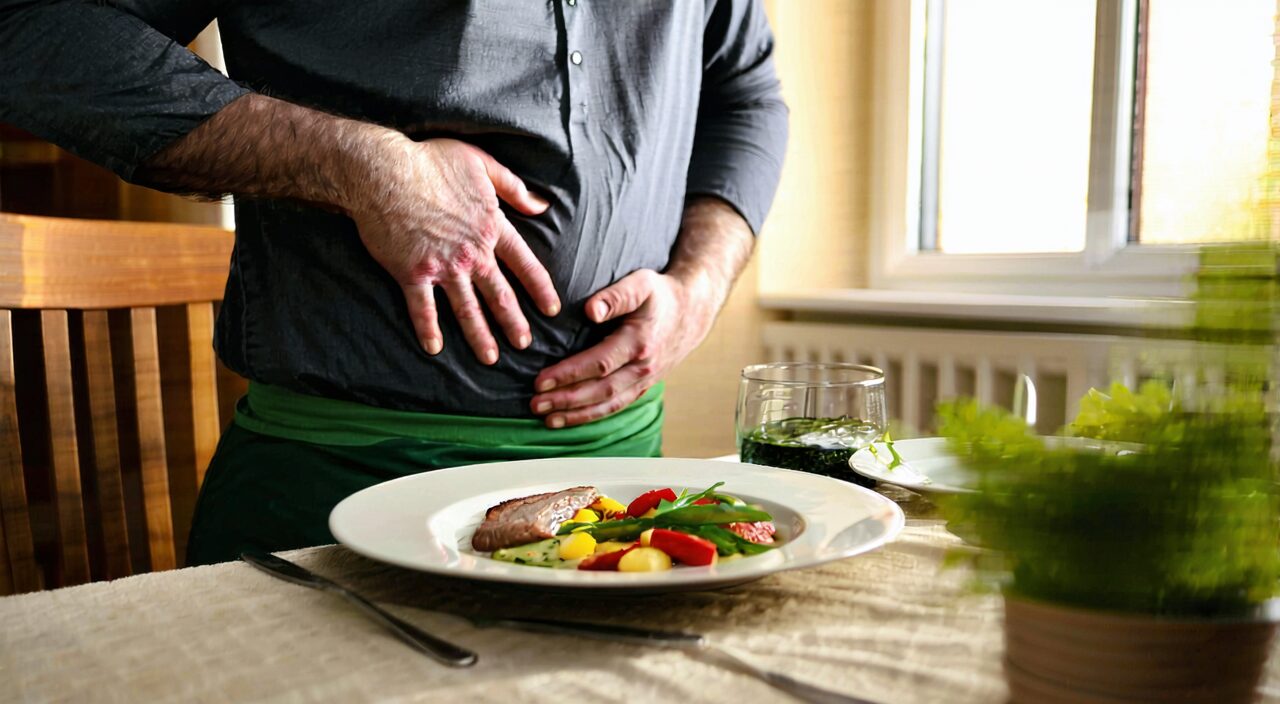
The following types of manifestations, in the view of traditional Chinese medicine, can serve as directions for understanding Bao He Wan if they are indeed related to improper diet and food stagnation. However, whether it is truly suitable still needs to be judged in combination with constitution and comprehensive symptoms, and one should not make a decision based on just one or two signs.
- Stomach and abdominal distension after overeating: After a meal or within a short period, having consumed a large amount and a wide variety of food, you clearly feel bloating and discomfort in the stomach or entire abdomen. Pressing on it worsens the distension, sometimes to the point where even clothing feels uncomfortably tight.
- Putrid belching and acid regurgitation, sour belching: Belching carries a distinct sour, putrid smell, like the sour, spoiled odor of fermented food. The tongue coating is often thick and greasy. This type of belching is quite different in odor from ordinary upward rebellion of stomach qi, often indicating that undigested food remains in the stomach.
- Strong, sticky bad breath: The mouth does not feel fresh, especially noticeable in the morning. You can sense the unpleasant odor yourself when talking, and others nearby might smell it too. This is different from simple oral hygiene issues and is more related to turbid qi from the middle burner rising upward.
- Incomplete or unsatisfactory bowel movements, or stools with undigested food: After defecation, there is a feeling of incomplete evacuation. The stool may be sticky in texture with a sour, foul, and pungent odor. Sometimes undigested food residue is visible (though seeing occasional traces of residue in daily life is not necessarily equal to food accumulation).
- Thick, greasy, and slightly yellow tongue coating: The tongue surface is covered with a relatively thick coating, which may be white-greasy or slightly yellow. A yellowish coating often suggests that the accumulation has begun to generate heat and can serve as an auxiliary reference indicator.
These manifestations are commonly seen after a short-term dietary indiscretion rather than persisting over many years. If a person only occasionally experiences such situations due to gatherings or festive occasions, without accompanying severe pain, fever, or vomiting, the approach of resolving food stagnation and guiding out accumulations might traditionally be considered. But even if the pattern seems very typical, it does not mean it can be used casually. After all, individual constitutional foundations and cold-heat tendencies differ, and the specific adjustment of the formula’s composition often requires the grasp of an experienced professional.
Situations Requiring Caution or Where It Is Not Suitable
Bao He Wan primarily focuses on reducing and guiding out accumulations. If the direction is mistaken, not only will it fail to solve the problem, but it may also deplete the spleen and stomach qi. The following types of conditions generally warrant caution, and using Bao He Wan as a reference direction should even be avoided:
- Spleen-stomach deficiency with chronic low appetite and loose stools: Usually have a small appetite, feel easily tired and bloated after eating, have chronically unformed stools, a sallow complexion, and soft, flabby muscles. This situation is more likely due to spleen deficiency failing to transport, and what is needed is generally to fortify the spleen and boost qi to assist transformation and transportation, rather than simply using resolving and guiding herbs to “resolve.” Using the approach of Bao He Wan might further weaken the already insufficient spleen function.
- Stomach yin deficiency: Typical sensations include a dull, vague pain in the epigastric region, dry mouth with a desire for warm water, hunger without a desire to eat, and dry, difficult bowel movements. For such relatively “dry” and “deficient” states, applying herbs that resolve accumulation and transform dampness is like continuing to dry out an already dehydrated land, potentially further consuming fluids and humors.
- Acute severe abdominal pain, high fever, vomiting, or unrelenting diarrhea: Sudden severe abdominal pain, stabbing or colicky pain, accompanied by fever, frequent vomiting, watery diarrhea, etc., may indicate acute pancreatitis, intestinal obstruction, acute gastroenteritis, and other diseases, which fall under emergency conditions. One should not self-treat with any food-stagnation resolving formulas but must seek medical attention immediately.
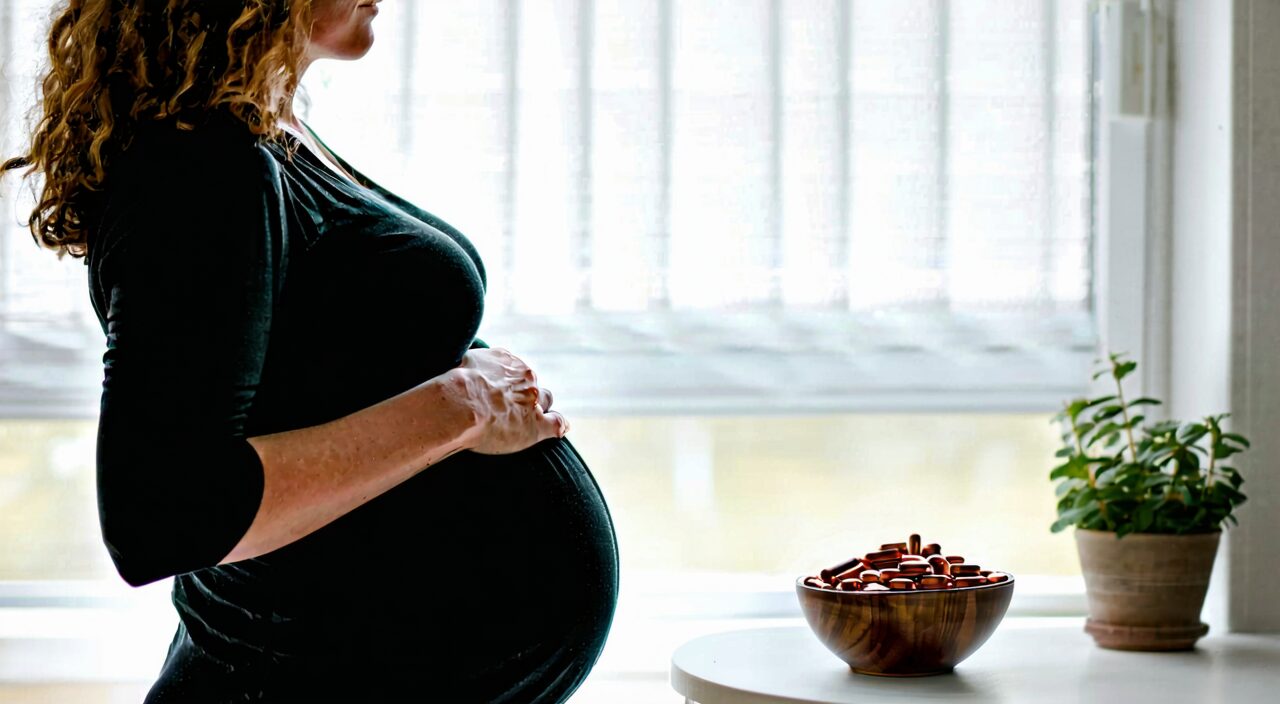
- Pregnant women, breastfeeding women, infants and young children, and the frail elderly: The physiological states of these groups are special. Even formulas traditionally considered relatively gentle are not suitable for use without close observation and professional guidance. For digestive issues, priority should also be given to dietary adjustments, small and frequent meals, and other physical interventions, seeking medical help when necessary.
- Recurrent food accumulation accompanied by weight loss, anemia, black stools, etc.: If abdominal distension and belching persist without relief, and the person is becoming increasingly thin, pale, or experiencing black stools, one must be alert to peptic ulcers or even more complex issues. This cannot be simply attributed to “eating too much and not digesting,” and further examination at a hospital is necessary.
Furthermore, if digestive symptoms are accompanied by significant palpitations, chest tightness, severe anxiety, or difficulty breathing, do not focus solely on regulating the stomach, as these may involve issues of the cardiopulmonary or emotional systems that require professional differentiation.
Differences Between Bao He Wan and Similar Formulas
In Chinese medicine, there are quite a few formulas that act on the digestive function of the middle burner, among which Zhi Shi Dao Zhi Wan, Jian Pi Wan, Xiang Sha Liu Jun Zi Tang, and Ping Wei San are often the ones compared. Understanding their respective emphases can prevent use in the wrong direction.
| Formula Name | Core Function | Main Applicable Manifestations | Key Difference from Bao He Wan |
|---|---|---|---|
| Zhi Shi Dao Zhi Wan | Resolves accumulation and attacks stagnation, clears and drains damp-heat | Food accumulation with internal damp-heat obstruction, constipation with tenesmus and a sense of urgency; accumulations that have already transformed into heat with relatively severe damp-heat and intestinal obstruction of excess type | Its action is more drastic than Bao He Wan, leaning toward “unblocking downward”; it is not the first choice when there is bloating but stools are still passable or are loose. |
| Jian Pi Wan | Fortifies the spleen primarily, resolves food accumulation secondarily, addressing both deficiency and excess | Spleen-stomach deficiency with weak transportation; feeling bloated even after eating a little more, easy fatigue, poor appetite, loose stools, and a puffy, scalloped tongue | The key lies in the proportional balance of “deficiency”; when deficiency predominates, use Jian Pi Wan; when excess predominates, Bao He Wan may be considered. |
| Xiang Sha Liu Jun Zi Tang | Boosts qi and fortifies the spleen, moves qi and transforms phlegm | Spleen-stomach qi deficiency with internal phlegm-dampness obstruction; epigastric fullness, belching, poor appetite, soft loose stools, and not closely related to food accumulation | Targets chronic insufficient spleen transportation with obstructed qi movement; its food-resolving power is weak, and Bao He Wan has difficulty taking effect here. |
| Ping Wei San | Dries dampness and invigorates the spleen, moves qi and harmonizes the stomach | Dampness obstructing the middle burner; epigastric and abdominal distension and fullness, bland taste in the mouth, heavy sensation in the body, white-greasy tongue coating | Focuses on transforming dampness and regulating qi, with weaker strength in resolving food accumulation; when bloating is not sour or putrid and the tongue coating is white-greasy and thick with a bland taste, its scope of application is approached. |
It can be seen that although these formulas all act on the middle burner, some lean toward attacking accumulations, some toward tonifying deficiency, and some toward transforming dampness. Without differentiating between deficiency, excess, cold, and heat, choosing based solely on the sensation of bloating makes it easy to go astray. Therefore, whether it is Bao He Wan or other formulas, they need to be comprehensively weighed based on a full understanding of constitutional characteristics and the root causes of symptoms, combined with professional advice.
Summary
Bao He Wan is a traditional formula designed around improper diet and food stagnation. It mainly targets “excess” manifestations such as stomach and abdominal distension and fullness, putrid belching and acid regurgitation, strong bad breath, and unsatisfactory bowel movements. Its overall approach is to resolve food stagnation, guide out accumulations, and harmonize the stomach to clear heat, rather than to tonify the spleen and stomach. Precisely because it primarily focuses on “resolving,” it is generally not suitable for people with spleen-stomach deficiency, stomach yin deficiency, or chronically weak digestive power. Although Zhi Shi Dao Zhi Wan, Jian Pi Wan, Xiang Sha Liu Jun Zi Tang, and Ping Wei San overlap in the area of action, their relative emphases on deficiency, excess, cold, and heat differ greatly and cannot substitute for one another.
In daily life, if brief distension and discomfort occasionally occur due to improper diet, one might consider understanding it from the perspective of resolving food stagnation. However, if digestive issues are chronic and recurrent, or accompanied by weight loss, black stools, or marked emotional fluctuations, one must go beyond the “food accumulation” mindset and undergo systematic evaluation and professional diagnosis and treatment. The content of this article is solely for the popularization of traditional Chinese medicine knowledge and cannot replace individualized diagnosis and treatment advice. The establishment of any therapeutic approach must be carefully decided after fully understanding the overall individual condition.