
Who Is Chuanxiong Chatiao San Suitable For? Composition, Effects and Contraindications

In daily health management, many people hear the name “Chuanxiong Chatiao San” and immediately associate it with headaches. In traditional Chinese medicine, this formula is indeed often used for certain specific headache situations, yet it is not suitable for all types of headaches. If one uses it blindly simply because of its reputation for “treating headaches,” one may overlook more important constitutional differences and underlying causes.
This article will explain its composition, traditional effects, suitable populations, contraindications, and how it differs from similar formulas, helping readers make more informed judgments based on understanding.
What Is Chuanxiong Chatiao San Used For?

In terms of traditional formula classification, Chuanxiong Chatiao San belongs to the category of formulas that disperse external wind, with the main purpose of relieving pain. It does not target all types of headaches, but rather focuses more on discomfort caused by “external wind pathogen” attacking the upper body, especially the head and face.
The characteristics of such headaches often include relatively rapid onset, a feeling of distending pain, wandering pain, or tightness in the head, sometimes accompanied by mild aversion to wind and nasal congestion.
If headaches occur repeatedly and are accompanied by obvious emotional stagnation, chronic sleep deprivation, or significant fluctuations in blood pressure, Chuanxiong Chatiao San may not be the first option to consider, which will be explained in detail later in this article.
Composition of Chuanxiong Chatiao San
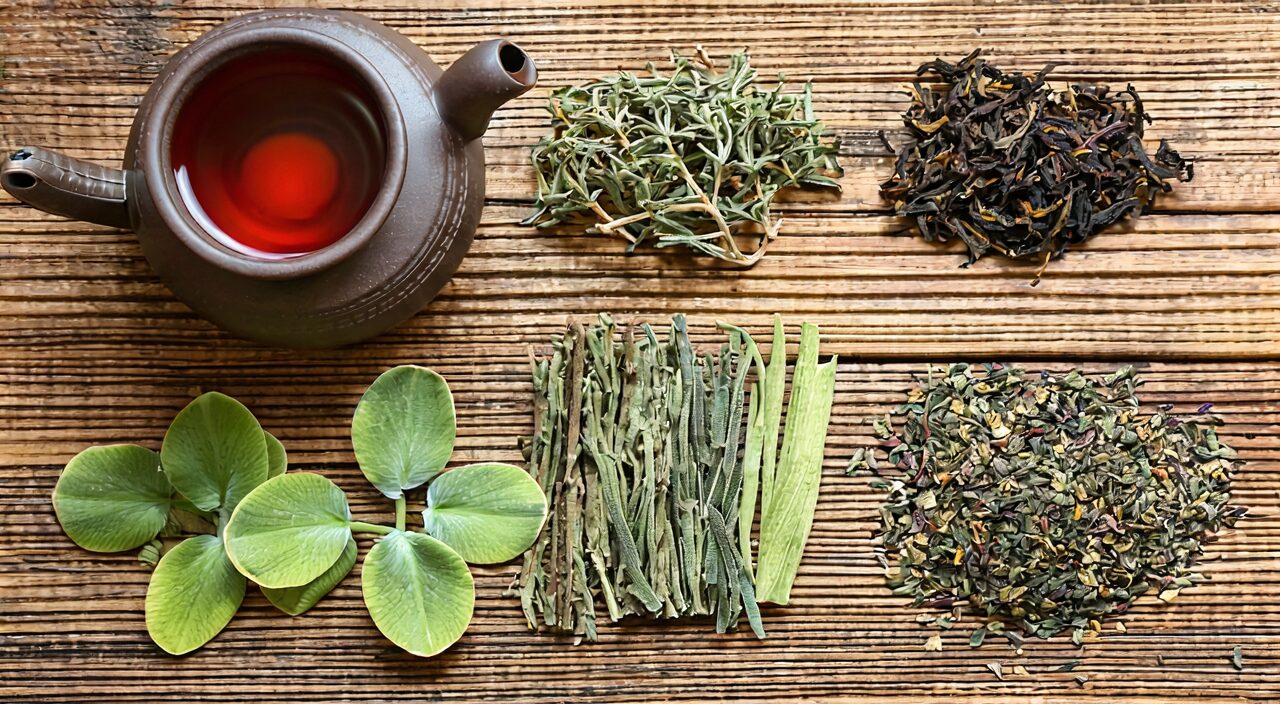
The composition of a formula is the foundation of its effects. Chuanxiong Chatiao San uses Chuanxiong (Ligusticum chuanxiong) as the sovereign herb, combined with other acrid herbs that disperse wind, and is especially taken with tea to clear and benefit the head and eyes. Its common composition is as follows:
| Herb | Traditional Role in the Formula |
|---|---|
| Chuanxiong (Ligusticum chuanxiong) | Ascends to the head and eyes, invigorates blood and moves qi, considered a key herb for headache |
| Baizhi (Angelica dahurica) | Opens the nasal passages, disperses wind pathogen, often used for pain in the forehead and eyebrow bone |
| Qianghuo (Notopterygium incisum) | Dispels wind and overcomes dampness, tends to address discomfort in the occipital region and upper back |
| Xixin (Asarum sieboldii) | Disperses cold and opens the orifices, guides the medicine into the Shaoyin channel, assists in pain relief |
| Fangfeng (Saposhnikovia divaricata) | Dispels wind and releases the exterior, widely used for wind pathogen in the head and face |
| Jingjie (Schizonepeta tenuifolia) | Disperses wind and expels pathogens, vents out external factors |
| Bohe (Mentha haplocalyx) | Disperses wind-heat, clears and benefits the head and eyes |
| Gancao (Glycyrrhiza uralensis) | Harmonizes all the other herbs |
Tea liquid plays a role in clearing the upper body and subduing rising qi, which is why the formula is called “tea-brewed” (Chatiao). Overall, the action of this group of herbs is relatively focused: it assists in dispersing external wind pathogen from the head and face, and cannot cover all types of headaches.
Who Is Generally Suitable for Chuanxiong Chatiao San?

Based on traditional use experience, this formula may be considered in the following situations:
- Head distension, wandering headache, or headache that worsens after exposure to wind following an external wind invasion;
- Headache accompanied by mild aversion to wind, nasal congestion, and slight stiffness in the neck;
- Headache location that is not fixed, sometimes on the top of the head, sometimes in the back of the head, sometimes on one side;
- A thin white tongue coating and a floating or floating tight pulse, overall leaning toward unresolved exterior syndrome.
In traditional pattern differentiation, such presentations are often summarized as “wind pathogen headache” or “external invasion headache.” If the symptoms match the above characteristics, it may suggest some correspondence with the therapeutic direction of Chuanxiong Chatiao San. However, even if the manifestations seem similar, a comprehensive assessment integrating personal constitution, tongue and pulse diagnosis, and other symptoms is still necessary. It is not advisable to choose this formula on one’s own based on just one or two features.
Who Should Not Use Chuanxiong Chatiao San?
If the headache is not primarily caused by external wind invasion but stems from constitutional imbalances or dysfunction of internal organs, using Chuanxiong Chatiao San may be inappropriate. The following conditions call for special caution:
Headache Due to Ascendant Liver Yang
This type of headache often presents as distending pain or throbbing pain, and may be accompanied by facial flushing, irritability, bitter taste in the mouth, and eye distension. Its root lies in internal wind disturbing the upper body, not external wind invasion.
Chuanxiong Chatiao San, being relatively acrid, dispersing and ascending, may aggravate the discomfort of internal yang hyperactivity. Therefore, headaches related to ascendant liver yang should not be taken as a reference option without professional assessment.
Constitution of Yin Deficiency and Flaming Fire
People who stay up late chronically and consume yin fluids tend to develop symptoms such as warm palms, malar flushing, dry mouth, night sweats, a red tongue with little coating, etc. If such a constitution further uses acrid, dispersing wind herbs as the main treatment, it may deplete yin and blood even more, making the head discomfort more unstable. So traditionally, those with yin deficiency and flaming fire are also considered unsuitable for this formula.
Headaches Related to Hypertension Without Clear Evaluation
When blood pressure is noticeably elevated and headaches are frequent, the top priority is to fully assess and manage the underlying condition. At this time, simply using the strategy of dispersing external wind may not touch the core of the problem, and the ascending and dispersing nature of some herbs in the formula needs to be carefully considered within the framework of blood pressure management. Priority must be given to modern medical evaluation and advice.
Special Populations
Pregnant women, breastfeeding women, children, and individuals with bleeding tendencies or those taking anticoagulant medications should not use this formula on their own, because herbs like Chuanxiong have certain influences on qi and blood circulation. Professional consultation is required in advance.
If a headache is accompanied by severe vomiting, changes in consciousness, neck stiffness, a sharp decline in vision, or follows a head injury, seek medical attention promptly and do not rely on any formula for self-treatment.
Distinguishing from Similar Formulas
Understanding the differences between various formulas helps explain why the traditional management approach for headache can differ completely. Below is a brief comparison of several formulas that are often mentioned together.
Yinqiao San
Yinqiao San focuses on dispersing wind-heat and is commonly used for the early stage of wind-heat colds, featuring fever, mild aversion to wind and cold, sore throat, thirst, etc. Although it can also address some mild head distension caused by wind-heat attacking the upper body, its core direction is to clear heat from the defensive level, unlike Chuanxiong Chatiao San, which specifically targets the head and eyes and emphasizes dispersing wind to stop pain.
If the headache is accompanied by obvious throat redness and swelling, red tongue tip and edges, and a floating rapid pulse, the direction of Yinqiao San may be more relevant.
Guizhi Tang
Guizhi Tang is a formula that harmonizes the nutritive and defensive levels and releases the muscle layer. It is commonly used for external wind-cold deficiency syndrome, such as aversion to wind, fever, sweating, and a floating relaxed pulse. It relatively excels at overall regulation of external symptoms caused by disharmony of nutritive and defensive qi, but its strength in directly targeting upward attacking wind pathogen, causing headache, is not as concentrated as Chuanxiong Chatiao San.
If the headache is only a minor part of the overall external symptoms and sweating with aversion to wind predominates, Guizhi Tang may be the more relevant approach to explore.
Chaihu Shugan San
Chaihu Shugan San emphasizes soothing the liver, regulating qi, invigorating blood, and stopping pain. It is often used for rib-side distension and pain and emotional distress due to liver qi stagnation. If headaches are closely related to mood swings, stress, chest oppression and frequent sighing, and the pain nature is mainly distension or tightness, the traditional perspective focuses more on liver qi not flowing freely. This is entirely different from the external wind headache that Chuanxiong Chatiao San addresses. Confusing the two may easily lead to a mistaken therapeutic direction.
Xuefu Zhuyu Tang
Xuefu Zhuyu Tang mainly works by invigorating blood, removing blood stasis, moving qi, and stopping pain. It is often used for chest pain, chronic headache with fixed stabbing pain sensation, a dark tongue with stasis spots, and other conditions caused by internal blood stasis. This type of headache usually has a fixed location and a longer disease course, fundamentally different from the wandering wind-pathogen headache that Chuanxiong Chatiao San targets.
If headaches are long-term and recurrent with obvious signs of blood stasis, traditionally the therapeutic exploration may shift toward blood-stasis-removing formulas like Xuefu Zhuyu Tang.
The above comparison is only to illustrate that while headache appears simple, it can involve wind, cold, heat, depression, stasis, deficiency and many other factors. The applicable boundaries between different formulas are very clear. Without a foundation in pattern differentiation, it is not advisable to self-identify based solely on formula names or rough impressions.
Summary
Chuanxiong Chatiao San, as a traditional formula for dispersing external wind and relieving pain, mainly suits headaches, nasal congestion, and aversion to wind caused by external wind invasion. Its composition centers on acrid, dispersing herbs like Chuanxiong, Baizhi, and Qianghuo, with a rather focused action. If the headache belongs to patterns such as ascendant liver yang, yin deficiency and flaming fire, or unstable blood pressure without proper control, it is generally not suitable. Meanwhile, Yinqiao San, Guizhi Tang, Chaihu Shugan San, Xuefu Zhuyu Tang and other formulas each have a different therapeutic emphasis, and differentiation must be based on specific symptoms and constitution.
This article provides informational reference from the perspective of traditional formula studies only and does not constitute any usage advice. If headaches recur frequently, are severe, or are accompanied by notable abnormalities in mood, sleep, or blood pressure, be sure to consult a professional physician and determine the management direction based on a comprehensive evaluation.