
Who Is Da Cheng Qi Tang Suitable For? Composition, Effects, and Contraindications

Many people, when experiencing bloating and constipation, consider finding a traditional formula to “clear things out.” As a classic potent purgative from the Treatise on Cold Damage (Shang Han Lun), Da Cheng Qi Tang (Major Order the Qi Decoction) indeed plays an important role in draining the bowels and clearing heat, but it is not suitable for all types of constipation or abdominal distension. Understanding what constitution and stage it fits, and who should avoid it, is more meaningful than simply “knowing the formula.”
This article, from a Chinese medicine perspective, outlines the composition, traditional applications, typical indications, contraindicated groups, and compares it with several commonly confused formulas, providing a reference for those who need to know.
Da Cheng Qi Tang Is the Representative Formula for Forcefully Purging Heat Accumulation
In traditional Chinese medicine, when dealing with “heat accumulation” issues, formulas of different strengths are used depending on the situation. Da Cheng Qi Tang belongs to the category with strong purgative power, mainly targeting Yangming bowel excess pattern — simply put, a condition where pathogenic heat binds with waste in the intestines, forming an interior heat excess state.
In the Treatise on Cold Damage, Da Cheng Qi Tang’s core action is to forcefully purge heat accumulation and drain the bowels to clear heat. It is often used for symptoms such as abdominal distension, fullness, hardness, and pain; no bowel movement or extremely dry, difficult stools; accompanied by fever, sweating, thirst, and a dry yellow or even burnt-black, prickly tongue coating.
Unlike gentle, lubricating, bowel-moistening formulas, it uses strong bowel-draining force to allow the heat accumulation to be resolved from below. Therefore, in traditional Chinese medicine practice, it is always used very cautiously: once the heat accumulation is removed, it should be discontinued or the approach adjusted; it is not suitable for long-term reliance.
Composition and Synergistic Characteristics of Da Cheng Qi Tang
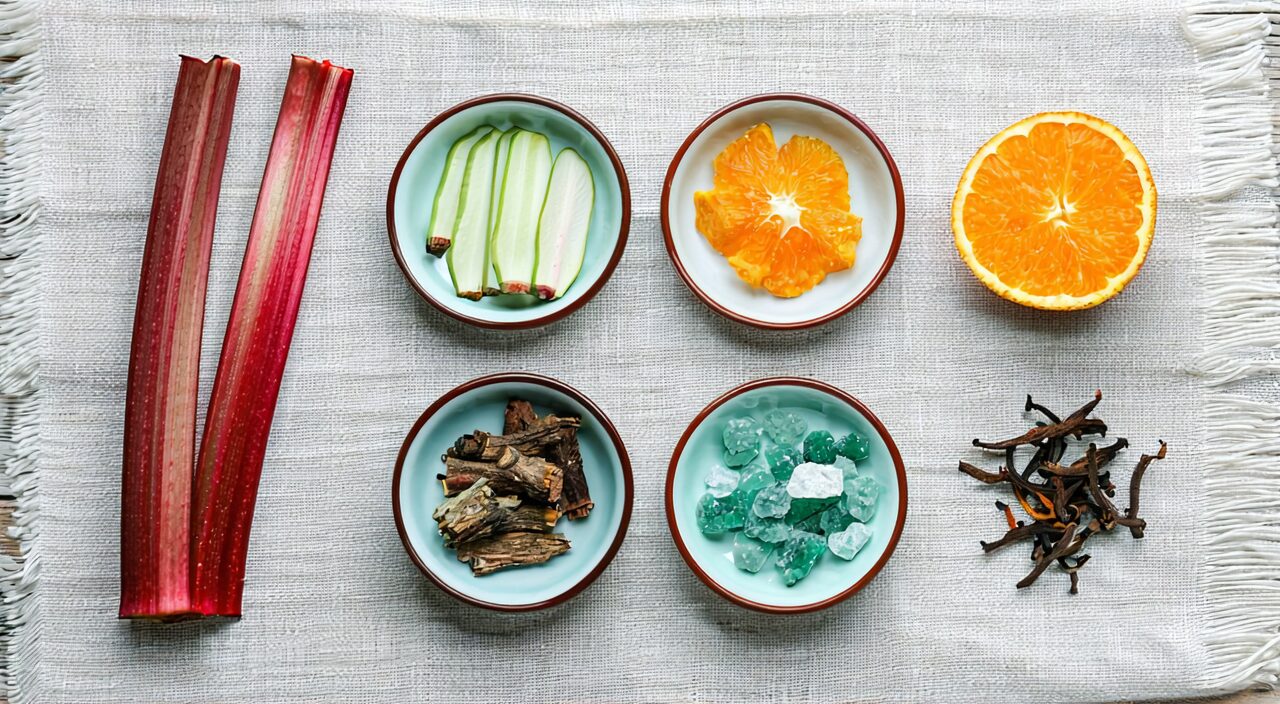
Da Cheng Qi Tang consists of four ingredients. Although the number of herbs is small, its purgative power is focused and strong. The combination is not a simple addition but follows the principle of “urgently draining to preserve yin.” Below is a brief summary table of its basic composition and traditional uses:
| Herb | Brief Traditional Application |
|---|---|
| Da Huang (Rhubarb) | Breaks up stagnation, drains the bowels and clears heat; the main purgative force in the formula |
| Mang Xiao (Glauber’s Salt) | Moistens dryness and softens hardness, helps promote bowel movement and dissipate masses |
| Hou Po (Magnolia Bark) | Widens the middle, moves qi, and relieves fullness, targeting abdominal distension and bloating |
| Zhi Shi (Immature Bitter Orange) | Breaks qi and disperses accumulations, strengthens the power to move qi and remove stagnation |
Together, these four herbs form a synergistic force centered on “draining, descending, breaking, and moving,” mainly addressing severe excess heat accumulation in the abdomen. If used without clear signs of heat accumulation and excess stagnation, it can easily damage qi and blood. Therefore, in traditional application, Da Cheng Qi Tang has always been regarded as a formula requiring strict pattern differentiation, never a simple “take this for constipation” choice.
Which Conditions May Be Suitable for Considering the Da Cheng Qi Tang Approach

In the Chinese medicine pattern differentiation system, the approach of Da Cheng Qi Tang mainly corresponds to the typical manifestations of Yangming bowel excess pattern. If a person simultaneously or successively presents multiple of the following features, the traditional thinking might then include formulas that forcefully purge heat accumulation, but it still requires assessment by an experienced Chinese medicine practitioner:
- Abdominal distension, fullness, and hardness, even refusing pressure; no bowel movement for several days, or extremely dry, difficult stools;
- Body fever, with pronounced afternoon or evening tidal fever, excessive sweating on the hands and feet;
- Thirst with a desire for cold drinks, dry yellow, thick, greasy tongue coating, or even burnt-black and prickly;
- Mental symptoms such as irritability or delirious speech, often indicating deeper heat accumulation.
These manifestations are more often seen during infectious disease processes, after high fevers, or in some acute abdominal conditions, rather than common indigestion or occasional constipation. Therefore, if someone only experiences occasional dry stools, without obvious abdominal hardness, fullness, and pain, and without such extreme tidal fever or tongue coating changes, the Da Cheng Qi Tang direction may not be appropriate. More commonly, what people need is dietary adjustment, lifestyle changes, or relatively gentle formulas that moisten the intestines and move qi.
Which Groups Need Special Caution or Should Avoid It
Because Da Cheng Qi Tang’s purgative power is strong and drastic, quite a few groups should not easily consider this formula, otherwise it may cause unnecessary burden:
- Deficiency-type constipation: such as difficulty defecating due to qi deficiency failing to propel, or dry stools caused by blood deficiency and intestinal dryness. This type of constipation usually has a soft abdomen that prefers pressure, and a pale tongue, and is not suitable for drastic purgation;
- Pregnant women and those during menstruation: purgative herbs are generally considered with caution or contraindicated, to avoid effects on the uterus;
- The elderly, children, and those with chronic illness or weakness: these individuals tend to have relatively deficient qi and blood, and often cannot withstand the attacking force of Da Cheng Qi Tang;
- Those with unexplained abdominal pain: when severe abdominal pain of unknown cause occurs, it may be an acute abdomen; one should never take any strong purgative formula blindly but instead seek modern medical evaluation first;
- Special constitutions or those with underlying diseases: such as severe cardiac, hepatic, or renal dysfunction, or structural intestinal diseases, require comprehensive professional judgment.
If constipation and bloating recur, or are accompanied by weight loss, black stools, persistent abdominal pain, vomiting, chest tightness, palpitations, or anxiety/depression, one should first seek medical clarification of the cause rather than looking for a purgative formula on their own. The “purgation method” in Chinese medicine is only safe within certain indications.
Differences Between Da Cheng Qi Tang and Ma Zi Ren Wan, Zhi Shi Dao Zhi Wan, Bao He Wan, and Bai Hu Tang
Many people compare Da Cheng Qi Tang with several other formulas because they may all be associated with “constipation, bloating, heat,” but each targets a completely different situation. The following table compares their core differences:
| Formula | Action Direction | Typical Indications Reference | Key Difference from Da Cheng Qi Tang |
|---|---|---|---|
| Ma Zi Ren Wan | Moistens intestines, mild purgative | Spleen-constraint pattern: intestinal dryness-heat of slower progression, fluid insufficiency, dry stools, frequent urination, abdomen not necessarily hard and refusing pressure | One is gentle and one is urgent; it targets deficiency with excess, while Da Cheng Qi Tang targets acute Yangming bowel excess |
| Zhi Shi Dao Zhi Wan | Removes food stagnation, guides out accumulations, clears damp-heat | Food stagnation with damp-heat binding, epigastric and abdominal distension and pain, diarrhea/dysentery with tenesmus or constipation, greasy yellow tongue coating | Focuses on stagnation and damp-heat; the depth and urgency of heat accumulation are usually milder than Da Cheng Qi Tang |
| Bao He Wan | Disperses food and guides stagnation, gentle action | Food accumulation, belching with rotten smell, acid regurgitation, milder abdominal fullness | Almost no heat-purging effect, unsuitable for severe excess heat; very different direction |
| Bai Hu Tang | Clears heat without purging | Large heat in Yangming qi level: high fever, great sweating, great thirst, flooding large pulse, without bowel excess dry accumulation | Only clears invisible heat, does not drain the bowels; if bowel excess has formed, Bai Hu Tang alone is usually insufficient |
Distinguishing “qi-level heat” from “bowel excess heat accumulation” is key to understanding Da Cheng Qi Tang. As can be seen, even when both “heat” and “intestinal symptoms” are involved, the differences between formulas often lie in the subtle distinctions of disease location, disease severity, and deficiency/excess. No formula should be simply matched by label; it requires combination with individual constitution, symptom characteristics, and professional pattern differentiation to determine if it falls within the reference range.
Summary
Da Cheng Qi Tang is a classic formula for forcefully purging heat accumulation in Chinese medicine, primarily targeting the severe stage of Yangming bowel excess pattern with interior heat and compacted accumulation. Typical manifestations include abdominal pain, distension, hardness refusing pressure, no bowel movement, tidal fever, thirst, and dry yellow tongue coating. It is not a routine choice for general constipation, and even less suited for deficiency-type constipation, pregnant women, the elderly, children, and various situations with unexplained abdominal pain.
If you are looking for a regulating approach, it is often better to start from gentler, constitution-appropriate directions, such as dietary adjustments, regular lifestyle, or understanding under professional guidance the different applicable ranges of formulas like Ma Zi Ren Wan, Zhi Shi Dao Zhi Wan, Bao He Wan, etc. The use of any formula should always be based on accurate pattern differentiation and standardized guidance to avoid risks. This article is only for sharing traditional Chinese medicine knowledge and cannot replace professional diagnosis or treatment advice.