
Who Is Huoxiang Zhengqi San Suitable For? Composition, Effects, and Contraindications Explained

When encountering traditional Chinese medicine formulas abroad, many people find the name “Huoxiang Zhengqi San” familiar, but they may not know exactly what conditions it is suitable for and who should avoid it. Especially during seasonal transitions, hot and humid weather, or when feeling heavy body, abdominal bloating, and nausea due to dietary or environmental changes, this formula often comes to mind.
From the perspective of traditional Chinese medicine, this article will sort out the composition of Huoxiang Zhengqi San, the common symptoms it addresses, contraindications to note, and brief comparisons with similar formulas, helping readers build a relatively clear foundational understanding.
The Traditional Role of Huoxiang Zhengqi San
In traditional Chinese medicine, it is not viewed simply as a heat-clearing formula nor merely a “cold remedy,” but rather understood from the perspective of “wind-cold with dampness” and “qi movement stagnation.” When external cold and dampness affect the body simultaneously, or when indulgence in cold, consumption of raw and cold foods, or living in damp environments obstructs the spleen and stomach qi, a series of “simultaneous exterior-interior patterns” may arise.
In this situation, it is necessary to address discomfort on the body surface while regulating the qi of the middle burner. Huoxiang Zhengqi San is formulated with this approach.
Composition of Huoxiang Zhengqi San
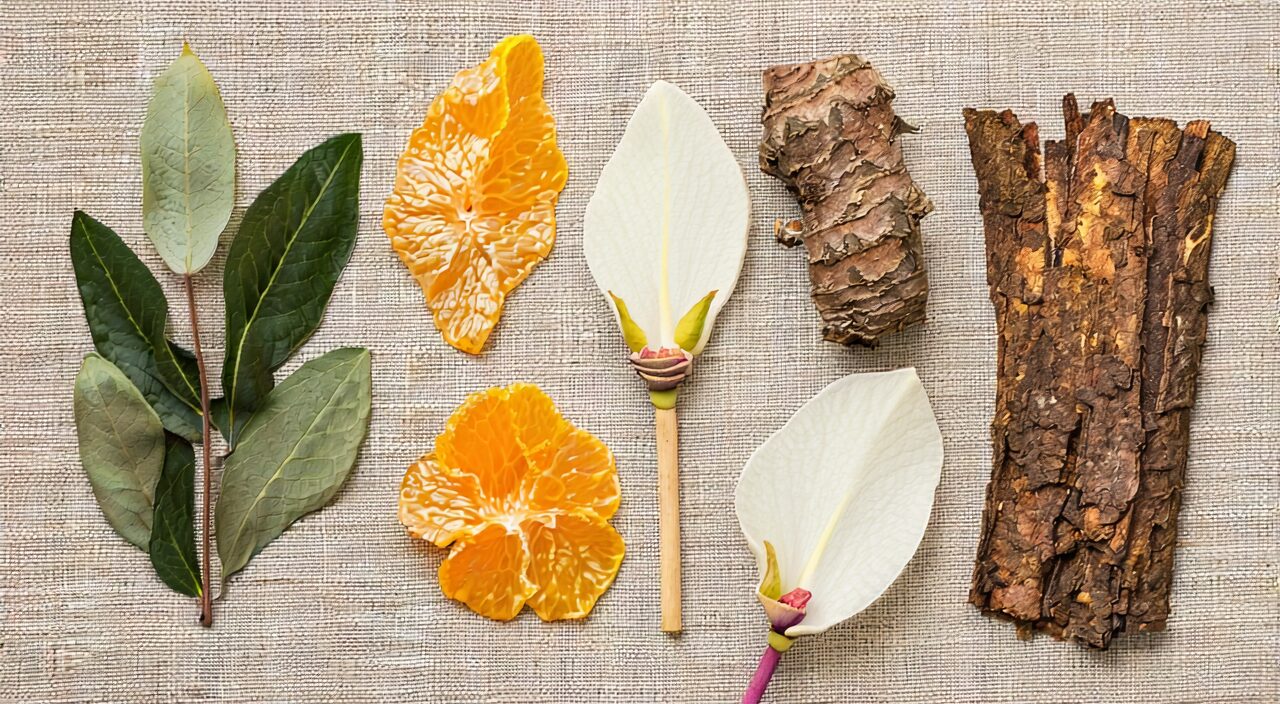
The classic composition of Huoxiang Zhengqi San is recorded in ancient texts such as the “Taiping Huimin Heji Ju Fang” (Prescriptions from the Great Peace Imperial Grace Formulary). In different medical books or for different usage scenarios, the herbs may be slightly adjusted, but the core medicinal direction remains relatively fixed. Below is a commonly cited composition reference:
| Herb | General Functional Role |
|---|---|
| Huoxiang | Aromatic transforms dampness, regulates qi and harmonizes the middle, addresses both exterior and interior |
| Zisuye | Releases exterior wind-cold, assists Huoxiang in relieving the exterior |
| Baizhi | Dispels wind and eliminates dampness, opens the orifices and relieves pain |
| Chenpi | Regulates qi and strengthens the spleen, dries dampness and transforms phlegm |
| Houpo | Moves qi and transforms dampness, descends rebellious qi and reduces distension |
| Fuling | Strengthens the spleen and leaches out dampness, promotes urination and awakens the spleen |
| Baizhu | Strengthens the spleen and dries dampness, aids transportation and transformation |
| Dafupi | Moves qi and relaxes the middle, promotes water and reduces swelling |
| Banxia Qu | Descends rebellious qi to stop vomiting, harmonizes the stomach and transforms phlegm |
| Jiegeng | Opens and disperses lung qi to facilitate the smooth flow of qi |
| Gancao | Harmonizes the other herbs, and also tonifies the middle qi |
Together, these herbs are traditionally summarized as “treating the exterior and interior simultaneously, with an emphasis on the interior; using ascending and descending actions together, with the interdependence of ascending and descending being key.” The core direction is to release the exterior and transform dampness, regulate qi and harmonize the middle.
It should be noted that versions circulating in different households or regions may vary slightly, and actual use should be based on specific literature or professional guidance.
Symptoms That May Be More Commonly Addressed

Huoxiang Zhengqi San is not a universal approach for regulation. Traditionally, it is most frequently mentioned for the following clustered discomfort patterns:
- Chills and fever, with the fever generally not very high, accompanied by heaviness of the head and body, and a feeling of mental cloudiness or grogginess
- Chest stuffiness and abdominal distension, feeling of fullness and discomfort in the stomach, lack of appetite
- Nausea and vomiting, especially prone to occur in hot and humid weather or after slight dietary indiscretions
- Loose stools or diarrhea, but without notable burning sensation or foul odor; rather it tends to be characteristic of cold-damp or summer-damp
- White, greasy or thick tongue coating, absence of dry mouth, or dry mouth with no desire to drink water
These symptoms, from a TCM perspective, are often related to external contraction of wind-cold with dampness, internal invasion of summer-damp, or qi stagnation of the spleen and stomach. If readers see some of their own situations in these descriptions, it should only serve as a direction for understanding, not a basis for self-diagnosis.
In particular, it is important to note that conditions with mainly high fever, sore swollen throat, thirst with desire for cold drinks, etc., likely do not fall within the common scope of consideration for this formula.
Contraindications That Require Special Attention
In traditional usage experience, the following groups or situations are generally considered to require extra caution, and may even be unsuitable for Huoxiang Zhengqi San:
When Wind-Heat or Damp-Heat is Prominent
If there is pronounced fever, red swollen sore throat, thick yellow nasal discharge, yellow sticky sputum, red tongue with yellow coating, or diarrhea with anal burning and strong foul smell, these symptoms are often not in the category of cold-damp or summer-damp with cold. Blind use may instead aggravate the condition.
Yin Deficiency with Dry Heat Constitution
Individuals with long-term dry mouth and tongue, heat in the palms, night sweats, dry stool, red tongue with scanty coating, since Huoxiang Zhengqi San is warm, drying, and aromatic, it may further consume yin fluids and is traditionally not recommended.
Acute Severe Illness or Unexplained High Fever
If the onset is sudden with persistent high fever, or severe abdominal pain, prolonged vomiting, altered consciousness, etc., immediate medical help should be sought, and one should not rely on any formula for self-treatment.
Special Physiological Stages
Pregnant women, breastfeeding women, infants and young children, as well as the elderly and frail, have special physiological states. Use of any formula should be decided after fully understanding the personal condition and following professional judgment.
Additionally, for long-term recurrent digestive issues, or those accompanied by signs such as significant anxiety, palpitations, chest tightness, weight loss, or black stool, it is necessary to consult a doctor promptly to rule out other possible causes.
A Simple Distinction from Similar Formulas
Huoxiang Zhengqi San is sometimes confused with several other traditional formulas. Understanding their differences helps to more accurately grasp their respective emphases.
Pingwei San
The core direction of Pingwei San is to dry dampness and activate the spleen, move qi and harmonize the stomach, mainly addressing epigastric bloating, lack of appetite, bland taste in the mouth, and thick, greasy white tongue coating due to dampness stagnating in the spleen and stomach. It focuses more on damp obstruction in the middle burner, with very weak exterior-releasing action. Huoxiang Zhengqi San, on the other hand, addresses both external pathogens and damp stagnation, combining qi regulation and the middle harmonization with exterior-releasing and dampness-transforming action, making its scope more inclined towards “simultaneous exterior-interior patterns.”
Xiangru San
Xiangru San is traditionally used for summer heat-dampness colds, with symptoms mainly including chills, fever, headache, absence of sweating, abdominal pain, vomiting, and diarrhea. Its overall direction is to release the exterior and disperse cold, transform dampness and harmonize the middle. Compared with Huoxiang Zhengqi San, Xiangru San may be stronger in dispersing external cold, while Huoxiang Zhengqi San has a more comprehensive combination for regulating qi and eliminating distension and smoothing the middle burner. Both deal with cold-dampness in summer months, but the specific emphasis differs.
Baohe Wan
Baohe Wan is mainly used for food stagnation, such as epigastric distension, sour belching, regurgitation, aversion to food, and vomiting after overeating or consuming hard-to-digest foods. Its direction is to digest food and harmonize the stomach, focusing on resolving “food accumulation.” Although Huoxiang Zhengqi San may also be used for nausea and bloating, its emphasis is on transforming dampness and regulating qi, not primarily on digesting and removing food stagnation. If bloating and vomiting are clearly due to dietary injury, the approach of Baohe Wan may be more direct.
Er Chen Tang
Er Chen Tang is a foundational formula for drying dampness and transforming phlegm, commonly used for damp-phlegm coughs, with symptoms such as profuse white sputum that is easy to expectorate, chest and diaphragm stuffiness, nausea, and vomiting. Its core is “phlegm,” resolving phlegm by regulating qi and harmonizing the middle. Although Huoxiang Zhengqi San contains some herbs that overlap with Er Chen Tang, the addition of exterior-releasing and dampness-transforming herbs like Huoxiang and Zisuye shifts the overall orientation from purely internal phlegm-damp stagnation to a situation where external wind-cold dampness and internal damp stagnation with qi rebellion coexist.
The above comparison of these formulas is mainly to help readers distinguish them conceptually, not to imply that they can substitute for one another. Whether any formula is appropriate still needs to be judged by a professional based on individual constitution and symptom presentation.
General Suggestions for Usage Approach
In traditional Chinese medicine, the use of Huoxiang Zhengqi San is never simply a matter of “take it when these symptoms appear”; it requires an assessment based on the person’s overall current state. For example, for the same summer nausea and diarrhea, one person may have cold-damp encumbering the spleen, another may have internal damp-heat, and yet another may have dietary stagnation, each requiring a completely different therapeutic approach. Therefore, any decision based solely on personal experience or fragmented information carries a certain risk.
If considering using formulas or products related to Huoxiang Zhengqi San, it is recommended to spend some time observing your specific symptoms, including sensations of cold and heat, thirst or lack thereof, tongue coating condition, abdominal sensations, etc., and pay attention to product instructions and professional advice. For those with complex constitutions or multiple simultaneous discomforts, it is even less advisable to mix multiple formulas on your own.
Summary
Huoxiang Zhengqi San is a classic TCM formula that addresses wind-cold dampness or summer-damp internal injury from the approach of releasing the exterior and transforming dampness, regulating qi and harmonizing the middle. Its composition features Huoxiang, Zisuye, Baizhi, etc. to disperse exterior dampness, combined with Chenpi, Houpo, Fuling, Baizhu, etc. to regulate the middle burner, thus addressing both the exterior and interior levels.
The formula’s more commonly mentioned scenarios include: chills and fever with heavy head and body, chest and abdominal distension, nausea and vomiting, watery diarrhea, etc., which suggest cold-damp or summer-damp patterns. Those with prominent wind-heat, damp-heat, yin deficiency with dry heat, acute severe illness, and special physiological stages are generally not suitable. Distinguishing Huoxiang Zhengqi San from formulas like Pingwei San, Xiangru San, Baohe Wan, and Er Chen Tang also helps avoid directional misjudgments.
This article is for informational reference only and cannot replace professional diagnosis or treatment advice. Any handling of specific situations needs to be integrated with personal circumstances and communicated with a professional.