
Ping Wei San: Who Is It Suitable For? Composition, Benefits, and Contraindications

In daily life, many people often experience a feeling of fullness in the stomach, poor appetite, heaviness of the body, and a thick, greasy tongue coating. In traditional Chinese medicine, these manifestations are often understood from the perspective of “dampness stagnating the spleen and stomach.” Ping Wei San, as a long-standing classic formula, is discussed and used precisely for such conditions. This article will outline the composition, traditional functions, suitable populations, contraindications, and differences between Ping Wei San and several commonly encountered formulas, providing a relatively clear orientation for understanding.
Traditional Functions of Ping Wei San: Drying Dampness, Invigorating the Spleen, Moving Qi, and Harmonizing the Stomach
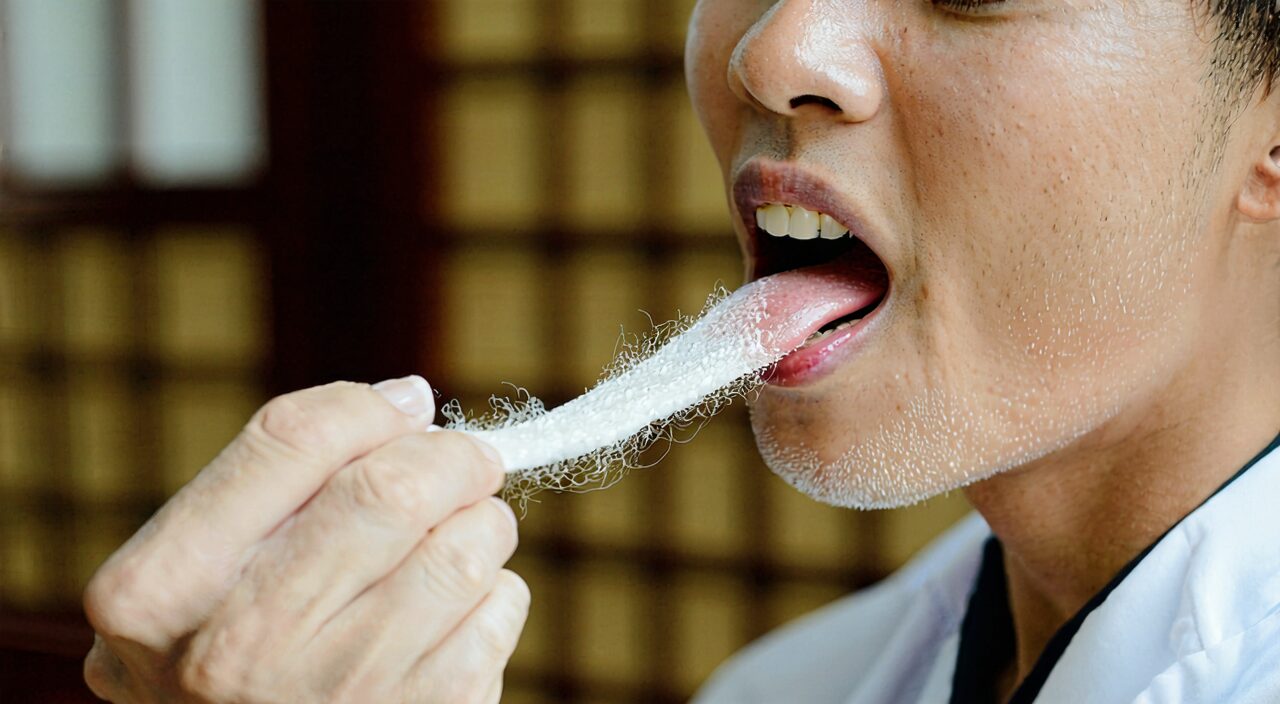
Traditional Chinese medicine holds that the spleen and stomach are responsible for transforming and transporting food, water, and dampness. If there is improper diet, excessive consumption of cold and raw foods, a damp living environment, or inherently weak spleen and stomach function, dampness can easily become trapped in the spleen and stomach, leading to dampness stagnating the spleen and stomach pattern. At this point, qi movement becomes obstructed, and a series of discomforts arise.
The traditional functions of Ping Wei San mainly revolve around “drying dampness and invigorating the spleen, moving qi and harmonizing the stomach.” “Drying dampness” refers to using bitter-warm, aromatic substances to resolve dampness turbidity in the middle burner and restore the spleen and stomach’s transport functions; “moving qi” helps the flow of qi, alleviating sensations of distension, fullness, and stuffiness. Therefore, it is often used to improve relevant manifestations caused by dampness stagnating the spleen and stomach, rather than directly targeting a specific modern disease name.
It should be noted that whether this formula is suitable must be determined by combining individual constitution, specific symptoms, and professional judgment; it is not appropriate to apply it based on a single symptom alone.
Composition of Ping Wei San and the Role of Each Herb
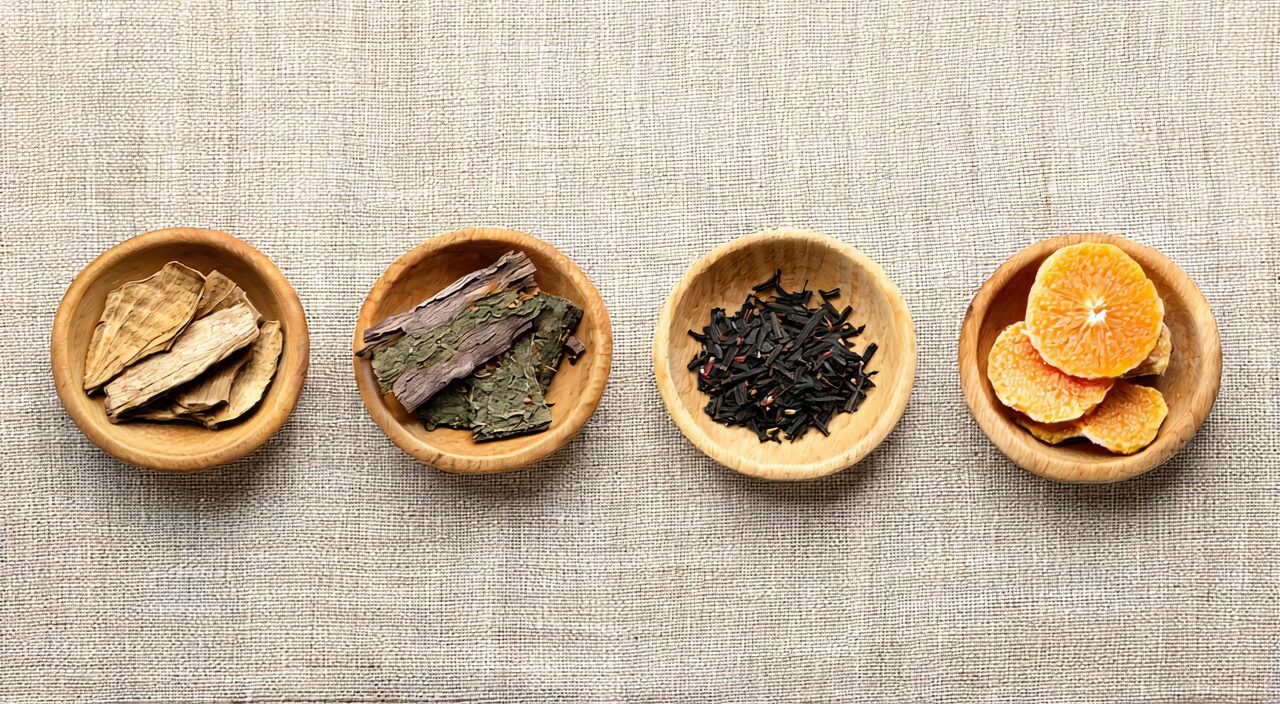
Ping Wei San first appeared in the “Taiping Huimin Heji Ju Fang” (Formulary of the Bureau of People’s Welfare Pharmacies). The original formula consists of Cang Zhu (Atractylodes), Hou Po (Magnolia Bark), Chen Pi (Tangerine Peel), Gan Cao (Licorice), together with Sheng Jiang (Fresh Ginger) and Da Zao (Jujube). To facilitate understanding, the roles of each herb in the formula can be summarized as follows:
| Herb | Dosage (Original Reference) | Main Action |
|---|---|---|
| Cang Zhu | four liang | Dries dampness and strengthens the spleen; the core herb for dampness encumbering the spleen and stomach |
| Hou Po | three liang | Moves qi, transforms dampness, and reduces distension and fullness |
| Chen Pi | two liang | Regulates qi and harmonizes the stomach, dries dampness and awakens the spleen |
| Gan Cao | one liang | Harmonizes the other herbs, tonifies the spleen and moderates the middle |
| Sheng Jiang, Da Zao | adequate amount | Harmonize the spleen and stomach, protect the middle burner |
The characteristic of this combination is that Cang Zhu serves as the principal herb to dry dampness and invigorate the spleen, while Hou Po and Chen Pi assist by moving qi, transforming dampness, and regulating the qi dynamic in the middle burner. Gan Cao, Sheng Jiang, and Da Zao moderate the nature of the herbs to prevent excessive acridity and dryness. The overall structure is compact with a clear direction, specifically targeting the pattern of dampness stagnating the spleen and stomach.
In modern application, dosages and dosage forms are often adjusted and must be determined based on the actual situation; the original formula’s doses should not be directly copied.
Who Might Be Suitable for Ping Wei San
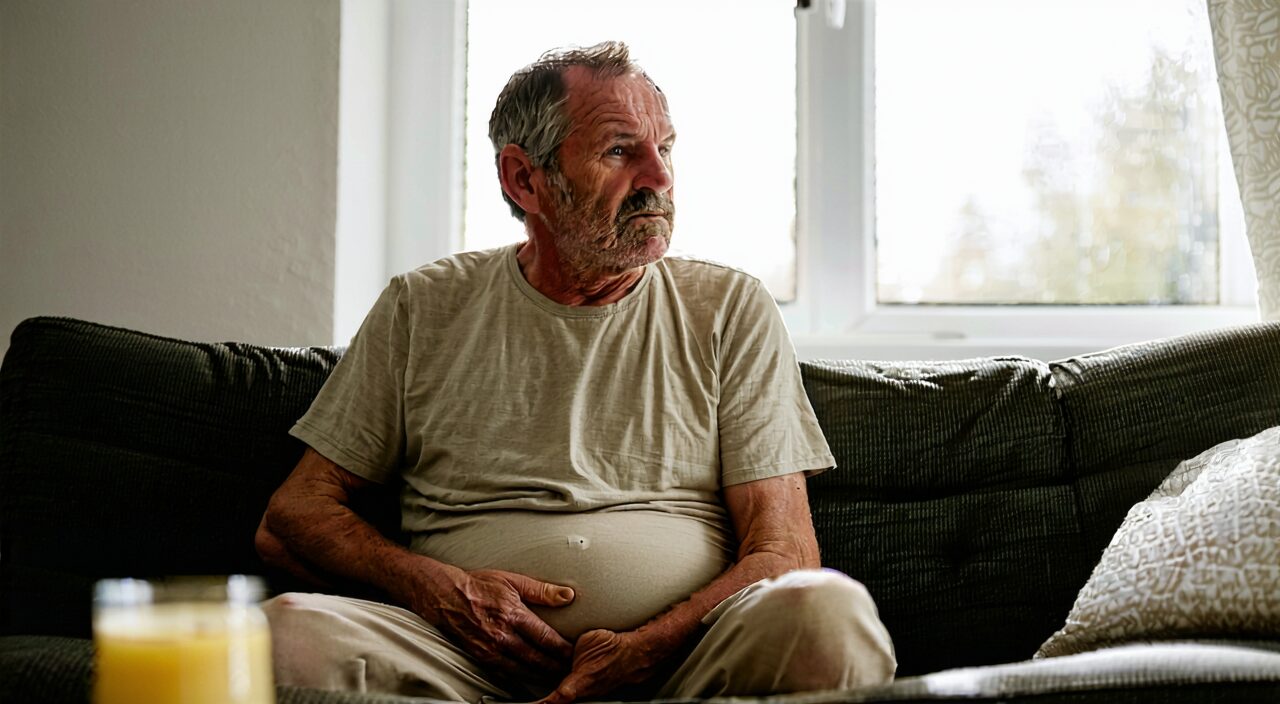
According to traditional pattern differentiation, the population relatively suitable for Ping Wei San typically points to dampness stagnating the spleen and stomach pattern. In other words, it is not just one or two symptoms but a group of relatively typical manifestations. The following manifestations can serve as a reference, but a definitive assessment still requires an experienced Chinese medicine professional.
Possible matching manifestations include:
- Abdominal distension and fullness, especially worsening after meals, accompanied by belching or a sensation of stuffiness
- Significantly decreased appetite, with no desire to eat even at mealtimes
- Heaviness and fatigue of the body, feeling that the limbs are heavy and the person is not refreshed
- Thick, white, greasy tongue coating that looks like a layer of grime
- Epigastric fullness and discomfort, sometimes with slight nausea
- Loose or sticky stools that do not flush away easily
If the majority of the above manifestations appear simultaneously and the overall constitution tends toward “excessive dampness turbidity,” Ping Wei San may be one direction Chinese medicine considers. However, it must be cautioned that even if the symptoms are similar, if there is an admixture of yin deficiency, qi deficiency, or heat signs, the situation becomes much more complicated and cannot be simply applied.
Contraindications and Unsuitable Populations for Ping Wei San
Not all cases of abdominal distension and poor appetite can be treated with Ping Wei San. The following populations or conditions are generally not suitable or require particular caution:
- Yin deficiency with stomach dryness: For example, dry mouth and throat, dry and hard stools, epigastric discomfort with a noisy sensation, red tongue with little coating. Such conditions require moistening rather than drying dampness; using Ping Wei San may worsen the discomfort.
- Excess heat constipation: Manifested as abdominal hardness, fullness and pain, difficult bowel movements with dry stool, thirst with desire for cold drinks, red tongue with dry yellow coating. This is heat accumulation and should be cleared and purged, not treated by drying dampness and moving qi.
- Severe spleen and stomach deficiency: If it is typical spleen qi deficiency, characterized by feeling bloated after eating just a little, pronounced fatigue, sallow complexion, loose stools but not thick greasy tongue coating; at this time, the focus should be on supplementing qi and strengthening the spleen. Using Ping Wei San alone may instead consume healthy qi.
- Special populations: Pregnant women, breastfeeding women, children, and the elderly or weak individuals have more sensitive body states. Self-administration without guidance from a professional Chinese medicine practitioner is not advised.
Overall, Ping Wei San tends toward dispelling pathogenic factors, focusing primarily on “drying” and “moving.” For individuals with insufficient healthy qi or pronounced dryness-heat, it may not only be unsuitable but could also bring adverse effects. Therefore, before use, one must comprehensively judge by combining one’s own constitution with the advice of a professional.
Differences Between Ping Wei San and Similar Formulas
You may also have heard of Huoxiang Zhengqi San, Er Chen Tang, Shen Ling Bai Zhu San, and Bao He Wan. These formulas can be easily confused with Ping Wei San for certain symptoms, but each has a different focus. The following brief comparison helps clarify the distinctions.
Huoxiang Zhengqi San
- Focus: External contraction of wind-cold, internal damage from dampness stagnation
- Common manifestations: Aversion to cold, fever, vomiting, diarrhea, indicating simultaneous exterior and interior disease
- Difference from Ping Wei San: Ping Wei San mainly targets internally generated dampness turbidity encumbering the spleen and stomach, generally without obvious exterior symptoms. If dampness stagnation is primarily in the spleen and stomach without external contraction, tradition tends more toward the Ping Wei San direction.
Er Chen Tang
- Focus: Dries dampness and transforms phlegm, regulates qi and harmonizes the middle
- Common manifestations: Cough with profuse phlegm, nausea with urge to vomit, dizziness, palpitations, indicating a phlegm-dampness pattern
- Difference from Ping Wei San: Ping Wei San also transforms dampness and moves qi, but its power to relieve distension and fullness is relatively stronger, while its phlegm-transforming strength is weaker. If the main manifestation is profuse phlegm without significant distension, one might need to consider the Er Chen Tang approach.
Shen Ling Bai Zhu San
- Focus: Supplements qi and strengthens the spleen, percolates dampness and stops diarrhea
- Common manifestations: Chronic fatigue and weakness, poor appetite, loose stools, pale tongue with white coating that may not be thick or greasy
- Difference from Ping Wei San: Ping Wei San has a strong dampness-drying effect but no significant qi-tonifying action. People with obvious body deficiency and non-thick tongue coating may feel even more fatigued if using Ping Wei San.
Bao He Wan
- Focus: Resolves food stagnation and guides out accumulations
- Common manifestations: Belching with a putrid odor, acid regurgitation, epigastric and abdominal distension and pain, sour and foul-smelling stools, thick greasy tongue coating (potentially yellow), often with a clear history of dietary indiscretion
- Difference from Ping Wei San: The key lies in whether it is food accumulation or dampness stagnation. Food accumulation often has a history of overeating and a sour/putrid smell; dampness stagnation is more about a persistent heavy and sticky sensation. Ping Wei San and Bao He Wan may be combined in some situations, but viewed individually, one focuses on transforming dampness and the other on resolving food stagnation.
The above distinctions among formulas are only broad guiding thoughts for differentiation. In reality, the human body’s condition often involves a mixture of deficiency and excess with multiple factors coexisting, so one cannot make a self-diagnosis based solely on a formula name.
Summary
Ping Wei San is a traditional formula whose main functions are drying dampness, invigorating the spleen, moving qi, and harmonizing the stomach. For abdominal distension, decreased appetite, body heaviness, and thick white greasy tongue coating caused by dampness stagnating the spleen and stomach, it is often considered in Chinese medicine pattern differentiation. However, it is not suitable for those with yin deficiency, excess heat, or extreme spleen deficiency, nor can it simply replace other approaches.
More importantly, each person’s body condition is complex; dampness stagnation, qi deficiency, food accumulation, and phlegm-dampness can intertwine. Ping Wei San, as well as Huoxiang Zhengqi San, Er Chen Tang, Shen Ling Bai Zhu San, and Bao He Wan, each have their own emphases. Whether one is suitable for you needs to be judged by combining specific manifestations, constitutional tendency, and under professional guidance. This article is for informational reference only and cannot replace professional diagnosis or treatment advice. If related discomfort persists or worsens, it is recommended to promptly consult a doctor or Chinese medicine practitioner.