
Who Is Qiang Huo Sheng Shi Tang Suitable For? Composition, Actions, and Contraindications Explained

Many people, when experiencing shoulder and back soreness, stiffness in the head and neck, or heaviness in the limbs after being caught in the rain or exposed to wind, hear the name “Qiang Huo Sheng Shi Tang” (Notopterygium Dampness-Dispelling Decoction). As a classic formula for dispelling wind and overcoming dampness, it has a clear line of thinking in traditional Chinese medicine.
However, its range of action is not unlimited. Understanding “who Qiang Huo Sheng Shi Tang is suitable for” and “who it is not suitable for” is far more important than simply remembering the formula name. This article will provide a relatively objective reference from the perspectives of its composition, traditional understanding, applicable presentations, situations where it should not be used, and comparisons with other commonly used formulas.
Understanding This Formula from the Perspective of “Wind-Dampness in the Exterior”
In traditional Chinese medicine understanding, wind pathogens and dampness pathogens often invade the human body together. When they mainly remain in the skin, muscles, and channels, a series of manifestations of “being trapped by dampness” can easily appear.
The idea behind Qiang Huo Sheng Shi Tang is precisely aimed at this state of “wind-dampness in the exterior,” focusing mainly on dispelling wind, overcoming dampness, unblocking collaterals, and relieving pain. It is not a tonic formula, nor is it a formula specifically for overuse injuries of sinews and bones; it leans more towards dispersing wind-cold-dampness pathogens located in the exterior.
Core Composition and the Roles of Key Herbs
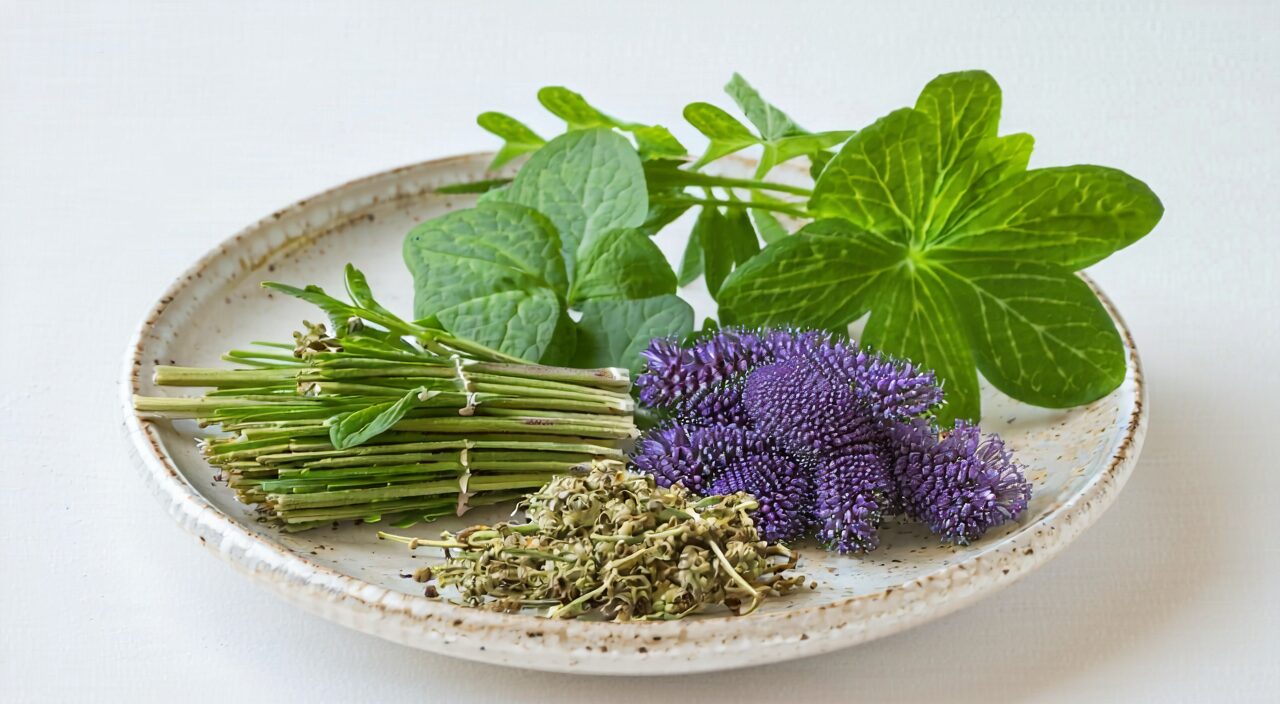
The compositional structure of Qiang Huo Sheng Shi Tang is not complicated, with clear division of labor among its key medicinals. The following is a common reference composition:
| Medicinal | Traditional Role |
|---|---|
| Qiang Huo (Notopterygium) | Dispels wind-cold-dampness from the upper body and whole body, especially good at treating pain in the shoulders, arms, head, and neck. |
| Du Huo (Angelica Pubescens) | Dispels wind-cold-dampness from the lower body, used in mutual reinforcement with Qiang Huo. |
| Chuan Xiong (Ligusticum) | Invigorates blood and moves qi, assists in pain relief, guides other medicinals upwards. |
| Fang Feng (Saposhnikovia) | Dispels wind, releases the exterior, overcomes dampness, and relieves pain. |
| Gao Ben (Ligusticum Sinense) | Reaches the vertex of the head, disperses wind-cold-dampness, improves stiffness in the head and neck. |
| Man Jing Zi (Vitex Fruit) | Disperses wind-heat-dampness from the head and face, clears and benefits the head and eyes. |
| Gan Cao (Licorice) | Harmonizes all medicinals, relaxes tension, and moderates the middle. |
In actual practice, modifications are sometimes seen where Huang Qi (Astragalus), Dang Gui (Angelica Sinensis), or Bai Shao (White Peony) are added, adjusting for individuals with concurrent qi and blood deficiency. However, the original formula mainly aims to expel pathogens and does not directly focus on tonification.
What Kinds of Presentations Might Qiang Huo Sheng Shi Tang Be Suitable For?

It must first be clarified that the following descriptions only summarize traditional application directions. Whether it is specifically suitable must be determined based on individual circumstances and professional judgment.
Generally, Qiang Huo Sheng Shi Tang is more commonly used for conditions related to externally contracted wind-dampness, bodily heaviness, and states associated with wind-cold-dampness pathogens. Common presentations include:
- Stiffness and pain in the head, neck, shoulders, and back, with a sensation of heaviness and discomfort;
- Aversion to wind and feeling cold, especially with symptoms worsening on rainy days or after exposure to wind;
- Soreness, heaviness, and weakness in the limbs, as if wrapped in a damp cloth;
- Tongue coating thin white or white and greasy, pulse floating or soft and moderate, as traditional pattern identification references.
These presentations often point to a pattern of wind-dampness in the exterior and impeded channels, rather than internal organ deficiency or structural joint changes. If the pain is fixed in a specific joint with redness, swelling, and heat, or if there is chronic low back and leg pain accompanied by weakness and numbness in the legs, it may be beyond the traditional scope of application of this formula.
Situations Where It Is Not Suitable or Requires Special Caution
Although Qiang Huo Sheng Shi Tang is a classic, it is not suitable for all joint and muscle discomforts. The following types of situations are often considered unsuitable for its sole use or must be strictly evaluated before deciding:
- Yin deficiency with blood deficiency: For example, those who often feel heat in the palms and soles, dry mouth and throat, night sweats, with a red tongue and little coating. Using acrid-dispersing, wind-dispelling, dampness-eliminating medicinals in this type of constitution may further consume yin and blood, worsening the original discomfort.
- Damp-heat impediment pain: Joints that are red, swollen, burning hot, with locally elevated skin temperature and a yellow, greasy tongue coating. This belongs to damp-heat accumulation, where the focus should be on clearing heat and draining dampness, which is opposite to the direction of Qiang Huo Sheng Shi Tang.
- Acute trauma or fractures: Local swelling and pain directly caused by external forces such as falls or impacts require surgical management or approaches to quicken the blood and transform stasis, and using a wind-dampness dispelling formula would be inappropriate.
- Special physiological stages: Pregnant women, breastfeeding women, and very young children, due to their unique physical conditions, require rigorous evaluation by a licensed TCM practitioner before using any formula.
- Long-term, chronic, progressive joint diseases: Such as active rheumatoid arthritis or severe degenerative joint disease. These conditions are often complex, and self-management using only this formula is not advisable.
Furthermore, if the pain persists without relief or is accompanied by chest tightness, palpitations, difficulty breathing, severe headache, weight loss, black stools, or other systemic symptoms, a detailed medical examination should first be conducted rather than trying to cover them using a wind-dampness dispelling approach on one’s own.
Differences from Du Huo Ji Sheng Tang, Gui Zhi Tang, Ge Gen Tang, and Fang Ji Huang Qi Tang
Many people struggle with the difference between Qiang Huo Sheng Shi Tang and “Du Huo Ji Sheng Tang” (Angelica Pubescens and Taxillus Decoction). Simply put, although both address body pain, the thinking behind them differs. Du Huo Ji Sheng Tang primarily tonifies the liver and kidneys, boosts qi and blood, and dispels wind-dampness, commonly used for soreness, weakness, and cold pain in the lower back and knees with significant physical fatigue; the disease location tends to be deeper, with more deficiency, and the course is often longer. Qiang Huo Sheng Shi Tang, on the other hand, leans towards dispersing wind-dampness located in the exterior, with a shallower disease location and less pronounced deficiency signs.
Looking at a few other formulas that are often compared:
- Gui Zhi Tang (Cinnamon Twig Decoction): Commonly used for externally contracted wind-cold presenting as exterior deficiency pattern, primarily featuring fever, sweating, aversion to wind, and a floating, moderate pulse. Stiffness and pain in the neck and back is not its only indicator, and it does not focus on dispelling dampness.
- Ge Gen Tang (Kudzu Decoction): Leans more towards wind-cold exterior excess, with a more pronounced sensation of stiffness and rigidity in the neck and back, but the overall direction of countering pathogens still centers on inducing sweating to release the exterior, differing in its dampness-dispelling combination.
- Fang Ji Huang Qi Tang (Stephania and Astragalus Decoction): Commonly used for external deficiency with weakened defensive qi, wind-water or wind-dampness patterns, often accompanied by sweating with aversion to wind, heaviness of the body with edema, and inhibited urination, with a more evident mixture of deficiency and excess.
For easier comparison, the following table organizes the differences based on their traditional pattern identification directions:
| Formula Name | Traditional Pattern Identification Direction | Key Characteristic Presentations | Main Distinction from Qiang Huo Sheng Shi Tang |
|---|---|---|---|
| Du Huo Ji Sheng Tang | Liver and kidney insufficiency, qi and blood dual deficiency, with concurrent wind-dampness | Soreness, weakness, and cold pain in lower back and knees, low physical stamina, longer course | Leans towards tonifying deficiency and expelling pathogens; disease location is deeper and more deficiency-based |
| Gui Zhi Tang | Externally contracted wind-cold exterior deficiency, disharmony between nutritive and defensive qi | Fever, sweating, aversion to wind, floating and moderate pulse | Focus is on harmonizing nutritive and defensive qi, not centered on dispelling dampness |
| Ge Gen Tang | Externally contracted wind-cold exterior excess, inhibited flow of Greater Yang channel qi | Marked stiffness and rigidity in the neck and back, absence of sweating | Emphasis on inducing sweating to release the exterior; dampness-dispelling power is weaker |
| Fang Ji Huang Qi Tang | External deficiency with weakened defensive qi, wind-water or wind-dampness | Sweating with aversion to wind, heaviness of the body with edema, inhibited urination | Often presents as mixed deficiency and excess; drains dampness while boosting qi to secure the exterior |
In summary, the comparison between these formulas is not about which one is “better,” but rather that they each correspond to different disease mechanisms and constitutional states. When choosing a direction, it is necessary to comprehensively evaluate whether it is an exterior or interior pattern, more excess or more deficiency, whether there is significant organ qi and blood insufficiency, and whether the nature of the pathogenic factors is wind-cold-dampness or damp-heat, etc.
Summary
Qiang Huo Sheng Shi Tang is a traditional formula that dispels wind and overcomes dampness, suitable for wind-dampness in the exterior patterns. It is commonly seen in populations presenting with stiffness and pain in the head, neck, shoulders, and back, heaviness in the limbs, aversion to wind, and intolerance of cold. Its composition mainly consists of dispersing agents, and it is not suitable for individuals with yin deficiency and blood deficiency, damp-heat impediment pain, acute trauma, or those in special physiological stages.
This article aims to provide a relatively clear framework by sorting out its composition, applicable directions, unsuitable situations, and distinctions from Du Huo Ji Sheng Tang, Gui Zhi Tang, Ge Gen Tang, and Fang Ji Huang Qi Tang. However, each person’s specific situation is different, and the use of traditional formulas ultimately needs to be combined with a comprehensive assessment of constitution, tongue and pulse, and symptoms, and conducted under professional guidance. This article is for informational reference only and cannot replace professional diagnosis or treatment advice.