
Who Is Sang Xing Tang Suitable For? Composition, Benefits, and Contraindications

Many people experience a particular type of cough during autumn and winter or in dry, heated environments: a dry, tickly throat with a crisp-sounding cough yet very little phlegm—sometimes nothing more than constant throat clearing—accompanied by dry nostrils, a dry mouth with a desire to drink, and no obvious sensation of fever.
In traditional Chinese medicine, these symptoms are often classified as “warm-dryness cough,” and Sang Xing Tang is a classic formula that targets this pattern.
For those living overseas, climate, diet, and constitution may differ from the original TCM context. When learning about a traditional formula like Sang Xing Tang, it is especially important to patiently understand its original design, appropriate situations, and limitations, rather than simply treating it as a “cough medicine.”
Below we will gradually unpack its composition, traditional effects, suitable users, contraindications, and how it differs from similar formulas.
How Traditional Chinese Medicine Views Sang Xing Tang
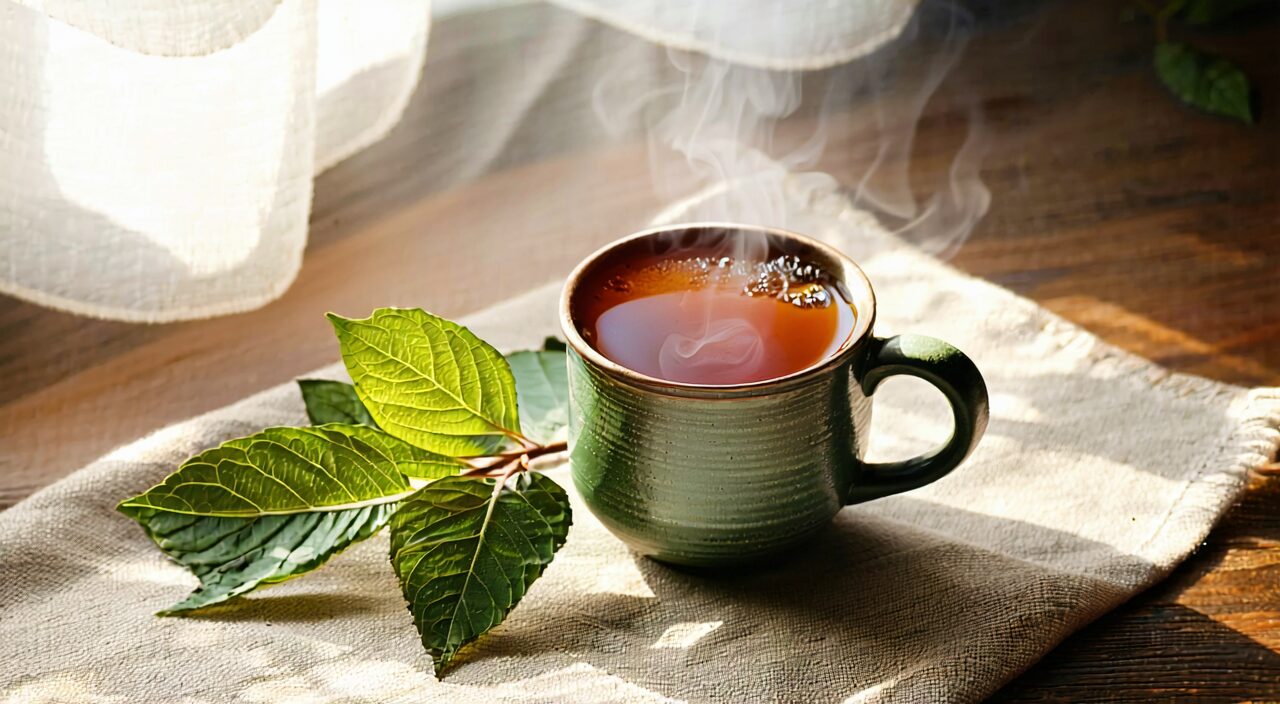
Sang Xing Tang originated from the Systematized Identification of Warm Diseases (Wen Bing Tiao Bian) and belongs to formulas that treat “warm-dryness.”
To understand this formula, it helps to start with the basic concept of “warm-dryness invading the lung.” The pathogen of dryness can be divided into cool-dryness and warm-dryness; warm-dryness often occurs in early autumn, when summer heat has not yet fully retreated while dryness arises, or during prolonged stays in warm, dry environments. When dryness combines with heat, it tends to injure lung fluids. The lung prefers moisture and dislikes dryness; once its fluids are consumed by dry heat, symptoms like dry cough, dry throat, dry nose, and thirst easily appear.
The strategy of Sang Xing Tang is not simply to moisten the lung; it is to gently diffuse warm-dryness and moisten the lung to stop coughing.
“Gentle diffusing” can be understood as using light, clearing medicinals to vent the dry heat constrained in the exterior of the lung, while employing moistening herbs to nourish lung fluids. This approach means it mainly targets the early stage of dryness, where the disease location is relatively superficial and heat signs are not pronounced.
If the cough has already progressed to profuse sticky phlegm, chest tightness, and abdominal distension, or if it is entirely a cold-type cough, then Sang Xing Tang is no longer the appropriate approach.
Composition of Sang Xing Tang
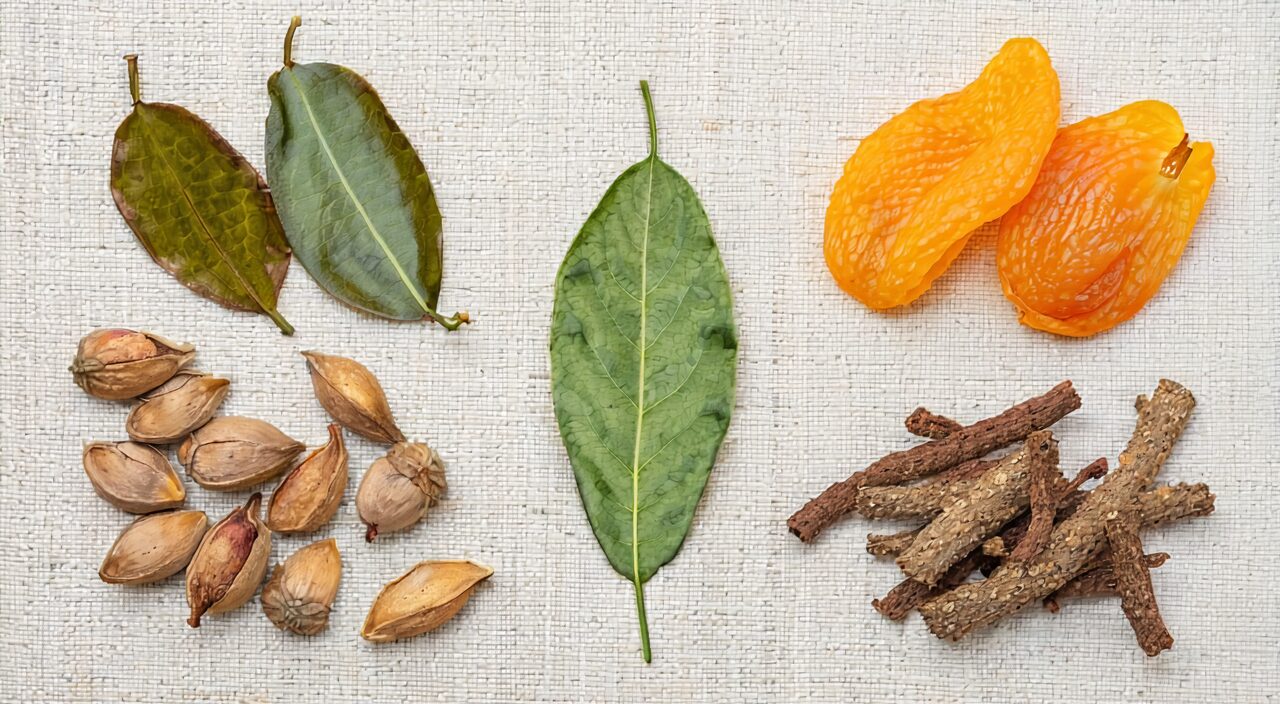
The formula uses relatively light and agile medicinals. The table below organizes common traditional reference dosages and the main traditional actions of each herb, making it easier to understand the general role of each ingredient in the formula.
| Herb | Traditional Reference Dosage | Common Understanding |
|---|---|---|
| Mulberry Leaf (Sang Ye) | 3–6 g | Light and clear, disperses wind-heat, targets lung dryness |
| Apricot Kernel (Xing Ren) | 4.5–9 g | Diffuses and descends lung qi, stops cough, helps restore the lung’s dispersing and descending functions |
| Glehnia Root (Sha Shen) | 6–9 g | Nourishes yin and moistens the lung, addresses dry cough caused by lung dryness |
| Fritillaria Thunbergii (Zhe Bei Mu) | 3–6 g | Clears and resolves phlegm-heat, moistens the lung and stops cough |
| Gardenia Peel (Zhi Zi Pi) | 3–6 g | Light and clear, diffuses and clears constrained heat |
| Pear Peel (Li Pi) | appropriate amount | Generates fluids and moistens dryness, clears heat and stops cough |
| Fermented Soybean (Dan Dou Chi) | 3–6 g | Vents constrained heat, helps release the exterior |
Overall, the combination in Sang Xing Tang is light and gentle, favoring the lung meridian, and emphasizes both diffusing and moistening methods. It does not use intensely bitter, cold, or cloying, heavy medicinals that would obstruct the free flow of lung qi. This is one reason it is suitable for the early stages of warm-dryness.
Traditional Effects and Direction of Action
From the perspective of traditional formula studies, the core action of Sang Xing Tang can be summarized as “clearing and diffusing warm-dryness, moistening the lung and stopping cough.”
This eight-character phrase encompasses two levels:
- Clearing and diffusing: addresses the external pathogen of dry heat by giving it a way out;
- Moistening the lung: addresses the internal deficiency of lung fluids, restoring the lung’s moist nature.
Therefore, traditionally Sang Xing Tang is more often used at the stage after contracting external warm-dryness, when the pathogen has already affected the lung system but the heat is not intense and dryness signs are prominent. Common reference presentations include:
- Dry cough without phlegm, or very little sticky phlegm that is hard to expectorate
- Dry throat, sometimes slightly sore
- Nasal dryness, occasionally with blood-streaked nasal discharge
- Dry mouth with a desire to drink, but not large amounts
- Tongue edges and tip are reddish, the tongue surface lacks moisture, and the coating is thin white or thin yellow
It is important to emphasize that these signs are only traditional references to help understand the formula’s design intent; they do not mean that Sang Xing Tang can be used directly as soon as any one of them appears. In daily life, many people’s conditions involve mixed factors—for example, signs of dryness combined with spleen-stomach weakness or internal dampness—requiring a more comprehensive assessment.
Who Is Sang Xing Tang Suitable For?

Based on the analysis above, Sang Xing Tang is relatively more suitable for people with the following characteristics, serving as a reference for further understanding:
- The cough is primarily dry: no obvious phlegm or very little phlegm, with a crisp, superficial-sounding cough.
- Dryness signs are prominent: dry throat, dry nose, dry mouth, and even chapped lips, with a sensation of lacking body moisture.
- Fever is mild or absent: body temperature may be normal or only slightly elevated, without persistent high fever.
- Thirst with limited water intake: this is because fluids have been damaged, but there is no actual excess heat accumulating inside.
- Tongue tends to be dry: the tongue tip is red, the tongue surface is dry, and the coating is not thick or greasy.
On the other hand, if a person’s cough falls into the following categories, it is not appropriate to apply the Sang Xing Tang approach alone:
- Cough with profuse, thin, clear phlegm accompanied by chills and clear nasal discharge
- Cough with abundant, thick yellow phlegm and marked chest tightness
- Cough accompanied by severe generalized body aches and high fever
It is especially important to note that this article is for educational reference only and cannot replace professional diagnosis or treatment advice. If you experience recurrent or prolonged cough, or if it is accompanied by difficulty breathing, chest pain, coughing up blood, or weight loss, please consult a doctor or relevant healthcare professional promptly.
Who Should Not Use Sang Xing Tang?
Every formula has its boundaries, and Sang Xing Tang is no exception. For the following populations or situations, it is generally not recommended to use Sang Xing Tang alone, or extreme caution is needed:
- Cold-fluid cough: cough with copious white, thin, even frothy phlegm, accompanied by chills, pale tongue with a white, slippery coating. This type of cough is often related to cold pathogens or fluid retention and requires warming and transforming treatment; the cool, moistening herbs in Sang Xing Tang may worsen it.
- Phlegm-damp cough: profuse, easily expectorated phlegm that is sticky or chunky, often with chest stuffiness, nausea, poor appetite, and a thick, greasy tongue coating. Sang Xing Tang’s moistening action may encourage dampness and generate more phlegm, so it is not suitable.
- Phlegm-heat obstructing the lung: rough, rapid cough with copious thick, yellow phlegm, sometimes with a foul smell, high fever, severe thirst, red tongue with a yellow, greasy coating. This is a more severe condition; Sang Xing Tang alone is insufficient and could delay proper treatment.
- Spleen deficiency with loose stools: herbs such as Sha Shen and Li Pi in the formula are cool and moistening by nature. Those with spleen-stomach deficiency-cold, prone to diarrhea or unformed stools, should use it cautiously in light of their individual condition.
- Special populations: pregnant or breastfeeding women, infants, the elderly and frail, and people with chronic underlying diseases should consult a doctor or pharmacist before using any formula.
Differences Between Sang Xing Tang and Formulas Like Sang Ju Yin and Qing Zao Jiu Fei Tang
In the Chinese herbal formulary, several formulas share similar names or contain mulberry leaf and apricot kernel, but they target different patterns and follow different therapeutic strategies. Comparing them helps clarify the place of Sang Xing Tang.
Sang Xing Tang vs. Sang Ju Yin
Sang Ju Yin also comes from the Systematized Identification of Warm Diseases and is often used in the early stage of wind-warmth, when the pathogen is in the lung-defense layer. It leans toward releasing the exterior with pungent-cool herbs and diffusing the lung to stop coughing; besides mulberry leaf and chrysanthemum, it includes forsythia and mint, giving it stronger exterior-releasing power. It is suitable when cough is accompanied by mild fever, headache, and sore throat with exterior signs, while dryness is not prominent.
Sang Xing Tang, on the other hand, has stronger dryness-moistening power, with milder surface symptoms; its focus is on dry cough and dry throat caused by dryness damaging fluids. Simply put, Sang Ju Yin tends to disperse wind-heat, while Sang Xing Tang leans toward clearing and moistening dry-heat.
Sang Xing Tang vs. Qing Zao Jiu Fei Tang
Qing Zao Jiu Fei Tang targets a more severe level of “warm-dryness damaging the lung.” It uses ingredients such as mulberry leaf, gypsum, ophiopogon, and donkey-hide gelatin, giving it significantly stronger heat-clearing and dryness-moistening power. It is applied when both qi and yin are injured, with a dry cough without phlegm, counterflow qi and wheezing, irritability, thirst, and relatively pronounced body heat.
Compared to Sang Xing Tang, Qing Zao Jiu Fei Tang addresses a deeper, more interior level, with more evident deficiency and damage. For mild throat and nasal dryness and early-stage dry cough, Sang Xing Tang is sufficiently light and agile; if the condition progresses to persistent fever, shortness of breath, and markedly worsened dry throat pain, then traditional thinking would consider a formula like Qing Zao Jiu Fei Tang.
Sang Xing Tang vs. Xing Su San
Xing Su San is a representative formula for cool-dryness cough, composed of apricot kernel, perilla leaf, pinellia, and poria, leaning toward warm-dispersing and diffusing. Cool-dryness cough presents with chills, nasal congestion, thin clear phlegm, and absence of thirst, forming a clear contrast to the warm-dryness cough addressed by Sang Xing Tang.
One is warm, the other is cool; one addresses dryness with diffusing, the other with moistening. The directions are completely different, and using them incorrectly can worsen discomfort. This also illustrates the importance of “pattern differentiation” in Chinese medicine—one cannot blindly apply a formula just because there is a cough.
Sang Xing Tang vs. Yang Yin Qing Fei Tang
Yang Yin Qing Fei Tang is often used for yin-deficiency lung dryness or diphtheria-related conditions. Its main ingredients include raw rehmannia, ophiopogon, scrophularia, white peony, and fritillaria, providing strong yin-nourishing power. It is typically indicated when there is dry, sore throat, dry cough with little phlegm, heat in the palms and soles, and malar flushing—signs of yin deficiency with internal heat.
Sang Xing Tang focuses on warm-dryness caused by external pathogens, with a more superficial disease location, and still retains diffusing and venting herbs such as fermented soybean. Yang Yin Qing Fei Tang, on the other hand, focuses on internal damage and yin deficiency, where dryness arises internally; thus, nourishing yin and clearing heat is the main approach. These two formulas operate at different traditional levels and are generally not confused.
From the comparisons above, we can see that for the same type of cough, the treatment method can be drastically different depending on the accompanying pathogens and constitutional state. This is why traditional Chinese medicine consistently emphasizes the need to judge based on individual constitution, symptoms, and professional advice, rather than mechanically selecting formulas by disease name.
Summary
As a classic formula for warm-dryness cough, Sang Xing Tang is traditionally suitable for the mild and superficial stage when dryness invades the lung, presenting with dry cough with little phlegm, dry throat and nose, thirst without drinking much, and minimal fever.
Its strength lies in gently diffusing warm-dryness and moistening the lung to stop cough, using balanced and cleverly chosen medicinals. However, precisely because its nature is cool and moistening, it is not suitable for individuals with cold-fluid cough, phlegm-damp cough, or pronounced phlegm-heat, and those with spleen-stomach deficiency who easily get diarrhea should also be cautious.
Furthermore, although Sang Xing Tang, Sang Ju Yin, Qing Zao Jiu Fei Tang, Xing Su San, and Yang Yin Qing Fei Tang all involve coughing, their internal logic differs, and they cannot replace one another. Understanding these differences can help us stay more level-headed and less impulsive when facing similar symptoms.
The use of any formula should ultimately be carried out on the basis of knowing one’s own condition and consulting professional advice.