
Who Is Si Ni San Suitable For? Composition, Effects, and Precautions Explained

Si Ni San (Frigid Extremities Powder) is a classic formula from Zhang Zhongjing’s Treatise on Cold Damage (Shang Han Lun). Although it consists of only four herbs, it holds an important place in traditional Chinese medicine. Many people associate it solely with “cold hands and feet,” but in clinical application, Si Ni San is more often centered around liver-spleen qi stagnation and impaired qi movement. Below we discuss its composition, traditional therapeutic directions, patterns it may be suitable for, situations requiring caution, and key differences from frequently compared formulas such as Xiao Yao San, to help readers develop a clearer understanding.
Composition of Si Ni San
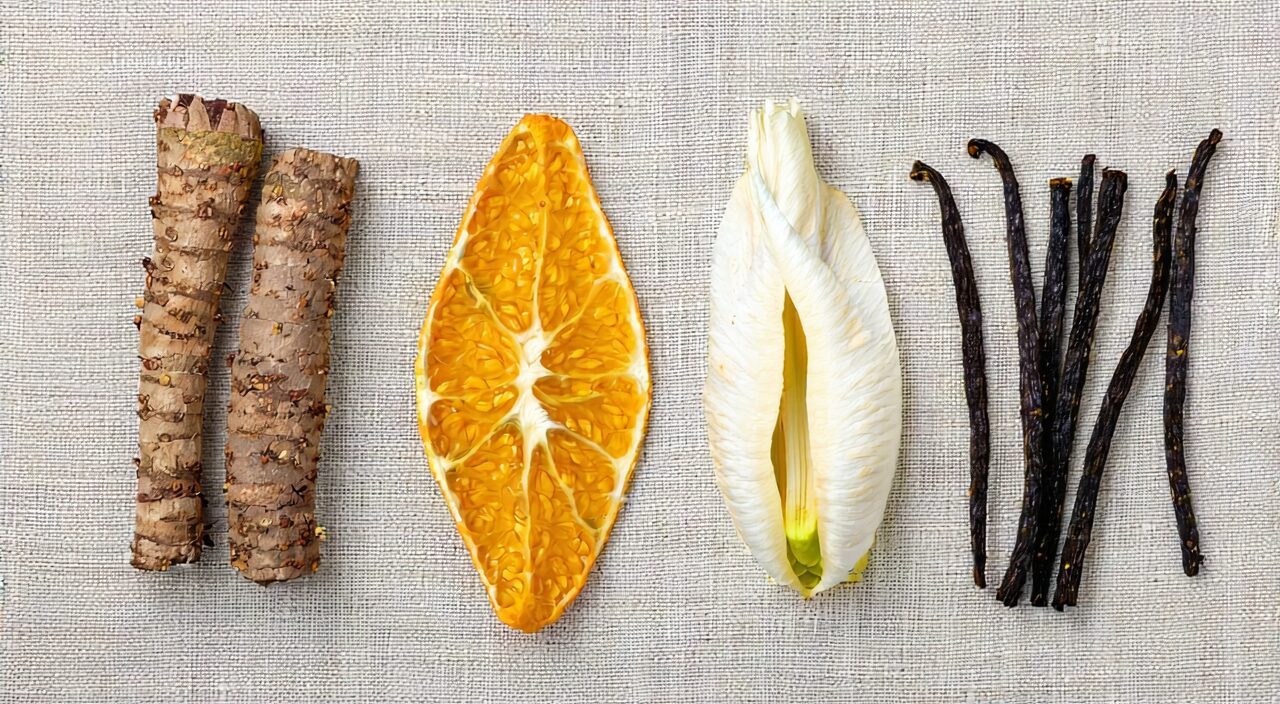
The composition of Si Ni San is remarkably concise. Each of the four herbs has its own role, and together they regulate qi movement.
| Herb | Traditional Action |
|---|---|
| Chai Hu (Bupleurum) | Disperses constrained qi, courses and smooths liver qi |
| Zhi Shi (Immature Bitter Orange) | Promotes qi movement, breaks up stagnation, eliminates distention |
| Bai Shao (White Peony) | Nourishes blood, softens the liver, relaxes spasms and alleviates pain |
| Gan Cao (Licorice) | Harmonizes the actions of the other herbs, supplements qi and centers the middle |
In the formula, Chai Hu serves as the sovereign herb, Zhi Shi as the minister, Bai Shao as the assistant, and Gan Cao as the guide. Chai Hu rises and scatters upward, while Zhi Shi descends and moves qi downward; this ascending-descending pair forms the core combination for regulating qi movement. Bai Shao and Gan Cao together tend to relax spasms and soften the liver. Overall, Si Ni San is traditionally used to vent pathogens and resolve constraint, soothe the liver, and rectify the spleen.
Traditional actions and therapeutic directions of Si Ni San

From a traditional perspective, the actions of Si Ni San are not limited to “cold hands and feet.” It mainly centers on one key point: qi stagnation. In this context, the “Si Ni” (four extremities cold) refers to coldness in the distal ends of the limbs, but the mechanism is not a deficiency of yang qi. Rather, the qi is constrained, preventing yang qi from reaching and warming the extremities. Therefore, the core direction of Si Ni San is to course and unblock the qi mechanism and restore the ascending-descending movement of liver and spleen qi.
Traditional Chinese medicine often understands it from the following perspectives:
- Venting pathogens and resolving constraint: When external pathogens have penetrated deeper into the body and the qi mechanism is constrained, the formula helps relieve the constraint so pathogens can find a way out.
- Soothing the liver and rectifying the spleen: Stagnant liver qi easily affects the spleen and stomach, leading to abdominal pain, distention, or altered bowel habits. Si Ni San can address both the liver and spleen simultaneously.
- Harmonizing qi and blood: Once the qi mechanism is unblocked, blood circulation also improves. It is therefore often used for certain types of pain and discomfort caused by qi stagnation.
In modern daily life, these directions commonly manifest in presentations related to emotional tension, high stress, and digestive functions influenced by emotions.
Who is Si Ni San suitable for?
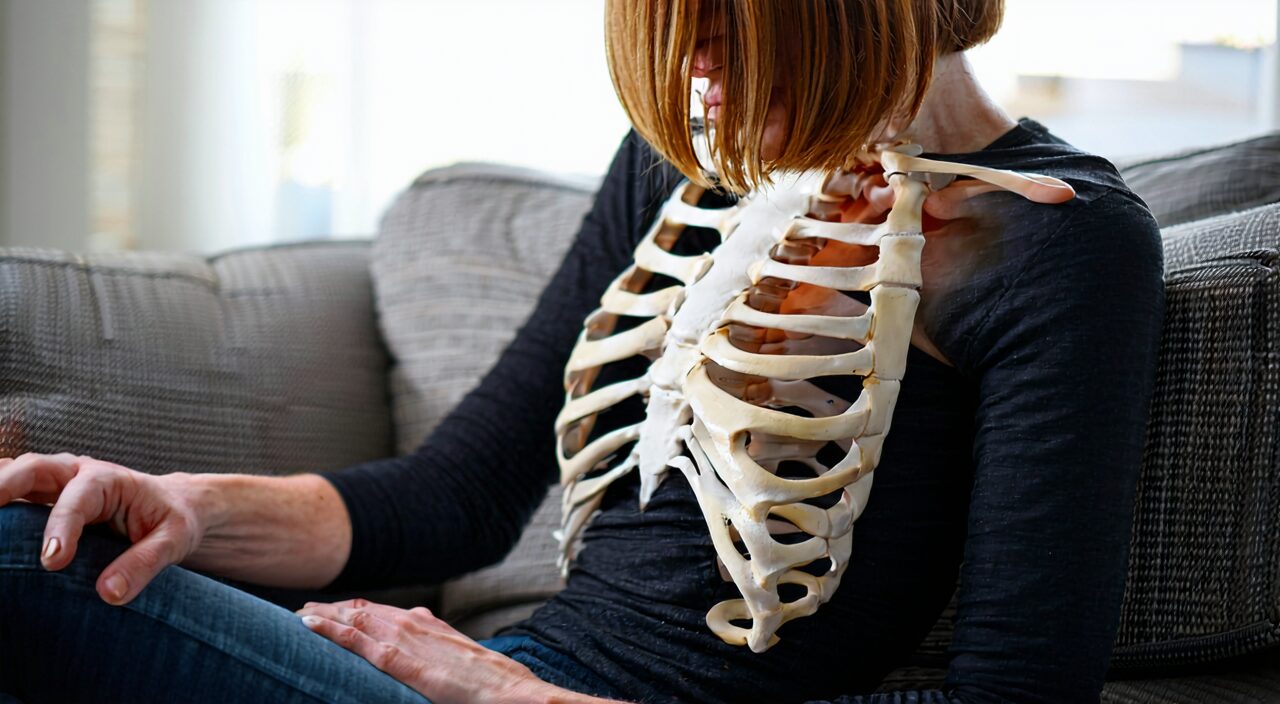
Si Ni San is not suitable for everyone with cold hands and feet — this point requires special attention. Traditionally, if the following manifestations occur together, especially when chest and rib-side discomfort is accompanied by digestive symptoms, they may suggest a pattern that falls within the consideration of Si Ni San:
- Distention, stuffiness, or wandering pain in the chest and rib-side: A sensation of fullness and distention in the chest and the areas below the ribs, with pain that lacks a fixed location and often worsens with emotional fluctuations.
- Mood tending toward melancholy or irritability: High mental stress, frequent sighing, a feeling of oppression, but not a persistent depressive state.
- Abdominal distention, pain, or borborygmus: Abdominal fullness with occasional pain that is relieved after passing gas or having a bowel movement. Stools may be somewhat dry or unformed and are related to emotional tension.
- Cold extremities but not due to yang deficiency: Hands and feet feel cold, but the trunk of the body does not fear cold. In fact, the person may sometimes feel vexed or sweat easily, and the pulse is often wiry. This type of “Si Ni” is caused by constrained qi and is fundamentally different from the cold extremities of yang qi debilitation.
In TCM pattern differentiation, these presentations mostly point to “liver-spleen qi stagnation” or “yang constraint causing cold extremities.”
Contraindications and situations requiring caution
Although Si Ni San is a widely used formula, its therapeutic direction is clearly defined, and misuse may actually worsen discomfort. The following situations are usually unsuitable or require extra caution:
- Yang deficiency cold extremities: The whole body fears cold, all four limbs are icy cold, the complexion is pale, stools are loose, the spirit is listless, and the pulse is very fine. This pattern belongs to debilitated yang qi and requires warming yang; using a method that courses and disperses is not appropriate.
- Excess cold pattern: Severe cold abdominal pain that is relieved by warmth, vomiting clear fluid, without clear signs of liver constraint and qi stagnation.
- Yin deficiency with effulgent fire: Dry mouth and tongue, heat in the palms and soles, night sweats, red tongue with little coating. Si Ni San tends to move and scatter qi and may consume yin fluids.
- Special populations: Pregnant women, breastfeeding women, children, the elderly and physically frail, as well as those with multiple pre-existing medical conditions, should not self-refer to this formula. Evaluation by a qualified professional is essential.
Furthermore, if symptoms are chronic and recurrent, or are accompanied by marked anxiety, depression, palpitations, chest tightness, persistent abdominal pain, blood in the stool, weight loss, etc., one should promptly seek medical help rather than relying solely on herbal formula regulation.
Differences from Xiao Yao San, Chai Hu Shu Gan San, Xiao Chai Hu Tang, and Jia Wei Xiao Yao San
Si Ni San frequently appears among harmonizing formulas and is easily confused with several similarly named formulas. Clarifying the differences helps in understanding their respective ranges of application.
Xiao Yao San (Free and Easy Wanderer Powder)
Xiao Yao San builds on the base of Si Ni San by adding Dang Gui, Bai Zhu, Fu Ling, Sheng Jiang, and Bo He, while retaining Chai Hu, Bai Shao, and Gan Cao. Its characteristic is that it also nourishes blood and strengthens the spleen. Traditionally, it leans more toward “liver constraint with blood deficiency and spleen weakness,” often accompanied by dizziness, mental fatigue, and menstrual irregularities. Si Ni San is more focused on qi stagnation, with relatively weaker tonifying effects.
Chai Hu Shu Gan San (Bupleurum Powder for Spreading the Liver)
Chai Hu Shu Gan San is derived from Si Ni San by replacing Zhi Shi with Zhi Qiao and adding Xiang Fu, Chuan Xiong, and Chen Pi. Its qi-moving and pain-relieving action is stronger. Traditionally, it is more often used for cases where liver qi constraint causes obvious chest and rib-side pain and distention, offering a richer level of qi regulation.
Xiao Chai Hu Tang (Minor Bupleurum Decoction)
Xiao Chai Hu Tang is another classic harmonizing formula, composed of Chai Hu, Huang Qin, Ban Xia, Ren Shen, Gan Cao, Sheng Jiang, and Da Zao. Traditionally used for lesser yang patterns, it may present with alternating chills and fever, bitter taste, dry throat, and fullness in the chest and rib-side. Compared to Si Ni San, Xiao Chai Hu Tang has a more prominent heat-clearing and righting-supporting action, whereas Si Ni San specializes in regulating qi and resolving constraint.
Jia Wei Xiao Yao San (Augmented Rambling Powder)
Jia Wei Xiao Yao San is Xiao Yao San plus Dan Pi and Zhi Zi. It leans toward clearing the liver and cooling the blood, suitable when liver constraint transforms into heat, with signs such as irritability, dry mouth, and early menstruation. Si Ni San itself has weak heat-clearing power; if constraint transforms into fire, it may not be the first choice.
For ease of comparison, the core directions can be summarized as follows:
| Formula | Core Direction | Key Differentiating Points |
|---|---|---|
| Si Ni San | Qi stagnation | Mainly distention, stuffiness, cold extremities; weak tonifying strength |
| Xiao Yao San | Blood deficiency with constraint | Also see dizziness, mental fatigue, menstrual irregularities |
| Chai Hu Shu Gan San | Qi stagnation with pain | More evident chest and rib-side distending pain; strong qi regulation |
| Xiao Chai Hu Tang | Shao yang constrained heat | Alternating chills and fever, bitter taste, dry throat |
| Jia Wei Xiao Yao San | Constraint transforming into fire | Irritability, dry mouth, clear heat signs |
Summary
Si Ni San is a classic formula centered on regulating the qi mechanism. Traditionally, it is understood from the perspectives of venting pathogens and resolving constraint, and soothing the liver and rectifying the spleen. The key to determining potential suitability is to distinguish “yang constraint Si Ni” from “yang deficiency Si Ni,” and to verify whether manifestations of liver-spleen qi stagnation truly exist — such as chest and rib-side discomfort, abdominal distention, depressed mood, and cold hands and feet.
At the same time, the application of any formula has a strict scope. Si Ni San is not suitable for constitutions with severe yang deficiency and cold, yin deficiency with effulgent fire, or those without qi stagnation presentations. The differences from formulas like Xiao Yao San also remind us that even similar symptoms can belong to different pattern types. In all cases, it is advisable to combine individual constitution, symptoms, and professional judgment. This article is for informational reference only and cannot replace professional diagnosis or treatment advice.