
Who Is Xiangsha Liujunzi Tang Suitable For? Composition, Benefits, and Contraindications

Many people interested in traditional Chinese medicine have heard of “Xiangsha Liujunzi Tang” in the context of spleen and stomach regulation. It is often mentioned especially when someone experiences bloating after meals, belching, and poor appetite.
However, what kind of constitution and presentations it truly suits, and who needs to be particularly cautious, are often overlooked. This article will, from the perspective of traditional Chinese medicine, sort out the composition of Xiangsha Liujunzi Tang, its common usage directions, characteristics of suitable populations, and contraindications, while also comparing it with several similar spleen-strengthening formulas to give you a clearer understanding.
Where Does Xiangsha Liujunzi Tang Come From? Basic Composition and Formula Rationale
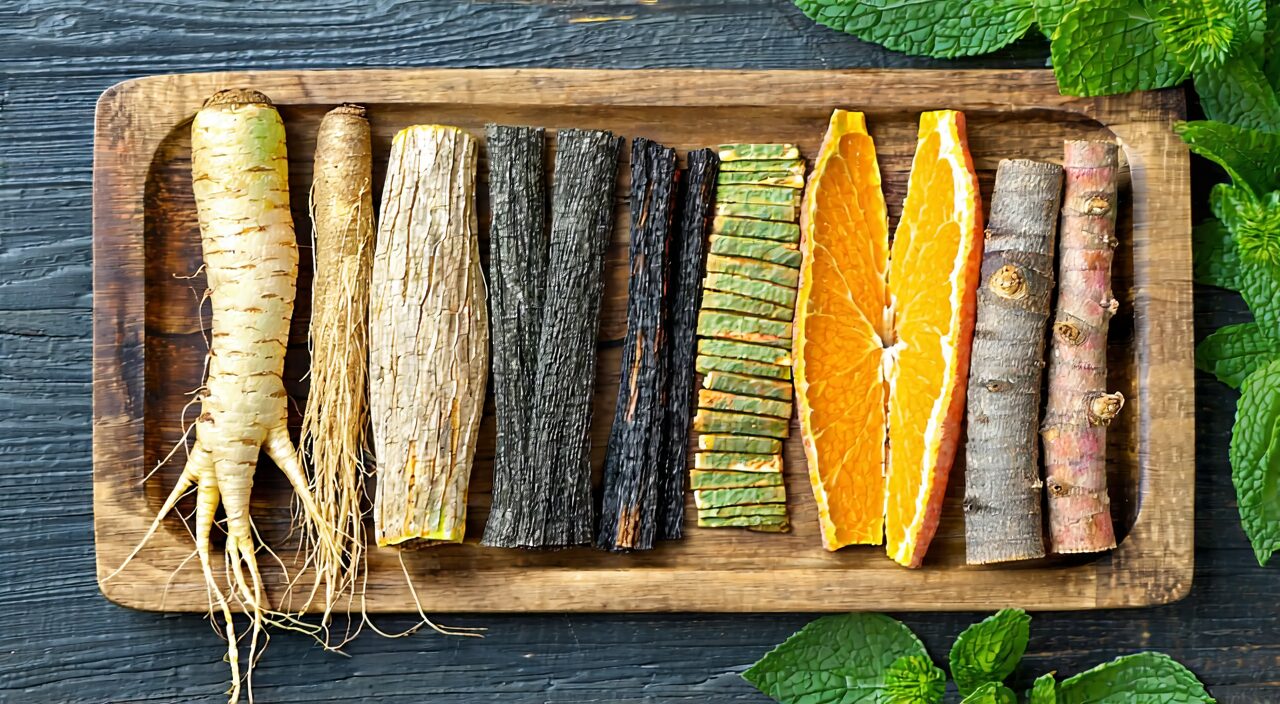
Xiangsha Liujunzi Tang is created by adding two herbs, Mu Xiang (Costus Root) and Sha Ren (Amomum Fruit), to the base of “Liujunzi Tang”. Liujunzi Tang, in turn, evolved from Sijunzi Tang (Ren Shen, Bai Zhu, Fu Ling, Gan Cao) by adding Chen Pi (Tangerine Peel) and Ban Xia (Pinellia Rhizome). Its origin can be traced back to the basic qi-supplementing and spleen-strengthening formula Sijunzi Tang, but it was gradually endowed with more detailed functions of harmonizing the middle, transforming phlegm, and moving qi.
The common composition of Xiangsha Liujunzi Tang is as follows (there may be slight variations in different dynastic texts or modern versions, but the general idea is consistent):
| Herb | General Intention in the Formula |
|---|---|
| Ren Shen (or Dang Shen) | Tonify spleen and supplement qi, boost the qi of the middle burner |
| Bai Zhu | Strengthen spleen and dry dampness, assist transportation and transformation |
| Fu Ling | Percolate dampness and strengthen spleen, calm the mind |
| Gan Cao | Supplement the center and boost qi, harmonize all medicinals |
| Chen Pi | Regulate qi and harmonize the middle, dry dampness and transform phlegm |
| Ban Xia | Dry dampness and harmonize stomach, direct rebellious qi downward and stop vomiting |
| Mu Xiang | Move qi and relieve pain, awaken the spleen and harmonize stomach |
| Sha Ren | Move qi and transform dampness, warm the middle and stop vomiting |
From the perspective of traditional theory, this formula mainly targets the state of “spleen deficiency with qi stagnation and dampness obstructing the middle burner.” The spleen governs transportation and transformation. If spleen qi is insufficient, water-dampness tends to linger, and qi movement easily becomes stagnant, leading to symptoms such as abdominal bloating, more pronounced after eating, belching, lack of appetite, unformed yet difficult-to-pass stools, etc.
In the formula, Ren Shen, Bai Zhu, Fu Ling, and Gan Cao serve as the foundation for supplementing qi and strengthening the spleen; Chen Pi and Ban Xia regulate qi and dry dampness; Mu Xiang and Sha Ren focus on moving qi, transforming dampness, and awakening the spleen, ensuring that supplementation does not cause stagnation. Therefore, it is not purely tonifying but rather combines tonification with unblocking, making it more suitable for deficiency with coexisting stagnation.
What Presentations May Indicate Suitability? – From the Perspective of Spleen Deficiency and Qi Stagnation
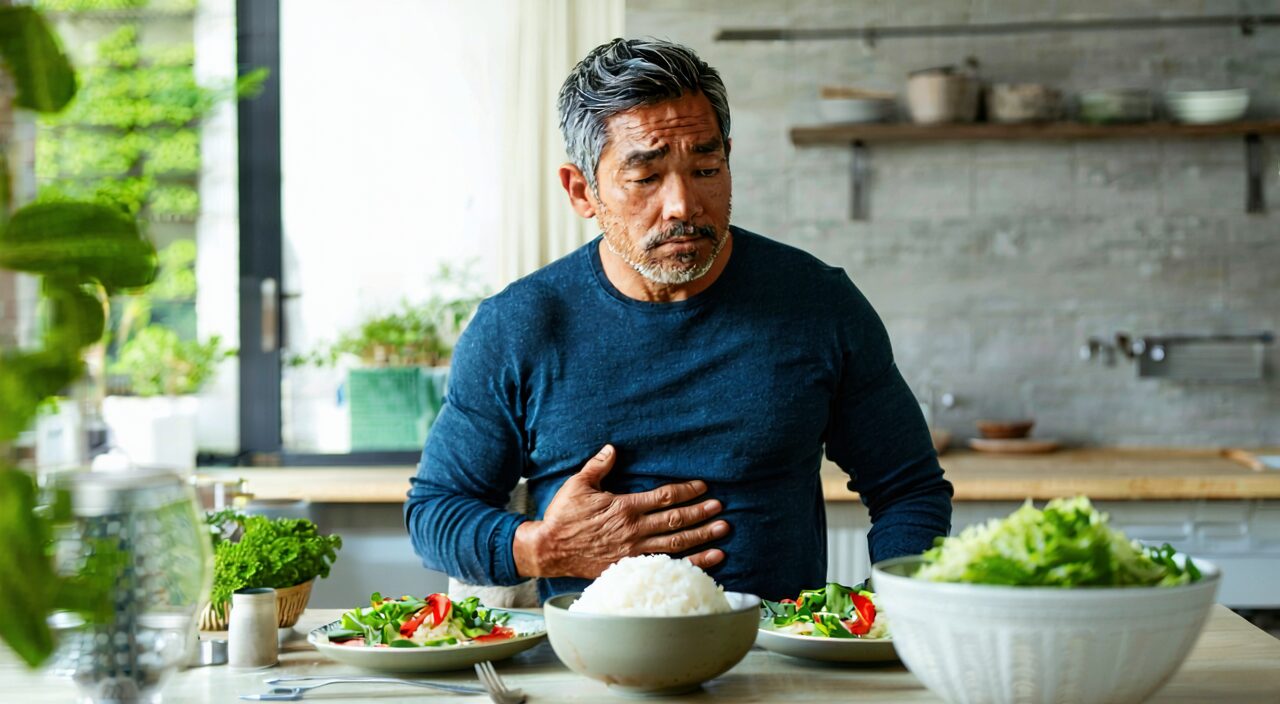
Many people ask, “Who is Xiangsha Liujunzi Tang suitable for?” In traditional application, it is more often used for patterns involving spleen and stomach qi deficiency accompanied by noticeable qi stagnation and dampness obstruction. If you identify with some of the following experiences, you might consider it as a direction worth understanding, but whether it is ultimately appropriate must be judged in combination with your overall condition:
- Soon after eating, feeling bloating or distension in the epigastric region or entire upper abdomen, as if something is stuck, with the bloating even extending to the sides of the ribs;
- Frequent belching or burping, especially more pronounced after meals or when emotionally upset;
- Appetite is not strong; feeling full after eating just a little, or being hungry but after a few bites no longer wanting to eat;
- Irregular bowel movements, possibly loose, unformed, or sticky and difficult to pass, with a sensation of incomplete evacuation after defecation;
- Always feeling low in energy, weak limbs, even too lazy to speak loudly, easily fatigued;
- Tongue body tends to be pale, with a white or white greasy coating; the tongue may be slightly swollen or have teeth marks.
If these presentations occur in combination, they are traditionally classified as a state of spleen deficiency with qi stagnation and impaired transportation. The actions of Xiangsha Liujunzi Tang—boosting qi, strengthening the spleen, regulating qi, and transforming dampness—may correspond well to this situation.
It is particularly important to note that similar sensations of bloating and poor appetite can also be caused by other factors, such as food stagnation, damp-heat, or liver-stomach heat stagnation. In such cases, using qi-tonifying and qi-moving methods might be contraindicated; one should clearly differentiate.
Which Situations Are Unsuitable or Require Great Caution?
Not everyone with stomach discomfort and bloating can consider the direction of Xiangsha Liujunzi Tang. The following conditions usually require avoidance or extra prudence:
- Presentations of stomach heat or predominant damp-heat: If there is bitter taste in the mouth, obvious dry mouth, thick yellow greasy tongue coating, foul-smelling sticky burning stools, or even acid reflux and heartburn, these often belong to heat or damp-heat patterns. Xiangsha Liujunzi Tang is warming and drying, and may aggravate heat, intensifying discomfort.
- Signs of yin deficiency and stomach dryness: Dull burning pain in the epigastric area, dry mouth with a desire for cold drinks, red tongue with little coating, dry stools like sheep pellets. Such deficiency-heat states are not suitable for warming, drying, qi-moving medicinals; they call for a strategy of nourishing yin and benefiting the stomach.
- Acute gastrointestinal discomfort or infectious diseases: Sudden severe abdominal pain, nausea, vomiting, diarrhea, fever, etc., should first be diagnosed clearly. It is inappropriate to self-medicate with such formulas for regulation in these cases.
- Special physiological periods or particular situations: During pregnancy, breastfeeding, for children, and for those with chronic underlying conditions on long-term medication, one should consult a Chinese medicine practitioner or professional doctor before using any herbal formula, as medicinals that regulate qi and blood and move qi may have an impact on the fetus or underlying condition.
- Long-term, recurrent, progressively worsening symptoms: If bloating, weight loss, black stools, difficulty swallowing, unexplained weight loss, or persistent unrelenting abdominal pain are present, it is imperative to prioritize medical evaluation to rule out organic diseases. Relying solely on the approach of constitutional regulation is not advisable.
Furthermore, even if the constitutional direction is suitable, it does not mean it can be used continuously without a break. Medicinals that move qi and regulate qi, if used for too long, may also consume qi and damage yin. Traditionally, such regulation strategies adhere to the principle of “stop once the illness is alleviated” or adjust in a timely manner.
Comparing Shenling Baizhu San, Liujunzi Tang, Sijunzi Tang, and Baohe Wan – Distinguishing Similar Formulas
Many enthusiasts of Chinese herbal formulas tend to confuse several spleen-fortifying or food-stagnation-relieving formulas. Although Xiangsha Liujunzi Tang shares a tendency to regulate the middle burner with the others, its emphasis differs. The following comparison from the perspective of traditional functions will help you understand their main differences:
- Sijunzi Tang: The basic spleen-strengthening qi-tonifying formula, composed of Ren Shen, Bai Zhu, Fu Ling, and Gan Cao. Primarily used for simple spleen-stomach qi deficiency, presenting as fatigue, poor appetite, loose stools, but without marked bloating or belching. It leans toward supplementing deficiency, with very weak qi-moving strength.
- Liujunzi Tang: Adds Chen Pi and Ban Xia to the base of Sijunzi Tang, increasing the functions of drying dampness, transforming phlegm, regulating qi, and harmonizing the stomach. It is more suitable for spleen qi deficiency accompanied by phlegm-dampness retention, such as profuse phlegm, nausea, epigastric stuffiness. It contains more “unblocking” components than Sijunzi Tang, but its qi-moving force is still relatively mild.
- Xiangsha Liujunzi Tang: Further adds Mu Xiang and Sha Ren to Liujunzi Tang, significantly strengthening its ability to move qi, transform dampness, and awaken the spleen. It targets the pathogenesis of spleen deficiency with qi stagnation and dampness obstructing qi movement. That is, there is not only deficiency and dampness but also obvious qi mechanism congestion, such as severe bloating after meals, frequent belching, and distension extending to the sides. Compared with Liujunzi Tang, it emphasizes simultaneous “unblocking and tonifying.”
- Shenling Baizhu San: This formula adds Shan Yao, Lian Zi, Bai Bian Dou, Yi Yi Ren, and Sha Ren, among others, to the Sijunzi Tang base, and is more skilled at strengthening the spleen, percolating dampness, stopping diarrhea, and supplementing lung qi. It is commonly used for chronic diarrhea, loose and unformed stools, emaciation, shortness of breath, and cough caused by spleen deficiency with exuberant dampness. Its tonifying effect is milder than Xiangsha Liujunzi Tang, with weak qi-moving power, focusing on astringency and dampness percolation.
- Baohe Wan: Completely different from the previous formulas, this is a food-stagnation-relieving and abductive formula, mainly used for epigastric and abdominal bloating and fullness, belching with foul odor and acid swallowing, aversion to food, and irregular stools caused by dietary stagnation, which mostly belongs to excess patterns. The formula is dominated by digestants such as Shan Zha, Shen Qu, and Lai Fu Zi, possessing strong attacking force and is not suitable for chronic regulation centered on spleen deficiency. If a spleen-deficient person needs to use digestants, they usually need to be combined with tonifying medicinals and should not be used for a long time.
For a more intuitive comparison, refer to the table below:
| Formula | Core Direction | Key Indicators That May Be Suitable | Directions Usually Requiring Caution |
|---|---|---|---|
| Sijunzi Tang | Strengthen spleen and supplement qi | Fatigue, poor appetite, loose stools, without obvious bloating | When excess patterns, qi stagnation, or dampness obstruction is pronounced, using it alone may tend to cloy and supplement excessively |
| Liujunzi Tang | Strengthen spleen, transform phlegm, regulate qi, and harmonize stomach | Spleen qi deficiency with profuse phlegm, nausea, epigastric stuffiness, greasy coating | Yin deficiency with scanty phlegm, yellow sticky heat phlegm are unsuitable |
| Xiangsha Liujunzi Tang | Boost qi, strengthen spleen, regulate qi, harmonize stomach, move qi, and transform dampness | Spleen deficiency with qi stagnation presenting severe post-meal bloating, belching, bloating affecting the ribs, irregular stools | Stomach heat, yin deficiency, damp-heat, acute discomfort, and special populations use with caution |
| Shenling Baizhu San | Strengthen spleen, percolate dampness, engender earth to produce metal | Spleen deficiency with dampness causing long-term diarrhea, loose stools, shortness of breath, fatigue, emaciation | Excess heat, food accumulation with stagnation, and constipation are not suitable |
| Baohe Wan | Relieve food stagnation, abduct accumulations, harmonize stomach, direct counterflow downward | Food stagnation with stomach distension and pain, belching with foul odor, acid swallowing, aversion to food, thick greasy coating | Predominant spleen deficiency without accumulation is unsuitable; not for long-term use |
Therefore, when understanding these formulas, one must consider multiple angles such as the deficiency-excess bias, cold-heat tendency, and whether food accumulation exists, rather than simply matching based on “bloating” or “poor digestion.” Traditional Chinese medicine emphasizes pattern differentiation precisely to avoid mistreating with attacking or supplementing methods.
Several Details Worth Noting in Use

Even when the general direction matches, the practical application of Xiangsha Liujunzi Tang involves many individual differences. Traditionally, experienced Chinese medicine practitioners will modify the herbs and dosages based on the relative severity of qi stagnation and qi deficiency, whether cold is concurrently present, whether dampness is mixed in, and so on. For example, if signs of deficiency are more pronounced, they might increase the dosage of Ren Shen and Bai Zhu; if bloating is extremely prominent, they might appropriately increase the proportion of Mu Xiang and Sha Ren or add other qi-regulating medicinals. Therefore, fixed-dosage prepared formulas may not be suitable for everyone.
Additionally, qi-moving formulas are not meant to be used as daily health supplements over a long period. The body’s state changes over time. When signs of qi stagnation such as bloating and belching are significantly reduced, it is often necessary to shift toward a predominantly supplementing approach or turn to dietary and lifestyle adjustments. Continuing to use qi-moving and dampness-transforming medicinals for an extended period may instead deplete the healthy qi and create new imbalances.
It must be reiterated that all discussions about formulas merely provide a traditional cognitive reference framework. Each person’s constitution and symptom combination is highly specific, and simply thinking one fits a certain pattern may lead to choosing the wrong direction. Especially when it is difficult to distinguish cold, heat, deficiency, and excess, or when multiple discomforts coexist simultaneously, one must not blindly apply a formula on their own; priority should be given to consulting a Chinese medicine practitioner or professional physician.
Summary
Xiangsha Liujunzi Tang, as a classic Chinese medicine formula for regulating the spleen and stomach, has traditionally been used for spleen qi deficiency with concurrent qi stagnation and dampness obstruction, such as post-meal bloating, belching, reduced appetite, and irregular stools. It is not simply a tonic; rather, it combines qi supplementation, qi movement, and dampness transformation to get the middle burner functioning again.
However, its warming, drying, and dispersing properties also mean that people with stomach heat, yin deficiency, acute conditions, and those in special physiological states need to actively avoid it. Compared with formulas like Shenling Baizhu San, Liujunzi Tang, Sijunzi Tang, and Baohe Wan, they do overlap in the broad direction of strengthening the spleen or regulating the middle burner, but their emphases and suitable details are quite different. If interested, one can further explore the traditional usage directions of each formula as a window into understanding Chinese medicine culture.
Finally, a reminder: the use of any formula should be based on an accurate differentiation of one’s specific constitution and symptoms. This article is for popular science reference only and cannot replace professional diagnosis or treatment advice. If obvious discomfort appears or persists without relief, please seek timely help from a doctor or professional.