
Who Is Yueju Wan Suitable For? Composition, Effects, and Contraindications

In modern life, emotional stress, irregular diet, and a sedentary lifestyle often lead to sensations of distension and oppression in the chest and abdomen, emotional depression, and frequent belching. Traditional Chinese medicine often interprets these discomforts from the perspective of “constraint” (yu), and Yueju Wan is a classic formula frequently mentioned in this context. Many people are concerned about: who is Yueju Wan suitable for? What are its composition, traditional effects, and contraindications? How does it differ from formulas like Xiaoyao San? This article addresses these questions, attempting to provide a clear overview in plain language to help readers build a comprehensive understanding.
The Origin of Yueju Wan and the Concept of the “Six Constraints”
Yueju Wan originated from Zhu Danxi’s Danxi Xinfa in the Yuan Dynasty. Building on previous theories, Zhu Danxi proposed the “six constraints” doctrine, which includes qi constraint, blood constraint, phlegm constraint, fire constraint, dampness constraint, and food constraint. He believed that many discomforts arise from constraint, with qi constraint being the primary factor.
When qi movement is not smooth, it often triggers disturbances in blood circulation, body fluids, and food digestion, leading to a situation where multiple constraints coexist. Yueju Wan is based on this understanding, using moving qi and resolving constraint as the breakthrough point, driving the dispersal of other constraints by restoring the free flow of qi.
Although the formula consists of only five herbs, it addresses five of the six constraints. Phlegm constraint often resolves naturally as qi moves and dampness transforms, so there is no need for a specific herb to transform phlegm. This idea of “treating constraint by first addressing qi” has had a profound influence on later generations.
Composition and Combination Analysis of Yueju Wan
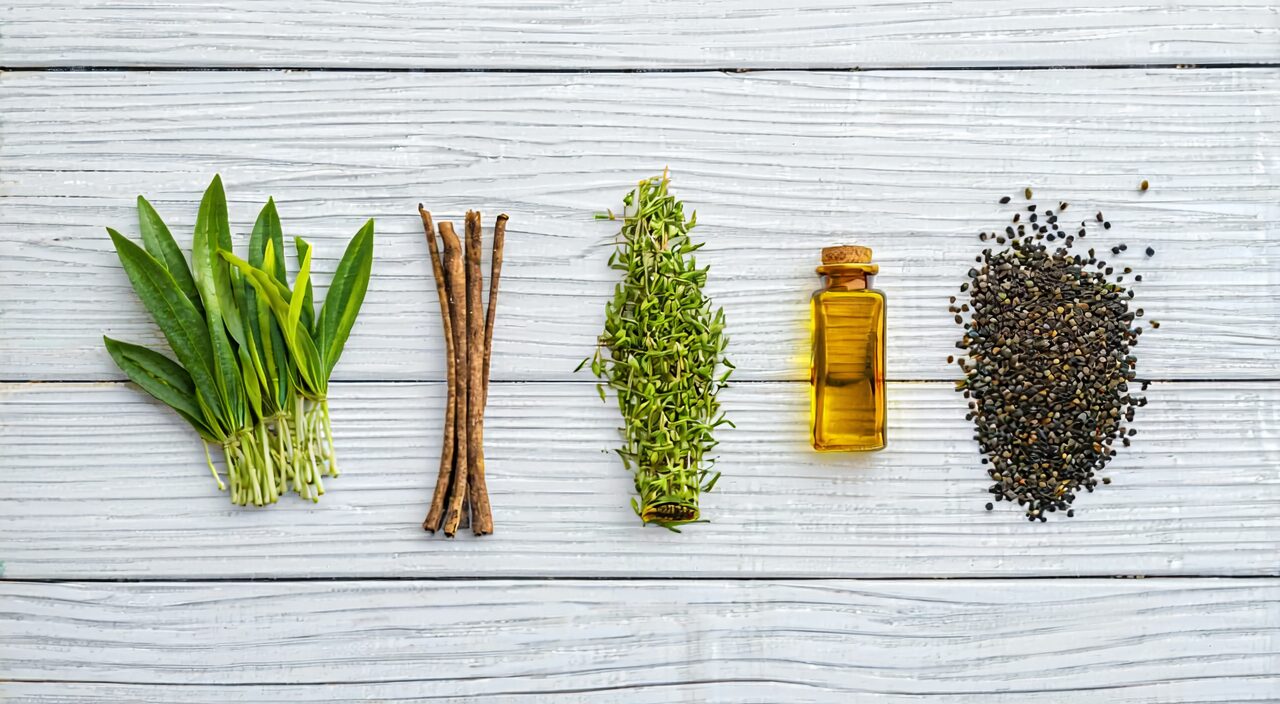
The composition of Yueju Wan is refined, with clear targeting in its combination. The commonly used herbs are shown in the table below:
| Herb | Primary Direction of Action |
|---|---|
| Xiangfu (Cyperus Rhizome) | Moves qi and resolves constraint, targeting qi constraint |
| Chuanxiong (Sichuan Lovage Root) | Invigorates blood and moves qi, targeting blood constraint |
| Cangzhu (Atractylodes Rhizome) | Dries dampness and strengthens the spleen, targeting dampness constraint |
| Zhizi (Gardenia Fruit) | Clears heat and drains fire, targeting fire constraint |
| Shenqu (Medicated Leaven) | Disperses food accumulation and harmonizes the stomach, targeting food constraint |
In the formula, Xiangfu is the chief herb, primarily moving qi and opening constraint, so that when qi moves, blood moves and when qi transforms, dampness transforms. Chuanxiong invigorates blood and removes stasis while also moving qi, assisting Xiangfu in regulating qi within the blood. Cangzhu dries dampness and transports the spleen, both treating dampness constraint and helping the spleen raise the clear. Zhizi is bitter, cold, clearing and descending, draining constrained fire from the triple burner. Shenqu disperses food accumulation and harmonizes the stomach, resolving food constraint.
The five herbs used together mutually restrain each other’s cold and warm properties. Although there is no dedicated herb for transforming phlegm, Xiangfu moves qi and Cangzhu dries dampness; as qi moves and dampness is eliminated, phlegm is unlikely to form, thus indirectly addressing phlegm constraint. It is important to note that the overall tendency of the formula is towards “dispersing” constraint rather than tonifying, making it more suitable for states where constraint is predominant and the body condition is relatively excess.
Traditional Functions and Regulatory Directions of Yueju Wan
In traditional Chinese medicine, Yueju Wan is not limited to a specific disease but is seen as a common choice for regulating qi mechanism constraint. The direction it guides is to restore the ascending, descending, entering, and exiting of the entire body’s qi movement by moving qi and resolving constraint.
When qi constraint is relieved, the manifestations arising from it—such as oppression and fullness in the chest and epigastrium, distension in the rib-side, abnormal taste in the mouth, lack of appetite, and low mood—may subsequently lessen.
Conventionally, Yueju Wan is often used in scenarios closely related to emotional unease and dietary irregularities, such as prolonged high stress, a tendency to suppress anger, or after food accumulation, where various “constraint” phenomena appear. However, the prerequisite for its effectiveness is that the body’s constraint is truly dominated by qi constraint and that the healthy qi is still relatively abundant. If the patient primarily suffers from deficiency patterns, Yueju Wan should not be regarded as a universal “constraint-resolving” formula.
Who Is Yueju Wan Suitable For? Common Manifestation Characteristics

Traditionally, Yueju Wan is more suitable for individuals with pronounced qi mechanism constraint and a tendency towards excess patterns. Its common manifestations often involve multiple aspects:
- Chest and Abdominal Area: Pronounced sensations of distension and oppression, possibly accompanied by wandering or fixed pain in the rib-side, which may be temporarily relieved by deep inhalation or belching.
- Epigastric Area: Frequent sensations of blockage, fullness, and bloating; reduced appetite; sometimes belching of putrid food and acid regurgitation.
- Emotional Aspects: Tendency towards depression, irritability, or frequent sighing, with symptoms often worsening with emotional fluctuations.
In addition, other signs of constraint may coexist:
- Dampness Constraint: Heavy sensation in the body, thick and greasy tongue coating.
- Food Constraint: Bad breath, irregular bowel movements, aversion to food.
- Fire Constraint: Irritability, dry and bitter mouth, dark urine, etc.
Overall, the pulse in this population is often wiry or slippery, the tongue coating may be white-greasy or yellow-greasy, and the constitution tends to be robust with few signs of deficiency. In Chinese medicine, this situation is often summarized as “mixed six constraints with qi constraint as the main factor.” From this perspective, Yueju Wan may be a regulating direction worth understanding, but whether it can be used still requires judgment based on tongue and pulse diagnosis and complete four-examination data.
When Is Yueju Wan Not Suitable?
Although Yueju Wan is powerful in resolving constraint, its moving and dispersing nature also determines clear situations where it is not applicable. The following categories require particular caution:
- Prominent Deficiency Patterns: If there is obvious fatigue, lack of strength, quietness with reluctance to speak, epigastric distension that prefers warmth and pressure, a sallow or pale complexion, a pale tongue, and a weak pulse, these suggest spleen-stomach qi deficiency or qi and blood insufficiency. Yueju Wan primarily attacks and disperses; using it alone can easily deplete healthy qi and potentially worsen the deficiency.
- Yin Deficiency with Effulgent Fire: Sensations of heat in the palms and soles, dry mouth and throat, night sweats, a red tongue with little coating or a thin, yellow, dry coating are all manifestations of fluid deficiency and ascending deficiency fire. In the formula, Xiangfu, Chuanxiong, and Cangzhu tend to be warm and drying. Although Zhizi clears heat, the overall formula is more acrid and dispersing than moistening, potentially further consuming yin fluids.
- Acute or Severe Conditions: Sudden severe abdominal pain, persistent vomiting, persistent high fever, vomiting blood, black stools, or significant weight loss in a short period do not fall within the normal scope of application of Yueju Wan and require immediate professional medical help.
- Special Physiological Stages: Pregnant women, breastfeeding women, children, and the elderly and frail have unique physical states, and the use of Yueju Wan should be fully discussed with a physician or professional before consideration.
- Associated Severe Emotional Disorders: For long-term depression, anxiety accompanied by insomnia, palpitations, chest oppression and pain, or even self-harm ideation, Yueju Wan cannot replace intervention by mental health specialists.
- Confirmed Organic Diseases: Conditions such as gastric ulcers, hepatitis, cholecystitis, pancreatitis, etc., should not be self-treated with Yueju Wan without a clear diagnosis and professional guidance.
Distinguishing Yueju Wan from Xiaoyao San, Chaihu Shugan San, Baohe Wan, and Erchen Tang
Yueju Wan is often compared with Xiaoyao San. Although both involve “constraint,” the emphases are distinctly different:
- Yueju Wan: Contains almost no tonifying components. Its action is strong and forceful, mainly breaking qi and dispersing constraint. It is more suitable for people with constraint that is predominantly excess, where signs of deficiency are not obvious.
- Xiaoyao San: Composed of Chaihu (Bupleurum), Danggui (Angelica Sinensis), Baishao (White Peony Root), Baizhu (Atractylodes Macrocephala), Fuling (Poria), Gancao (Licorice), etc. It soothes the liver, resolves constraint, nourishes blood, and strengthens the spleen. It is suitable for patterns of liver constraint, blood deficiency, and spleen weakness. Its manifestations, besides emotional depression and chest and rib-side distension and pain, often include fatigue, dizziness, poor appetite, and irregular menstruation—all signs of deficiency—with equal emphasis on nourishing blood and strengthening the spleen.
Chaihu Shugan San originates from Jingyue Quanshu and consists of Chaihu, Chenpi (Tangerine Peel), Chuanxiong, Xiangfu, Zhiqiao (Bitter Orange), Shaoyao (Peony), and Gancao. Its function is to soothe the liver and regulate qi, invigorate blood, and relieve pain, focusing on treating rib-side distension and pain, chest oppression, and frequent sighing caused by liver qi constraint. Its qi-moving strength is relatively strong, but it does not address food dispersion, dampness elimination, or fire drainage. If there is only liver qi discomfort without obvious food accumulation, dampness turbidity, or constrained heat, Chaihu Shugan San is more targeted; if multiple constraints are intertwined, Yueju Wan has broader coverage.
Baohe Wan, made with Shanzha (Hawthorn Fruit), Shenqu, Banxia (Pinellia Rhizome), Fuling, Chenpi, Lianqiao (Forsythia Fruit), and Laifuzi (Radish Seed), is a specialized formula for dispersing food and removing stagnation. It mainly addresses epigastric and abdominal fullness, belching of putrid food, acid regurgitation, and aversion to food or nausea caused by dietary accumulation. Its key diagnostic point lies in the two words “food accumulation,” and it has almost no constraint-resolving effect. If abdominal distension is accompanied by clear emotional triggers and rib-side distension, Baohe Wan alone cannot resolve the qi constraint problem.
Erchen Tang is a foundational formula for transforming phlegm, composed of Banxia, Juhong (Red Tangerine Peel), Fuling, and Gancao. It dries dampness, transforms phlegm, regulates qi, and harmonizes the middle. It is commonly used for cough with profuse phlegm, chest oppression, nausea, and a white-greasy tongue coating caused by phlegm-dampness stagnation. It targets phlegm-dampness and does not address fire constraint or food accumulation. If the constraint manifestation is predominantly phlegm-dampness, without obvious heat signs or food accumulation, Erchen Tang is sufficient; however, if there is concurrent constrained fire or food accumulation, Yueju Wan covers a broader range.
Overall, the distinctive feature of Yueju Wan is its ability to simultaneously address complex states where multiple constraints coexist, particularly suitable for the typical scenario of “qi constraint arising first, with other constraints following one after another.” Understanding the differences among these formulas helps avoid simplistically treating it as a universal “constraint-resolving panacea.”
Key Points to Note Before Use
The application of traditional formulas is never a simple matching of symptoms. Judging cold, heat, deficiency, and excess is crucial. When considering the use of Yueju Wan, the following points deserve special attention:
- Not Suitable for Long-term Use: Yueju Wan mainly moves and disperses. Generally, it should be stopped once the constraint is relieved. Long-term casual use may deplete healthy qi.
- Must Be Assessed According to Constitution: Differences in cold, heat, deficiency, and excess directly affect the applicability of the formula. The same symptom manifestations may correspond to different pattern types.
- Careful Product Selection: When independently evaluating relevant products, it is advisable to make a comprehensive judgment based on one’s actual constitution, symptom manifestations, and product descriptions.
- Professional Guidance Is Indispensable: Although Yueju Wan is a classic formula, whether it is truly suitable should be determined under the guidance of a Traditional Chinese Medicine professional before use.
This article is for informational reference only and cannot replace professional diagnosis or treatment advice.
Summary
Yueju Wan is an important representative formula in traditional Chinese medicine for “moving qi and resolving constraint.” Its core thinking is to seize qi constraint and drive the free flow of qi throughout the entire body, thereby influencing other constraints such as blood, dampness, food, and fire.
It is relatively suitable for individuals with chest oppression, abdominal distension, emotional constraint, belching, and food accumulation—conditions where constraint predominates and healthy qi is still abundant—but it is not applicable for deficiency patterns, yin deficiency with effulgent fire, acute severe illnesses, or special populations.
By distinguishing it from Xiaoyao San, Chaihu Shugan San, Baohe Wan, and Erchen Tang, one can more accurately understand the positioning of Yueju Wan within the category of constraint-resolving formulas. Regardless of which regulatory approach is chosen, it is recommended to first have a professional assess the constitution and pattern type before deciding on a plan, to avoid taking a wrong direction.