
Who Is Zhibai Dihuang Wan Suitable For? Composition, Effects and Contraindications

In traditional formulas, Zhibai Dihuang Wan is often mentioned by those focusing on nourishing yin and draining fire. However, people still feel confused when facing questions like “Is it suitable for me?” and “How is it different from Liuwei Dihuang Wan?”
This article will sort through these aspects from the perspectives of formula origin, composition, traditional usage, and applicable directions, helping you build a basic framework of understanding rather than directly applying it. Each person’s situation is different; whether it is suitable still needs to be judged in combination with individual constitution, symptoms, and professional advice.
What Is Zhibai Dihuang Wan
Zhibai Dihuang Wan is a formula created by adding the herbs Anemarrhena (Zhimu) and Phellodendron (Huangbai) to the base of Liuwei Dihuang Wan.
Liuwei Dihuang Wan itself mainly nourishes kidney yin. Adding Anemarrhena and Phellodendron shifts the overall direction more toward nourishing yin while clearing and subduing deficiency fire. Traditional Chinese medicine often understands the use of such formulas from the perspective of “yin deficiency with fire hyperactivity”—that is, the body lacks sufficient moistening and nourishment, while some deficiency-heat signs appear.
Origin and Composition
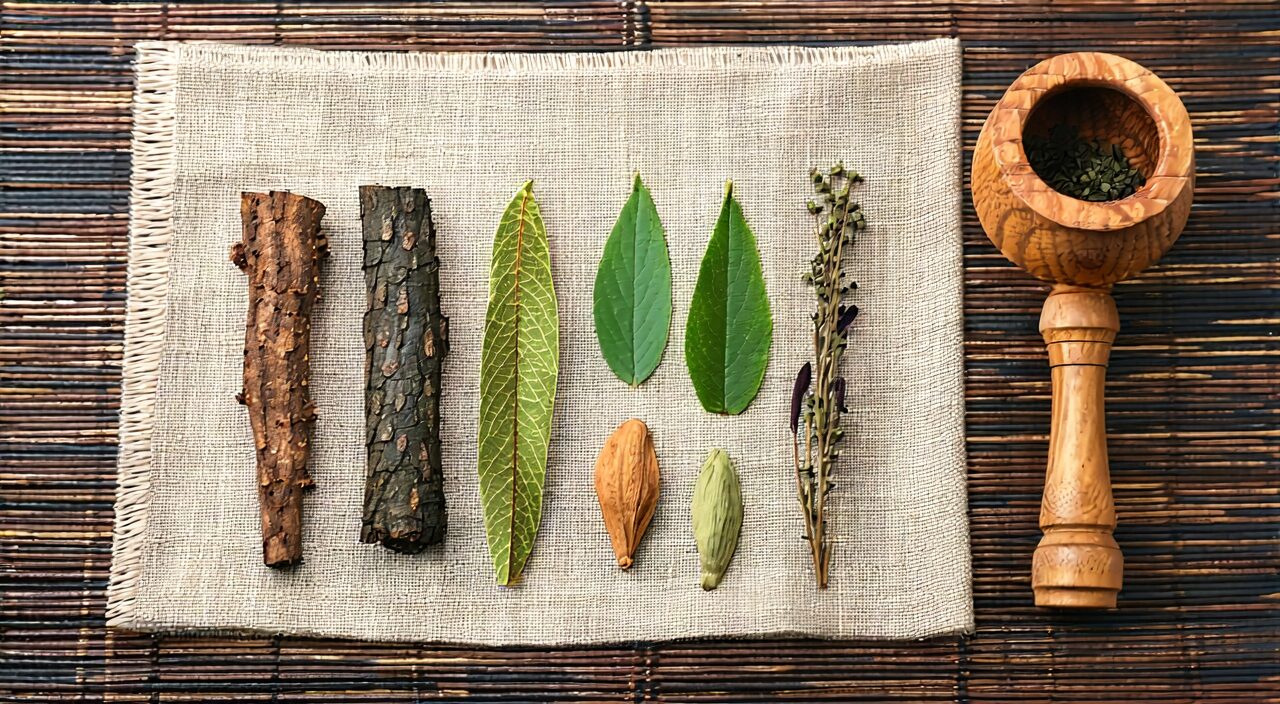
The formula Zhibai Dihuang Wan first appeared in the “Yizong Jinjian” (Golden Mirror of Medicine), derived from Liuwei Dihuang Wan created by Qian Yi in the Song Dynasty. Its composition and general action directions are as follows:
| Herb | Traditional Reference Dosage | General Action |
|---|---|---|
| Prepared Rehmannia (Shu Di Huang) | eight qian | Nourishes kidney yin, replenishes essence and marrow |
| Cornus fruit (Shan Zhu Yu) | four qian | Tonifies liver and kidney, astringes and secures |
| Chinese yam (Shan Yao) | four qian | Tonifies spleen and kidney, astringent |
| Alisma rhizome (Ze Xie) | three qian | Promotes urination, drains dampness, purges kidney turbidity |
| Moutan bark (Mu Dan Pi) | three qian | Clears heat, cools blood, clears liver fire |
| Poria (Fu Ling) | three qian | Strengthens spleen and leaches out dampness |
| Anemarrhena rhizome (Zhi Mu) | two qian | Clears heat and drains fire, nourishes yin and moistens dryness |
| Phellodendron bark (Huang Bai) | two qian | Clears heat and dries dampness, reduces deficiency heat |
The above dosages are based on traditional records; modern preparations have been adjusted accordingly and should not be self-compounded.
Formula Design and Rationale
The composition of Zhibai Dihuang Wan continues the “three tonifying and three draining” structure: Prepared Rehmannia, Cornus, and Chinese yam tonify the kidney, liver, and spleen respectively, while Alisma, Moutan, and Poria respectively drain kidney turbidity, clear liver fire, and leach out spleen dampness, creating tonification with drainage so that supplementation does not cause stagnation.
On top of this, Anemarrhena and Phellodendron are added. Anemarrhena excels at clearing heat and draining fire while also nourishing yin, and Phellodendron is good at clearing deficiency heat from the lower burner and reducing bone-steaming. The overall intent of the formula is to “strengthen the master of water to restrain the excessive yang”—meaning to calm deficiency fire by nourishing kidney yin. It does not directly target a single symptom but rather adjusts the imbalance between yin deficiency and fire hyperactivity.
Understanding the Traditional Effects

Traditionally, Zhibai Dihuang Wan is frequently used for “nourishing yin and draining fire,” with its applicable pattern mainly centered on kidney yin deficiency with fire hyperactivity. Common manifestations of this pattern include:
- Afternoon facial flushing and heat
- Heat in the palms and soles
- Night sweats (sweating during sleep)
- Dry mouth and throat, dry sore throat
- Tinnitus
- Soreness and weakness of the lower back and knees
- Yellow urine, relatively dry stools
The tongue often appears red with little coating.
It should be noted that these manifestations are not diagnostic criteria for a disease but rather reference clues used in traditional pattern differentiation. Even if several similar sensations appear, whether they truly belong to yin deficiency with fire hyperactivity still requires comprehensive assessment including overall presentation, tongue, and pulse. Self-diagnosis based on only one or two symptoms is not recommended.
Who Is It Suitable For

From a traditional pattern differentiation perspective, Zhibai Dihuang Wan is relatively more suitable for people who truly exhibit signs of kidney yin deficiency with fire hyperactivity. For instance, after ruling out other causes, having the following long-term presentations may fit this direction:
- Heat in the palms and soles
- Afternoon or evening tidal fever
- Noticeable night sweats
- Accompanied by dry mouth and throat, throat discomfort, irritability, tinnitus, lower back and leg soreness or weakness, and yellowish urine
Such individuals often have an underlying condition of yin fluid insufficiency, such as depletion of body fluids, long-term late nights, excessive fatigue, or poor recovery after febrile diseases. However, it is by no means the case that everyone with signs of “heat” is suitable. Whether it is appropriate to use must be determined by a professional based on the tongue, pulse, and complete pattern differentiation.
Who Should Avoid It
Zhibai Dihuang Wan is not suitable for everyone; the following situations are generally advised to avoid or exercise particular caution:
- Those with spleen and stomach deficiency-cold: People who usually feel cold, have a cold sensation in the stomach, poor appetite, are prone to abdominal bloating and diarrhea, and have loose stools. Anemarrhena and Phellodendron in the formula are relatively cold and may increase the burden on the spleen and stomach.
- Those with obvious yang deficiency: Pale complexion, cold limbs, aversion to cold with a preference for warmth, cold pain in the lower back and knees, and clear and copious nighttime urination—indications that lean toward kidney yang deficiency and are inconsistent with the formula’s direction.
- Those with marked excess heat or damp-heat: Such as high fever, thirst with desire for cold drinks, severe red and swollen sore throat, and a thick, yellow, greasy tongue coating—these do not belong to yin deficiency with fire hyperactivity and the formula should not be used.
- Special physiological periods: Pregnant women, breastfeeding women, children, and the elderly or frail must be evaluated by a physician before use and should not decide on their own.
- Those with allergies: People with a history of allergy to any ingredient in the formula should avoid it.
Furthermore, if symptoms such as tidal fever, night sweats, and dry mouth are severe, persist for a long time without relief, or are accompanied by unexplained weight loss, chest tightness and palpitations, abnormal breathing, severe abdominal pain, persistent vomiting, or black stools, you should seek medical attention promptly rather than self-selecting a formula to manage them.
How It Differs from Similar Formulas
Zhibai Dihuang Wan is often compared with Liuwei Dihuang Wan, Qiju Dihuang Wan, Maiwei Dihuang Wan, and Jinkui Shenqi Wan. Their emphases can be briefly seen from the table below:
| Formula | Main Direction | Common Pattern Characteristics |
|---|---|---|
| Liuwei Dihuang Wan | Nourishes kidney yin | Sore lower back and knees, dizziness, tinnitus, night sweats, but heat signs not obvious |
| Zhibai Dihuang Wan | Nourishes yin and drains fire | Kidney yin deficiency with marked deficiency fire, such as tidal fever, night sweats, dry mouth and throat, heat in palms and soles |
| Qiju Dihuang Wan | Nourishes kidney and liver, brightens eyes | Kidney yin deficiency with dry eyes, photophobia, blurred vision, dizziness |
| Maiwei Dihuang Wan | Nourishes kidney and lung | Kidney yin deficiency with dry cough with little phlegm, dry throat, deficiency-type wheezing |
| Jinkui Shenqi Wan | Warms and tonifies kidney yang | Aversion to cold, cold limbs, cold pain in lower back and knees, difficult or frequent urination, edema |
As can be seen, although they may all involve the “kidney” direction, the orientations of cold, heat, deficiency, and excess differ greatly. If one indiscriminately uses Zhibai Dihuang Wan as a general kidney tonic, it could lead in the wrong direction. The specific choice should be made based on a clear understanding of one’s constitution and pattern, combined with professional advice.
Frequently Asked Questions
Can Zhibai Dihuang Wan be taken together with Liuwei Dihuang Wan? Generally, it is not recommended to self-combine the two formulas. Liuwei Dihuang Wan focuses on nourishing yin, while Zhibai Dihuang Wan already adds heat-clearing herbs on top of yin-nourishing. Combining them creates overlapping directions and may increase the dosage of cold herbs, adversely affecting the spleen and stomach. Whether combination or substitution is needed should be decided by a doctor.
Can Zhibai Dihuang Wan be taken long-term? It is not recommended to take it long-term without professional guidance. In traditional use, formula adjustments are often made as the pattern changes. If the signs of yin deficiency with fire have improved, continued use may shift to a different type of imbalance. Whether to continue and for how long should be assessed based on the current condition.
If I have night sweats and dry mouth, can I use Zhibai Dihuang Wan? Night sweats and dry mouth can indeed belong to yin deficiency with fire, but they may also be caused by other reasons such as damp-heat, qi deficiency, disharmony between ying and wei, and so on. Self-selecting based on these two symptoms alone leads to easy misjudgment. It is recommended to first have a professional help clarify the pattern direction before considering suitability.
Is Zhibai Dihuang Wan suitable for menopausal individuals? Some menopausal individuals may indeed experience changes resembling yin deficiency with fire, such as hot flashes, night sweats, and irritability; traditionally, Zhibai Dihuang Wan may be considered as a direction to explore. However, the menopausal picture is complex, and not everyone fits this pattern. Some may concurrently have yang deficiency, qi stagnation, blood stasis, etc., so it cannot be generalized. Whether it is suitable still requires individualized pattern differentiation.
Summary
Zhibai Dihuang Wan is one of the representative traditional formulas for nourishing yin and draining fire. Its core approach is to moderate deficiency fire by nourishing kidney yin, not a simple “clear heat” or “reduce fire” tool. Its applicable direction is closely related to kidney yin deficiency with fire hyperactivity, and it is often mentioned when tidal fever, night sweats, dry mouth and throat, and heat in the palms and soles appear.
But no matter how much the above descriptions seem to “fit” your own situation, the step of professional pattern differentiation should not be skipped. Judgments about the cold, heat, deficiency, or excess nature of one’s constitution, as well as the selection and adjustment of formulas, always require holistic consideration. This article is for informational reference only and cannot replace professional diagnosis or treatment advice. If related symptoms persist or worsen, please consult a doctor or professional promptly.