
Food Accumulation Syndrome: What to Do When You Overeat and Can’t Digest? TCM Strategies for Dispelling Food Stagnation and Medication

After parties or festive meals, many people experience this trouble: the stomach feels stuffed like cotton, bloated and uncomfortable, belching with a sour, foul odor, a sticky or noticeably bad breath, and stools that are either loose and sour-smelling or simply impossible to pass. In TCM, this is often categorized as “food accumulation syndrome,” meaning the consumed food has not been properly digested and transported in time, stagnating in the gastrointestinal tract and becoming a burden.
Food accumulation is common, but its severity and accompanying constitutional factors vary. Some people simply overeat at a few meals and can recover by slightly fasting and drinking radish water; others find that food accumulation intertwines with damp-heat or spleen deficiency, dragging on into a chronic problem that may even trigger more complex stomach discomfort. Therefore, understanding the basic patterns and conditioning direction of food accumulation syndrome helps take appropriate measures early on, avoiding long-term reliance on digestive medications or overlooking potential risks.
How Does Food Accumulation Occur? It’s Not Just “Overeating”
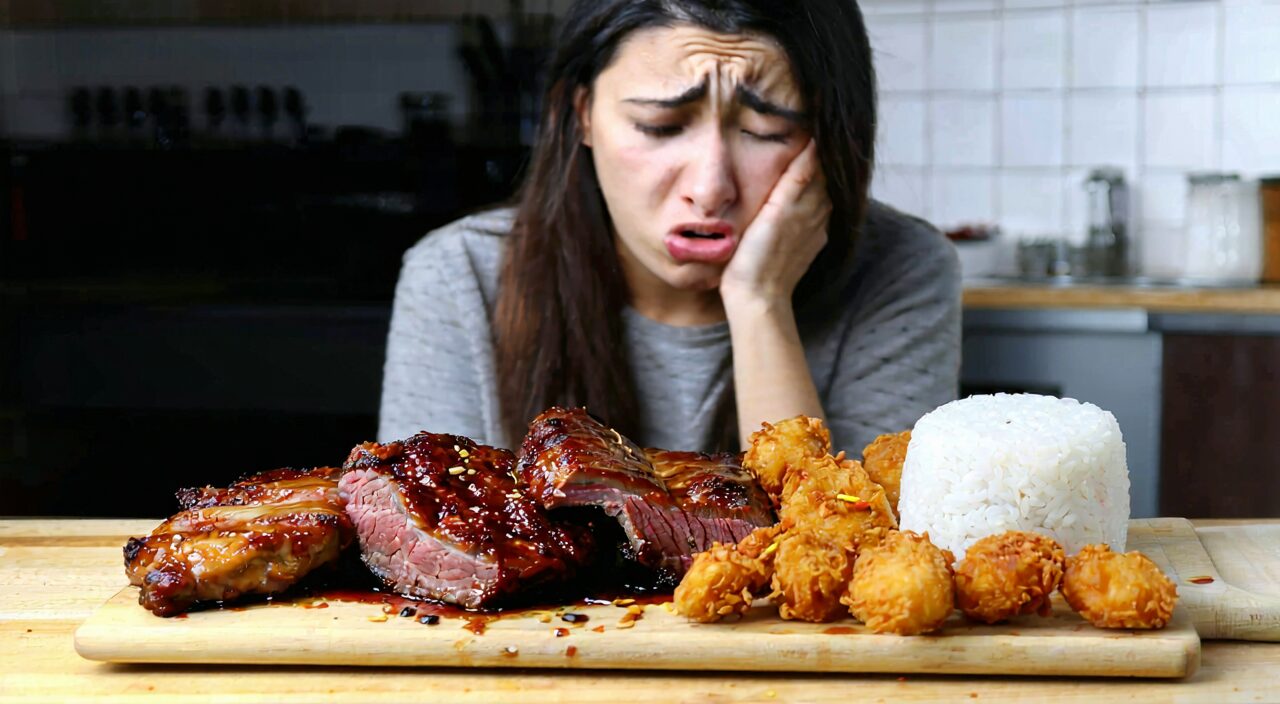
Traditional Chinese medicine often understands food accumulation from the perspective of “if food intake is doubled, the intestines and stomach are damaged.” When the amount of food consumed in a short time clearly exceeds the spleen and stomach’s transporting capacity, or when large quantities of greasy, cold, raw, sweet, sticky, or hard-to-digest foods are eaten, the food stagnates in the stomach and forms accumulation. Once food accumulation develops, it not only affects the ascending and descending of qi but also produces sour, foul, and turbid qi, which harass the mouth and throat upward and disturb the intestines downward, causing a series of digestive reactions.
Common causes include:
- Eating too much at once, especially high-protein, high-fat foods or sticky rice and other hard-to-digest items;
- Eating too quickly without chewing thoroughly, so the stomach and intestines don’t have time to secrete enough digestive fluids;
- Irregular eating habits, alternating between hunger and overeating, with pre-existing weak spleen and stomach function, so even a slight excess leads to accumulation;
- Eating during emotional fluctuations, where constrained liver qi impairs the stomach’s descending function, making food more likely to stagnate.
These habits are particularly prone to appear together during holidays, parties, or stressful periods, which is why many people repeatedly suffer from food accumulation at these times.
Typical Manifestations of Food Accumulation Syndrome: From Sour Belching and Acid Reflux to Thick Greasy Tongue Coating
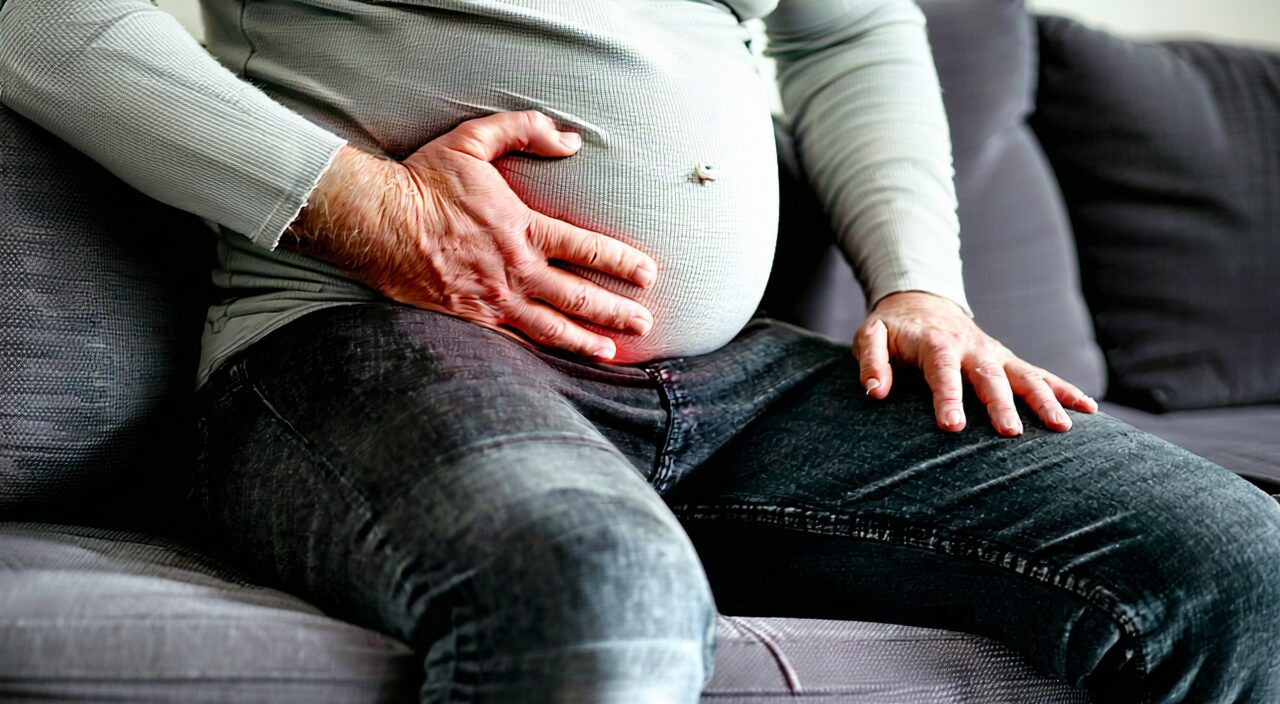
The clues to food accumulation syndrome often lie in the signals the body sends. The most typical symptoms are concentrated in the digestive tract.
Signals in the Upper Digestive Tract
- Fullness and congestion in the epigastric region, often feeling that food is stuck in the chest and won’t go down after meals;
- When belching or experiencing acid reflux, a sour, rancid, or spoiled taste emerges in the mouth—known as “sour belching and acid regurgitation,” which differs from ordinary acid reflux odor;
- Obvious bad breath upon waking, with the tongue coating becoming thick and greasy, whitish or slightly yellow, as if coated with a layer of paste.
Reactions in the Lower Digestive Tract
Food accumulation can also disrupt bowel rhythm:
- Stools that are sour and foul-smelling, or contain undigested food residues, with a loose consistency;
- Some present with constipation, dry hard stools that remain unpassed for days, with a distended abdomen to the touch;
- Markedly increased flatulence with an exceptionally strong odor.
Possible Systemic Accompanying Sensations
- Body heaviness, dizziness with a foggy sensation, no desire to eat, and occasionally a mild feverish feeling;
- If food accumulation persists for some time, it may affect sleep, manifesting as “when the stomach is not in harmony, one cannot rest peacefully”—difficulty falling asleep, light sleep, and a constant sensation of something lodged in the stomach causing unease.
These manifestations do not necessarily appear together and may vary depending on what accompanies the food accumulation.
Simple Food Accumulation, Food Accumulation with Dampness, and Food Accumulation with Heat: Differentiating Three Common Directions
Even though overeating and indigestion are the common thread, the emphasis of food accumulation symptoms varies according to different constitutions and dietary habits. Broadly, several common directions can be distinguished, which also helps understand why different individuals may be suited to different methods of dispelling food stagnation.
Simple Food Accumulation
This is the accumulation that follows one or several clear episodes of overeating, primarily featuring stomach and abdominal distention, sour belching and acid reflux, nausea, aversion to food, and either loose or constipated stools. The tongue coating is thick white or greasy, but the tongue body is generally not particularly red. It is commonly seen in young people or adults with relatively normal spleen-stomach function who merely indulge occasionally.
Food Accumulation with Dampness
If the diet includes too many sweet, sticky, cold, raw, or greasy foods, or if one lives in a damp environment and the spleen and stomach’s ability to transport water-dampness is weak, food accumulation easily combines with damp turbidity. In this case, besides stomach distention, there are often sensations of body heaviness, a sticky unpleasant feeling in the mouth, unformed sticky stools that cling to the toilet, and a white, greasy, slippery tongue coating. Simple digestives may not be sufficient, and the approach needs to also address resolving dampness and moving qi.
Food Accumulation Transforming into Heat or with Heat
When food accumulation remains in the stomach and intestines for a long time, just as a garbage heap ferments and generates heat, it tends to transform into heat. Common manifestations include stomach distention accompanied by heartburn, worsening dry mouth and bad breath, swollen and painful gums, dry hard stools, or loose stools with a burning sensation in the anus during defecation, and a tongue coating that turns yellow and greasy. For this type, one needs to consider clearing the heat generated by the food accumulation, rather than simply using warm, drying digestive remedies.
Distinguishing these three general directions can help us target the selection of Chinese patent medicines more precisely, rather than taking the same digestive tablet for every case of bloating.
Selection Approach for Chinese Patent Medicines that Disperse Food Stagnation
TCM has a category of formulas specifically designed to “disperse food and remove stagnation.” They are not simply about promoting digestion, but focus more on restoring the stomach and intestines’ harmonious descending and patency. Below are several common Chinese patent medicines, each with a different emphasis, which can serve as a reference for understanding traditional management approaches.
Bao He Wan: A Common Formula for Early-stage Food Accumulation
Bao He Wan is one of the representative formulas for dispersing food stagnation, commonly used when food accumulation and stagnation occur but without obvious heat transformation and when the spleen and stomach are not deficient. It contains ingredients like hawthorn (shan zha), medicated leaven (shen qu), and radish seed (lai fu zi), traditionally used to resolve various food stagnations, especially those caused by meat and wheat-based foods. If the main symptoms are epigastric and abdominal distention, sour belching and acid reflux, aversion to food, and sticky sour-smelling stools with a thick white greasy tongue coating, Chinese patent medicines related to Bao He Wan may be a direction traditionally considered. However, it tends to focus on promoting digestion and guiding out stagnation; if the spleen and stomach are relatively weak or if there are already obvious signs of heat, using it alone may not be an ideal match.
Zhi Shi Dao Zhi Wan: Addressing Both Food Accumulation and Damp-Heat Stagnation
When food accumulation combines with damp-heat, presenting with epigastric and abdominal distention and pain, sticky unformed stools or tenesmus, a red tongue with a yellow greasy coating, the approach of Zhi Shi Dao Zhi Wan leans more toward dispersing accumulation, guiding out stagnation, and clearing and transforming damp-heat. It contains ingredients like rhubarb (da huang), unripe bitter orange (zhi shi), and skullcap root (huang qin), and has a stronger downward-pushing force to move stagnation than Bao He Wan. It is commonly used for cases where food accumulation and damp-heat are intertwined, with obvious abdominal distention and pain. However, precisely because its draining action is strong, it is not suitable for indiscriminate use by those with weak constitutions, spleen-stomach deficiency cold, or simple food accumulation without marked damp-heat.
Da Shan Zha Wan: Specializing in Resolving Greasy Meat Accumulation
The composition of Da Shan Zha Wan is relatively simple, with hawthorn as the main ingredient, focusing on resolving greasy meat accumulation while also moving qi and promoting appetite. If you simply ate too much meat or greasy dishes at one meal and feel a heavy, greasy, bloated sensation in the stomach, it is often regarded as a straightforward digestive option. However, its spectrum of action is narrow; for rice and wheat stagnation or conditions already accompanied by dampness or heat, its effect may be limited.
It is especially important to note that each of the above Chinese patent medicines has its own medicinal bias. Whether they are suitable still requires consideration of individual constitution, symptoms, and product instructions; when necessary, consult a TCM professional for assessment. If self-medicating, and symptoms do not improve after three to five days, or if abdominal pain worsens, fever, vomiting, or other symptoms appear, use should be discontinued and medical attention sought promptly.
Dietary Regulation After Food Accumulation: More Than Just “Skipping a Few Meals”
After food accumulation occurs, many instinctively think, “I should eat less for a while” or “just fast.” Moderately reducing food intake to allow the stomach and intestines to rest is indeed a very basic and effective measure. However, purely fasting or only drinking thin congee may not always quickly resolve the accumulated stagnation; dietary approaches can be more targeted.
Mild Fasting and Gentle Liquid Diets
During the acute phase of food accumulation, you can adjust according to the following pace:
- First, try drinking only small amounts of rice soup or oil-free vegetable broth for one or two meals, completely pausing solid foods to give the spleen and stomach a buffer for recovery;
- Once the sensation of fullness subsides somewhat, gradually transition to soft congee, steamed egg custard, and other easily digestible semi-liquid foods;
- Avoid immediately resuming a normal meal size as soon as the bloating eases, or eating greasy, cloying foods like barbecue or hot pot, as this can easily lead to a second bout of stagnation.
Traditional Use of Radish Water
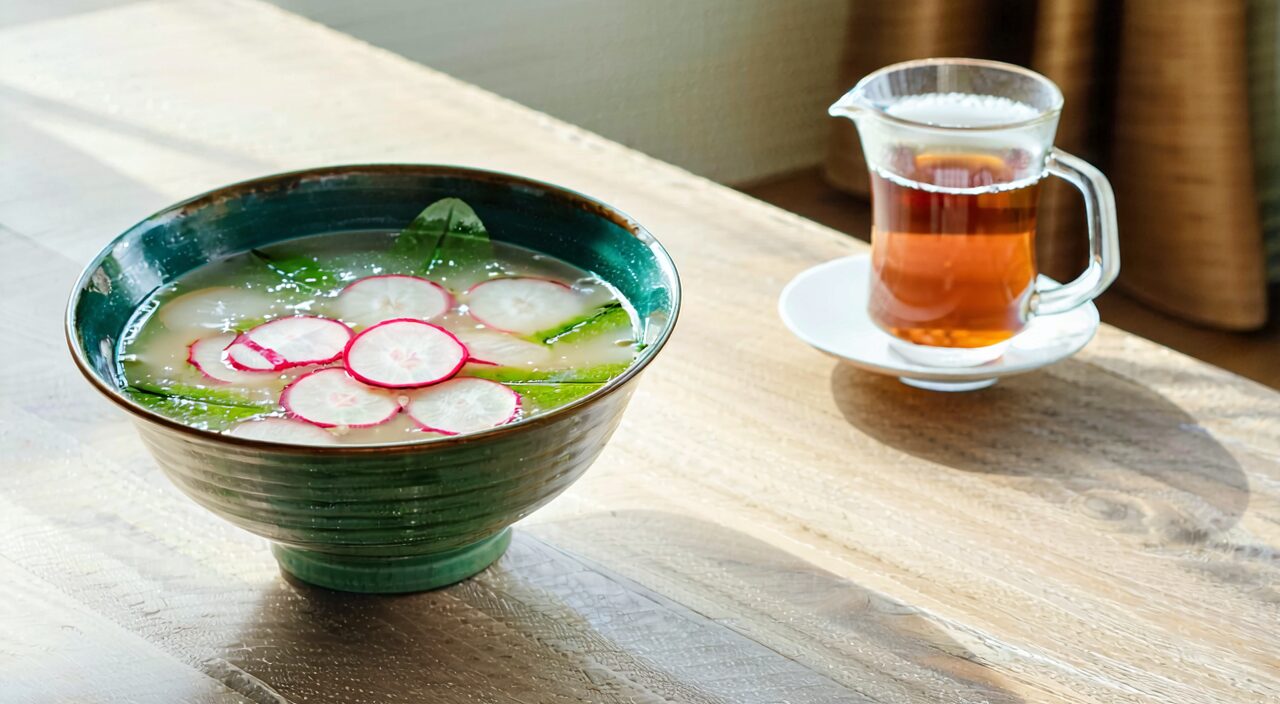
White radish is believed in TCM to have the effect of descending qi and dispersing food. Cutting white radish into chunks or slices, boiling it in water, and then drinking the soup and eating the radish is a common folk method for relieving distention. If food accumulation is marked by qi stagnation and pronounced bloating, this downward-driving force may help relieve the fullness and oppression. However, if there are simultaneously signs of deficiency-cold such as feeling chilled and having loose stools that are not foul-smelling, consuming large amounts of radish water may worsen the discomfort and should be adjusted based on individual response.
Suitable Scenarios for Hawthorn-Malt Drink
For definite meat-related stagnation, hawthorn boiled in water is often used as an adjunct; for stagnation caused by rice, wheat, and starchy foods, stir-fried malt boiled in water is more targeted. The two can also be used in combination, but note that hawthorn is sour, and people with excessive stomach acid or frequent heartburn should not drink large amounts. These herbal tea recipes have clear purposes, but they are only supplementary and cannot replace overall dietary restructuring.
Characteristics and Precautions for Food Accumulation in Children
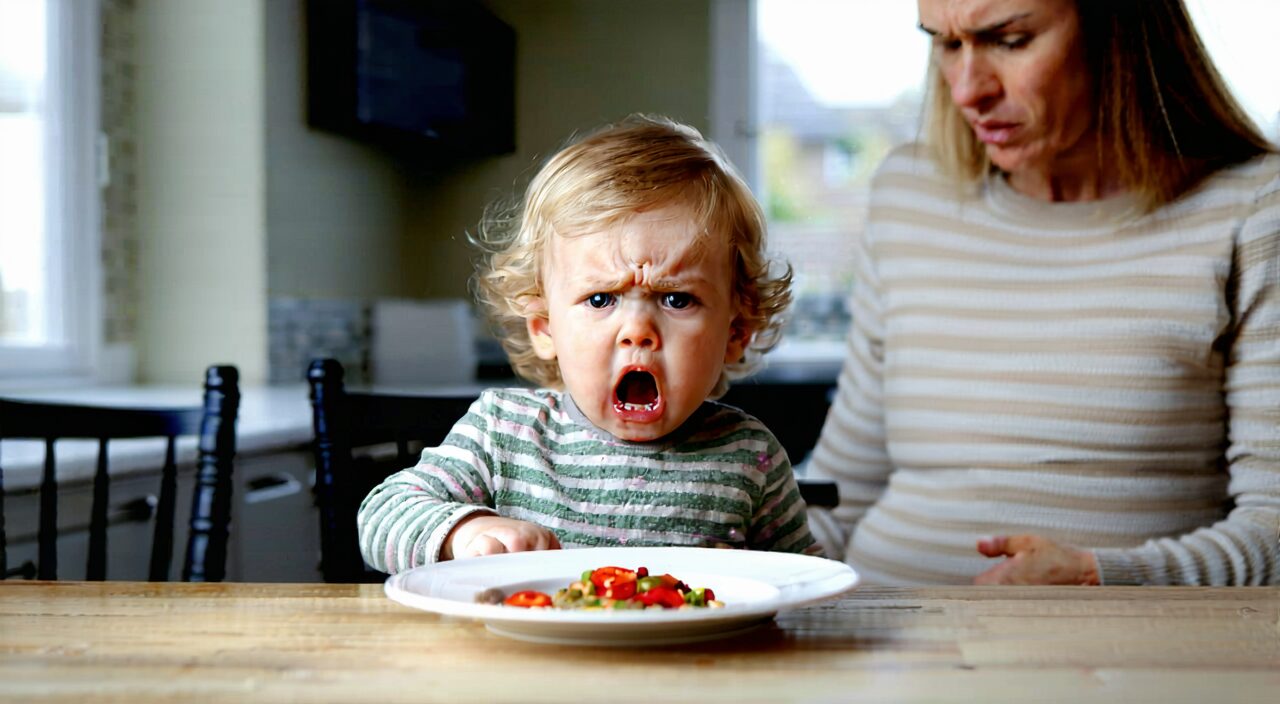
Children’s spleen-stomach function is not yet fully mature, and “spleen is often insufficient” is a physiological characteristic; therefore, food accumulation is especially common in children, and its presentation sometimes differs greatly from that in adults.
Common Signals
Children often cannot accurately describe stomach bloating and are more likely to present with:
- A sudden loss of appetite, even refusing favorite snacks;
- A sour, foul odor detectable around the abdomen;
- Stools that are either dry like sheep droppings or loose and sour-smelling;
- Restless sleep at night, tossing and turning, grinding teeth, or sudden nighttime crying;
- Thick and greasy tongue coating.
Aspects to Pay Attention to During Regulation
- Occasional use of children-specific digestive and stagnation-dispersing products may offer short-term help, but they should not be relied on long-term; repeatedly using digestive aids can easily damage children’s already fragile spleen-stomach qi;
- Dietary management is the more central aspect, including adjusting feeding schedules and controlling snacks, especially sugary drinks and cold foods;
- If a child’s food accumulation is accompanied by fever, severe abdominal pain, frequent vomiting, or blood in the stool, it must never be treated as simple “overeating” at home; seek medical attention immediately to rule out acute abdomen and other risks;
- Whether using Western or Chinese medicine, pediatric medication should be administered under the guidance of a doctor or pharmacist; do not simply halve the adult dose.
Hidden Dangers of Recurrent Food Accumulation: Be Alert to Deeper Issues
An occasional bout of food accumulation is a temporary functional disorder. However, if food accumulation occurs frequently, or you feel blocked and bloated after eating even a small amount and the sensation persists, you need to consider whether there is a deeper deviation in spleen-stomach function. For example, long-term dietary indiscretion may damage stomach yin or consume spleen qi, leading to chronic gastritis or functional dyspepsia. Some presentations of gastric ulcers may also be mistaken for simple food accumulation, thus delaying diagnosis.
Therefore, when the following situations occur, you should no longer remain at the level of daily regulation but should seek professional evaluation:
- Recurrent or persistent upper abdominal distention and pain, especially if the pain pattern changes;
- Accompanied by unexplained weight loss, anemia, black stools, or vomiting blood;
- Abnormally prolonged fullness after eating, even feeling bloated after eating very little;
- Food accumulation symptoms intertwined with significant low mood, anxiety, insomnia, etc.;
- New-onset indigestion in middle-aged and elderly individuals unresponsive to routine digestive regulation.
These signals may suggest the need for further investigation such as gastroscopy or other digestive system evaluations, rather than simply switching to a different digestive patent medicine.
Summary
Food accumulation syndrome is a common digestive problem in daily life, often caused by dietary indiscretion, overeating, or consuming hard-to-digest foods, with main manifestations including stomach bloating, sour belching and acid reflux, and thick greasy tongue coating. Distinguishing the three different directions—simple food accumulation, accumulation with dampness, and transformation into heat—helps in selecting Chinese patent medicines and dietary regimens in a more targeted manner. Traditional formulas for dispersing food stagnation such as Bao He Wan, Zhi Shi Dao Zhi Wan, and Da Shan Zha Wan each have their own emphasis and must be judged based on individual circumstances; they should not be used arbitrarily in the long term.
Dietary management is the foundation of regulating food accumulation. Moderate mild fasting and drinking radish water or hawthorn-malt water can serve as adjunctive measures, but if food accumulation recurs or is accompanied by severe abdominal pain, fever, black stools, etc., timely medical attention must be sought to rule out deeper gastrointestinal diseases. Even more caution is needed for food accumulation in children, focusing on adjusting feeding habits and avoiding over-reliance on digestive aids. This article is for informational reference only and cannot replace professional diagnosis or treatment advice.