
Ba Zhen Tang: Who Is It Suitable For? Composition, Benefits, and Contraindications

Among traditional herbal formulas, Ba Zhen Tang is one of the representative remedies for tonifying both Qi and Blood. It is often brought up when people feel tired and their physical strength declines. Many overseas Chinese users encountering Ba Zhen Tang for the first time often want to clarify several questions: Who exactly is it suitable for? What herbs does it consist of? And what contraindications should be noted?
This article, from a traditional Chinese medicine perspective, reviews the basic composition of Ba Zhen Tang, its common applications, suitable constitutional characteristics, and the differences from similar formulas such as Si Wu Tang and Si Jun Zi Tang. It is for knowledge exchange only and does not constitute any medical advice.
Composition of Ba Zhen Tang
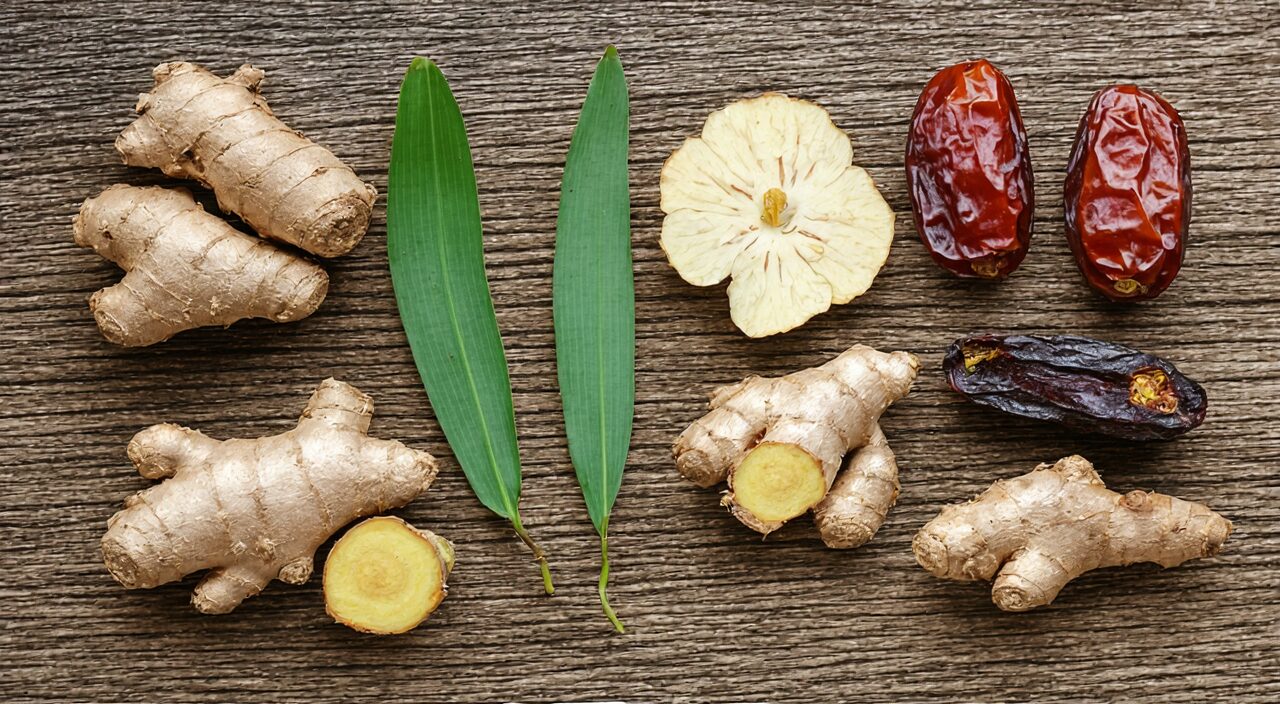
Ba Zhen Tang originates from the Ruizhutang Jingyan Fang and is formed by combining two basic formulas—Si Jun Zi Tang and Si Wu Tang—addressing both Qi supplementation and blood nourishment. Its herbal composition and functions are roughly as follows:
| Herb | General Role in the Formula | Brief Description |
|---|---|---|
| Ginseng | Tonify Qi | Greatly tonifies original Qi, often used for Qi deficiency fatigue |
| Atractylodes | Strengthen spleen and tonify Qi | Assists transportation and transformation, reduces dampness stagnation |
| Poria | Strengthen spleen and drain dampness | Calms the mind, assists Atractylodes in strengthening the spleen |
| Licorice | Harmonize all herbs and tonify middle | Harmonizes medicinal properties, also has Qi-tonifying effect |
| Angelica Sinensis | Nourish and harmonize blood | Often used for blood deficiency causing pale complexion and dizziness |
| Chuanxiong | Invigorate blood and move Qi | Moves Qi within the blood, preventing tonic herbs from causing stagnation |
| White Peony | Nourish blood and soften liver | Relieves spasms and pain, works with Angelica to nourish blood |
| Prepared Rehmannia | Nourish yin and tonify blood | Replenishes essence and blood, often used for blood deficiency |
In traditional usage, fresh ginger and jujube are often added during decoction to reduce the medicinal harshness on the stomach and enhance the nourishing effect. The specific ratios and modifications are adjusted according to individual conditions and should not be casually combined on one’s own.
Conditions Where Ba Zhen Tang Is Traditionally Considered Suitable

In TCM theory, Qi and Blood mutually generate each other: “Qi is the commander of Blood, and Blood is the mother of Qi.” When Qi and Blood are insufficient, it is often not pure Qi deficiency or pure Blood deficiency alone, but rather a coexistence of both. Ba Zhen Tang is based on this idea by simultaneously tonifying Qi and nourishing Blood.
Traditionally, Ba Zhen Tang is viewed more as a foundational formula for gently tonifying both Qi and Blood, commonly used for the following manifestations of dual Qi and Blood deficiency:
- Chronic or recurrent fatigue and weakness: Not easily relieved by rest, with shortness of breath and a disinclination to talk after daily activities.
- Lack of luster in complexion and lips: Pale or sallow complexion, pale lips and nails.
- Dizziness and palpitations: Occasional light-headedness, feeling the heartbeat when at rest, more pronounced after exertion.
- Poor appetite and weak digestion: Easily bloated, reduced food intake, or loose, unformed stools.
- Weakness during recovery or after prolonged depletion: After illness, childbirth, or prolonged overexertion, slow recovery of physical strength, and prone to spontaneous sweating.
These manifestations may appear alone or concurrently and are generally related to inadequate generation of Qi and Blood or excessive consumption. Whether it truly belongs to a dual Qi and Blood deficiency requires professional assessment including tongue and pulse diagnosis; it is not advisable to self-identify based on just one or two symptoms.
Conditions Where Ba Zhen Tang May Not Be Suitable
Not all cases of poor stamina or poor complexion are suitable for Ba Zhen Tang. If used incorrectly, it may even aggravate the condition. The following situations are traditionally considered to require avoidance or cautious use:
- Excess heat constitution or active infection: e.g., flushed face, high fever, red and swollen throat, irritability and thirst, dark urine, dry stools; tonifying Qi and Blood may worsen heat.
- Damp-heat or heavy phlegm-dampness: Heavy body sensation, thick greasy tongue coating, abdominal distension, nausea, or sticky difficult bowel movements; using tonic formulas easily obstructs the spleen and stomach’s transportation.
- Acute external pathogenic attack: Cold, fever, cough, aversion to wind, and other exterior syndromes that are not yet resolved; generally, tonics should not be used to avoid prolonging the illness.
- Certain specific physiological stages with unclear conditions: Such as pregnancy, postpartum, preconception, or presence of significant organic diseases; must be evaluated by a professional TCM practitioner before deciding to use.
- Presence of acute symptoms: Sudden severe abdominal pain, vomiting, diarrhea, bleeding tendency, severe chest tightness or pain, etc.; emergency management should take priority and self-administration of tonifying formulas is not advisable.
Furthermore, although Ba Zhen Tang is a gentle tonic, if one’s digestive function is particularly weak, even a single use may increase discomfort such as gastric bloating and decreased appetite. Therefore, it is recommended to have a TCM professional familiar with your constitution evaluate before use.
Differences Between Ba Zhen Tang and Similar Formulas
Those new to Ba Zhen Tang often encounter a series of formulas with similar names. To help clarify the distinctions, a brief comparison is made below in terms of composition and primary focus:
| Formula | Core Composition | Primary Focus |
|---|---|---|
| Si Wu Tang | Angelica Sinensis, Chuanxiong, White Peony, Prepared Rehmannia | Focuses on nourishing and regulating blood; its Qi-tonifying strength is relatively weak, primarily for blood deficiency |
| Si Jun Zi Tang | Ginseng, Atractylodes, Poria, Licorice | Focuses on strengthening the spleen and tonifying Qi; it is a foundational formula for Qi deficiency and does not directly nourish blood |
| Ba Zhen Tang | Combination of Si Wu Tang and Si Jun Zi Tang | Dual tonification of Qi and Blood, relatively gentle in strength, used when both Qi and Blood deficiency are present together |
| Shi Quan Da Bu Tang | Ba Zhen Tang plus Astragalus and Cinnamon | Enhances Qi tonification and warming yang, warmer tonic, suitable for dual Qi and Blood deficiency accompanied by cold signs |
| Gui Pi Tang | Atractylodes, Ginseng, Astragalus, Angelica Sinensis, Poria, Polygala, Sour Jujube Seed, Aucklandia, Longan Fruit, Licorice | Tonifies Qi and Blood while adding calm the mind and spirit, often used for heart and spleen deficiency with insomnia, palpitations, and forgetfulness |
The differences among these formulas do not indicate superiority or inferiority but rather target different constitutional imbalances and symptom emphases. In actual practice, a single formula is rarely used without modification, so it is not advisable to apply one formula directly to all your own symptoms.
Important Reminders About Using Ba Zhen Tang
- Any tonifying formula requires the spleen and stomach’s transportation and transformation ability as a foundation. If there is heavy dampness or pronounced bloating, it may be necessary to first adjust digestive function before considering tonic herbs.
- Traditional formulas emphasize specific combinations, dosages, and decoction methods. Modifying them yourself or using them long-term may lead to unexpected deviations.
- Individual constitutions vary greatly; the same formula can react differently in different people. If any discomfort occurs, discontinue use promptly and consult a professional.
Summary
Ba Zhen Tang is a traditional foundational formula for dual supplementation of Qi and Blood, formed by combining Si Jun Zi Tang and Si Wu Tang, theoretically addressing both Qi supplementation and blood nourishment. In traditional application, it is often considered for fatigue, poor complexion, dizziness, palpitations, decreased appetite, and deficiency during recovery caused by dual Qi and Blood deficiency.
However, it is not suitable for everyone. Conditions such as excess heat, damp-heat, heavy phlegm-dampness, acute external syndromes, and certain specific physiological stages should be avoided or approached with caution. Compared with Si Wu Tang, Si Jun Zi Tang, Shi Quan Da Bu Tang, and Gui Pi Tang, the distinctive feature of Ba Zhen Tang lies in its gentle dual tonification of Qi and Blood, not in being more potent than any of them.
Before using any formula, understanding its composition, traditional uses, and limitations is far more important than blindly taking it. This article aims to provide an objective framework of formula knowledge and does not serve as a basis for personal health regulation or medication. If you experience long-term, recurrent, or notably pronounced discomfort, it is recommended to seek help from a professional who can comprehensively assess your constitution, to avoid delay.