
What Is Bai Hu Tang (White Tiger Decoction) Suitable For? Composition, Effects, and Contraindications

In traditional Chinese medicine (TCM), persistent high fever, profuse sweating, intense thirst with a desire for cold drinks, and restlessness are often classified as typical manifestations of “exuberant heat in the Yangming qi aspect.” When these symptoms appear together, one classic formula is frequently mentioned—Bai Hu Tang (White Tiger Decoction). For overseas Chinese, understanding Bai Hu Tang is not about self-prescribing, but rather about gaining clearer insight into how TCM approaches such conditions when they or their family members experience similar symptoms.
Traditional Understanding and Core Functions of Bai Hu Tang
Bai Hu Tang originates from Zhang Zhongjing’s Treatise on Cold Damage and is one of the foundational formulas for clearing heat at the qi aspect. TCM theory holds that it primarily addresses the state of “exuberant heat in the Yangming qi aspect.” This state is neither an exterior syndrome nor a fu-organ excess syndrome; instead, the pathogenic heat has penetrated from the exterior to the interior but has not yet bound with intestinal dregs. It diffuses through the qi aspect, causing the body to display a range of excess-heat signs.
In terms of therapeutic direction, Bai Hu Tang mainly focuses on “clearing heat” and “generating fluids.” “Clearing heat” centers on venting diffuse heat from the qi aspect, not directly draining fire and resolving toxins like Huang Lian Jie Du Tang (Coptis Decoction to Resolve Toxins). “Generating fluids” helps restore body fluids depleted by high fever, thereby alleviating extreme thirst and irritability.
Traditionally, this formula is often considered for high fever, sweating, excessive thirst with a desire to drink copiously, vexation, and a flooding large pulse. It is particularly referenced during the intense heat stages of certain acute infectious diseases. It is essential to emphasize that such applications must be guided by a professional’s pattern diagnosis; this article only provides a directional introduction.
Composition of Bai Hu Tang
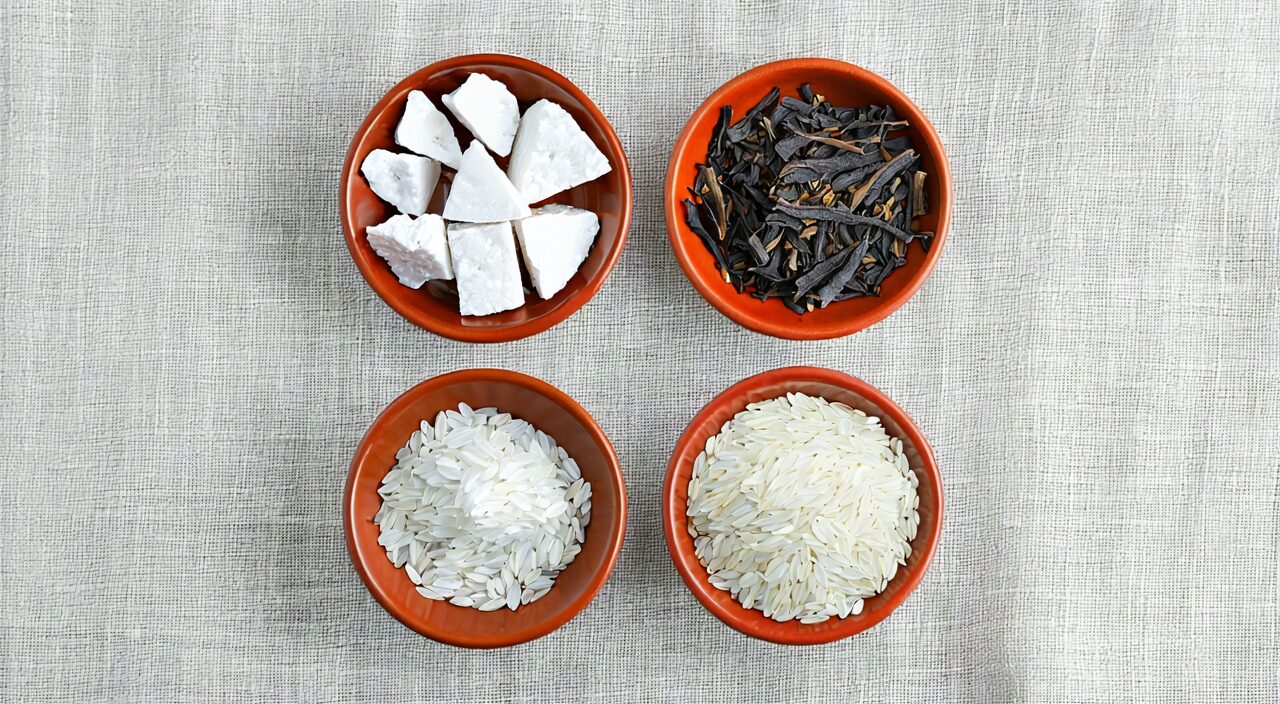
The composition of Bai Hu Tang is remarkably succinct, with only four herbs, yet it demonstrates a clear distinction between primary and secondary roles and a well-defined direction of action. The table below presents its components and their traditional roles within the formula:
| Medicinal Herb | Traditional Role in the Formula |
|---|---|
| Gypsum (Shi Gao) | Pungent, sweet, and very cold; clears and relieves excess heat in the qi aspect, eliminates vexation, and stops thirst; acts as the chief ingredient. |
| Anemarrhena (Zhi Mu) | Bitter, cold, and moistening; assists Gypsum in clearing heat while nourishing the body fluids damaged by high fever. |
| Licorice (Gan Cao) | Sweet and neutral; harmonizes the middle burner, supplements qi, and moderates the harsh cold of Gypsum and Anemarrhena to prevent damage to the stomach. |
| Polished Round-Grained Rice (Jing Mi) | Sweet and neutral; protects stomach qi, ensuring that heat is cleared without injuring the middle burner. |
Looking at the overall combination, Gypsum and Anemarrhena work together to clear heat while protecting yin fluids. The addition of Licorice and Rice prevents the excessively cold medicinals from harming the spleen and stomach. This demonstrates that even when excess heat is pronounced, ancient physicians still valued the principle of “preserving fluids and protecting stomach qi.”
Who Is Bai Hu Tang Suitable For?

Bai Hu Tang is not suitable for every type of fever; its use follows relatively strict directional indications. Traditionally, the “Four Major Signs” serve as reference criteria: high fever, profuse sweating, extreme thirst, and a flooding large pulse. Specifically, it may be suitable for individuals with the following characteristics:
- Persistent high fever: Markedly elevated body temperature with burning skin upon touch, and aversion to heat rather than cold.
- Pronounced, profuse sweating: Generalized heavy sweating, not localized mild perspiration. The temperature may temporarily drop after sweating but soon rises again.
- Extreme thirst with a desire for cold water: Severe dry mouth, instinctive craving for cold beverages, and drinking large amounts frequently.
- Restlessness and irritability: Inner vexation, agitation, inability to sit still, and emotional distress caused by the high fever.
- Tongue and pulse signs matching excess heat: Reddened tongue body with a dry yellow coating; pulse is flooding, large, and forceful, or slippery and rapid.
Simply put, when these features emerge together without pronounced aversion to cold and without constipation, abdominal distension, or hard fullness, Bai Hu Tang may traditionally be considered one of the approaches. This corresponds to the TCM description of “the exterior syndrome has resolved, and interior heat is at its height,” which belongs to an excess-heat pattern in the qi aspect.
It should also be noted that if high fever persists for a long time, or is accompanied by altered consciousness, shortness of breath, or severe headache, such situations are beyond self-assessment and formula reference; one must immediately seek emergency medical treatment. Discussion of Bai Hu Tang cannot replace modern medical management for acute high-fever conditions.
Contraindications and Those Unsuitable for Bai Hu Tang
Although Bai Hu Tang is a famous heat-clearing formula, its cold and cooling power is strong. If applied in the wrong direction, it can easily damage yang qi. The following conditions or populations are generally unsuitable:
- Deficiency-cold constitution or insufficient yang qi: People who are frequently sensitive to cold, have cold extremities, a pale complexion, and loose stools. Even with fever, it is typically low-grade and accompanied by chills; such patterns should not use this formula.
- Yin-deficiency low fever rather than excess heat: Conditions such as afternoon tidal fever, heat in the palms and soles, night sweats, and dry mouth with no desire to drink much belong to deficiency heat, not the qi-aspect excess heat targeted by Bai Hu Tang.
- Early-stage external contraction with an unresolved exterior pattern: When fever occurs alongside marked chills, absence of sweating, headache, and body aches, it indicates that the exterior pathogen is still present. Premature use of cold medicinals like Gypsum may drive the pathogen deeper.
- Fever with spleen-stomach deficiency cold: If fever is accompanied by cold epigastric pain, vomiting of clear fluids, or unformed stools, extremely cold substances should be avoided.
- Special populations: Pregnant women, breastfeeding mothers, children, and frail elderly individuals require extra caution even if signs resembling excess heat appear. Use must be evaluated and decided by a professional.
If fever persists or recurs, or is accompanied by palpitations, chest tightness, abnormal breathing, severe abdominal pain, persistent vomiting, dark stools, or weight loss, this cannot be addressed merely by discussing a formula; consult a doctor promptly.
Differences Between Bai Hu Tang and Similar Formulas
Many people confuse Bai Hu Tang with formulas like Huang Lian Jie Du Tang, Qing Wei San (Clear the Stomach Powder), Da Cheng Qi Tang (Major Order the Qi Decoction), and Yin Qiao San (Lonicera and Forsythia Powder), but their therapeutic directions and applicable stages are markedly different.
Difference from Huang Lian Jie Du Tang (Coptis Decoction to Resolve Toxins)
Huang Lian Jie Du Tang primarily uses bitter, cold herbs such as Coptis (Huang Lian), Scutellaria (Huang Qin), Phellodendron (Huang Bai), and Gardenia (Zhi Zi). It focuses on clearing fire toxins from all three burners, suitable for blazing heat toxins causing extreme restlessness, mania, vomiting blood, epistaxis, sores, abscesses, damp-heat jaundice, and similar conditions. Its direction is “draining fire and resolving toxins,” whereas Bai Hu Tang emphasizes “clearing qi-aspect heat.” If the presentation revolves around high fever, profuse sweating, and extreme thirst without significant heat-toxin signs, Bai Hu Tang’s direction is traditionally preferred; if heat-toxin signs are present, Huang Lian Jie Du Tang might be considered. The two cannot simply be interchanged.
Difference from Qing Wei San (Clear the Stomach Powder)
Qing Wei San consists of Rehmannia (Sheng Di Huang), Chinese Angelica (Dang Gui), Moutan (Mu Dan Pi), Coptis (Huang Lian), and Cimicifuga (Sheng Ma). It emphasizes clearing stomach heat and cooling blood, commonly used for stomach fire causing toothache, red and swollen bleeding gums, and foul breath. Its main battleground is the stomach, often with heat at the blood aspect. In contrast, the heat addressed by Bai Hu Tang is generalized qi-aspect heat affecting the whole body. Although it can affect the stomach, its focus is systemic high fever and thirst. If the issue is merely toothache and gum swelling without generalized high fever and extreme thirst, Bai Hu Tang is generally not the first choice.
Difference from Da Cheng Qi Tang (Major Order the Qi Decoction)
Da Cheng Qi Tang is a potent formula for purging heat accumulation, applicable to Yangming fu-organ excess patterns. Its core manifestations are focal distension, fullness, dryness, and excess—that is, abdominal distension, fullness, hardness, and pain; dry, bound stools or fecal impaction with watery discharge; possibly accompanied by tidal fever and delirious speech. It eliminates heat by promoting bowel movements. Bai Hu Tang’s pattern, in contrast, is heat in the qi aspect without intestinal stagnation; the abdomen is usually soft without hardness or fullness, and stools may be normal or slightly loose. One treats the qi aspect, the other treats the fu organs; the key difference lies in the presence or absence of tangible pathogenic deposits in the intestines.
Difference from Yin Qiao San (Lonicera and Forsythia Powder)
Yin Qiao San is a pungent-cool exterior-releasing formula commonly used for wind-heat exterior patterns. Manifestations include fever, mild chills, absence of sweating or slight sweating, sore throat, cough, etc., with the disease location in the lung-defense aspect, still belonging to the exterior stage. Bai Hu Tang’s pattern indicates that exterior signs are no longer obvious—there is pure heat without chills, placing it in the interior heat stage. The progression from Yin Qiao San to Bai Hu Tang can be seen as the pathogenic evil moving from the exterior to the interior through different stages; therefore, the initial stage of an external contraction is usually not suitable for Bai Hu Tang.
Summary
Bai Hu Tang, as a foundational formula for clearing qi-aspect heat in Chinese medicine, primarily targets states of exuberant heat in the Yangming qi aspect. It is suitable for the concentrated presentation of excess-heat signs such as high fever, profuse sweating, extreme thirst, and restlessness. It is not indicated for those with deficiency-cold, yin deficiency, early-stage external contraction, or spleen-stomach weakness.
Through analysis of its composition, explanation of suitable and contraindicated populations, and comparison with Huang Lian Jie Du Tang, Qing Wei San, Da Cheng Qi Tang, and Yin Qiao San, this article aims to help readers understand the traditional application direction of Bai Hu Tang. The selection of any formula must be based on accurate pattern diagnosis and should never rely on matching a single symptom.
If severe or recurrent high fever occurs, it is imperative to seek medical attention promptly and not to rely solely on single folk experiences or self-selected formulas.