
Who is Chaihu Shugan San Suitable For? Composition, Effects, and Contraindications

Many people, under stress or emotional restraint, experience a feeling of fullness in the chest and flanks, a tendency to sigh, abdominal bloating, or migratory distending pain on both sides. From the perspective of traditional Chinese medicine, these manifestations are often related to “liver qi stagnation.” Chaihu Shugan San is a well-known classical formula designed around this direction, but it is not suitable for everyone who feels distension and stuffiness.
This article aims to provide a relatively complete framework of understanding from several angles: its composition, traditional uses, conditions for which it may be suitable, contraindications that require attention, and the differences between this and similar formulas.
Understanding Chaihu Shugan San from the Traditional Chinese Medicine Perspective
Traditional Chinese medicine does not simply regard sensations of distension, stuffiness, and pain as localized problems, but understands them through the movement of qi. The liver is responsible for free flow of qi and governs the smooth movement of qi throughout the body. When emotions are constrained, stress is excessive, or the rhythm of life is chronically disrupted, liver qi movement can easily be obstructed, forming “liver qi stagnation.”
When qi stagnation obstructs the channels, the areas along the liver meridian—such as the chest, flanks, breasts, and lower abdomen—may experience distension or distending pain. The location of the pain is often not fixed and tends to migrate.
The design concept of Chaihu Shugan San revolves around “soothing the liver, regulating qi, invigorating blood, and relieving pain.” It mainly targets the pattern of liver qi stagnation leading to impeded blood circulation. It is not a formula for calming the spirit, nor does it directly address insomnia or excessive dreaming. However, once qi mechanism is regulated, some individuals may experience improved sleep quality as an indirect outcome. This can only be understood as an indirect possible manifestation and should not be interpreted as a therapeutic effect.
Composition and Reference for Chaihu Shugan San
Chaihu Shugan San originates from the Jingyue Quanshu (Complete Works of Zhang Jingyue). It is composed of seven medicinal substances. The table below lists its common ingredients and their traditional understanding, providing a straightforward impression for readers unfamiliar with these herbs.
In practical application, specific proportions and dosages should be adjusted based on individual constitution and symptomatic emphasis. One must not copy a fixed ratio verbatim.
| Medicinal | Brief Description of Traditional Use |
|---|---|
| Chai Hu (Bupleurum) | Soothes the liver, relieves constraint, and ensures free flow of liver qi |
| Chen Pi (Tangerine Peel) | Regulates qi, harmonizes the stomach, and facilitates smooth qi movement |
| Chuan Xiong (Sichuan Lovage Root) | Invigorates blood, moves qi, and improves qi stagnation and blood stasis |
| Xiang Fu (Cyperus Rhizome) | Regulates qi, soothes the liver, and relieves distension in the chest and flanks |
| Zhi Qiao (Bitter Orange) | Regulates qi, broadens the center, and reduces distension and fullness |
| Bai Shao (White Peony Root) | Nourishes blood, softens the liver, and moderates spasms to relieve pain |
| Zhi Gan Cao (Honey-fried Licorice) | Harmonizes the actions of other herbs, benefits the center, and moderates urgency |
As can be seen from the formula, Chaihu Shugan San focuses on soothing the liver and regulating qi, supplemented by blood-invigorating and liver-softening actions, aiming to promote qi flow and blood circulation so that distension and pain are relieved. This distinguishes it from formulas purely for tonifying or clearing heat.
Possible Suitable Conditions: Those with Prominent Liver Qi Stagnation Manifestations

Traditionally, Chaihu Shugan San is mostly applied to a range of manifestations caused by liver qi stagnation and poor qi movement. The following groups may be more suitable candidates to consider this direction under professional guidance:
- Frequently experiencing distension or distending pain in both sides of the chest and flanks or the breasts, especially worsening after emotional fluctuations; the pain location is not fixed and tends to migrate.
- Emotionally prone to depression, irritability, and sighing frequently, with a feeling of slight relief in the chest after sighing.
- Frequent belching; abdominal bloating is slightly relieved after belching but soon returns.
- Significant abdominal bloating, decreased appetite, and the distension and pain are closely related to emotional state.
- Some women experience premenstrual breast distension and pain, lower abdominal distension and pain, accompanied by emotional agitation and other manifestations.
The core of the above presentations is “qi stagnation,” without obvious heat signs or deficiency signs. If distension, stuffiness, and pain are accompanied by marked dry mouth, bitter taste, flushed face, red eyes, dry stools, or hot sensations in the palms and soles, it suggests that the stagnation may have transformed into heat or that the condition itself is a heat pattern, which is not suitable for simply soothing the liver and regulating qi.
It is particularly important to note that these are merely generalizations from traditional experience and do not represent a one-to-one correspondence. Each individual’s presentation emphasizes different aspects. Whether Chaihu Shugan San is appropriate must still be comprehensively judged by combining tongue appearance, pulse condition, and the overall presentation.
Conditions Requiring Caution or Contraindications
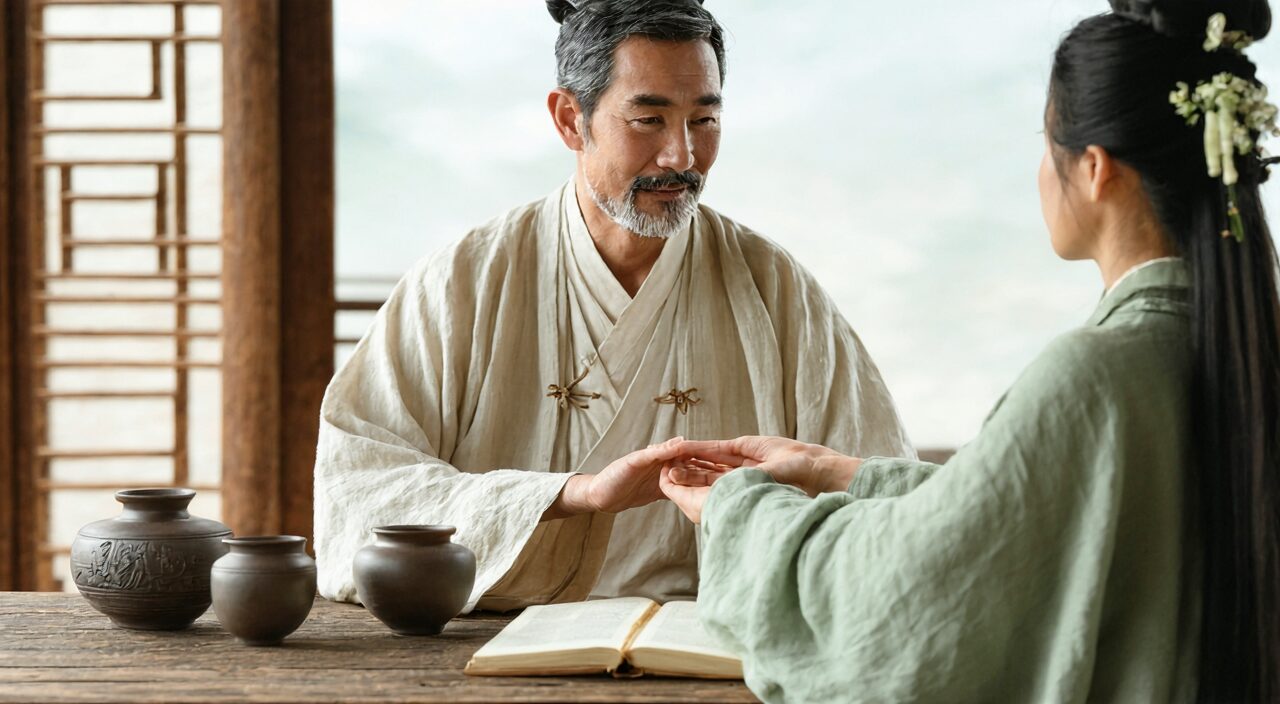
Not everyone with chest and flank distension is suitable for Chaihu Shugan San. The following situations require special caution or should be avoided after assessment by a professional:
- Yin deficiency with fire hyperactivity constitution: Thin body build, dry mouth and tongue, hot sensations in the palms, soles, and chest, night sweating, red tongue with little coating. In such individuals, body fluids are insufficient, and herbs that soothe the liver and regulate qi may worsen dryness and deficiency fire.
- Prominent liver fire blazing: If there are obvious manifestations such as headache, dizziness, flushed face, red eyes, irritability and quick temper, tinnitus, bitter mouth, dry throat, constipation, and yellow urine—these are excess fire signs. Priority should be given to clearing heat and purging fire rather than simply soothing the liver.
- Obvious stomach yin insufficiency or marked spleen-stomach weakness: Burning sensation in the stomach, gastric discomfort, poor appetite, loose stools accompanied by fatigue. The qi-regulating herbs in Chaihu Shugan San may further consume stomach qi.
- Pregnancy, breastfeeding, children, and those who are frail or chronically ill: These special populations require extreme caution in medication use. Self-administration of any formula is not recommended; a comprehensive assessment by a physician is necessary.
- Acute severe pain or when organic diseases have not been clearly diagnosed: If chest or abdominal pain is intense and persistent, or accompanied by fever, vomiting, black stools, weight loss, palpitations, or difficulty breathing, one should seek medical attention promptly. Self-medicating with Chinese herbs for regulation is not advisable, as it may delay treatment.
In summary, although Chaihu Shugan San is quite widely applied, it is not suitable for long-term use, nor should it be casually used to “relieve emotions.” Once qi stagnation is resolved, the medication should generally be stopped or adjusted according to the presenting pattern.
Differences Between Chaihu Shugan San and Xiao Yao San, Jia Wei Xiao Yao San, Si Ni San, and Mu Xiang Shun Qi Wan
When the topic of soothing the liver arises, many people immediately think of Xiao Yao San. Several formulas with similar names or overlapping effects have distinct traditional applications and can be differentiated in the following aspects:
| Formula | Core Direction | Typical Manifestation Emphasis |
|---|---|---|
| Xiao Yao San | Soothes the liver, relieves constraint, nourishes blood, and strengthens the spleen | Liver constraint with blood deficiency and spleen weakness: bilateral flank pain, headache, dizziness, fatigue, poor appetite, irregular menstruation; constitution tends toward deficiency, pale tongue with thin coating |
| Jia Wei Xiao Yao San (Dan Zhi Xiao Yao San) | Soothes the liver, clears heat, nourishes blood, and strengthens the spleen | Liver constraint transforming into heat: irritability, dry mouth, facial flushing heat, premenstrual fever or early menstruation, with concurrent blood deficiency |
| Si Ni San | Disperses constrained heat and harmonizes the liver and spleen | Yang constraint leading to reverse cold of the extremities: cold limbs, flank and abdominal fullness; qi stagnation with heat signs, but the power to invigorate blood and regulate qi is slightly milder than Chaihu Shugan San |
| Mu Xiang Shun Qi Wan | Moves qi, transforms dampness, strengthens the spleen, and harmonizes the stomach | Dampness obstruction and qi stagnation: epigastric and abdominal fullness, nausea, belching, sticky and difficult bowel movements; the disease location is more biased toward the spleen and stomach |
Although all these formulas deal with “qi,” their directions differ. Some individuals may simultaneously fit the characteristics of multiple formulas, which makes it necessary to distinguish primary from secondary issues. Simple substitution or layering is not appropriate. Traditionally, it is emphasized to use a formula based on the presenting pattern rather than choosing according to a formula’s fame.
Summary
Chaihu Shugan San is a traditional formula primarily aimed at soothing the liver, regulating qi, invigorating blood, and relieving pain. It is suitable for people whose core manifestation is liver qi stagnation, such as migratory distension and fullness in the chest and flanks, emotional depression, belching, and abdominal bloating. Its composition includes qi-regulating herbs like Chai Hu, Xiang Fu, and Zhi Qiao, as well as Chuan Xiong for invigorating blood and Bai Shao for softening the liver, reflecting an approach that simultaneously adjusts qi and blood.
However, it is not suitable for those with obvious yin deficiency with fire hyperactivity, liver fire blazing, or marked spleen-stomach weakness. It is also not recommended for special populations to use on their own. Compared with formulas like Xiao Yao San, Jia Wei Xiao Yao San, Si Ni San, and Mu Xiang Shun Qi Wan, although they all involve regulating qi flow, there are clear differences in accompanying patterns and emphasis. Therefore, whether to choose this formula and how to combine it with other methods must be based on individual constitution, specific manifestations, and professional judgment, rather than matching a single symptom.
For long-term, recurrent, or complex conditions involving significant anxiety, depression, palpitations, or weight loss, a comprehensive evaluation by a professional physician should be sought to avoid masking or delaying underlying problems. This article serves only as a popular science reference for traditional knowledge and cannot replace any form of diagnosis or treatment advice.