
Who is Huanglian Decoction Suitable For? Composition, Effects, and Contraindications

When learning about traditional formulas, one often hears the term “upper heat and lower cold.” Some people clearly feel a chill in the stomach and fear eating cold foods, yet easily become vexed, have a bitter taste in the mouth, or experience acid reflux. Others may feel as if there is fire in the upper body while the lower body always feels un-warmed. Huanglian Decoction is a classic formula often mentioned in this context. It does not suit everyone, but understanding its logic helps us view mixed cold-heat body states more clearly.
The Concept and Composition of Huanglian Decoction
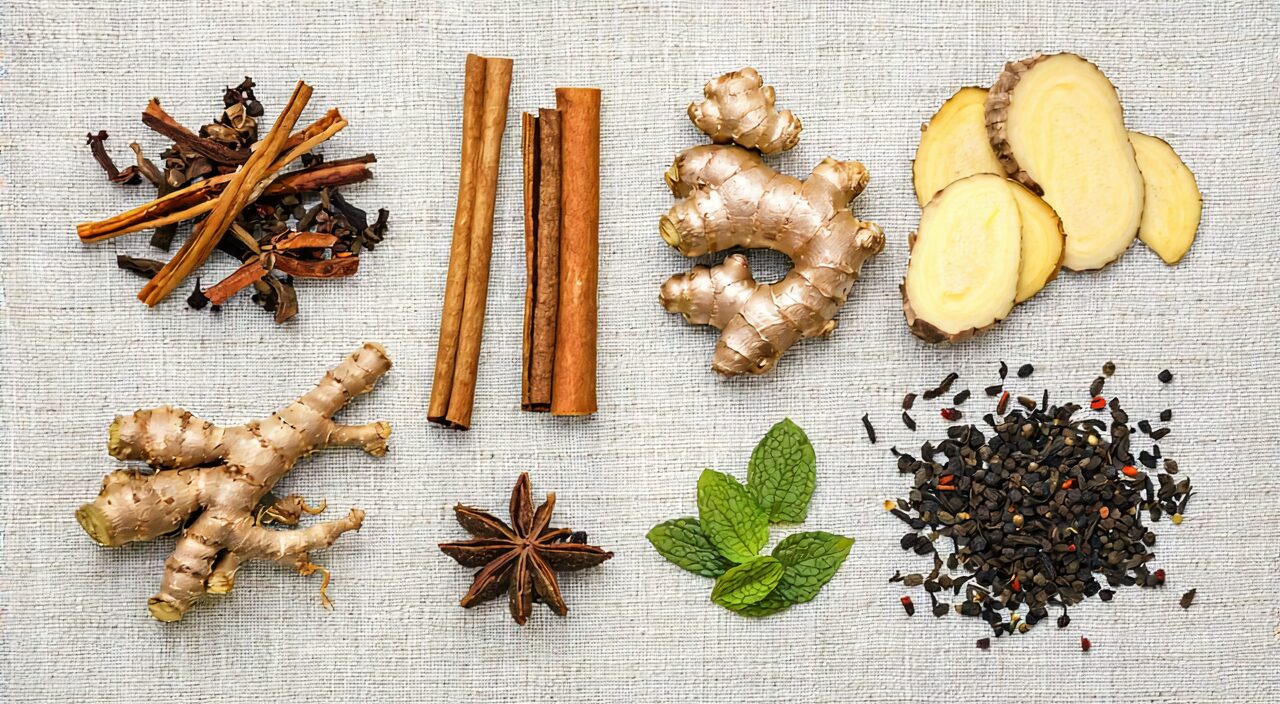
Huanglian Decoction comes from the Treatise on Cold Damage and has traditionally been used mainly to address a rather specific situation: heat in the chest, cold in the stomach, and disruption in the normal ascending and descending of qi.
In simple terms, the body simultaneously exhibits disharmony in two directions—heat signs above, cold signs below, and the spleen and stomach in the middle become trapped, leading to discomfort such as pain and vomiting.
For such problems, using solely heat-clearing medicinals may damage the spleen and stomach, while using interior-warming and cold-dispersing medicinals may aggravate the heat in the upper body. Therefore, Huanglian Decoction adopts a combination that clears the upper and warms the lower.
Composition and Reference Dosages
The following is a representative composition found in common heritage. The specific dosages may vary in emphasis under different circumstances, so it is for informational understanding only:
| Medicinal Name | Reference Dosage | Brief Explanation |
|---|---|---|
| Huanglian (Coptis) | around 9g | Clears heat in the chest, harmonizes the stomach, and stops vomiting |
| Ganjiang (Dried Ginger) | around 9g | Warms the stomach and disperses cold, targets cold pain in the abdomen |
| Guizhi (Cinnamon Twig) | around 9g | Warms and unblocks yang qi, calms surging and redirects rebellious qi |
| Banxia (Pinellia) | around 9g | Redirects rebellious qi, stops vomiting, transforms phlegm, and dissipates masses |
| Renshen (Ginseng) | around 6g | Tonifies the qi of the spleen and stomach |
| Gancao (Licorice) | around 9g | Harmonizes the medicinals, moderates spasms, and relieves pain |
| Dazao (Jujube) | around 4 pieces | Harmonizes the middle, nourishes the constructive, and protects the spleen and stomach |
The above represents traditional reference information, not a fixed dosage, and does not constitute personal usage advice.
Possible Indications for Huanglian Decoction

It must be especially noted that “suitable” here refers to a pattern direction summarized by traditional medicine based on tongue appearance, pulse qualities, and symptom clues. It does not mean that having one or two of the following manifestations warrants use. In actual assessment, multiple pieces of information are usually synthesized.
The following conditions may traditionally serve as reference patterns for Huanglian Decoction:
- Discomfort in the epigastric region, possibly dull pain, cold pain, or a feeling of fullness and blockage, accompanied by upper heat signs such as vexation, bitter taste in the mouth, and dry throat.
- Easily experiencing nausea, retching, or vomiting sour-bitter fluids; the abdomen is particularly sensitive to cold, and discomfort worsens after eating cold items.
- Abdominal pain, possibly located in the upper abdomen or around the navel; the nature of the pain may be either spasmodic or a persistent dull ache, often accompanied by bloating.
- Typical mixed cold-heat manifestations: for example, one side of the cheek may be flushed, with acne formation or recurrent oral ulcers, while on the other side, one feels cold in the lower abdomen, lower back, or is prone to diarrhea.
- Poor appetite, or a desire to eat yet hesitation, because eating easily triggers pain, nausea, or vomiting.
From a traditional perspective, the action of Huanglian Decoction mainly lies in simultaneously clearing heat from the upper burner and warming cold in the middle burner, while restoring the normal downward direction of stomach qi through medicinals like Banxia and Guizhi. This also explains why the formula is headed by “Huanglian” in its name, yet the overall composition is not simply a bitter-cold heat-clearing formula.
Contraindications and Situations Requiring Extra Caution
Huanglian Decoction targets patterns of mixed cold and heat, upper heat with lower cold, and spleen-stomach qi deficiency. If the body state leans toward a single extreme, or the situation is urgent, it is less suitable to consider this formula as the primary approach.
The following presentations or situations are usually not regarded as within the scope of Huanglian Decoction:
- Pure excess heat pattern: characterized by pronounced high fever, thirst with desire for cold drinks, strong mouth odor, dry bound stools, a red tongue with yellow dry coating. In this case, clearing heat and draining fire is needed, not clearing the upper and warming the lower.
- Pure deficiency cold pattern: characterized by aversion to cold, cold hands and feet, cold abdominal pain without heat signs, loose stools, very poor appetite, and mental fatigue. Internal warming and tonification would likely be the main focus.
- Acute abdominal pain of yet undetermined cause, especially when the pain is severe, persistent without relief, or accompanied by fever, bilious vomiting, or cessation of gas and bowel movements. Medical evaluation should be sought promptly rather than self-referencing a formula.
- Special populations such as those in pregnancy, breastfeeding, and young children, whose body states are particularly delicate. Use of any formula must be judged based on a full understanding of the individual’s condition and cannot simply be applied directly.
Furthermore, if there are long-term recurrent episodes of upper abdominal pain, heartburn, acid reflux, difficulty swallowing, black stools, or unexplained weight loss, the symptoms may involve conditions that require further examination. This article serves only as educational reference and cannot substitute professional diagnosis.
Differences Between Huanglian Decoction and Several Similar Formulas
In the traditional formula repertoire, there are often formulas whose directions appear similar but whose emphases differ. Understanding their differences helps avoid simplistic name-matching.
Banxia Xiexin Decoction
Many people easily confuse Huanglian Decoction with Banxia Xiexin Decoction because both contain Huanglian, Ganjiang, Banxia, Renshen, Gancao, and Dazao, and both are used for mixed cold-heat digestive system issues.
The core difference is that Huanglian Decoction contains Guizhi, which Banxia Xiexin Decoction does not, and Huanglian Decoction uses a relatively larger amount of Huanglian, with Ganjiang and Huanglian given equal weight. The overall emphasis is more on warming, unblocking, and redirecting rebellious qi, making it more suitable for “heat in the chest, cold in the stomach” with pronounced abdominal pain and a tendency to retch.
Banxia Xiexin Decoction leans more toward middle burner focal distention and blockage, with epigastric focal distension and fullness, vomiting with borborygmus, and diarrhea as the main features. The treatment focus lies in acrid opening and bitter downbearing to dissipate masses and relieve focal distension.
In simple terms, if the main complaint is “fullness, distention, and blockage,” the approach of Banxia Xiexin Decoction is more traditionally mentioned; if “pain, vomiting, and a clear separation of upper cold and lower heat” are more prominent, Huanglian Decoction is often presented as a subject for study.
Zuojin Pill
Zuojin Pill has a very simple composition, mainly Huanglian and Wuzhuyu (Evodia). Their ratio often varies in traditional literature, with a typical example being six parts Huanglian to one part Wuzhuyu. The direction emphasizes clearing the liver and draining fire, redirecting rebellious qi, and stopping vomiting. It is commonly used for liver fire invading the stomach causing distending pain in the hypochondrium, epigastric upset with acid swallowing, bitter taste, belching, red tongue with yellow coating, and so on.
Compared with Huanglian Decoction, Zuojin Pill lacks interior-warming and cold-dispersing Ganjiang and yang-unblocking Guizhi, and also does not include tonifying ingredients like Renshen and Dazao. Its overall emphasis is more on draining fire and clearing the liver, making it unsuitable for those with clear signs of stomach cold and pronounced cold abdominal pain.
Xiaojianzhong Decoction
Xiaojianzhong Decoction is composed of Guizhi Decoction with doubled Shaoyao (White Peony) plus Yitang (Maltose). Its direction is to warm the middle, tonify deficiency, and relax internal spasms. It is commonly used for spleen-stomach deficiency cold patterns causing spasmodic abdominal pain that prefers warmth and pressure, a lusterless complexion, pale tongue with white coating, etc.
Its similarity to Huanglian Decoction lies in the possibility of addressing abdominal pain, but Xiaojianzhong Decoction targets pure deficiency cold without heat signs, whereas Huanglian Decoction must have evidence of upper heat. If abdominal pain is accompanied by pronounced vexation, bitter taste, and a red tongue, Xiaojianzhong Decoction may not be a suitable match.
Fuzi Lizhong Pill
Fuzi Lizhong Pill adds Fuzi (Aconite) to Lizhong Decoction, primarily warming yang, dispersing cold, and tonifying the spleen and stomach. It is often used when spleen-stomach deficiency cold is relatively severe, even manifesting with cold extremities and diarrhea with undigested food—clear cold signs.
It shares the concept of warming the middle with Huanglian Decoction, but Fuzi Lizhong Pill focuses on “cold”; it is less suitable if there is upper heat. Huanglian Decoction is designed for “mixed cold and heat,” attempting to address both conflicting presentations simultaneously.
To delve into the specifics of these formulas, you may further explore the respective analysis pages for Banxia Xiexin Decoction, Zuojin Pill, Xiaojianzhong Decoction, Fuzi Lizhong Pill, and others.
Summary
Huanglian Decoction is a typical combination formula for managing mixed cold-heat patterns. It is not intended to resolve a single case of “excessive fire” or simple stomach cold, but rather targets the specific state of “heat in the upper body, cold in the middle, and stomach qi rebelling upward.”
From a traditional understanding, when a person simultaneously shows signs such as vexation with bitter taste, aversion to cold in the stomach region, and abdominal pain with nausea—without obvious excess heat or severe deficiency cold tendencies—Huanglian Decoction can be a direction worth investigating. However, it is not suitable for everyone, especially when symptoms are atypical, the cause of abdominal pain is unclear, or severe organic problems are present. Blindly referencing a formula may actually delay proper judgment.
Viewing such a formula as an example of “how Chinese medicine regulates complex patterns” rather than as a simple tool for solving a specific problem is likely a more prudent approach. For everyday discomfort, it is still recommended to combine information about individual constitution, tongue, and pulse, and to seek assessment from a qualified professional.