
Who Is Jia Wei Xiao Yao San Suitable For? Composition, Effects, and Contraindications

In daily life, many people who pay attention to TCM regulation notice the formula name “Jia Wei Xiao Yao San.” Some friends, due to long-term high stress and emotional tension, often experience irritability, bitter taste in the mouth, chest and hypochondriac distension, or restless sleep. They hear that Jia Wei Xiao Yao San may suit such conditions, yet are unsure whether they can use it or how it truly differs from the common Xiao Yao San.
This article will, from the traditional Chinese medicine perspective, review the composition of Jia Wei Xiao Yao San, the directions of its commonly noted actions, the groups it may suit, and the contraindications to be aware of, and compare it with several similar formulas, helping everyone form a relatively clear understanding. Please note: This article is for informational reference only and cannot replace professional diagnosis or treatment advice.
What Is Jia Wei Xiao Yao San? How Does It Differ from Xiao Yao San?
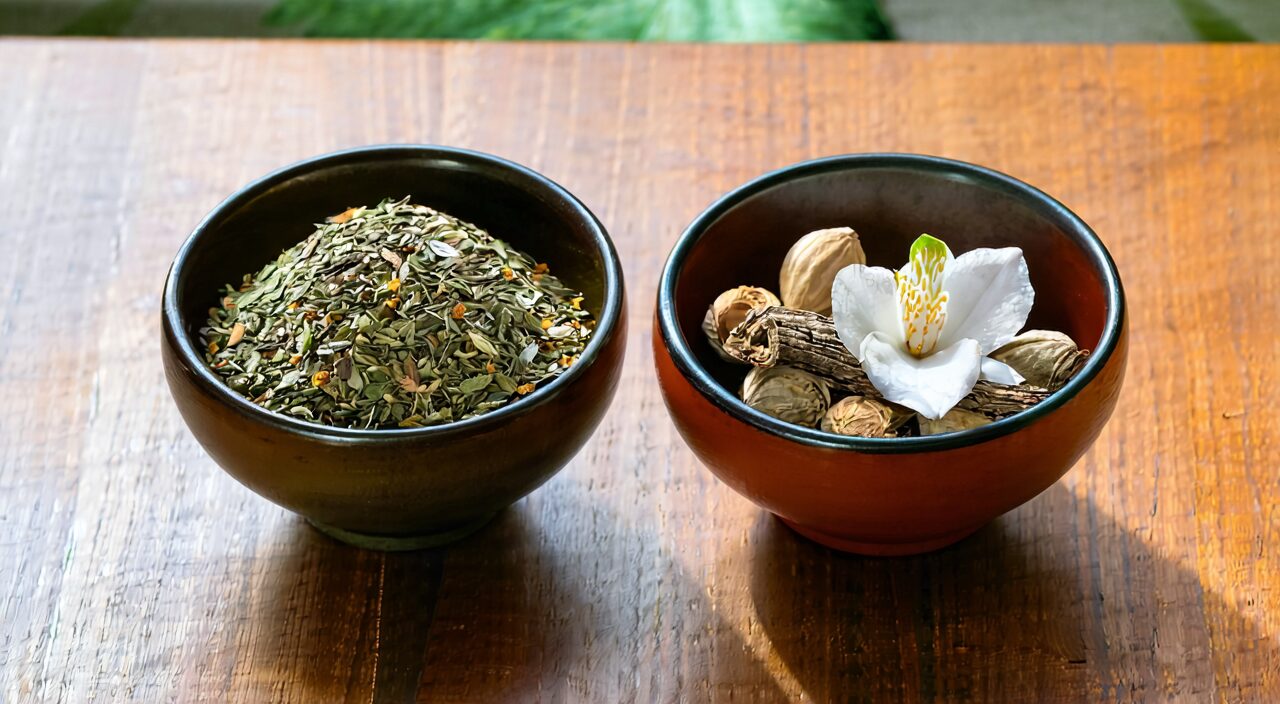
The name Jia Wei Xiao Yao San already reveals its origin: it is made by “adding ingredients” to the base of Xiao Yao San.
Xiao Yao San is a classic formula for soothing the liver, relieving depression, nourishing blood, and strengthening the spleen. Jia Wei Xiao Yao San adds two more herbs – Moutan Cortex (Mu Dan Pi) and Gardenia (Zhi Zi). It is precisely the addition of these two herbs that shifts the formula’s direction to a certain extent, from primarily soothing the liver, relieving depression, nourishing blood, and strengthening the spleen toward simultaneously clearing stagnant heat while soothing the liver and strengthening the spleen.
From the perspective of traditional pattern differentiation thinking, Xiao Yao San is more suitable for “liver depression and spleen deficiency” without obvious heat signs, such as:
- easily feeling low in mood
- chest and hypochondriac distending pain
- poor appetite, fatigue
- women’s menstrual irregularities with a pale tongue and no noticeable heat sensation
Jia Wei Xiao Yao San, on the other hand, emphasizes “liver depression transforming into fire” or “liver channel stagnant heat,” meaning heat signs appear on the basis of liver qi stagnation, such as:
- irritability and tendency to anger
- dry mouth and bitter taste
- flushed face and red eyes
- headache or insomnia
Therefore, although these two formulas are closely related, their respective emphases differ.
Analysis of the Composition of Jia Wei Xiao Yao San
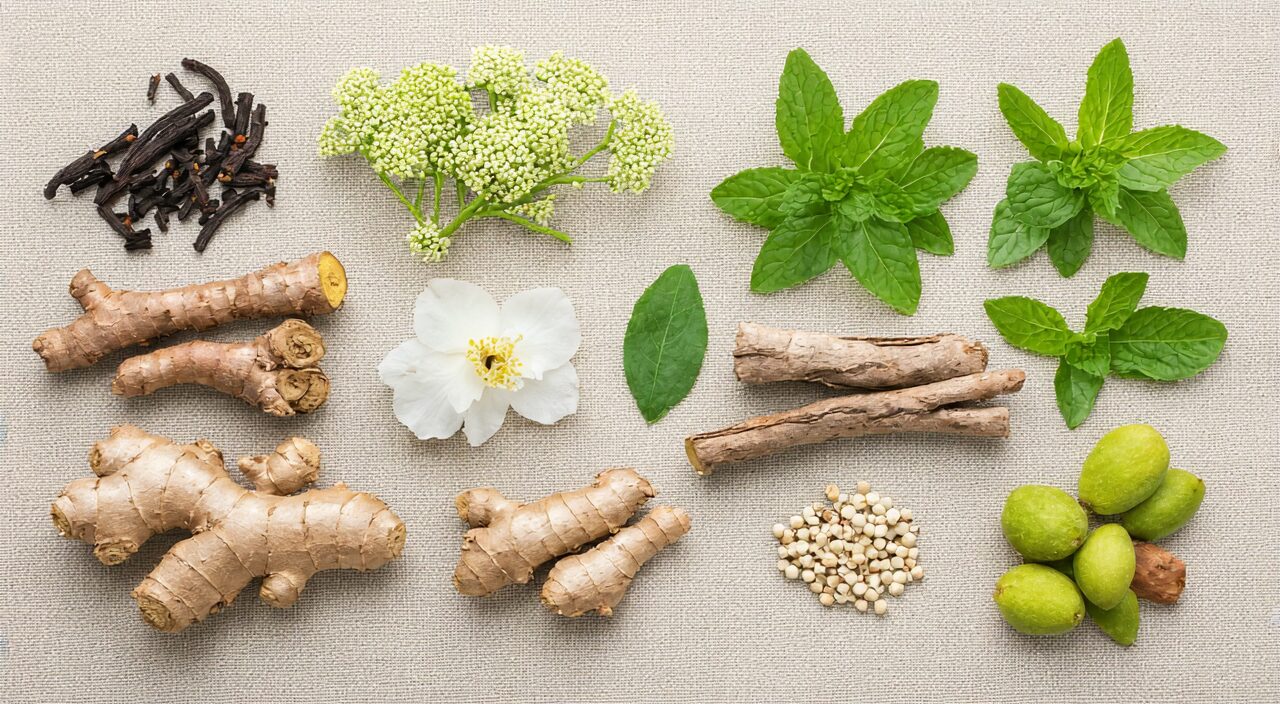
The medicinal composition of Jia Wei Xiao Yao San can be seen as adding Moutan Cortex and Gardenia to the base of Xiao Yao San. Each of these medicinal substances plays a different role in traditional formulas, jointly forming a combination that soothes the liver, clears heat, nourishes blood, and strengthens the spleen.
The following table displays its common composition and the reference functional direction of each herb.
| Medicinal | Traditional Functional Direction |
|---|---|
| Bupleurum (Chai Hu) | Soothes the liver, relieves depression, lifts yang qi |
| Angelica Sinensis (Dang Gui) | Nourishes and harmonizes blood, regulates menses, alleviates pain |
| White Peony Root (Bai Shao) | Softens the liver, nourishes blood, relaxes spasms, eases pain |
| Atractylodes (Bai Zhu) | Strengthens the spleen, boosts qi, dries dampness, promotes water metabolism |
| Poria (Fu Ling) | Strengthens the spleen, calms the heart, promotes water metabolism, drains dampness |
| Licorice (Gan Cao) | Supplements qi, harmonizes the middle, moderates and harmonizes all herbs |
| Moutan Cortex (Mu Dan Pi) | Clears heat, cools blood, invigorates blood, disperses stasis |
| Gardenia (Zhi Zi) | Drains fire, eliminates irritability, clears heat, promotes diuresis |
| Fresh Ginger (Sheng Jiang) | Warms the middle, harmonizes the stomach, moderates cold properties |
| Mint (Bo He) | Soothes the liver, moves qi, clears and benefits the head and eyes |
As the table shows, Bupleurum, Angelica Sinensis, and White Peony Root are responsible for soothing the liver and nourishing blood; Atractylodes, Poria, Licorice, and Fresh Ginger aim to strengthen the spleen and harmonize the middle; while Moutan Cortex and Gardenia focus on clearing stagnant heat. Mint assists Bupleurum in soothing the liver and additionally helps clear the head and eyes.
The entire formula is not simply about clearing heat; it deals with stagnant heat on the foundation of supporting qi, blood, spleen, and stomach. This makes its traditional use more focused on situations where “heat exists within deficiency” or “heat arises from stagnation.”
Who May Be Suitable for Jia Wei Xiao Yao San

In traditional application, Jia Wei Xiao Yao San is often considered for the direction of “liver depression transforming into fire” or “liver-spleen disharmony accompanied by heat signs.” The groups it may suit often present certain features simultaneously in both physical sensations and emotional states.
The following aspects can serve as directions for understanding, but whether it is specifically suitable must be comprehensively judged based on individual constitution, symptom presentation, and professional advice.
Prone to Irritability, Tendency to Anger, and Emotional Fluctuations
- Long-term high stress, fast-paced life, or suppressed emotions, gradually developing irritability and being easily provoked
- A feeling as if there is restrained fire inside the heart, unable to control anger over trivial matters
Such presentations are often associated in traditional understanding with liver qi stagnation that becomes depressed and transforms into fire. Jia Wei Xiao Yao San can both soothe the liver and clear stagnant heat, hence it is often regarded as a reference formula possibly suited for this direction.
Frequent Bitter Taste, Dry Mouth, Dry Throat, or Eye Discomfort
- Morning bitter taste is relatively obvious
- Dry throat, dry and red eyes or increased eye secretions upon waking
- Easily vexed and poor sleep
These manifestations are related to liver depression transforming into fire disturbing upward. Traditionally, they may be considered signs for which Jia Wei Xiao Yao San is worth considering. However, if the bitter taste is accompanied by a sensation of coldness and an aversion to cold in the abdomen, it may not fully correspond to this direction.
Chest and Hypochondriac Distension, Discomfort, or Dull and Wandering Pain
The liver channel traverses the chest, hypochondrium, breasts, and other areas. When qi movement is inhibited and stagnant heat harasses internally, these areas may present:
- Distension, wandering pain
- Premenstrual breast distension and pain worsening in women
Jia Wei Xiao Yao San, by combining liver-soothing and qi-moving effects with cooling blood and dispersing stasis, is often taken as one reference approach for this kind of distension and pain accompanied by a heat sensation.
Restless Sleep, Excessive Dreaming, or Difficulty Falling Asleep
“The liver stores the ethereal soul,” and heat disturbing the liver channel can affect sleep, manifesting as:
- Difficulty falling asleep
- Excessive dreaming and easy waking
- Irritability during dreams
In such cases, traditional practice does not simply use calming (shen) herbs; instead, it considers the approach of soothing the liver and clearing heat. Jia Wei Xiao Yao San precisely targets the sleep instability potentially caused by liver depression transforming into fire, providing a direction for regulation.
Stress-Related Head Distension and Tendency Toward Migraines
- Migraine or head distension occurring during high stress and emotional tension
- Pain located more on the sides of the head, near the temples, or a sensation of head distension and heat
Traditional pattern differentiation often relates this to liver fire flaring upward. Jia Wei Xiao Yao San addresses heat signs on the basis of liver depression, so it is frequently mentioned in the regulatory direction for this type of headache.
Premenstrual Discomfort and Menstrual Irregularities
For some women, liver depression transforming into fire may present:
- Early menstruation, heavy flow with red color or blood clots
- Premenstrual irritability, breast distension and pain, headache
Jia Wei Xiao Yao San’s compositional idea of soothing the liver, clearing heat, nourishing blood, and regulating menstruation makes it frequently applied in gynecology. However, if menstrual problems manifest as scanty pale flow, cold abdominal pain, and aversion to cold, they probably do not fall within the scope considered for this formula.
It must be emphasized again that the above presentations are only reference features in traditional application and do not mean that one is definitely suitable for using Jia Wei Xiao Yao San just because these features appear. Whether it is appropriate still requires combining tongue diagnosis, pulse diagnosis, and overall constitution evaluation by an experienced TCM professional.
Contraindications and Unsuitable Groups for Jia Wei Xiao Yao San

Jia Wei Xiao Yao San is overall cooling in nature, containing heat-clearing herbs like Moutan Cortex and Gardenia, so it is not suitable for everyone. The following types of situations are generally regarded as unsuitable or require extreme caution.
Spleen-Stomach Deficiency Cold
- Usually susceptible to abdominal cold pain, aversion to cold with preference for warmth
- Loose or unformed stools
- Poor appetite, stomach discomfort exacerbated after exposure to cold
Using the cooling Jia Wei Xiao Yao San with this type of constitution may further damage spleen and stomach yang qi, leading to worsening diarrhea and stomach pain. Therefore, people who lack obvious heat signs and show a picture of pure deficiency cold are generally not suitable.
Yang Deficiency with Aversion to Cold, Cold Extremities
- Usually cold hands and feet, aversion to cold
- Low energy, soreness and weakness of the lower back and knees
Even if there is occasional emotional frustration, formulas directed toward clearing heat may not be appropriate. For such groups, the focus should be on warming and nourishing yang qi and dredging stagnation, rather than clearing heat.
During Acute External Invasion, Fever, or Gastrointestinal-Type Colds
When the body is coping with an acute external contraction, such as fever, cough, sore throat, vomiting, or diarrhea, priority should usually be given to addressing the external invasion. It is not advisable at this time to use Jia Wei Xiao Yao San, which primarily regulates the internal environment, to avoid interfering with the body’s normal process of dispelling pathogens.
Pregnant Women, Breastfeeding Women, and Children
These special populations must exercise extra caution when using any formula. Jia Wei Xiao Yao San contains herbs that invigorate blood and clear heat; pregnant women especially need to avoid self-directed use. Breastfeeding women and children should also determine suitability under physician guidance and should not try it on their own.
When Longstanding or Severe Symptoms Have No Clear Cause
If the following symptoms persist, recur chronically, or are accompanied by chest tightness and palpitations, severe pain, black stools, significant weight loss, etc., one should not simply consider proprietary formulas:
- Vexation, insomnia
- Headache
- Menstrual abnormalities
Such symptoms may point to health issues that require further examination. Timely medical consultation is recommended to clarify the diagnosis before discussing a regulation plan.
Differences Between Jia Wei Xiao Yao San and Similar Formulas
Among formulas that soothe the liver and clear heat, several are often compared together. To help everyone better distinguish them, they are explained below.
Xiao Yao San
Xiao Yao San is the base formula of Jia Wei Xiao Yao San and does not contain Moutan Cortex or Gardenia. It is more suitable for “liver depression, spleen deficiency, and blood weakness” without obvious stagnant heat. Typical presentations can be low mood, fatigue, poor appetite, and menstrual irregularities combined with blood deficiency.
Simply put, Xiao Yao San leans toward “relieving depression and nourishing blood,” while Jia Wei Xiao Yao San leans toward “relieving depression, clearing heat, and cooling blood.”
Dan Zhi Xiao Yao Wan
Dan Zhi Xiao Yao Wan (Moutan and Gardenia Free Wanderer Pill) has the same composition as Jia Wei Xiao Yao San, only the dosage form differs. Pill forms act relatively mildly and are suitable for chronic regulation. Whether using a decoction with modifications or taking pill forms, the pattern differentiation direction is liver depression transforming into heat. If someone casually chooses it simply because they heard Xiao Yao San can “soothe the liver” without distinguishing whether there are heat signs, it may not be appropriate.
Chai Hu Shu Gan San
Chai Hu Shu Gan San emphasizes soothing the liver, regulating qi, invigorating blood, and relieving pain. It is more suitable for relatively marked distension and stabbing pain caused by liver qi stagnation, such as chest and hypochondriac distension and fullness, and epigastric pain. It generally does not emphasize clearing heat, nor does it have the function of harmonizing the stomach and strengthening the spleen.
Thus, when qi stagnation pain predominates without prominent heat signs, Chai Hu Shu Gan San may be more appropriate; only when signs like irritability and bitter taste are also present would the attention turn to Jia Wei Xiao Yao San.
Long Dan Xie Gan Tang
Long Dan Xie Gan Tang is a representative formula for clearing excess fire from the liver and gallbladder and draining damp-heat. It targets liver and gallbladder fire-heat complicated by dampness in an excess pattern, commonly featuring headache, red eyes, hypochondriac pain, bitter taste, scanty dark urine, and stranguria. Compared with Jia Wei Xiao Yao San, Long Dan Xie Gan Tang has a stronger heat-clearing power, a more bitter-cold nature, and is often used when damp-heat is equally pronounced; it is not suitable for prolonged use.
If a person only experiences mild irritability, bitter taste, and unstable sleep due to stress without obvious damp-heat indicators, they may not need a heavy formula like Long Dan Xie Gan Tang.
To more intuitively understand the differences among them, here is a brief comparison of these formulas together:
| Formula | Emphasis Direction | Typical Reference Features |
|---|---|---|
| Xiao Yao San | Soothe the liver, relieve depression, nourish blood, strengthen the spleen | Liver depression and spleen deficiency, no obvious heat signs |
| Jia Wei Xiao Yao San / Dan Zhi Xiao Yao Wan | Soothe the liver, clear heat, nourish blood, strengthen the spleen | Liver depression transforming into fire, with heat signs like irritability and bitter taste |
| Chai Hu Shu Gan San | Soothe the liver, regulate qi, invigorate blood, relieve pain | Qi stagnation distension and stabbing pain predominate, heat signs not prominent |
| Long Dan Xie Gan Tang | Clear excess fire of liver and gallbladder, drain damp-heat | Strong liver and gallbladder fire with dampness, obvious excess pattern |
The core of choosing which formula lies not in the name but in the precise matching of constitution and pattern. These formulas each target different natures, locations, and accompanying situations of “heat” and “depression”; casual substitution or mixing is inappropriate.
Viewing the Use of Jia Wei Xiao Yao San from a Traditional Perspective
Within the framework of Chinese medicine, Jia Wei Xiao Yao San has never been a “universal formula for bad moods.” It was designed to target a specific state of “prolonged liver depression transforming into heat.”
This means that before use, at least the following must be judged:
- Is there liver depression?
- Has it already transformed into heat?
- Can the spleen and stomach functions tolerate it?
- Are there other complicating problems?
Therefore, if one wishes to use Jia Wei Xiao Yao San for regulation, the relatively reliable approach is to have a qualified TCM practitioner conduct a detailed four-diagnostic examination to confirm the constitutional tendency. Self-diagnosis based on fragmented information can easily lead to deviations in direction. Moreover, even when the pattern corresponds, adjustments must be made according to changes over time; fixed long-term use without modification is rarely recommended.
In addition, lifestyle is equally important in the regulation of liver depression transforming into fire:
- Regular daily routines
- Appropriate exercise
- Learning stress management
- Reducing overly stimulating diet
These are more fundamental than relying solely on formulas. Formulas function more as a boost to open a door at a specific stage, while sustained health requires returning to daily adjustments.
Summary
Jia Wei Xiao Yao San is a classic formula formed by adding Moutan Cortex and Gardenia to the base of Xiao Yao San. Traditionally, it is often used in the direction of soothing the liver, clearing heat, strengthening the spleen, and nourishing blood, especially targeting presentations such as irritability and tendency to anger, bitter and dry mouth, chest and hypochondriac discomfort, restless sleep, and stress-related head discomfort that may arise from liver depression transforming into fire.
However, it is overall cooling in nature and is not suitable for conditions such as spleen-stomach deficiency cold, yang deficiency with aversion to cold, and acute external invasions. Special populations like pregnant women, breastfeeding women, and children should also avoid self-directed use.
Among many liver-soothing formulas, Jia Wei Xiao Yao San, Xiao Yao San, Dan Zhi Xiao Yao Wan, Chai Hu Shu Gan San, and Long Dan Xie Gan Tang each have their own emphasis and correspond to different pattern characteristics. Whether it is suitable for use must be judged based on TCM pattern differentiation, not simply chosen based on a single symptom.
The more complex the signals the body sends, the more systematic and cautious the assessment needs to be, to avoid delaying overall condition adjustment due to an inaccurate direction.