
Who is Mahuang Decoction Suitable For? Composition, Effects, and Contraindications

Feeling chilled, feverish yet not sweating, along with headache, body aches, and even wheezing or cough — when such symptoms appear, many people interested in traditional Chinese medicine may think of Mahuang Decoction. Mahuang Decoction originates from the Treatise on Cold Damage (Shang Han Lun) and is a representative formula for releasing the exterior with acrid warmth, diffusing the lung, and relieving wheezing. However, it is not suitable for all colds or externally contracted conditions; misuse may actually worsen discomfort. This article provides objective reference from the perspectives of formula composition, suitable populations, contraindications, and differentiation from commonly confused formulas.
Traditional Composition and Interpretation of Mahuang Decoction
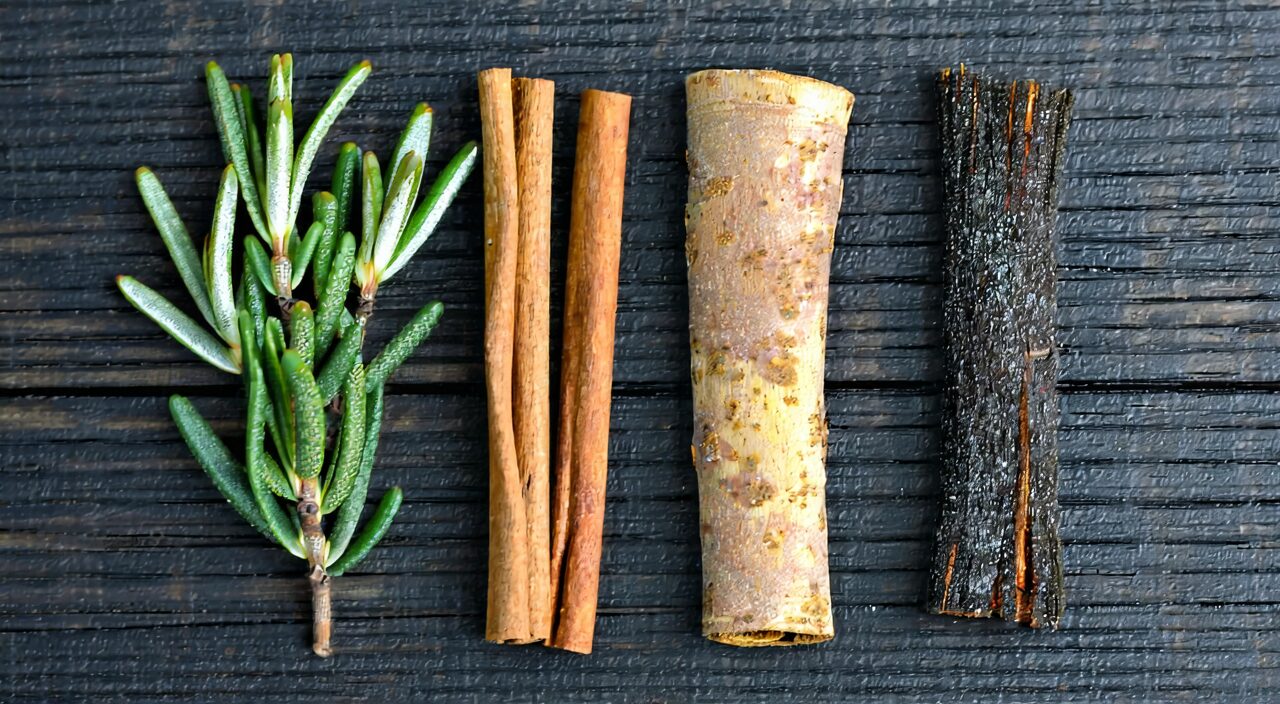
Mahuang Decoction is composed of four Chinese medicinals with a strict structure, each playing a focused role:
| Medicinal | Traditional Role | Common Dosage Reference (for reference only) |
|---|---|---|
| Ephedra (Ma Huang) | Induces sweating to release the exterior, diffuses the lung and relieves wheezing; sovereign medicinal | 6-9g |
| Cinnamon Twig (Gui Zhi) | Releases the muscle layer to expel pathogens, warms and unblocks the meridians, assists Ephedra in promoting sweating; minister medicinal | 6-9g |
| Apricot Kernel (Xing Ren) | Descends and regulates lung qi, stops cough and relieves wheezing; assistant medicinal | 6-9g |
| Honey-fried Licorice Root (Zhi Gan Cao) | Harmonizes the properties of the medicinals, moderates the strength of sweating; envoy medicinal | 3-6g |
In traditional usage, Ephedra paired with Cinnamon Twig emphasizes inducing sweating to disperse cold; Ephedra with Apricot Kernel causes ascending diffusion and descending regulation, smoothing lung qi to relieve wheezing and cough; Honey-fried Licorice Root moderates the medicinal properties and prevents excessive dissipation. The entire formula tightly targets the pattern of external contraction of wind-cold, obstruction of the interstices, and impaired lung qi diffusion — the “exterior excess pattern.”
How Traditional Chinese Medicine Understands the Applicable Scope of Mahuang Decoction
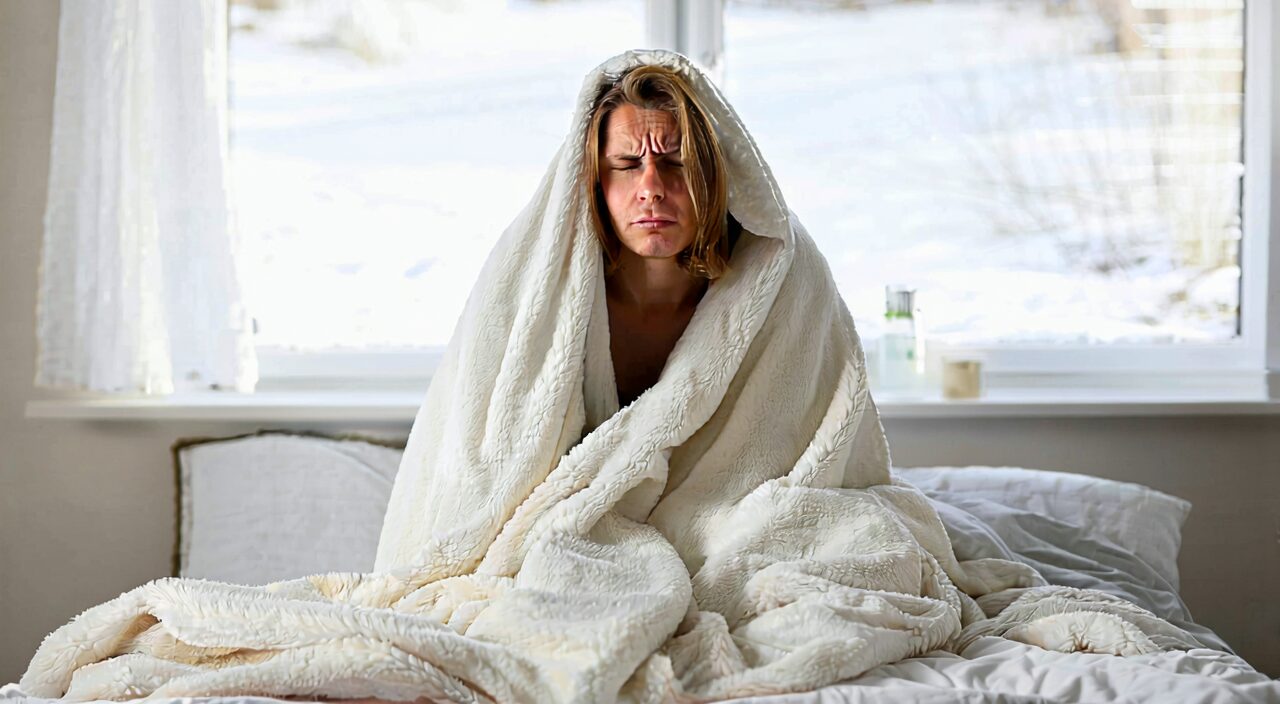
Within the TCM pattern identification system, Mahuang Decoction corresponds to the “exterior excess pattern due to external contraction of wind-cold.” The key distinguishing point is the absence of sweat.
When wind-cold pathogens obstruct the exterior, causing sweat pores to close tightly and preventing sweat from escaping, the following manifestations are likely:
- Pronounced aversion to cold (chills), still feeling cold despite adding clothes or blankets
- Fever, but the skin feels dry and hot without perspiration
- Headache, body aches, muscle and joint soreness
- May be accompanied by wheezing and cough with thin, white, clear sputum
- Tongue body light red with thin white coating, pulse floating and tight
It must be stressed that one should not assume Mahuang Decoction is appropriate based on just one or two of these symptoms. TCM pattern identification emphasizes holistic assessment; individual constitution and concurrent symptoms will influence the choice of formula.
Who Might Be Suitable for Mahuang Decoction
From a traditional pattern differentiation perspective, Mahuang Decoction may be more suitable for those with relatively typical presentations:
- Usually of a relatively robust constitution, rarely experiencing spontaneous sweating or night sweats
- Sudden onset of illness recently, with prominent chills and virtually no sweating
- Severe headache and body aches, preference for warmth, aversion to cold
- Possibly accompanied by chest tightness, wheezing, cough but with little phlegm
- Urine relatively clear, no obvious thirst or craving for cold drinks
If the presentation generally matches and there are no clear deficiency signs such as qi deficiency, yin deficiency, or internal heat, Mahuang Decoction can be a direction worth understanding. However, it is crucial to note that not all “fever without sweating” cases are suitable — one must also differentiate from wind-heat exterior patterns, external contraction with underlying deficiency, and other conditions.
Situations Requiring Special Caution or Where It Is Not Suitable
The following situations generally call for caution and are not recommended for self-administration of Mahuang Decoction, or may only be considered after rigorous evaluation by an experienced professional:
- Those who usually sweat easily, have shortness of breath, lack strength, or have a weak constitution: Mahuang Decoction has a relatively strong sweat-inducing effect; those with deficiency using it may easily damage fluids and qi, requiring caution.
- External contraction of wind-heat: Characterized by prominent fever, sore throat, dry mouth with desire to drink, red tongue tip, and thin yellow coating; misuse of Mahuang Decoction may fuel the heat pathogen.
- Those with hypertension, palpitations, arrhythmia, or poor sleep: Ephedra has certain blood-pressure-elevating and stimulant effects that may impact these conditions, requiring extra attention.
- Pregnant women, postpartum women, breastfeeding women, and the elderly or debilitated: These groups have lower tolerance to diaphoretics and should not use rashly.
- Those with severe chronic diseases, such as heart disease, hyperthyroidism, glaucoma, etc.: Ephedra may induce or aggravate related problems.
Furthermore, if fever persists without subsiding, breathing difficulty worsens, severe chest pain occurs, or there are changes in consciousness, seek formal medical help promptly. Do not rely on a single therapy and manage by yourself.
Differences Between Mahuang Decoction and Several Common Formulas
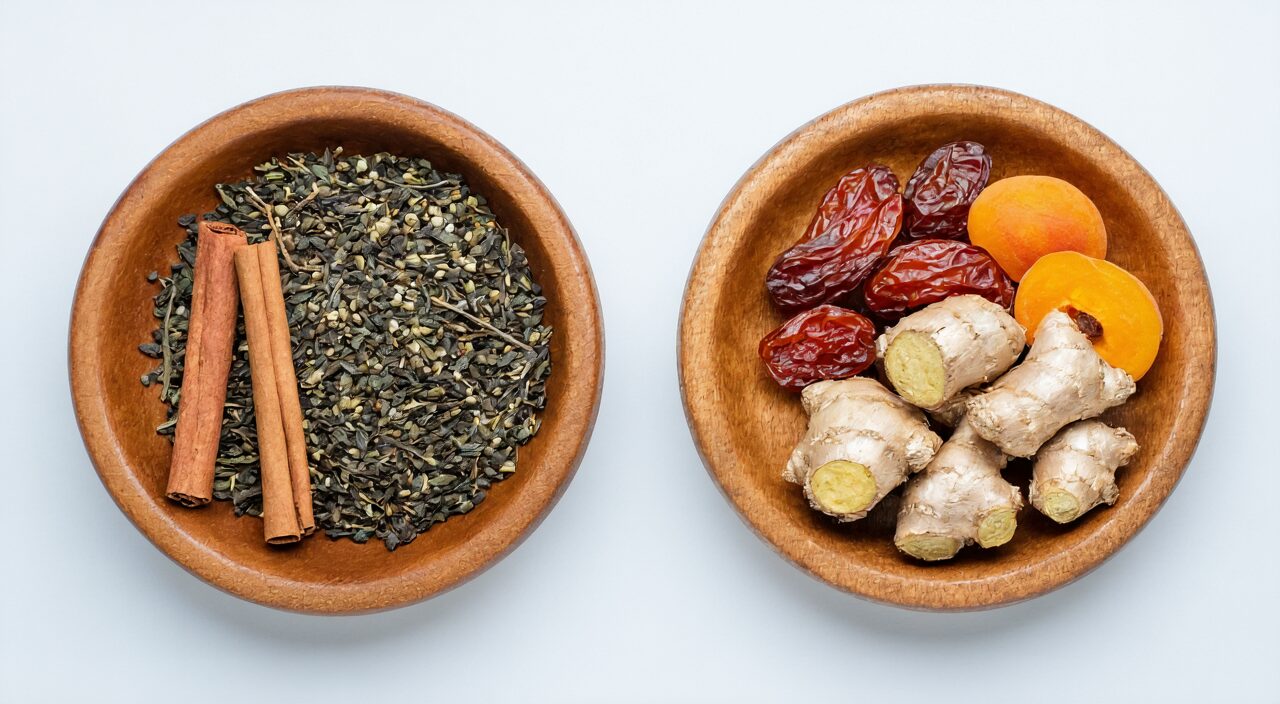
Within the Treatise on Cold Damage and later formula applications, Mahuang Decoction often needs to be differentiated from Guizhi Decoction, Gegen Decoction, Xiaoqinglong Decoction, Yinqiao Powder, and others. Clarifying their differences helps reduce misuse.
Mahuang Decoction vs. Guizhi Decoction: Sweating vs. No Sweating is Key
| Comparison | Mahuang Decoction | Guizhi Decoction |
|---|---|---|
| Pattern type | Taiyang cold damage exterior excess pattern | Taiyang wind strike exterior deficiency pattern |
| Sweating | No sweating | Spontaneous sweating |
| Pulse | Floating and tight | Floating and relaxed (moderate) |
| Aversion to cold / wind | Aversion to cold more pronounced, severe chills | Aversion to wind more obvious, strong discomfort with drafts |
Tradition emphasizes that “when there is sweating, one must not use Ephedra,” showing how crucial it is to differentiate sweating manifestations.
Mahuang Decoction vs. Gegen Decoction: Is There Neck and Back Stiffness?
| Comparison | Mahuang Decoction | Gegen Decoction |
|---|---|---|
| Composition highlights | Ephedra, Cinnamon Twig, Apricot Kernel, Licorice | Guizhi Decoction plus Ephedra and Kudzu (Gegen) |
| Core focus | Induces sweating to disperse cold, diffuses lung and relieves wheezing | Disperses wind-cold, ascends fluids and relaxes sinews |
| Distinctive feature | No sweating, body aches, wheezing and cough, no obvious stiffness in neck and back | No sweating, tight and stiff neck and back, may be accompanied by diarrhea |
Gegen Decoction, while dispersing wind-cold, also specifically addresses the neck and fluid distribution, making it suitable for those with wind-cold no sweating accompanied by stiffness and discomfort in the neck and back.
Mahuang Decoction vs. Xiaoqinglong Decoction: Differences in Cold Phlegm-Fluid Retention in the Lung
| Comparison | Mahuang Decoction | Xiaoqinglong Decoction |
|---|---|---|
| Indication | External wind-cold, exterior excess with no sweating, impaired lung qi diffusion | External cold with internal fluid retention, cold phlegm-fluid lodged in the lung |
| Sputum characteristics | Sputum scant or thin-clear, not frothy | Copious white frothy sputum, sensation of cold in the back |
| Tongue appearance | Tongue light red, thin white coating | Tongue coating white and slippery |
Mahuang Decoction focuses on exterior cold fettering the lung, while Xiaoqinglong Decoction excels at warming the lung and transforming retained fluid; the degree of cold fluid involvement is clearly different between the two.
Mahuang Decoction vs. Yinqiao Powder: Acrid Warm vs. Acrid Cool
| Comparison | Mahuang Decoction | Yinqiao Powder |
|---|---|---|
| Medicinal nature | Acrid-warm exterior-releasing | Acrid-cool exterior-releasing |
| Applicable pattern | Wind-cold exterior excess pattern | Early-stage wind-heat |
| Key manifestations | Severe chills, no sweating, no thirst, tongue light red | High fever, slight chills, sore throat, thirst, red tongue tip |
The two are completely opposite in terms of cold and heat nature. Using Mahuang Decoction incorrectly for a wind-heat pattern may be like “adding fuel to the fire”; using Yinqiao Powder for a wind-cold exterior excess pattern would be insufficient in dispersing force. Correctly distinguishing cold from heat is essential.
Summary
As a classic acrid-warm exterior-releasing formula, Mahuang Decoction primarily targets wind-cold exterior excess patterns characterized by chills, fever without sweating, headache, body pain, and accompanying wheezing or cough. Its use must be based on relatively accurate TCM pattern identification. Those with deficiency leading to profuse sweating, wind-heat external contractions, or underlying cardiovascular issues are generally unsuitable. The differentiation from Guizhi Decoction, Gegen Decoction, Xiaoqinglong Decoction, Yinqiao Powder, and other formulas hinges on sweating presentation, concurrent symptoms, and the cold-heat attributes.
This article provides only popular science reference from a traditional Chinese medicine perspective and cannot replace professional diagnosis or treatment advice. Everyone’s physical condition differs. As to whether Mahuang Decoction or similar formulas should be considered, it is recommended to take personal circumstances into account and consult a locally qualified TCM professional for judgment. If severe, recurrent, or persistent symptoms appear, seek medical attention promptly to avoid delay.