
Who Is Suitable for Mu Xiang Shun Qi Wan? Composition, Effects and Contraindications

In traditional Chinese medicine, people often hear descriptions like “qi not flowing smoothly” or “heavy dampness,” especially when some individuals feel abdominal bloating, tend to belch, have a sensation of something blocked in the chest, or constantly feel undigested even without eating much. Mu Xiang Shun Qi Wan is one of the frequently mentioned formulas oriented towards moving qi and transforming dampness.
So, for whom is Mu Xiang Shun Qi Wan suitable? What are its ingredients? What contraindications should be noted? And how does it differ from formulas such as Chai Hu Shu Gan San and Xiang Sha Liu Jun Zi Tang? This article attempts to sort through these aspects from the perspective of traditional formulas, helping everyone build a clearer understanding.
The Core Orientation of Mu Xiang Shun Qi Wan: Moving Qi, Transforming Dampness, Strengthening the Spleen and Harmonizing the Stomach
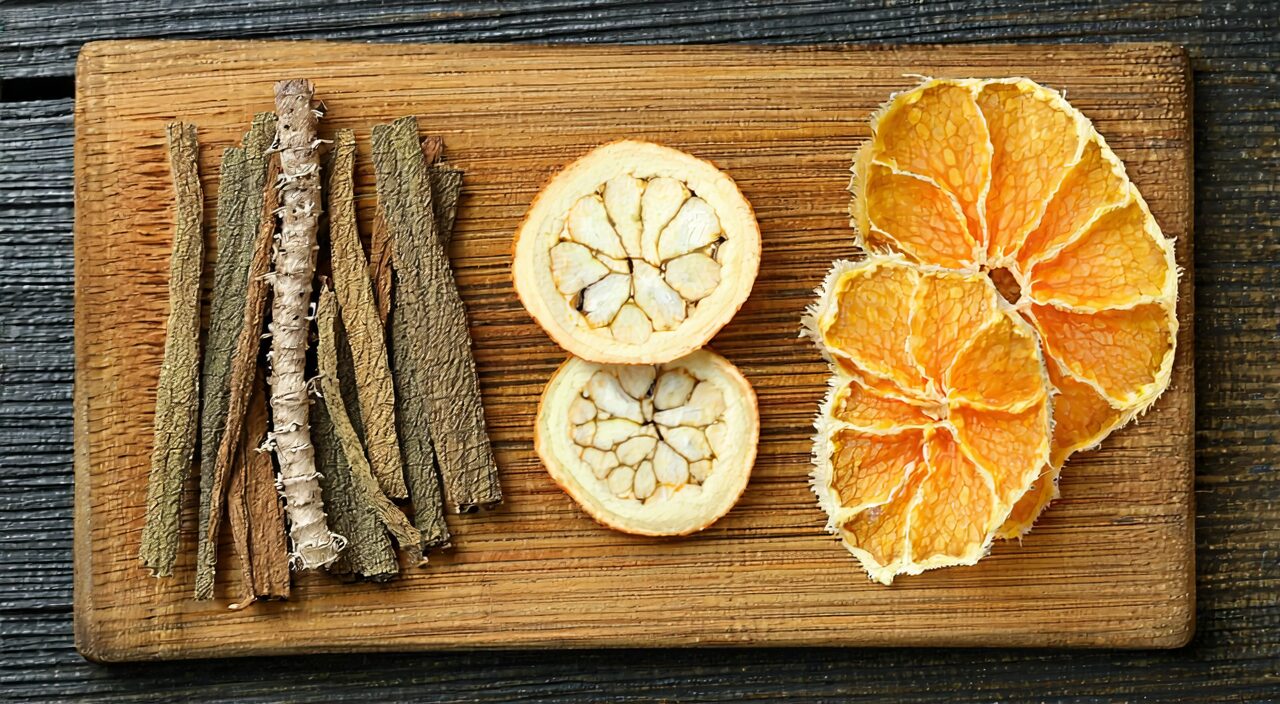
The traditional approach of Mu Xiang Shun Qi Wan is not simply regulating qi, but rather combining qi movement with dampness transformation and spleen strengthening. In classical formula studies, it is often categorized under qi-moving formulas that also dispel dampness, mainly addressing the combined condition of “qi stagnation and dampness obstruction.”
What is qi stagnation and dampness obstruction? One way to understand it is this: the movement of qi in the body is like the flow of wind, while dampness is like mist or water vapor. If the wind stops, water vapor easily gathers and becomes trapped; conversely, too much water vapor can entrap the wind, making it harder for qi to move.
Therefore, when the spleen and stomach’s transportation and transformation function weakens, dampness arises internally, and coupled with emotional disharmony or improper diet, a pattern of distention, stuffiness, and oppression easily forms. Mu Xiang Shun Qi Wan is designed precisely for this state of “qi obstruction and dampness failure to transform,” leaning towards regulating qi, drying dampness, awakening the spleen and harmonizing the stomach, enabling qi to move and dampness to be dispersed accordingly.
Key Ingredients of Mu Xiang Shun Qi Wan
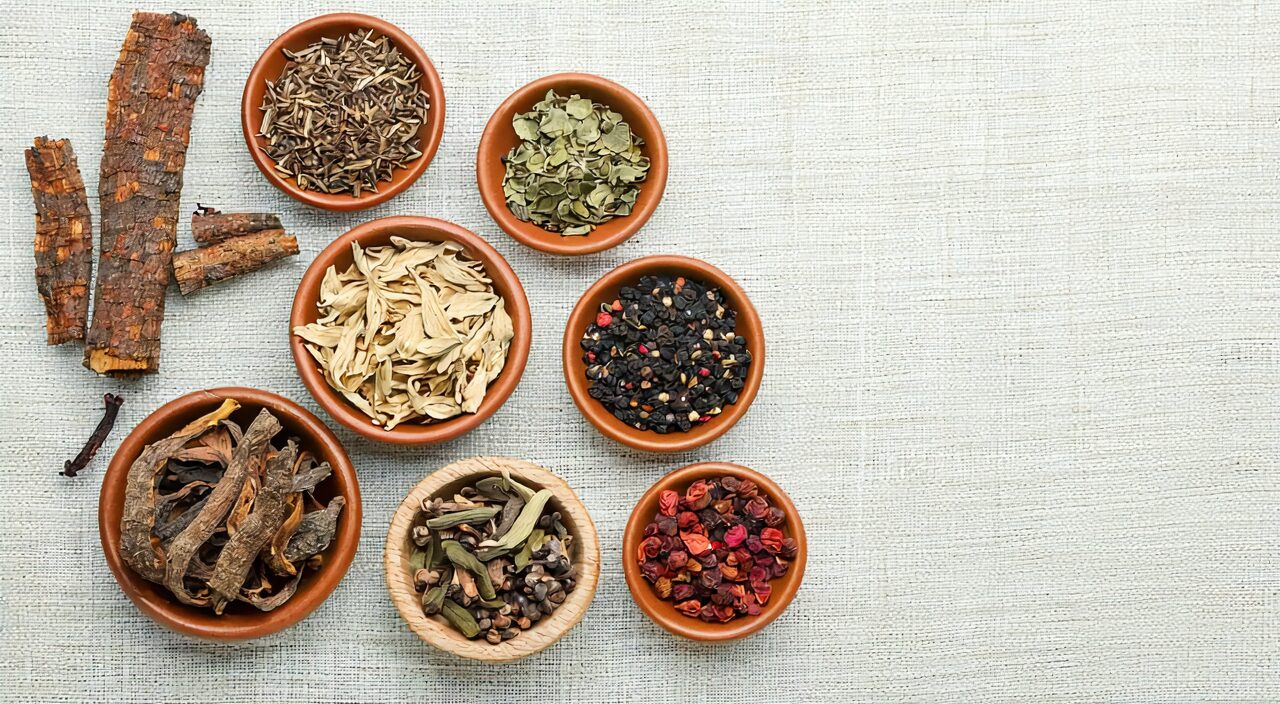
Understanding a formula requires looking beyond its name and examining its internal composition structure. Mu Xiang Shun Qi Wan originates from classical formula books, and although different versions may have slight variations in composition, the core herbs are represented by Mu Xiang (Aucklandia root), Xiang Fu (Cyperus rhizome), Hou Po (Magnolia bark), and others, with the overall nature being predominantly acrid, bitter, and warm. It primarily moves qi while also being able to transform dampness.
Below is a simple table listing the commonly recognized main ingredients, to facilitate understanding of each one’s role from a traditional perspective:
| Herb | Traditional Action Direction |
|---|---|
| Mu Xiang (Aucklandia Root) | Moves qi, relieves pain, and is adept at harmonizing spleen and stomach qi stagnation |
| Xiang Fu (Cyperus Rhizome) | Soothes the liver and regulates qi, relieves qi dysregulation caused by emotional unease |
| Hou Po (Magnolia Bark) | Moves qi, reduces distention, dries dampness, and eliminates fullness |
| Sha Ren (Amomum Fruit) | Transforms dampness, opens the appetite, warms the spleen, and stops diarrhea |
| Chen Pi (Tangerine Peel) | Regulates qi, harmonizes stomach, dries dampness, and transforms phlegm |
| Cang Zhu (Atractylodes Rhizome) | Dries dampness, strengthens the spleen, promotes sweating and dispels dampness |
| Gan Cao (Licorice Root) | Harmonizes all the other herbs and simultaneously cares for the spleen and stomach |
From the table above, it can be seen that the entire formula primarily uses several qi-moving herbs, combined with dampness-transforming herbs such as Cang Zhu and Sha Ren, and then Gan Cao to harmonize them, forming a basic pattern of “moving qi without damaging the correct, transforming dampness without aggravating dryness.” This compositional approach determines that it is more suitable for conditions where dampness exists internally and qi mechanism is stagnant, rather than for states of insufficient fluids or yin deficiency with heat.
Manifestations for Which Mu Xiang Shun Qi Wan May Be More Suitable

Based on the core pattern of qi stagnation and dampness obstruction, Mu Xiang Shun Qi Wan is traditionally often used for the following directions of manifestation. If multiple of these appear simultaneously, they can serve as a reference for further understanding, but whether it is ultimately suitable still requires combining individual constitution and professional judgment.
- Abdominal distention and fullness: A sensation of heaviness and bloating in the epigastric area or the entire abdomen. Pressing does not reveal water-like fluid, but it feels bloated and uncomfortable, especially noticeable during emotional fluctuations, after meals, or on rainy and overcast days.
- Frequent belching: Constantly feeling that qi is rushing upward, only able to get temporary relief after taking a deep breath or burping. The distention reduces after belching, but soon returns.
- Chest oppression and stuffiness: A vague sense of oppression in the chest and hypochondriac area, as if something is pressing down, with breathing not feeling completely smooth, sometimes accompanied by low mood or anxiety.
- Poor appetite and sticky sensation in the mouth: Food has no taste, and there is a sticky, pasty feeling in the mouth, with a tongue coating that is white and slimy or thick and greasy.
- Stools that are soft but not smooth: Stool is unformed, yet feels difficult and strenuous to pass, with a sensation of incomplete evacuation. This is a typical manifestation of dampness being sticky and obstructing coupled with qi stagnation.
If, in addition to the above manifestations, there is also notable emotional depression, frequent sighing, or distending pain in both rib sides, this indicates a heavier component of qi stagnation. If there is more pronounced fatigue, heaviness, a sense of bodily puffiness, and a sensation of the head being wrapped, then the proportion of dampness may be greater. Mu Xiang Shun Qi Wan can be one of the regulating approaches in these directions, but it needs to be differentiated from unsuitable situations mentioned below.
Situations Where Mu Xiang Shun Qi Wan Is Not Suitable
Although Mu Xiang Shun Qi Wan is common, not all types of distention or indigestion can be treated with it. Since its overall nature is warm and drying, special caution is needed for certain constitutions or stages.
- Yin deficiency with stomach dryness: If the stomach has a feeling of fullness but is simultaneously accompanied by obvious dry mouth, a burning sensation in the stomach, and a red tongue with little or no coating, this often indicates stomach yin insufficiency and lack of moisture. Using warm, drying qi-moving herbs in this case may further damage fluids and make the distention worse.
- Obvious stomach heat: Heavy breath odor, acid reflux, heartburn, swollen and painful gums, and dry, bound stools mostly indicate heat in the stomach. Such situations mainly require clearing heat and promoting downward movement, making them unsuitable for warming, drying and qi-regulating methods.
- Pregnancy: Pregnant women have a special constitution, and any formula with a relatively strong qi-moving force needs to be evaluated under professional guidance. Self-use is not advised.
- Extremely weak or markedly qi and blood deficient individuals: If the whole person is very fatigued, with a pale complexion, shortness of breath, and speaks little, even if there is abdominal bloating, it may be related to qi deficiency failing to promote movement. Mu Xiang Shun Qi Wan leans towards attacking pathogens and regulating qi; for purely deficient patterns it may not be suitable and needs to be combined with a qi-tonifying approach.
- Long-term, recurrent abdominal bloating or accompanied by melena (black stool), emaciation, etc.: These manifestations can sometimes be linked to more complex digestive system issues. A doctor should first determine the cause rather than self-judge the use of a formula.
In general, Mu Xiang Shun Qi Wan is more suitable for “qi stagnation with dampness obstruction” conditions leaning toward excess. Once there are deficiencies, heat, or dryness deviations, very great caution is needed.
Differences Between Mu Xiang Shun Qi Wan and Several Similar Formulas
Many people frequently ask about the differences between Mu Xiang Shun Qi Wan and formulas like Chai Hu Shu Gan San, Xiang Sha Liu Jun Zi Tang, Ping Wei San, and Bao He Wan. Although these all involve digestion, their focal points differ. Clarifying these differences helps better understand which direction one’s own situation belongs to.
| Formula | Core Focus | Typical Manifestation Reference | Main Difference from Mu Xiang Shun Qi Wan |
|---|---|---|---|
| Chai Hu Shu Gan San | Primarily soothes the liver and regulates qi; action level is more toward liver meridian qi depression | Distending pain in the chest and rib sides, emotional unease, frequent sighing; the distending pain is mostly tied to emotional fluctuations | More biased toward liver qi stagnation; Mu Xiang Shun Qi Wan is more biased toward spleen and stomach qi stagnation with dampness obstruction, with more prominent abdominal distention, belching, and greasy tongue coating |
| Xiang Sha Liu Jun Zi Tang | Mainly tonifies qi and strengthens the spleen, combined with moving qi and transforming dampness | Spleen deficiency is obvious: fatigue, low voice and reluctance to speak, sallow complexion, post-meal bloating, loose stools | Tonifies qi while moving qi, suitable for more deficiency; Mu Xiang Shun Qi Wan regulates qi while transforming dampness, more suitable for more excess |
| Ping Wei San | Dries dampness, transports spleen, moves qi and harmonizes stomach, leaning toward dampness lodged in the spleen and stomach | Distention and fullness, no desire to eat, nausea and urge to vomit, bland taste in mouth, white thick greasy tongue coating | Focuses on “dampness”; Mu Xiang Shun Qi Wan focuses on “qi stagnation,” with more obvious qi depression manifestations |
| Bao He Wan | Disperses food and guides stagnation, targeting food accumulation and stoppage | Epigastric and abdominal distention and fullness, belching with decaying smell, acid swallowing, nausea and vomiting, foul-smelling stool; often there is a history of dietary impropriety | Oriented toward dispersing food; Mu Xiang Shun Qi Wan is oriented toward regulating qi and transforming dampness; for undigested food accumulation, Bao He Wan is more suitable |
These formulas each have their own suitable body constitutions and symptom combinations, with no absolute superiority or mutual exclusivity. In actual selection, it often requires comprehensive balancing under professional guidance, while taking tongue picture, pulse picture, and whole-body manifestations into account.
Aspects to Note Before Use
Although Mu Xiang Shun Qi Wan, as a traditional formula, has a clear direction of use, everyone’s body response is different.
During the initial period of use, if discomforts such as bloating and belching actually worsen, or dry mouth, constipation, and other dryness-heat manifestations appear, this may indicate that the direction is not completely matched, and one should pause, observe, and adjust the approach.
At the same time, if symptoms such as abdominal distention and chest oppression persist for a long time, or are accompanied by notable anxiety, palpitations, difficulty breathing, severe abdominal pain, continuous vomiting, black stools, or unexplained weight loss, it cannot simply be attributed to qi stagnation and dampness obstruction. It is essential to promptly seek professional help and undergo a comprehensive examination to avoid delaying issues that are more complex.
This article merely provides a preliminary popular science reference from the perspective of traditional formulas, to help readers understand the applicable scope and contraindications of Mu Xiang Shun Qi Wan, and cannot substitute for individualized diagnosis and treatment advice.
Summary
Mu Xiang Shun Qi Wan is a formula in traditional Chinese medicine with the core orientation of moving qi, transforming dampness, strengthening the spleen and harmonizing the stomach. It mainly targets manifestations such as abdominal distention, belching, chest oppression, poor appetite, and greasy tongue coating caused by qi stagnation and dampness obstruction. Its composition is warm and drying, and it is not suitable for situations like yin deficiency with stomach dryness, obvious stomach heat, pregnancy, and states of extreme weakness.
It differs in emphasis from formulas like Chai Hu Shu Gan San, Xiang Sha Liu Jun Zi Tang, Ping Wei San, and Bao He Wan, which respectively correspond to liver qi depression, spleen deficiency with dampness, dampness lodging in the spleen and stomach, and food accumulation stagnation. Only by clarifying these differences and thoroughly considering individual constitution and symptom characteristics can we more correctly view the value and limitations of such traditional formulas.