
Spleen Deficiency with Dampness Obesity: Why You Gain Weight Despite Eating Less and Feel Tired

Many people feel confused about weight management: they don’t eat much, sometimes even less than thinner friends, yet the scale won’t budge or even creeps up. If at the same time you often feel heavy, tire easily, have loose stools or a yellowish complexion, the problem may not simply be “eating too much and moving too little.” In the framework of traditional Chinese medicine, this presentation is more likely to be categorized as “spleen deficiency with dampness” type obesity. Understanding this constitution can help us see weight issues from a different angle, instead of fixating only on calorie counts.
Signs your body sends when the spleen is deficient and dampness accumulates

Spleen deficiency with dampness obesity is usually not the firm, muscular type but rather a kind of “puffy weakness.” Common signs include:
- Weight gain with soft, flabby muscles: Especially the abdomen, hips, and thighs tend to accumulate soft, loose fat; the flesh isn’t firm.
- Appetite is average or small: Sometimes even a poor appetite, easily feel bloated after meals, with a sensation that food just sits in the stomach without moving down.
- Loose or unformed stools: Often sticky and hard to flush away, with an incomplete feeling after bowel movements; sometimes several times a day, sometimes dry at first then loose.
- Low energy all day: Even with enough sleep, you still feel exhausted and heavy, as if your limbs were weighted with lead.
- Complexion tends to be yellowish and lackluster: Sometimes mild puffiness around the eyelids or ankles.
- Tongue appearance is enlarged with teeth marks on the edges: Tongue coating is white and greasy or slippery.
Not all these signs need to appear at once, but if several of them have been present for a long time, it may point to weakened spleen transportation function, making it easy for dampness to accumulate in the body.
Why spleen deficiency with dampness easily leads to weight gain
The TCM understanding of the spleen is not exactly the same as the anatomical spleen in Western medicine; it refers more to a whole functional system of digestion, absorption, and fluid metabolism. The spleen governs transportation and transformation: it is responsible for distributing the refined essence from food throughout the body, as well as eliminating excess water and dampness.
When spleen qi is weak, transportation functions decline, and two key changes can occur:
- Nutrients cannot be used efficiently: Even if you don’t eat much, the spleen lacks the strength to transform food into qi and blood. Instead, it tends to stagnate as dampness and phlegm turbidity, gradually accumulating under the skin and between the organs.
- Water and dampness metabolism is sluggish: Spleen deficiency fails to propel water circulation, so dampness lingers inside. This combines with surplus lipid turbidity to form “fatty deposits” that lead to weight gain.
This explains why some people gain weight even when eating little — the key is not the total calories consumed, but the body’s ability to “process, utilize, and eliminate” has declined. This type of obesity is often accompanied by marked fatigue and heaviness, because dampness itself is heavy and sticky by nature, further obstructing qi flow, making one more lethargic and reluctant to move, thus creating a vicious cycle.
Don’t confuse spleen deficiency with stomach heat
When discussing TCM patterns of obesity, there is also the stomach heat type or strong stomach with weak spleen type, whose presentation is almost the opposite of spleen deficiency with dampness. It’s important to distinguish these clearly because the direction of care is completely different.
| Comparison Item | Spleen Deficiency with Dampness Type | Stomach Heat / Strong Stomach & Weak Spleen Type |
|---|---|---|
| Appetite | Average or small appetite, possibly aversion to greasy food | Strong appetite, easily hungry soon after eating |
| Thirst | Generally no thirst or no desire to drink even when thirsty | Easily thirsty |
| Stool | Loose, unformed, sticky | Dry or constipated |
| Core strategy | Strengthen spleen and transform dampness | Clear heat and unblock fu organs, or clear stomach and reinforce spleen |
| Common error | Wrongly using cold, purging methods will worsen spleen deficiency and damp encumbrance | Simply supplementing and tonifying may aggravate heat |
For the spleen deficiency with dampness type, the core lies in “invigorating the spleen earth” and “draining and filtering dampness turbidity,” allowing spleen function to recover gradually, rather than simply suppressing appetite or accelerating excretion.
Daily life directions for strengthening the spleen and dispelling dampness
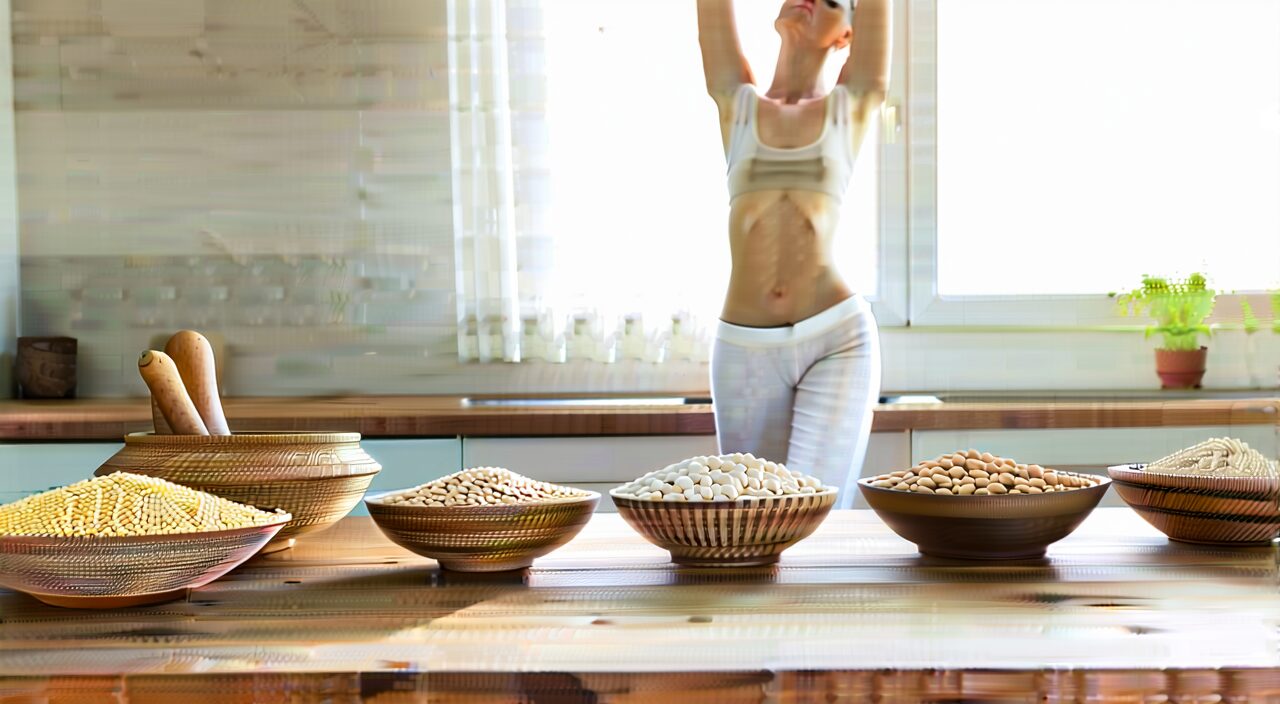
Gentle dietary adjustments
For people with spleen deficiency and dampness, the focus of eating is not starvation, but choosing foods that are easily transformed and transported by the body while not contributing to dampness.
- Foods to favor: Millet, coix seed (yi yi ren), white hyacinth bean (bai bian dou), Chinese yam (shan yao), poria (fu ling), lotus seed, euryale seed (qian shi), rice bean (chi xiao dou), etc. These ingredients are commonly used in traditional dietary therapy to strengthen the spleen and dispel dampness; they can be cooked into congee or added to daily staples. Coix seed drains dampness and promotes water percolation, white hyacinth bean tonifies the spleen and transforms dampness, and Chinese yam reinforces the spleen and boosts qi.
- Foods to reduce: Raw, cold fruits and vegetables, ice cream, ice-cold drinks — these can directly damage spleen yang; greasy, sweet, sticky, and rich foods such as deep-fried items, fatty meats, cream cakes also encourage dampness and produce phlegm, increasing the spleen’s burden.
- Eating habits: Practice mindful chewing, avoid scrolling on your phone while eating, and try not to eat under emotional stress, as emotional tension also affects spleen transportation. Stop at about 70-80% fullness; don’t force in extra bites just because you feel you “haven’t eaten much.”
Exercise should be gentle but consistent
Those with spleen deficiency and dampness usually have lower stamina; overly strenuous workouts may be hard to sustain and can deplete already insufficient qi and blood. More suitable forms are moderate-intensity, sustainable activities like brisk walking, gentle yoga, Baduanjin (Eight Brocades), and tai chi.
These exercises help move the body’s qi dynamic; mild sweating can release some dampness without causing excessive fatigue. The key is regularity and long-term commitment — even just twenty minutes a day is more helpful than a single exhausting workout once a week.
Daily rhythm and emotional care
In TCM, excessive pensiveness harms the spleen. People who overthink and worry chronically are prone to spleen deficiency with dampness patterns. Therefore, adjusting your life pace to give your mind time to rest is an often overlooked part of the care process.
Also, try to avoid staying up late. At night, yang qi is supposed to store inward; staying up late consumes yang qi, depriving the spleen of warmth and making dampness even harder to expel.
A look at traditional formulas and proprietary Chinese medicines
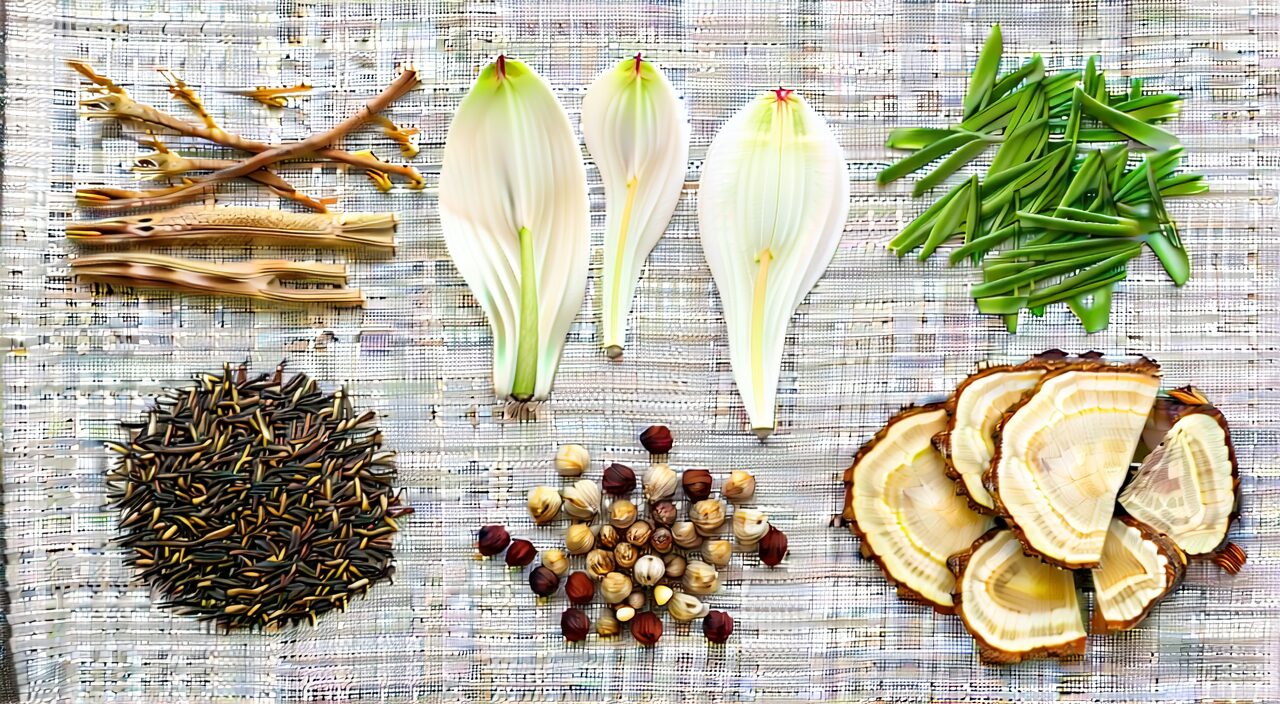
Within classical TCM formulas, there are several well-known directions for strengthening the spleen and dispelling dampness, often mentioned as care strategies for related presentations. The following information is meant only to broaden understanding and should not be taken as a ready-to-use personal protocol.
- Shen Ling Bai Zhu San: This is one of the foundational formulas for fortifying the spleen and transforming dampness, commonly considered for spleen qi deficiency with dampness, matching signs like poor appetite, loose stools, shortness of breath, fatigue, and epigastric or abdominal fullness. The formula contains ginseng, white atractylodes, poria and licorice to reinforce spleen qi, paired with Chinese yam, lotus seed, white hyacinth bean and coix seed to enhance damp-draining and anti-diarrheal effects. If the main concerns are spleen-deficiency diarrhea, feeling bloated after eating just a little, and a soft, flabby body with low energy, this is a direction traditionally taken into consideration.
- Xiang Sha Liu Jun Wan: Based on Liu Jun Zi Decoction with the addition of mu xiang and sha ren, which strengthens the action of moving qi and transforming dampness. It is often used when spleen qi is deficient and cold-dampness with qi stagnation is more pronounced — for example, epigastric fullness, belching, nausea, loose stools with marked bloating. For those with spleen deficiency dampness accompanied by gastrointestinal qi stagnation, this direction may be more pertinent.
- Jian Pi Wan: Emphasizes strengthening the spleen and dispersing food accumulation. In addition to tonifying the spleen, it includes digestant ingredients like shan zha, mai ya, and shen qu. It suits patterns of spleen deficiency with food accumulation, such as poor appetite, a stuck feeling after eating small amounts, foul belching and acid reflux. However, for simple spleen deficiency with dampness without prominent food stagnation, it needs careful evaluation based on the actual situation.
These formulas and patent medicines all build on the foundation of strengthening the spleen, but each has a slightly different emphasis — some lean toward supplementing qi, some toward moving qi, some toward dispersing food stagnation. Precisely because of this, which direction is more suitable cannot be decided based on a single symptom; it requires a comprehensive look at constitution, tongue and pulse, and other accompanying signs. If unsure whether a given option is appropriate, it’s advisable to consult an experienced TCM practitioner, taking into account specific product information and current physical condition, rather than self-combining or using them long term on your own.
When to seek professional help

Many discomforts caused by spleen deficiency with dampness can be improved to some degree through dietary and lifestyle adjustments. However, if the following situations occur, it is advisable to consult a doctor or professional TCM practitioner promptly:
- Weight keeps rising and is accompanied by obvious edema, especially worsening in the afternoon or after fatigue.
- Noticeable changes in bowel habits, such as recurring alternation between constipation and diarrhea, or stools containing mucus or blood.
- Fatigue that seriously affects daily life, cannot be relieved by rest, and is accompanied by palpitations, chest tightness, shortness of breath, or significantly low mood.
- Chronically poor sleep quality, difficulty falling asleep with vivid dreaming and frequent waking, or waking up at night for no clear reason feeling short of breath.
These presentations are sometimes not merely spleen deficiency with dampness; they could involve more complex body states that require professional help to identify the cause.
Summary
Spleen deficiency with dampness type obesity is not uncommon among people working on weight management. Its typical feature is that you don’t eat much, yet easily gain weight, along with body heaviness, fatigue, and loose stools. From a TCM perspective, the focus is on the spleen’s declining transportation ability and internal retention of water-dampness. Fundamentally, the main thread should be strengthening the spleen and transforming dampness, rather than just cutting calories or over-consuming energy. Day to day, you can gradually adjust by choosing foods that are easy to digest and help eliminate dampness, together with gentle, consistent exercise and a regular daily routine.
Traditional formulas such as Shen Ling Bai Zhu San, Xiang Sha Liu Jun Wan, and Jian Pi Wan, though having a long history of application in the spleen-strengthening and dampness-dispelling direction, each has its own focus and cannot be used interchangeably. Whether a formula suits a specific person needs to consider individual constitution, symptom presentation, and adequate product knowledge, along with advice from professionals. For any long-term, recurrent weight problem, or one accompanied by other systemic symptoms, caution is warranted, and timely evaluation and guidance from a physician should be sought. This article does not replace a doctor’s diagnosis or professional advice; if you have health concerns, please consult a medical professional promptly.