
Excessive Appetite, Always Wanting to Eat? TCM Explains Common Signs of Stomach-Heat Type Obesity

Have you ever experienced this: you just finished a meal not long ago, but your stomach is already growling again, craving something with strong flavors—sweets, fried foods, barbecue—nothing is off-limits. Your mouth often feels dry, your breath is not so fresh, and your bowel movements tend to be dry and constipated. If these symptoms recur and your weight gradually climbs, from a traditional Chinese medicine (TCM) perspective, it may not simply be a matter of “weak willpower,” but rather an imbalance in your body’s internal environment. This is often categorized as a pattern related to “Stomach Heat” or “exuberant Stomach Fire.”
Recognizing these signals doesn’t mean labeling yourself; it gives us an additional dimension to observe ourselves when adjusting our lifestyle. Below, we systematically review the common manifestations, contributing factors, and regulation directions for Stomach-Heat type obesity.
What Is Stomach-Heat Type Obesity?

In traditional Chinese medicine, “Stomach Heat” can be roughly understood as the stomach’s function being hyperactive, generating excessive “heat.” It is like a furnace burning too fiercely: food is decomposed and digested especially quickly, which easily leads to frequent hunger.
The formation of Stomach Heat is not isolated; it is often intertwined with dietary habits and emotional states. When this condition persists, and intake far exceeds the body’s actual needs, it can gradually develop into a type of obesity—Stomach-Heat type obesity.
In classical descriptions, there is a term called “xiao gu shan ji” (rapid digestion with frequent hunger), which means that food eaten is consumed very quickly, and hunger returns soon after. This hunger often comes with a sense of urgency and a craving for thick, greasy, or sweet foods, while light meals often feel unsatisfying. This is one of the typical characteristics of Stomach Heat.
Signs to Help You Recognize Stomach Heat

Everyone’s constitution varies greatly. A single symptom like dry mouth or bad breath doesn’t necessarily indicate Stomach Heat. But if several of the following manifestations match your long-term condition, you might consider observing and adjusting from the Stomach Heat perspective.
Characteristics of Appetite and Hunger
- Your meal portions are not small, but you feel hungry again two to three hours after eating, or even sooner, especially in the afternoon and evening.
- You have a strong craving for greasy, spicy, sweet, and heavy-flavored foods; light and bland meals feel unsatisfying.
- Sometimes the hunger comes with a mild stomach noise or discomfort, not exactly pain but unpleasant, and eating something can temporarily relieve it.
Oral and Digestive Manifestations
- Dry mouth, preferring cold water or cold drinks; sometimes you still feel thirsty even after drinking water.
- Noticeably bad breath, especially in the morning, with limited relief after brushing teeth.
- Stools tend to be dry and hard, difficult to pass, or even occur only every few days, making hemorrhoids or anal fissures more likely.
- Gums may easily become red, swollen, or bleed, and mouth ulcers appear repeatedly.
Head, Face, and Body Sensations
- The face becomes oily, prone to red papules or acne, especially on the forehead, chin, and around the lips.
- A subjective feeling of body heat, warm palms or soles, though body temperature may not necessarily be elevated.
- Emotionally, you easily become irritable and impatient; sometimes a minor issue can make you feel like “fire rising to the heart.”
If you simultaneously experience excessive appetite, dry mouth and bad breath, dry stools, and facial greasiness, the likelihood of Stomach Heat is relatively high. It should be noted that this information is for self-observation only and cannot replace professional diagnosis. When symptoms persist and affect daily life, or are accompanied by significant stomach pain, acid reflux, or heartburn, it is recommended to consult a doctor promptly to avoid delay.
Why Does Stomach Heat Become Predominant?

The formation of Stomach Heat is usually not caused by a single factor, but rather a combination of diet, emotions, and daily routines. The following common triggers are worth noting.
Improper Diet Dominated by Spicy, Dry, and Rich Foods
Long-term consumption of large amounts of spicy, fried, barbecued, and sweet foods easily accumulates heat in the body, directly increasing the burden on the stomach.
Additionally, excessive alcohol consumption, especially hard liquor, is often considered a factor that fuels fire and generates heat.
Many people do not eat this way for all three meals, but concentrate it during dinner or late-night snacks. Nighttime is when the body should be gradually calming down; excessive calories accumulating at this time make Stomach Heat manifestations more prominent.
Emotional Stress and Liver Depression Transforming into Fire Invading the Stomach
In TCM, the Liver and Stomach are closely related. Long-term mental stress, emotional depression, or irritability and anger can easily lead to Liver qi stagnation. Over time, this stagnation can transform into fire and heat, which then spreads to the stomach, causing Stomach Heat.
Many people may have experienced this: when angry or under intense work pressure, they particularly want to eat, especially something with strong taste. This might be a reflection of Liver Fire stirring up Stomach Heat.
Irregular Daily Routine Leading to Accumulation and Heat Generation
Staying up late, insufficient sleep, lying down immediately after meals, and lack of physical activity can all make digestive functions sluggish. Food staying in the gastrointestinal tract for too long can gradually brew into heat.
Furthermore, insufficient water intake and a diet low in vegetables and fruits weaken intestinal propulsion, which easily aggravates constipation, and in turn worsens internal stagnant heat.
Associations of Stomach-Heat Type Obesity with Other Organs
In TCM, obesity is not solely related to the stomach. The Spleen, Liver, and Large Intestine are also involved.
When Stomach Heat occurs, the stomach is hyperactive, but the Spleen’s function may be relatively weak, often referred to as “strong Stomach, weak Spleen.” The ability to digest food becomes uneven: the stomach quickly receives and processes food, but the Spleen’s capacity to transport and transform fluids, nutrients, and moisture cannot keep up, easily generating dampness and phlegm, leading to fat accumulation.
On the other hand, the Stomach and Intestines are interiorly-exteriorly related. Stomach Heat easily moves downward to the Large Intestine, damaging the Large Intestine’s fluids, making stools dry, hard, and difficult to pass. When the bowels are obstructed, turbid qi cannot descend and further disturbs upward, affecting the mouth and skin condition.
The Liver-Stomach relationship has been mentioned earlier. Stomach Heat caused by emotional issues often manifests as fluctuating appetite or binge eating after periods of stress.
Therefore, when considering regulation approaches, TCM usually takes into account the overall state of the Stomach, Spleen, Liver, and Intestines, rather than simply “clearing Stomach Fire.”
General Directions for Regulating Stomach Heat Conditions
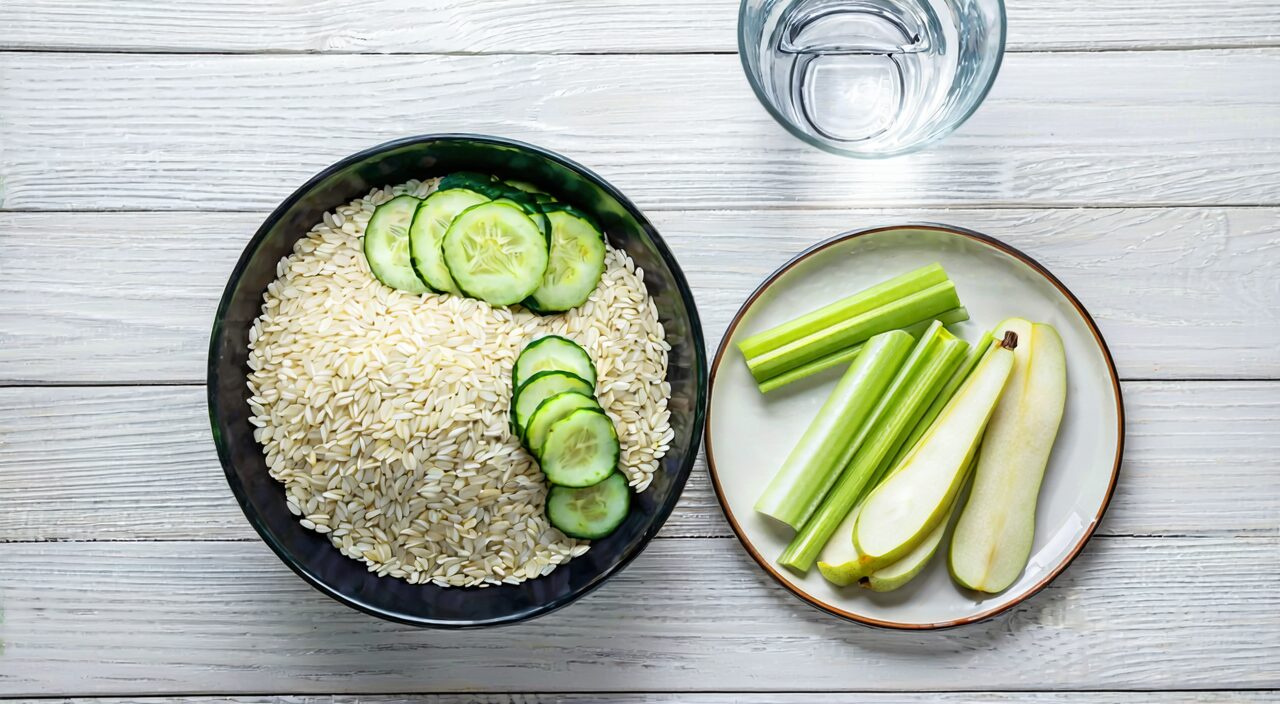
What follows are some common traditional regulation ideas, not a plan tailored to any specific individual. Everyone’s constitution and situation differ greatly, so please judge based on your own actual circumstances, and seek help from TCM professionals if necessary.
Dietary Structure Adjustments Can Be Tried First
Since Stomach Heat is closely related to diet, it’s good to start with the parts that are easy to adjust.
Moderately reduce the frequency of spicy, fried, barbecued, and sweet foods, and increase vegetables that are cool and moistening in nature, such as cucumber, winter melon, celery, and Chinese cabbage.
In staple foods, you can include a certain amount of coarse grains, such as millet, brown rice, and buckwheat, which in traditional experience are considered helpful for nourishing the stomach and promoting intestinal motility.
For fruits, those with high water content and a cool nature, like pears, water chestnuts, and watermelon, can be eaten in moderation, but be careful not to replace meals with fruits, as excessive coldness may damage the Spleen and Stomach.
As for beverages, warm plain water remains the most gentle supplement. It is not recommended to gulp down ice-cold drinks, as overly cold stimulation can sometimes cause qi and blood in the stomach to congeal, which is not conducive to actually relieving Stomach Heat.
Eating Habits and Pace Also Deserve Attention
People with Stomach Heat often eat quickly and do not chew thoroughly; before the brain receives the satiety signal, they have already overeaten.
Try to slow down your eating pace, chew each mouthful a few more times, and give your body time to perceive fullness.
Try to keep three meals regular, especially breakfast, which should not be too greasy. Control late-night snacks as much as possible. If you must eat within two to three hours before bedtime, choose a small amount of easily digestible food, like a small bowl of millet porridge, to avoid increasing the stomach’s burden.
Emotional Management and Regular Routine
Maintaining emotional stability is no easy task, but you can pay attention to the relationship between mood swings and appetite. When you feel irritable or stressed and want to eat, try engaging in brief emotional regulation first, such as deep breathing, a short walk, or drinking a glass of warm water, giving yourself a “pause” buffer.
Regular exercise helps to smooth the qi mechanism and is beneficial for relieving Liver depression and Stomach Heat, but the intensity and type of exercise should be chosen according to individual capacity. Avoid immediately consuming large amounts of cold drinks after heavy sweating.
Application of Traditional Formulas and Patent Medicines in Related Directions
In actual TCM practice, for Stomach Heat predominance accompanied by obesity and appetite issues, certain formulas and patent medicines are often considered as regulation options. Here, we briefly introduce two common examples to help readers understand, but they should not be taken directly as treatment recommendations.
| Formula | Main Direction of Action | Possible Applicable Situations | Special Precautions |
|---|---|---|---|
| Fangfeng Tongsheng Wan | Releases the exterior, unblocks the interior, dispels wind and clears heat | Stomach-Heat type obesity accompanied by constipation, aversion to heat, tendency to skin eruptions; external pattern present with interior heat stagnation (e.g., inhibited sweating, constipation, dark urine) | This formula tends to be purging. It is often unsuitable for those with weak constitution or Spleen-Stomach deficiency cold. It should not be taken long-term and requires professional assessment. |
| Bao He Wan | Digests food, harmonizes the stomach, resolves food accumulation | Food accumulation and weak Spleen-Stomach transportation, such as bloating, sour belching, worsened bad breath, and abnormal stools after binge eating; reference for when food accumulation begins to generate heat | Not specifically targeted at Stomach Heat; it primarily transforms phlegm-dampness. It is not advisable to combine it with other drugs on your own. |
It is especially important to note that any Chinese patent medicine should be selected based on specific symptoms, constitution, and current state. The focuses of Fangfeng Tongsheng Wan and Bao He Wan are different: one emphasizes clearing heat and unblocking the bowels, while the other emphasizes digesting food and harmonizing the stomach. Neither should be mixed casually or taken long-term.
If you are unsure about your situation, are taking other medications, or are in special periods such as preparing for pregnancy, pregnancy, or breastfeeding, or have other diseases, please consult a doctor, pharmacist, or TCM practitioner before use.
When to Be Vigilant and Seek Professional Help

Although occasional dry mouth, bad breath, and temporary excessive appetite may not be major problems, certain signals, when combined, should be taken seriously. Especially if the following situations occur, it is not advisable to rely solely on self-regulation, and you should see a doctor promptly:
- Long-term severe constipation, or alternating diarrhea and constipation.
- Unexplained rapid weight gain or loss.
- Accompanied by obvious stomach pain, acid reflux, heartburn, difficulty swallowing, or retrosternal discomfort.
- Extreme thirst, excessive drinking and urination, weight loss; blood sugar and other issues need to be checked.
- Emotionally unrelieved anxiety or depression, or accompanying palpitations, chest tightness, abnormal breathing, pain, etc.
Professional diagnosis and intervention can more accurately grasp the core problem and avoid delays.
Summary
Stomach-Heat type obesity is a TCM understanding of a state characterized by excessive appetite, rapid digestion with frequent hunger (xiao gu shan ji), dry mouth, bad breath, and dry stools, along with a tendency toward obesity. Its formation is related to long-term dietary preference for spicy, dry, and rich flavors, emotional stress, and irregular routines, often involving an imbalance among the Stomach, Spleen, Liver, and Large Intestine.
Daily regulation can start with dietary structure adjustments, improved eating habits, emotional management, and a regular daily routine. The goal is not to pursue rapid weight loss, but to allow the body to gradually return to balance. As for traditional formulas or patent medicines like Fangfeng Tongsheng Wan and Bao He Wan, although they are applied in relevant directions, they must be carefully referenced based on personal constitution and symptoms under professional guidance, and should not be self-prescribed.
Finally, it should be said that obesity is a complex issue that may involve multiple factors. When facing persistent appetite and weight concerns, maintaining patience and rationality, and seeking professional evaluation, is often safer and more effective than self-medicating.