
Spleen-Kidney Yang Deficiency Obesity: A Guide to Managing Cold Sensitivity, Cold Extremities, and Stubborn Puffiness

Even with a moderate diet, weight loss can stall—especially with a soft, puffy sensation around the abdomen and thighs; feeling colder than others year-round, with persistently cold hands and feet, and discomfort with air conditioning even in summer; puffy eyelids in the morning, and ankles that indent easily at night…
If these issues persist long term, they may be hinting at more than just “a bit of dampness.” They could signal a tendency toward spleen-kidney yang deficiency.
From the perspective of traditional Chinese medicine, obesity is not a single type. Some people need to transform phlegm and eliminate dampness, others to strengthen the spleen and boost qi. Yet there is a type of puffy obesity rooted in insufficient yang qi and weak metabolic drive for water and fluids. If this kind of obesity is treated only with cold, purging, or simply drying dampness, it can leave the body more fatigued and cold sensitivity more pronounced.
This article organizes the characteristics and management directions for spleen-kidney yang deficiency obesity, helping you understand your body’s signals more clearly.
Signs Your Body May Give with Spleen-Kidney Yang Deficiency

People with spleen-kidney yang deficiency obesity tend not to be “solid and robust” but rather soft, pale, and lacking warmth. Beyond concerns about weight or body shape, the body also provides clues from multiple angles.
Cold sensitivity is a core clue, especially in the lower back, abdomen, and limbs
Yang qi inside the body is like a fire source, maintaining body temperature and the normal function of organs. When both spleen yang and kidney yang are relatively weak, the capacity to warm decreases, and a person becomes notably sensitive to cold:
- Chronically cold hands and feet, especially in winter when they struggle to warm up.
- Many women also feel a cold sensation in the lower back and abdomen, preferring to hold with their hands or use a hot water bottle for comfort.
- Soreness and weakness in the lower back and knees, as well as a lack of strength in the legs, are also common—even a bit of standing or walking can make them feel weak and unsupported.
Persistent edema with slow rebound when pressed
The spleen is responsible for transporting and transforming water-dampness, while the kidney regulates water metabolism. When yang qi is insufficient, water-dampness lacks driving force for transformation and easily stagnates, causing edema:
- Morning eyelid puffiness
- Ankle and lower leg swelling in the afternoon, with slow rebound after pressing
This kind of edema differs from that caused simply by drinking too much water. Its core is “insufficient qi transformation”—the body’s ability to process fluids cannot keep up.
Clues from the tongue and urination
People with spleen-kidney yang deficiency often show characteristic changes on the tongue:
- The tongue body is pale and slightly puffy
- Tooth marks may appear on the edges
- The coating is white and slippery or white and greasy
Meanwhile, urination tends to be clear and profuse, with frequent trips to the bathroom, possibly waking at night; stools are often loose, sometimes even diarrhea triggered by a little cold food. These are all signs that yang qi cannot warm, control, or transform properly.
Overall, this type of obesity is not the “excess calorie” robust type, but a deficiency-type obesity marked by “water-dampness predominating and heat/energy insufficiency.” Therefore, the management approach should start from warming and nourishing, rather than simply attacking or purging.
Why Does Insufficient Yang Qi Lead to Puffy Obesity?
Many people wonder: why does being cold-sensitive and having a slow metabolism lead to weight gain? From a TCM perspective, this is related to a core function—qi transformation.
Yang qi is the “power source” for metabolizing water-dampness
The body’s fluids are not static; they are constantly being absorbed, distributed, and excreted. This process requires the driving force of qi and the warmth of yang.
- Kidney yang is the root of all yang qi in the body, like the fire in the boiler room;
- Spleen yang is like the pipeline system that conveys heat, transporting the essence of food and water to where it is needed.
If kidney yang is insufficient, the fire is weak, and fluids will stagnate due to lack of evaporative, transforming power, forming water-dampness and phlegm-fluid retention. If spleen yang is insufficient, transportation and transformation capacity declines, making water-dampness more prone to internal accumulation in the abdomen, limbs, and just under the skin.
Over time, this internal water-dampness manifests as edema, weight gain, and a heavy sensation. This weight gain is often “erratic”—sometimes a kilogram can be gained in a day or two just from water retention, rather than stable fat accumulation. Therefore, for spleen-kidney yang deficiency obesity, the focus is not on “burning fat” but on restoring yang qi so that water-dampness can be properly metabolized and excreted.
Differences from simple phlegm-dampness or spleen deficiency patterns
While edema and body heaviness occur in all three patterns, the emphases differ:
| Pattern | Body shape characteristics | Cold manifestation | Tongue features | Management direction |
|---|---|---|---|---|
| Phlegm-dampness predominance | More robust body type | Cold sensitivity not prominent | Thick, greasy coating; sticky sensation in mouth | Transform dampness and eliminate phlegm |
| Primarily spleen deficiency | Loose muscles | Cold signs not severe; may not be particularly cold-sensitive | Tongue tends pale but not necessarily puffy and slippery | Strengthen spleen and boost qi |
| Spleen-kidney yang deficiency | Soft, pale, puffy | Obvious cold signs; notably cold-sensitive | Pale, puffy tongue with tooth marks; white, slippery coating | Warm and tonify spleen and kidney, transform qi and move water |
The spleen-kidney yang deficiency constitution involves simultaneous weakness of both spleen yang and kidney yang, with obvious cold and deficiency signs. Therefore, management cannot only strengthen the spleen and drain dampness, nor simply dry dampness and transform phlegm. It needs to warm and tonify the spleen and kidney, transform qi and move water—adding fire and heat to the body so that water-dampness can either be vaporized for use or smoothly excreted.
If mistakenly using overly warming and drying medicinals or foods, one may temporarily feel warmer but secretly consume yin fluids. If using cold and purging methods to drain water, it may further damage already weak yang qi, making cold sensitivity and edema more stubborn.
Warming and Nourishing Spleen and Kidney, Transforming Qi and Moving Water: Organizing the Management Approach
The management principle for spleen-kidney yang deficiency obesity can be summarized as “warm and tonify spleen and kidney, transform qi and move water.” These eight words sound simple, but in practice they require balancing warming yang and draining water while avoiding dryness-heat damaging yin and avoiding harsh attacking.
Small daily habits to warm yang
Daily details can play a long-term supportive role. The following aspects are worth attention:
- Dietary choices: Appropriately select ingredients that are mild in nature, easy to digest, and have some water-draining effect, such as Chinese yam, poria, ginger, fennel, cinnamon, and black cardamom (yi zhi ren). They can be used in soups or congee to help warm the middle and lower burner. What needs to be avoided are raw, cold foods, iced drinks, and excessive consumption of cold-natured fruits and vegetables, which can continuously deplete yang qi.
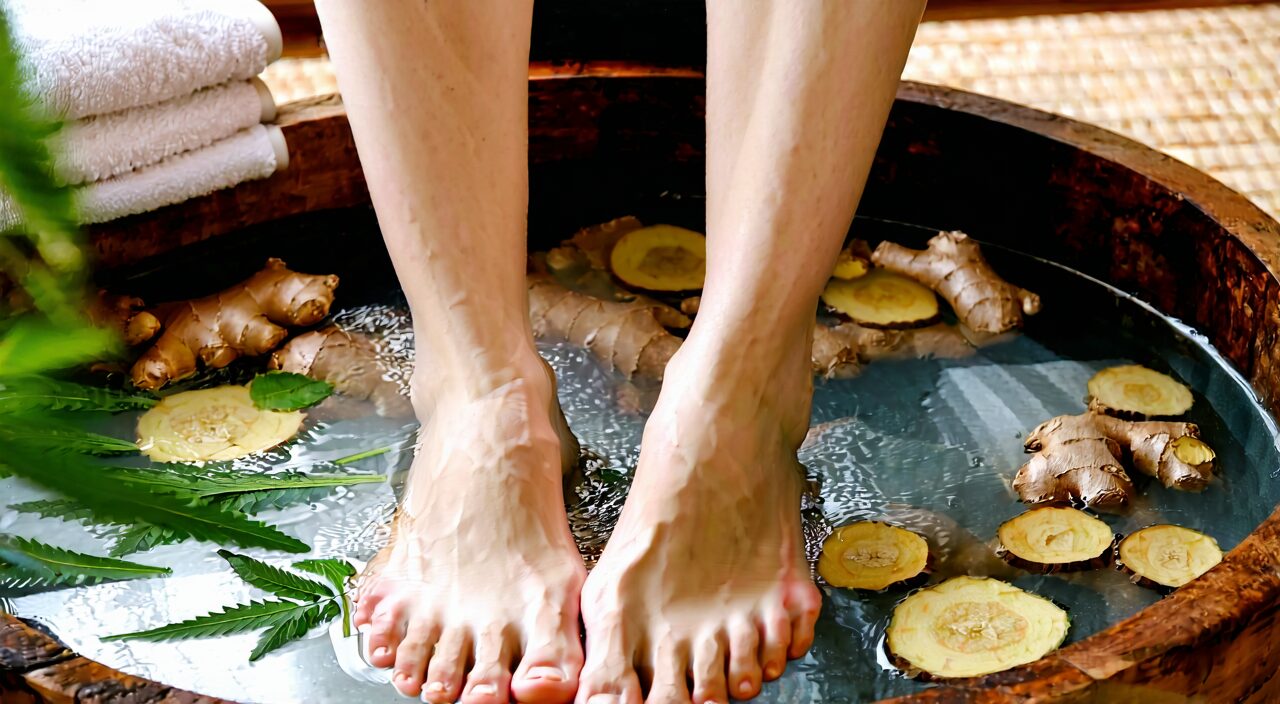
- Key areas for warmth: Pay special attention to the lower back, abdomen, and lower limbs. Soaking feet in warm water before bed, adding a little ginger or mugwort, can help promote the flow of yang qi in the meridians and improve cold hands and feet.
- Regular routine: Avoiding staying up late is an important part of protecting kidney yang, because late nights and chronic insufficient sleep are the most draining for yin essence and yang qi.
- Type of exercise: Moderate exercise helps the circulation of qi and blood, but avoid profuse sweating. People with spleen-kidney yang deficiency already have insufficient yang qi; excessive sweating further consumes qi and damages yang, aggravating fatigue. More suitable methods are walking, practicing Baduanjin, tai chi, or gentle yoga, aiming for a slight warmth in the body. The key is consistency.
Traditional application directions of formulas and patent Chinese medicines
In traditional TCM thinking, for spleen-kidney yang deficiency with internal water-dampness, there is a category of formulas and patent medicines often considered for management, but they each have different emphases and need to be judged in combination with the body’s specific manifestations.
- Xiang Sha Liu Jun Wan (Aucklandia and Amomum Six Gentlemen Pills): Commonly used for spleen and stomach qi deficiency with dampness obstruction and qi stagnation. It leans more toward warming the middle, moving qi, and transforming dampness. If there is poor appetite, abdominal bloating after meals, loose stools, epigastric cold, and slight edema, this may relate to spleen yang insufficiency and weak transportation. Traditionally it might be considered as an option. It focuses on the middle burner (spleen and stomach), but it is relatively weaker in addressing kidney yang insufficiency symptoms such as soreness in the lower back and knees or frequent nighttime urination.
- Shen Ling Bai Zhu San (Ginseng, Poria, and Atractylodes Macrocephala Powder): Commonly used for spleen qi deficiency with dampness patterns. It can tonify qi, strengthen the spleen, drain dampness, and stop diarrhea, with a relatively balanced nature. It suits people whose spleen qi is relatively deficient with internal water-dampness, but whose cold signs are not pronounced. For example, if someone simply gets tired easily, has unformed stools, heavy body sensation, and slight edema, but without prominent cold sensitivity or lower back and knee soreness, this type of formula might traditionally be a starting point.
- When symptoms such as fear of cold with cold extremities, lower back and knee soreness and weakness, edema, and clear profuse urination—indicating more prominent kidney yang insufficiency—TCM often combines methods that warm and tonify kidney yang, transform qi and move water, such as modifications of Zhen Wu Tang or Ji Sheng Shen Qi Wan. These formulas need to be prescribed by a TCM practitioner based on specific tongue, pulse, and constitutional differentiation and should not be self-selected.
It is especially important to note that whether a particular patent medicine or formula is suitable cannot be determined merely by a few symptoms. Body constitutions are often complex; sometimes yang deficiency coexists with phlegm-heat, damp stagnation, or yin and blood deficiency. It is recommended to consult product instructions and seek guidance from a TCM professional, and not to take them long-term on one’s own just because symptoms seem to match.
Avoid Two Common Misunderstandings
Around spleen-kidney yang deficiency obesity, two misconceptions are fairly common in daily life and worth understanding in advance.
Misunderstanding One: Focusing only on draining dampness and water while neglecting warming yang
Many people, upon noticing edema and body heaviness, immediately think of “eliminating dampness” and consume large amounts of ingredients or products like adzuki beans and coix seed that drain water and leach dampness. Although coix seed can drain water and leach dampness, its nature is slightly cold. Long-term, heavy, single use in spleen-kidney yang deficiency individuals may drain some dampness while further consuming yang qi, worsening cold sensitivity and diarrhea, and causing edema to recur.
As long as yang qi is not restored, water-dampness will re-accumulate. Therefore, in managing this kind of puffy obesity, warming yang and draining water must go hand in hand; when yang qi is extremely weak, warming and nourishing should take priority, as water-dampness will naturally dissipate with qi transformation.
Misunderstanding Two: Pursuing rapid warming and rapid weight loss
Some people hope to use warming yang herbs or foods to quickly heat the body or eliminate edema rapidly. However, the recovery of yang qi in the human body is a gradual process; excessive force may backfire.
Overly warm and drying medicinals (such as large doses of aconite or dried ginger used inappropriately) can cause dryness-heat, fire rising, dry mouth, bitter taste, and even damage yin and blood, creating new imbalances.
Weight expectations should also be reasonable: edema reduction may be relatively fast, but overall metabolic recovery and improvement of the yang-deficiency state take time. During management, weight may drop and then stabilize, or even fluctuate due to improved physical strength and muscle gain—this is more meaningful than fixating on the scale number.
Observation Points to Notice in Daily Life
During the adjustment process, paying attention to certain body feedback can help gauge whether the direction is roughly suitable for you.
- Positive signals of yang qi recovery: Hands and feet gradually becoming warm, reduced cold intolerance, improvement in edema, formed stools, urine no longer excessively clear and profuse with reduced nighttime urination, and the tongue shifting from puffy and tender toward a more normal appearance.
- Warning signals of dryness-heat: If symptoms such as dry mouth, irritability, insomnia, acne, or dry stools appear, you need to consider whether the warming method is excessive or whether the constitution also includes yin deficiency. In such cases, suspend the current protocol and promptly consult a professional.
For long-standing significant edema, unexplained continuous weight gain, or accompanying symptoms like palpitations, chest tightness, severe fatigue, or persistently low mood, these may involve other medical conditions. It is advisable to seek medical attention promptly rather than treating it simply as a constitutional imbalance.
Summary
Spleen-kidney yang deficiency obesity is not simply a matter of “eating too much and exercising too little.” Its core is insufficient yang qi lacking driving force, leading to internal water-dampness, manifested as cold sensitivity, cold hands and feet, lower back and knee soreness, and edema-predominant puffy obesity. Management requires step-by-step restoration of the body’s driving force through warming and tonifying the spleen and kidney, transforming qi and moving water, rather than solely relying on draining water or drying dampness.
The proportion of spleen yang deficiency versus kidney yang deficiency can vary between individuals, and the management emphasis should shift accordingly. Xiang Sha Liu Jun Wan traditionally leans toward strengthening the spleen, warming the middle, and moving qi; Shen Ling Bai Zhu San toward supplementing qi, strengthening the spleen, and leaching dampness. However, whether to use them and how to combine them must be based on individual constitution, specific symptoms, and under professional guidance.
Most importantly, patiently observe the body’s changes and use gentle, sustained methods to help yang qi gradually return. As the body gradually warms and water-dampness metabolism tends to normalize, the soft, puffy edema state often improves along with it, leading to more stable weight management and overall comfort.