
Who Is Tao Hong Si Wu Tang Suitable For? Composition, Benefits, and Contraindications

Many people encounter a confusion when learning about traditional formulas: why do some formulas focus mainly on nourishing while others also emphasize “unblocking,” even though both address qi and blood?
Tao Hong Si Wu Tang is a typical example. It is not a simple blood-tonifying formula; instead, it strengthens blood activation on the foundation of nourishing blood.
This article mainly reviews Tao Hong Si Wu Tang from the perspective of traditional Chinese medicine, covering its composition rationale, the types of people it may suit, common contraindications, and its differences from Si Wu Tang, Gui Zhi Fu Ling Wan, Xue Fu Zhu Yu Tang, and Ba Zhen Tang, to help readers build a relatively clear cognitive framework.
From Si Wu Tang to Tao Hong Si Wu Tang: A Clear Shift
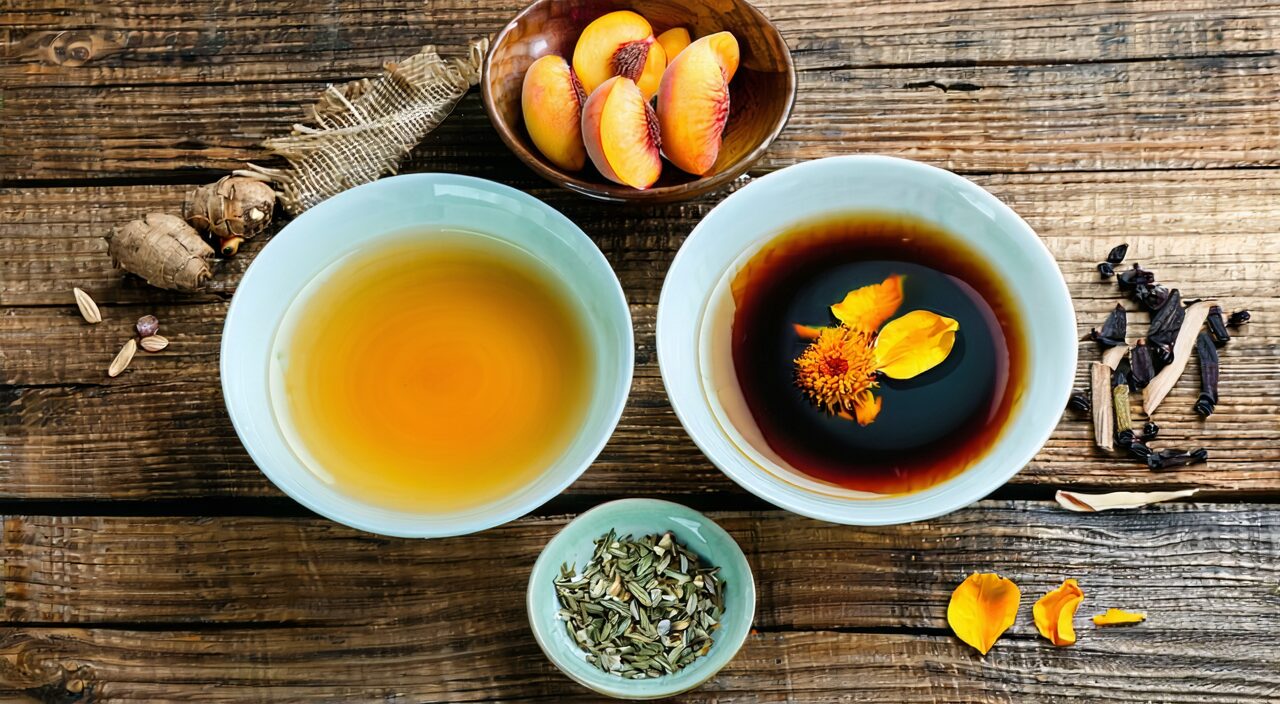
To understand Tao Hong Si Wu Tang, it helps to first look at Si Wu Tang.
Si Wu Tang consists of Dang Gui (Angelicae Sinensis Radix), Chuan Xiong (Chuanxiong Rhizoma), Bai Shao (Paeoniae Radix Alba), and Shu Di Huang (Rehmanniae Radix Praeparata). Traditionally, it is considered a foundational formula for nourishing blood and regulating menstruation, often used for conditions related to blood deficiency.
Tao Hong Si Wu Tang adds two more ingredients, Tao Ren (Persicae Semen) and Hong Hua (Carthami Flos), resulting in a noticeable shift in its functional direction.
If Si Wu Tang can be understood as “nourishing the blood,” then Tao Hong Si Wu Tang leans more toward “enabling the blood to be both nourished and to circulate more smoothly.” In traditional Chinese medicine, this is often summarized as nourishing and activating blood, targeting situations of blood deficiency accompanied by blood stasis.
Composition of Tao Hong Si Wu Tang and the Role of Each Herb
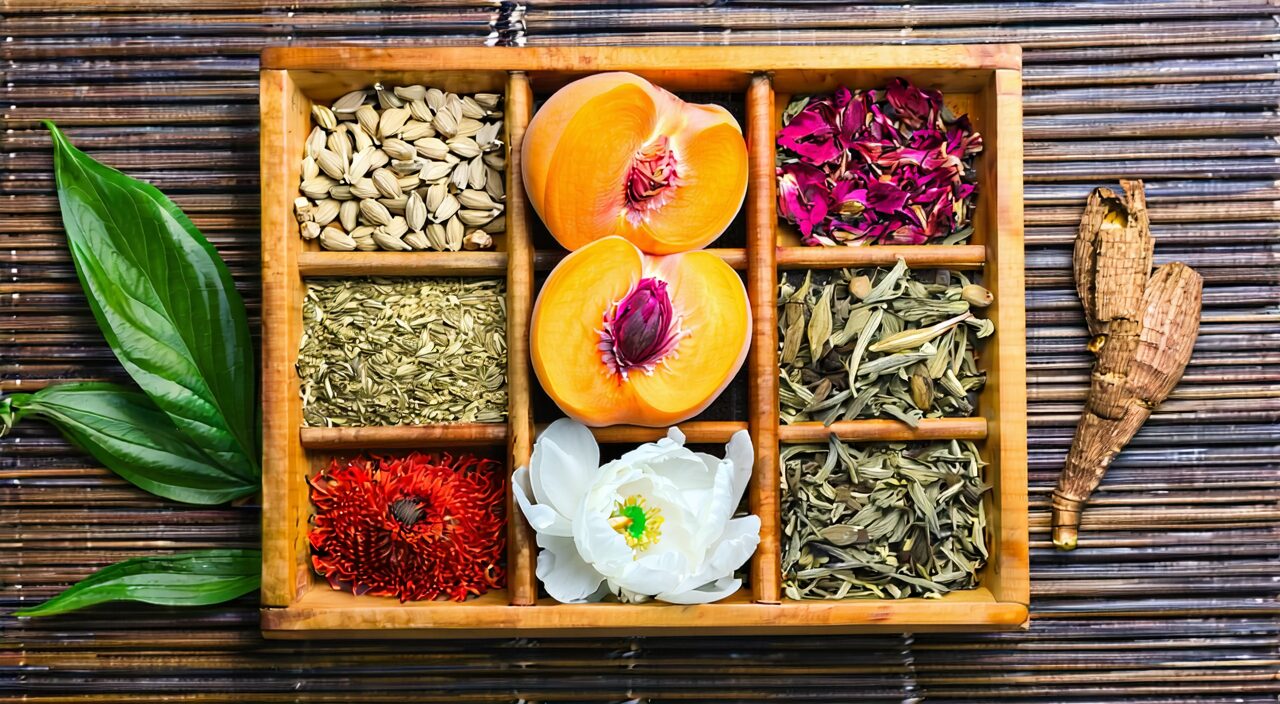
The following table briefly outlines the main composition of Tao Hong Si Wu Tang and the traditional understanding of each herb.
| Herb | Traditional understanding |
|---|---|
| Dang Gui (Angelicae Sinensis Radix) | Nourishes and harmonizes the blood, often used when blood deficiency is accompanied by poor circulation. |
| Chuan Xiong (Chuanxiong Rhizoma) | Activates blood and moves qi; it moves without staying, helping to promote blood circulation. |
| Bai Shao (Paeoniae Radix Alba) | Nourishes blood and softens the liver, tending to astringe yin and harmonize the nutritive aspect. |
| Shu Di Huang (Rehmanniae Radix Praeparata) | Enriches yin and tonifies blood, tending to replenish essence and blood. |
| Tao Ren (Persicae Semen) | Invigorates blood and removes stasis; with an oily and moist texture, it also has a bowel-moistening implication. |
| Hong Hua (Carthami Flos) | Invigorates blood and unblocks menstruation, dispels stasis and relieves pain, tending to disperse. |
From the composition, one can see that the formula includes blood-tonifying herbs such as Shu Di Huang, Bai Shao, and Dang Gui, as well as blood-activating herbs such as Chuan Xiong, Tao Ren, and Hong Hua. The overall direction is to promote blood circulation on the foundation of nourishment. Therefore, it has traditionally not been regarded as an ordinary blood-tonifying formula, but rather emphasizes the idea of “removing stasis to generate the new.”
What types of presentations may Tao Hong Si Wu Tang be more suitable for?
In traditional application, Tao Hong Si Wu Tang is often used for presentations related to blood deficiency with concurrent stasis. The following areas are common concerns, but whether the formula is truly suitable still requires a comprehensive assessment based on individual conditions.
Dull or darkish complexion with lusterless appearance
Unlike the pale or sallow complexion of simple blood deficiency, when blood deficiency is combined with stasis, the complexion may lack luster while also having a dull or darkish tone. The lip color may also be dark or purplish. Such a state is often seen as a sign of insufficiently smooth circulation of qi and blood.
Menstrual irregularities with blood clots
For women whose menstrual cycles are generally regular, but who experience the following, traditional views may interpret them from the perspective of blood stasis:
- Difficult menstrual flow
- Scanty menstrual volume
- Presence of many blood clots
- Dark menstrual blood color
Tao Hong Si Wu Tang is one of the commonly referenced formulas for such situations. It is more likely to be considered especially when there is fixed, stabbing pain before or during menstruation.
Pain in fixed locations
In Chinese medicine, there is a saying “where there is pain, there is obstruction.” Pain caused by blood stasis tends to be fixed in location, such as:
- Headaches with a needle-pricking sensation
- Dull or stabbing pain in the chest and hypochondrium
- Tenderness upon pressure at certain body sites
Traditionally, Tao Hong Si Wu Tang is sometimes used as one approach to promote blood circulation and unblock collaterals.
Dark tongue body or ecchymoses
A darkish tongue body, ecchymoses or petechiae on the tongue surface, and distended sublingual veins are common indicators for assessing blood stasis. When these tongue signs are accompanied by blood deficiency manifestations—such as a relatively thin tongue body and a palish tongue quality with darkness—they are more likely to be associated with blood deficiency with stasis.
It should be noted that the above presentations are merely provided as a way of understanding, and do not mean that Tao Hong Si Wu Tang must be used whenever such signs appear. Depending on the individual’s balance of cold, heat, deficiency, and excess, the choice of treatment direction can vary greatly.
Who may need to be more cautious?
Because Tao Hong Si Wu Tang has a relatively strong blood-activating tendency, several conditions in traditional use warrant special caution or even avoidance.
Pregnancy and preconception stage
Since the formula contains herbs that invigorate blood and remove stasis, its use during pregnancy may involve risks and is generally not recommended for self-directed use. For those in the preconception stage, it is also advisable to consult a professional first to avoid inadvertent misuse.
Bleeding tendencies or use of anticoagulant medications
People with the following conditions should exercise particular caution when using blood-activating formulas:
- Easy gum bleeding
- Easy bruising under the skin
- Gastrointestinal bleeding
- Excessively heavy menstrual bleeding
- Currently taking anticoagulant medications
Such individuals should ideally seek a comprehensive evaluation from a physician before making a decision.
Significant damp-heat or excess heat
Tao Hong Si Wu Tang is generally warm in nature and has fairly strong tonifying effects. If there is a predominance of damp-heat in the body, indicated by the following, indiscriminate use may aggravate damp-heat:
- Yellow and greasy tongue coating
- Dry mouth and bitter taste
- Sticky, difficult bowel movements
- Oily skin with a tendency to acne
Severe qi and blood deficiency with no obvious stasis
If the main presentation is one of the following severe deficiency patterns, and stasis signs are not prominent, it may be more appropriate to approach from the direction of dual supplementation of qi and blood:
- Severe fatigue
- Shortness of breath
- Palpitations
- Pale complexion
- Very pale tongue body
Using a formula that leans toward blood activation may easily deplete qi and damage blood instead.
Children, adolescents, and those with special constitutions
Children and adolescents have not yet fully developed their constitutions, so the casual use of blood-activating and stasis-removing formulas is generally not recommended. Individuals with allergic constitutions or other chronic diseases should also make careful choices after clarifying their own body patterns.
The above situations are only broad directions for exclusion, not absolute “contraindications.” Specific decisions should still respect individual differences and professional judgment.
Differences between Tao Hong Si Wu Tang and Similar Formulas
Comparing Tao Hong Si Wu Tang with several common blood-nourishing and blood-activating formulas makes it easier to see where it stands.
Differences with Si Wu Tang
- Si Wu Tang: Its direction is nourishing and regulating blood, with relatively gentle blood-activating power. It promotes blood circulation through replenishing blood, leaning toward “nourishing.”
- Tao Hong Si Wu Tang: With the addition of Tao Ren and Hong Hua, its blood-activating and stasis-removing effects are markedly enhanced. While still “nourishing,” it emphasizes “unblocking” more, making it suitable for situations where blood deficiency is accompanied by relatively prominent stasis.
Differences with Gui Zhi Fu Ling Wan
- Gui Zhi Fu Ling Wan: Composed of Gui Zhi (Cinnamomi Ramulus), Fu Ling (Poria), Mu Dan Pi (Moutan Cortex), Tao Ren (Persicae Semen), and Shao Yao (Paeoniae Radix), its overall direction is warming the blood vessels and gradually dissipating masses. It is often used for blood stasis accompanied by cold congelation, particularly for chronic stasis such as abdominal masses.
- Tao Hong Si Wu Tang: Has a stronger blood-nourishing base and is more suitable for conditions where both blood deficiency and blood stasis coexist.
Differences with Xue Fu Zhu Yu Tang
- Xue Fu Zhu Yu Tang: Mainly invigorates blood, removes stasis, moves qi, and relieves pain. It is commonly used for chest oppression, chest pain, insomnia, and irritability caused by blood stasis in the chest and qi stagnation. It has stronger blood-activating and qi-moving power and relatively fewer blood-nourishing components, making it more suitable for severe stasis without prominent deficiency.
- Tao Hong Si Wu Tang: Gives equal weight to nourishing and activating blood, applicable to deficiency accompanied by stasis.
Differences with Ba Zhen Tang
- Ba Zhen Tang: A combination of Si Jun Zi Tang and Si Wu Tang, it emphasizes dual supplementation of qi and blood. It is commonly used for fatigue, dizziness, palpitations, and scanty, pale menstruation caused by both qi and blood deficiency. It has almost no blood-activating or stasis-removing tendency, making it more suitable for purely deficient constitutions with little stasis.
- Tao Hong Si Wu Tang: Addresses both nourishing and activating blood, targeting deficiency with concurrent stasis.
If a person has both clear signs of qi and blood deficiency and features of blood stasis, deciding which formula to start with often requires more meticulous pattern differentiation and cannot be simply interchanged.
Understanding these differences helps build a more multidimensional understanding of formulas rather than treating any one formula as a universal choice.
Summary
As a classic formula for nourishing and activating blood, Tao Hong Si Wu Tang has traditionally been used in regulatory approaches for blood deficiency with stasis. It builds on the blood-nourishing base of Si Wu Tang and adds Tao Ren and Hong Hua to invigorate blood and dissolve stasis, making it more suitable for people who show both blood deficiency manifestations and blood stasis signs—such as a dull or darkish complexion, menstrual irregularities with blood clots, pain in fixed locations, and a darkish tongue body.
At the same time, Tao Hong Si Wu Tang is not suitable for everyone. Pregnant women, those with bleeding tendencies, damp-heat or excess heat patterns, severe qi and blood deficiency, and individuals with special constitutions generally require extra caution. It differs from formulas such as Si Wu Tang, Gui Zhi Fu Ling Wan, Xue Fu Zhu Yu Tang, and Ba Zhen Tang in terms of emphasis on nourishing versus activating blood. Selection should be made by integrating individual constitution, specific presentations, and professional judgment.
This article is for informational reference only and does not replace professional diagnosis or personalized advice.