
Who Is Wenjing Tang Suitable For? Composition, Effects, and Contraindications

Many women, when temperatures drop or when they have a constitution prone to cold, often feel a cold sensation in the lower abdomen and worsening menstrual discomfort, sometimes affecting daily life. In traditional Chinese medicine, there is a classic formula from the Jin Gui Yao Lue (Synopsis of the Golden Chamber) — Wenjing Tang (Warm the Menses Decoction), which has long been used in treatment strategies related to such manifestations.
So, who exactly is Wenjing Tang suitable for? What are its composition, traditional effects, and usage contraindications? How does it differ from similar formulas like Shao Fu Zhu Yu Tang and Si Wu Tang? This article explains from the perspective of deficiency-cold in the Chong and Ren meridians, blood deficiency, and blood stasis, helping you gain a more objective understanding of this traditional formula.
Traditional Understanding of Wenjing Tang
In traditional Chinese medicine theory, women’s menstruation is closely related to the Chong and Ren meridians and the abundance and warmth of qi and blood.
If yang qi in the body is insufficient, or if there is excessive intake of cold and raw foods, or prolonged exposure to cold and damp environments, cold pathogens may stagnate in the Chong and Ren meridians, forming what is known as “deficiency-cold in the Chong and Ren.” Cold pathogens congeal, blood flow becomes sluggish, and over time this can be accompanied by both blood deficiency and blood stasis, resulting in a series of discomforts.
Wenjing Tang is a traditional formula specifically designed for this composite state of deficiency-cold in the Chong and Ren, blood deficiency, and blood stasis. The two characters “Wen Jing” (warm the meridians) in its name emphasize warming the meridians and dispelling cold, rather than simple warming and tonifying; at the same time, it cares for nourishing blood and invigorating blood to regulate the stasis and obstruction caused by deficiency-cold congealing. Therefore, it is traditionally recognized as one of the representative formulas for warming the meridians, dispelling cold, nourishing blood, and removing stasis.
Main Composition of Wenjing Tang
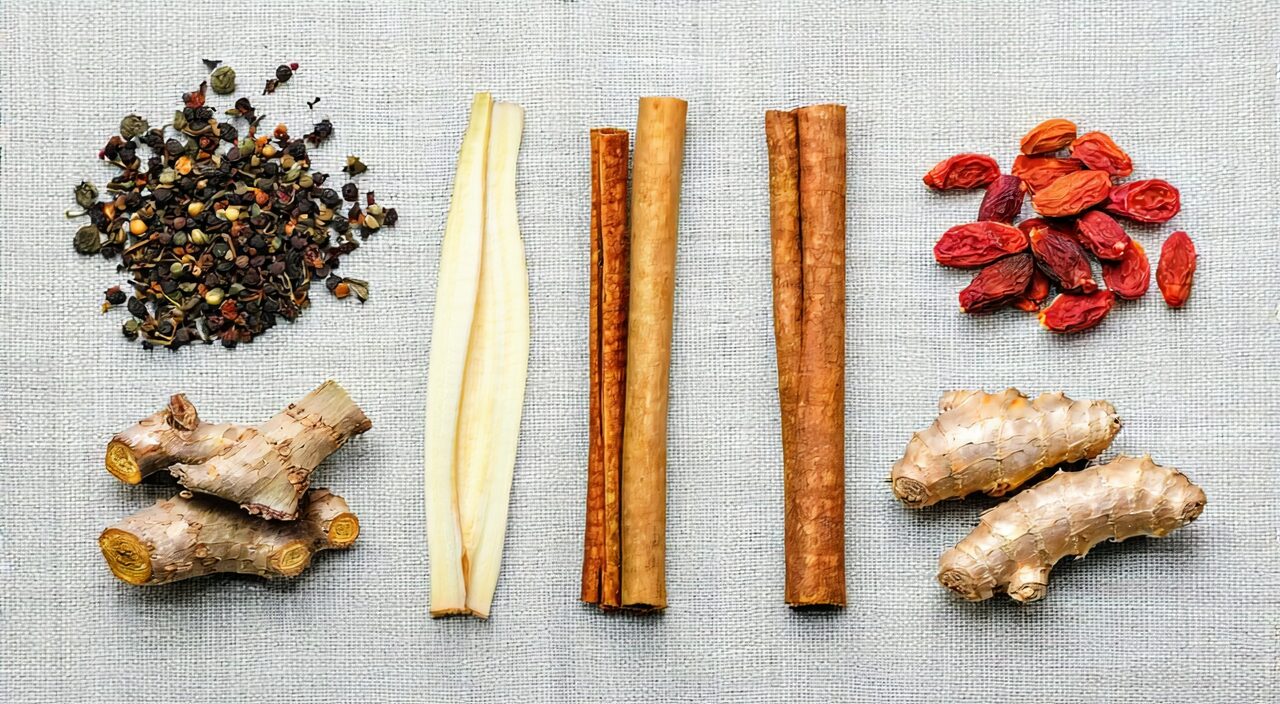
Wenjing Tang originates from the Jin Gui Yao Lue. The original formula is composed of multiple herbs, each with its own emphasis within the traditional formulation philosophy. Below is a brief overview of the common herbal composition and their traditional functional directions:
| Herb Name | Traditional Main Functional Direction |
|---|---|
| Evodia fruit (Wu Zhu Yu) | Dispels cold and relieves pain, warms the liver and kidneys |
| Cinnamon twig (Gui Zhi) | Warms the meridians and dispels cold, promotes blood circulation |
| Chinese angelica root (Dang Gui) | Nourishes and invigorates blood, regulates menstruation and relieves pain |
| Chuanxiong rhizome (Chuan Xiong) | Invigorates blood and moves qi, regulates blood circulation |
| White peony root (Bai Shao) | Nourishes blood, preserves yin, relieves spasm and pain |
| Moutan cortex (Mu Dan Pi) | Invigorates blood and removes stasis, cools blood and clears heat |
| Donkey-hide gelatin (E Jiao) | Nourishes blood and enriches yin, moistens dryness |
| Ophiopogon tuber (Mai Dong) | Nourishes yin and generates fluids, clears the heart |
| Ginseng (Ren Shen) | Benefits qi and strengthens the spleen, assists in the generation of qi and blood |
| Fresh ginger (Sheng Jiang) | Warms the middle jiao and dispels cold, directs rebellious qi downward |
| Pinellia rhizome (Ban Xia) | Directs rebellious qi downward and stops vomiting, dissipates masses |
| Licorice root (Gan Cao) | Harmonizes the actions of all herbs, benefits qi and harmonizes the middle jiao |
The formula includes herbs such as Evodia fruit, cinnamon twig, and fresh ginger to warm the meridians and dispel cold, while also combining Chinese angelica root, chuanxiong rhizome, and moutan cortex to invigorate blood and regulate menstruation. At the same time, ginseng, donkey-hide gelatin, ophiopogon tuber, and white peony root are used to benefit qi, nourish blood, and enrich yin. This reflects the characteristics of warming without causing dryness, and attacking with simultaneous tonification. In traditional applications, dosages are often adjusted or herbs are added or subtracted according to individual conditions.
Who Might Wenjing Tang Be Suitable For

It must be emphasized that the choice of any herbal formula should be based on specific constitution and pattern presentation, and cannot be self-determined based on a single manifestation alone. The following description is only provided as a reference for traditional pattern differentiation; specific assessment requires professional judgment.
In traditional pattern differentiation, if the following manifestations are present, they may suggest a certain correlation with deficiency-cold in the Chong and Ren, blood deficiency, and blood stasis, and Wenjing Tang may be further considered:
- Delayed menstrual cycle, scanty flow, dark or dim-colored menstrual blood with clots;
- Colicky or bearing-down pain in the lower abdomen that may be relieved by warmth;
- Cold hands and feet, especially noticeable around the menstrual period, and generally feeling more sensitive to cold;
- Lustreless or pale, sallow complexion, pale lips, easy fatigue;
- Soreness and weakness of the lower back and knees, tongue body pale or pale-dark, with a white, moist coating.
If some of the above manifestations are present, and conditions such as excess heat or damp-heat have been ruled out, then Wenjing Tang may be a traditional strategy worth understanding. However, it is crucial to note that the same symptoms may be caused by different underlying reasons and cannot be generalized.
When to Be Cautious or When Wenjing Tang Should Not Be Used
Wenjing Tang is warming, tonifying, and blood-invigorating, and is not suitable for everyone. The following situations generally warrant avoiding self-administration or require special caution:
- Damp-heat or excess heat constitution: If the menstruation is early, heavy, with bright or dark red, thick sticky blood, accompanied by dry mouth, bitter taste, yellow urine, dry stool, red tongue with yellow greasy coating, the warming nature of Wenjing Tang may worsen internal heat;
- Unexplained bleeding: When menstrual bleeding is excessive, prolonged, or there is intermenstrual bleeding of unknown cause, blood-invigorating herbs may increase the risk of bleeding; a diagnosis must be established first;
- Pregnancy and preconception: In pregnancy, blood-invigorating and stasis-removing herbs are generally contraindicated. During preconception, the use should also be evaluated under professional guidance to avoid unnecessary risks;
- Special constitutions or acute conditions: In cases such as fever, acute inflammation, or known allergy to certain ingredients, it should also not be used casually;
- Prolonged or severe discomfort: If menstrual irregularities are accompanied by severe abdominal pain, abnormal discharge, significant weight loss, etc., it is more important to consult a gynecologist first to rule out organic pathology.
Additionally, children, breastfeeding women, and individuals with chronic underlying diseases should consult a qualified Chinese medicine practitioner or physician before considering its use.
Differences Between Wenjing Tang and Similar Formulas
Many users compare Wenjing Tang with Shao Fu Zhu Yu Tang, Si Wu Tang, Tao Hong Si Wu Tang, Gui Zhi Fu Ling Wan, and others. These formulas have different emphases in managing gynecological issues, and distinguishing them helps avoid misuse.
| Formula | Characteristics and Origin | Focus | Main Differences from Wenjing Tang |
|---|---|---|---|
| Shao Fu Zhu Yu Tang | Originating from Yi Lin Gai Cuo, stronger blood-breaking and stasis-dispersing action | More severe cold congealing and blood stasis, fixed lower abdominal pain that refuses pressure, many menstrual clots | Stasis is more prominent; weaker in nourishing blood and tonifying deficiency |
| Si Wu Tang | Basic formula for nourishing and regulating blood, composed of Dang Gui, Chuan Xiong, Bai Shao, and Shu Di Huang | Menstrual irregularities predominantly due to blood deficiency, with pale complexion, dizziness, palpitations | Lacks warming meridian and dispersing cold herbs; no effect in invigorating blood and removing stasis to eliminate masses |
| Tao Hong Si Wu Tang | Si Wu Tang plus Tao Ren and Hong Hua, enhancing blood-invigorating and stasis-removing action | Menstrual irregularities, amenorrhea, dysmenorrhea caused by blood stasis | Emphasizes removing stasis; insufficient strength in warming meridians and dispelling cold |
| Gui Zhi Fu Ling Wan | Composed of Gui Zhi, Fu Ling, Tao Ren, Mu Dan Pi, Bai Shao; gradually dissolves masses | Internal blood stasis, palpable masses in the abdomen, amenorrhea, abdominal pain | Marked stasis-removing and mass-dissipating effect; less comprehensive for Chong-Ren deficiency-cold and dual qi-blood tonification compared to Wenjing Tang |
Thus, it can be seen that Wenjing Tang covers the three aspects of cold, deficiency, and stasis, while warming and nourishing simultaneously; other formulas may lean towards dispelling cold and invigorating blood, or tonifying blood, or removing stasis. The specific choice should be based on comprehensive analysis using the four diagnostic methods, and cannot be switched randomly based on isolated symptoms.
Key Points to Note Before Use
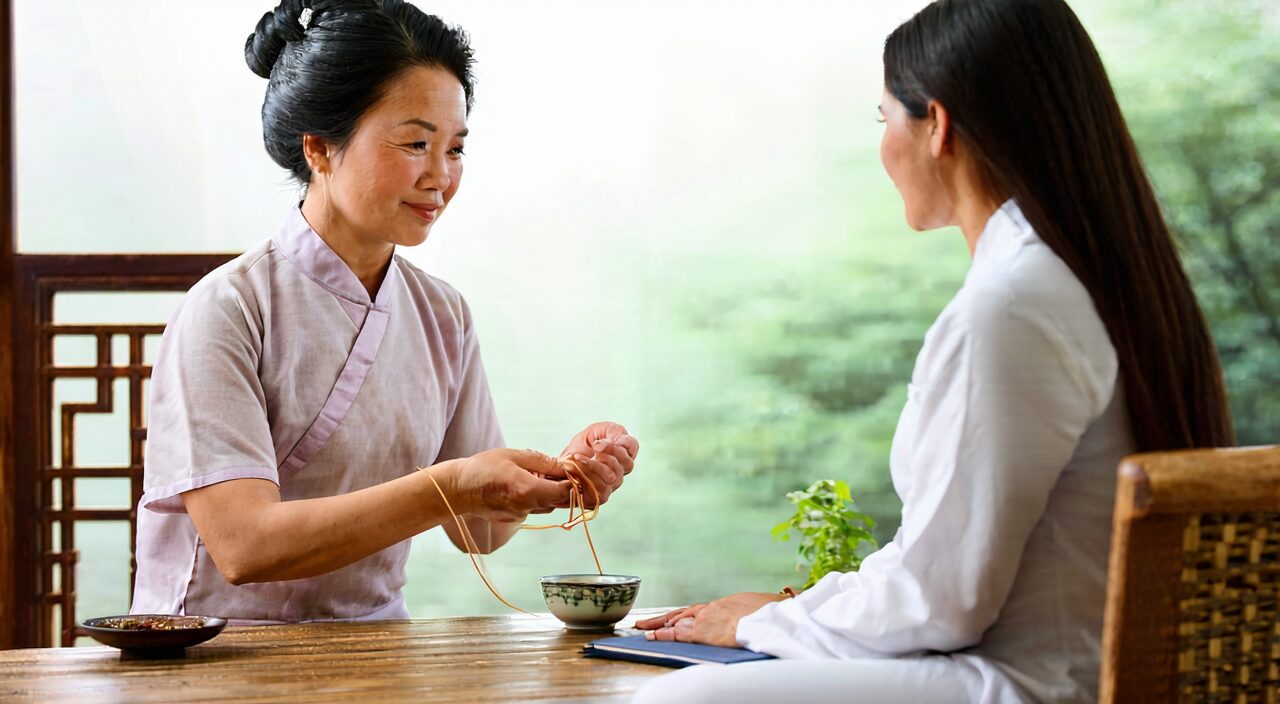
If you are interested in Wenjing Tang, the following points are worth noting:
- Pattern differentiation first, then consider: The selection of any Chinese herbal formula should be based on a relatively accurate pattern differentiation. It is recommended to have a qualified Chinese medicine professional conduct observation, listening/smelling, inquiry, and palpation to determine if the pattern belongs to deficiency-cold in the Chong and Ren with blood deficiency and blood stasis.
- Do not take blindly for prolonged periods: Even if the pattern matches, Wenjing Tang does not mean it can be used continuously in the long term without interruption. During the course of treatment, adjustments should be made according to the body’s response, and the guidance of a professional should be followed.
- Observe bodily reactions: During use, if there is aggravation of original symptoms, stomach discomfort, dry mouth and throat, abnormal bleeding, etc., it is necessary to stop and consult promptly.
- Cannot replace conventional medical diagnosis: For persistent menstrual irregularities, severe dysmenorrhea, or conditions accompanied by other systemic symptoms, necessary gynecological examinations should be undertaken first to rule out organic pathology. Herbal formulas can be part of comprehensive care but cannot substitute modern medical diagnosis.
Summary
Wenjing Tang, as a classic traditional Chinese medicine formula, has a long history of use in warming the meridians, dispelling cold, nourishing blood, and removing stasis. It primarily addresses the composite state of deficiency-cold in the Chong and Ren, blood deficiency, and blood stasis, and may offer some reference value for individuals with delayed menstruation, dark menstrual blood with clots, cold lower abdominal pain, and cold hands and feet.
However, its warming and blood-invigorating nature also determines that it is not suitable for conditions such as damp-heat, excess heat, or pregnancy. Compared with formulas like Shao Fu Zhu Yu Tang and Si Wu Tang, the uniqueness of Wenjing Tang lies in its simultaneous attention to warming and dispersing cold pathogens, nourishing qi and blood, and removing stasis to regulate menstruation. Precisely because of this, the requirements for accurate pattern differentiation are even more meticulous.
Whichever direction of care is chosen, it should be based on a clear understanding of one’s own constitution and carried out under professional guidance.
This article is for informational reference only and cannot replace professional diagnosis or treatment advice. If you have related concerns, especially if symptoms are severe, persistent, or accompanied by other discomforts, please consult a doctor or a qualified Chinese medicine practitioner promptly.