
Who is Zeng Ye Tang Suitable For? Composition, Effects and Contraindications

Many people have a practical concern: even without eating particularly spicy foods, they still experience persistent dry mouth and throat, and their stools become dry and difficult to pass. In traditional Chinese medicine (TCM) thinking, this is sometimes not simply “excessive internal heat” but may relate to a deficiency of body fluids. Zeng Ye Tang (Humor-Increasing Decoction) is one of the frequently mentioned formulas that addresses this pattern.
This article takes an objective, educational approach to organize information about Zeng Ye Tang’s composition, its traditional positioning, possible indications, contraindications, and how it differs from several similar formulas, offering those interested an additional angle of understanding.
How to Understand Zeng Ye Tang

Zeng Ye Tang originates from Wu Jutong’s Systematic Differentiation of Warm Diseases (Wen Bing Tiao Bian). The entire formula is not designed to directly purge the bowels; instead, it supplements body fluids and moistens the intestines, thereby helping restore normal elimination rhythm. Traditionally, it is often used with the concept of “increasing water to float the boat,” which can be understood as adding water to a dried riverbed so that the boat can sail naturally.
In TCM, some constipation is not due to weak intestinal peristalsis but rather to depleted fluids and dry, under-lubricated intestines. Zeng Ye Tang is one of the basic formulas designed for this pattern of “fluid deficiency and intestinal dryness,” and is often considered during the later stages of warm-heat diseases or in constitutions that tend toward yin deficiency with fluid damage.
Composition of Zeng Ye Tang
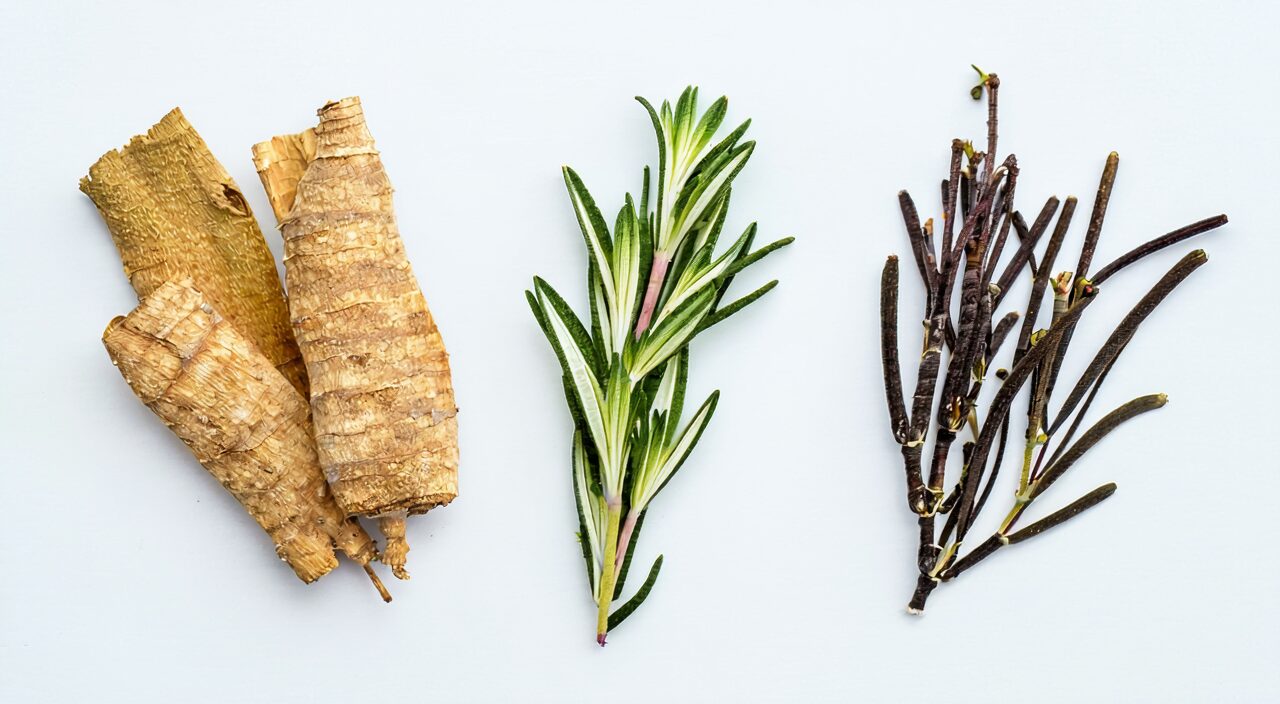
The composition of Zeng Ye Tang is very simple, consisting of only three herbs. The traditional dosage ratio often centers on Scrophularia Root (Xuan Shen).
| Herb | Traditional Actions |
|---|---|
| Xuan Shen (Scrophularia Root) | Nourishes yin, clears fire, moistens dryness, and generates fluids; it is the chief herb of the formula. |
| Mai Dong (Ophiopogon Tuber) | Nourishes yin, moistens the lungs, benefits the stomach, and generates fluids; it assists with moistening. |
| Sheng Di Huang (Rehmannia Root) | Clears heat, cools the blood, nourishes yin, and generates fluids; it reinforces the fluid-supplementing effect. |
These three herbs all tend toward a yin-nourishing, moistening nature. The entire formula does not use purgative herbs such as rhubarb (Da Huang) or mirabilite (Mang Xiao), so its action is relatively gentle. It focuses more on supplementing fluids at the source rather than simply promoting elimination.
Which Presentations May Be More Suitable

Zeng Ye Tang is not for all types of constipation; it is more suitable for individuals who display signs of yin-fluid depletion. If several of the following manifestations appear together, the formula may traditionally be a direction worth learning about:
- Dry, hard stools, even pellet-like (sheep-dung stools), with difficulty passing.
- Dry mouth and throat, always wanting to drink water, yet still feeling unmoistened after drinking.
- Tongue body tends to be red with little coating or appears dry lacking fluid; pulse tends to be thin and rapid.
- Skin and lips also feel dry, with a sensation of heat in the palms and soles.
- Often seen after the late stages of febrile diseases, prolonged staying up late, or excessive talking that consumes body fluids.
These manifestations reflect a constitutional bias; they do not mean that Zeng Ye Tang can be used for any constipation. Whether it is suitable requires a comprehensive assessment based on overall condition, tongue and pulse examination, and other information, and evaluation by an experienced TCM professional is recommended.
Which Situations May Not Be Suitable
In the following situations, blindly using Zeng Ye Tang may instead cause discomfort:
- Cold-type constipation or yang-deficiency constipation: aversion to cold, a sensation of cold in the abdomen, dry stools but without marked dry mouth or tongue, or even cold abdominal pain. Using large amounts of yin-nourishing herbs in this case may aggravate deficiency-cold.
- Spleen-deficiency with loose stools: those who easily get diarrhea, have unformed stools, or abdominal bloating. Using Zeng Ye Tang may lead to more pronounced loose stools.
- Constipation due to damp-heat accumulation: stools are difficult to pass but are sticky and greasy with a stronger odor, and the tongue coating is yellow, thick, and greasy. This condition requires draining damp-heat, not simply nourishing yin and increasing fluids.
- Pregnant women, children, and those with special constitutions: these are special populations. Whether the formula is suitable requires professional judgment, and self-prescription is not advised.
If constipation persists for a long time or is accompanied by significant abdominal distension, pain, weight loss, or black stools, a doctor should be consulted first to rule out other possible causes, rather than attempting self-care with an herbal formula.
Comparison with Several Similar Formulas
People sometimes hear names like Ma Zi Ren Wan (Hemp Seed Pill), Da Cheng Qi Tang (Major Purgative Decoction), Bai Hu Tang (White Tiger Decoction), and Liu Wei Di Huang Wan (Six-Ingredient Rehmannia Pill), which are also often discussed alongside bowel issues or yin deficiency. Understanding their differences helps avoid confusion.
Zeng Ye Tang vs. Ma Zi Ren Wan
Ma Zi Ren Wan, also called Pi Yue Wan (Spleen-Constraining Pill), is commonly used for intestinal dryness-heat and spleen-constraint constipation. Its feature is that it contains moistening herbs such as hemp seed (Ma Zi Ren) and apricot kernel (Xing Ren), combined with small doses of qi-moving and purging herbs like rhubarb (Da Huang), immature bitter orange (Zhi Shi), and magnolia bark (Hou Po). Its approach leans toward “moisten and also unblock.”
In contrast, Zeng Ye Tang has no purgative components and purely focuses on nourishing yin and increasing fluids. If there is severe fluid depletion but intestinal motility is still adequate, Zeng Ye Tang might be considered first. If there is both fluid deficiency and marked qi stagnation in the bowels, Ma Zi Ren Wan may be more suitable, though this still requires judgment based on the specific situation.
Zeng Ye Tang vs. Da Cheng Qi Tang
Da Cheng Qi Tang is a classic drastic purgative formula for clearing heat accumulations. It is used for internal excessive heat binding, hard stool obstruction, abdominal distension with pain that refuses pressure, and a tongue coating that is yellow, dry, and prickly—a state of obvious excess-heat accumulation. It falls under the concept of “urgent purging to preserve yin.”
Zeng Ye Tang is much gentler, primarily targeting fluid deficiency with intestinal dryness where deficiency predominates or in purely deficient and non-excess patterns. The two have very different indications and should not be used interchangeably.
Zeng Ye Tang vs. Bai Hu Tang
Bai Hu Tang clears intense heat from the Yangming qi level and is used for high fever, severe thirst, profuse sweating, and a large surging pulse. Although dry mouth can also be present, its focus is on clearing heat and relieving irritability, not on supplementing fluids to relieve constipation. Zeng Ye Tang emphasizes nourishing yin and moistening dryness, with weaker heat-clearing power. They may sometimes appear in sequence or be combined at different stages of warm diseases, but their roles are distinct.
Zeng Ye Tang vs. Liu Wei Di Huang Wan
Liu Wei Di Huang Wan is a foundational formula for supplementing kidney yin, targeting liver and kidney yin deficiency with common signs such as soreness and weakness of the lower back and knees, dizziness, tinnitus, and night sweats. Its yin-nourishing scope is broader but does not specifically target intestinal fluid depletion.
Zeng Ye Tang is more focused on supplementing the fluids of the stomach and intestines to moisten and promote bowel movements. For individuals who have both kidney yin deficiency and dry-intestine constipation, modifications based on Liu Wei Di Huang Wan may be considered, but this must be decided by a physician in light of the overall condition.
Several Reminders for Chronic Constipation
The causes of chronic constipation are many. Besides fluid deficiency, it may be related to the following factors:
- Insufficient dietary fiber
- Inadequate fluid intake
- Weakened intestinal motility
- Mental stress
- Medication effects
Traditional Chinese medicine also understands chronic constipation from various perspectives, including qi stagnation, blood stasis, yang deficiency, and damp-heat.
If, after a period of self-care, problems such as dry stools and dry mouth and throat keep recurring, or if accompanied by any of the following, medical attention should be sought promptly to rule out organic issues:
- Marked anxiety, palpitations, or chest tightness
- Pain or abnormal breathing
- Severe abdominal pain, persistent vomiting
- Black stools or unexplained weight loss
Summary
Zeng Ye Tang is a traditional formula composed of Scrophularia Root (Xuan Shen), Ophiopogon Tuber (Mai Dong), and Rehmannia Root (Sheng Di Huang). It mainly addresses yin-fluid deficiency and dry-intestine constipation, working to increase fluids, moisten dryness, nourish yin, and promote bowel movements. It is often used for individuals with prominent fluid-insufficiency signs such as dry hard stools, dry mouth and throat, and a red tongue with little moisture. However, it is not suitable for conditions like cold-type constipation, spleen-deficiency with loose stools, or damp-heat accumulation.
Compared with formulas such as Ma Zi Ren Wan, Da Cheng Qi Tang, Bai Hu Tang, and Liu Wei Di Huang Wan, the distinctive feature of Zeng Ye Tang is that it purely supplements fluids without purging. Its direction is clear, but in actual application, it still needs to be guided by constitutional differences, symptom emphasis, and professional judgment. This article only provides objective TCM educational knowledge and cannot replace personalized diagnosis or treatment advice. For any health direction, it is recommended to fully understand one’s own condition and consult a professional before proceeding.