
Who Is Zhi Shi Dao Zhi Wan Suitable For? Composition, Benefits and Contraindications

Many people, after irregular eating or excessive consumption of rich, greasy foods, experience abdominal fullness, difficult bowel movements, or even sticky stools, heavy breath, and a thick, greasy yellow tongue coating—symptoms that can be quite uncomfortable. In traditional Chinese medicine, such conditions are often classified under the category of “food stagnation with damp-heat,” and Zhi Shi Dao Zhi Wan (Immature Bitter Orange Pill to Guide Out Stagnation) is a frequently mentioned formula that reduces food accumulation, guides out stagnation, and clears damp-heat.
However, not all cases of bloating and constipation are suitable for Zhi Shi Dao Zhi Wan. This article will objectively examine the formula’s characteristics from the perspectives of its composition, traditional actions, suitable groups, unsuitable groups, and differences from similar formulas, helping overseas Chinese readers better understand it.
Understanding the Traditional Reasoning Behind Zhi Shi Dao Zhi Wan from Food Stagnation with Damp-Heat
Traditional Chinese medicine does not view digestive issues simply as a lack of gastrointestinal motility, but rather observes whether a state of “stagnation” and “damp-heat” coexist.
Simply put, consuming too much mixed or overly greasy food at once can overwhelm the spleen and stomach’s ability to transport and transform, causing food to accumulate in the gastrointestinal tract, known as “food stagnation.” If this stagnation persists, it can generate heat, and when this heat combines with internal dampness, signs of “damp-heat” readily appear.
The condition Zhi Shi Dao Zhi Wan addresses is precisely this situation of “internal accumulation of food stagnation and damp-heat.” It does not simply promote bowel movements but works on two levels: first, by reducing food accumulation and guiding out stagnation to push out and eliminate the accumulated food in the gastrointestinal tract; second, by clearing heat, drying dampness, and draining dampness to relieve the body’s distress caused by damp-heat.
Therefore, the formula contains ingredients that break up stagnation and also ingredients that clear damp-heat, with an overall action that leans toward “unblocking” and “clearing.”
Formula Composition and the Roles of Each Ingredient
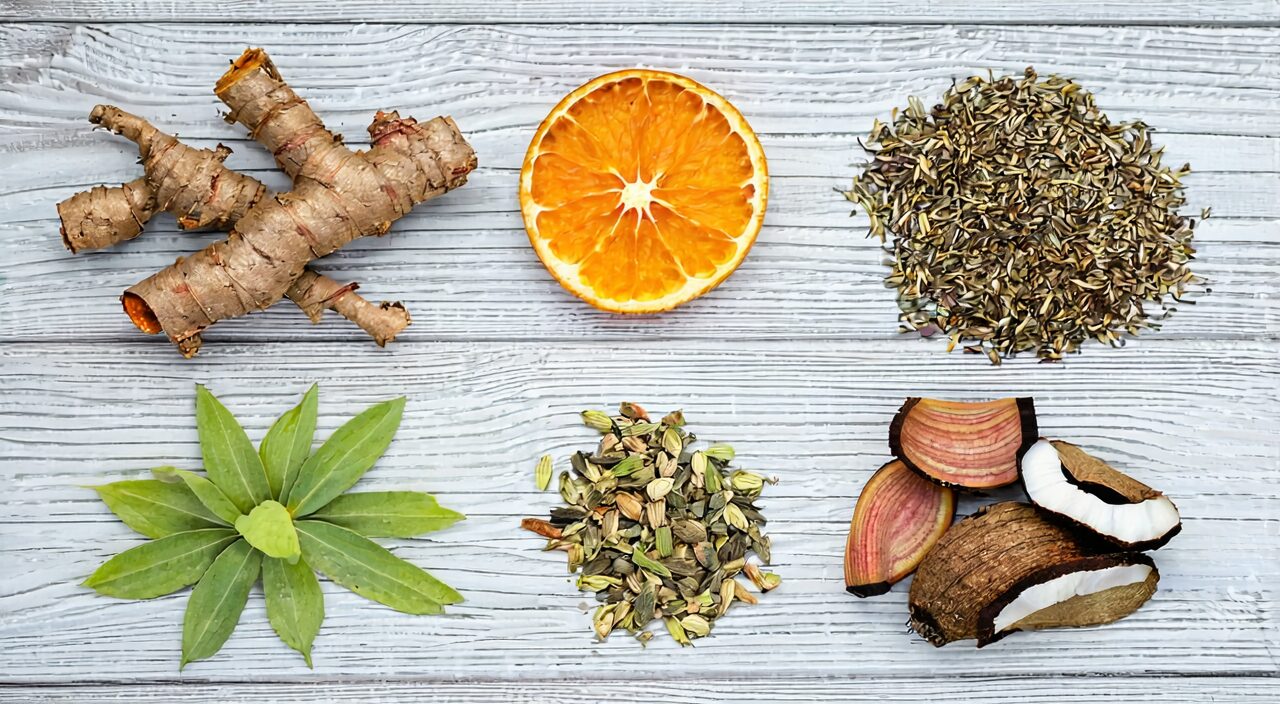
The composition of Zhi Shi Dao Zhi Wan varies slightly across historical medical texts. A commonly cited composition includes the following herbs. For easier understanding, the table below lists the common ingredients and a brief summary of their traditional functions:
| Herb | Brief Traditional Function |
|---|---|
| Zhi Shi (Immature Bitter Orange) | Breaks qi, reduces accumulation, guides out stagnation, and unblocks the bowels; targets epigastric and abdominal fullness, distension, and pain. |
| Da Huang (Rhubarb) | Attacks accumulation, guides out stagnation, clears heat, and unblocks the bowels; drives out retained stagnation. |
| Huang Lian (Coptis) | Clears heat, dries dampness, drains fire, and resolves toxicity; focuses on clearing damp-heat from the middle burner. |
| Huang Qin (Scutellaria) | Clears heat and dries dampness; assists Huang Lian in strengthening the heat-clearing effect. |
| Fu Ling (Poria) | Promotes urination, leaches out dampness, and strengthens the spleen; helps resolve dampness. |
| Bai Zhu (White Atractylodes) | Strengthens the spleen and dries dampness; takes into account the spleen and stomach’s transport function. |
| Ze Xie (Alisma) | Promotes urination and leaches out dampness; provides an exit route for dampness pathogens. |
| Shen Qu (Medicated Leaven) | Reduces food accumulation and harmonizes the stomach; helps resolve food stagnation. |
From the composition structure, it is evident that the formula combines attacking and tonifying methods but primarily focuses on attacking pathogens. Through multiple pathways—breaking qi, promoting purgation, clearing heat, draining dampness, and reducing food accumulation—it jointly acts on the internal environment of food stagnation and damp-heat.
Which Groups Might Be Suitable for Zhi Shi Dao Zhi Wan
Zhi Shi Dao Zhi Wan is not suitable for everyone with indigestion. It is traditionally used in cases primarily characterized by food stagnation with damp-heat. The following signs, when they appear more prominently, may serve as a reference direction, but they still need to be combined with an individual’s constitution and professional judgment:
- Abdominal distension and pain, especially worsened after eating greasy foods or overeating;
- Dry, hard stool that is difficult to pass, or sticky, difficult bowel movements with a clear sensation of incomplete evacuation, possibly even foul-smelling diarrhea;
- Heavy breath, bitter taste in the mouth, sticky sensation in the mouth;
- A thick, greasy yellow tongue coating with a reddish tongue body;
- Possibly accompanied by irritability, sour or putrid belching, and decreased appetite.
It is important to note that these signs are only reference dimensions in traditional pattern differentiation, and having several of them does not necessarily mean the formula is appropriate. The formation of food stagnation with damp-heat is closely related to personal dietary habits and constitutional tendencies. If it only occurs occasionally from one or two episodes of overeating and symptoms are mild, recovery may be achieved simply by eating lightly for a short time, without rushing to use a formula with relatively strong pathogen-attacking power.
Who and Which Situations Require Extra Caution
Precisely because Zhi Shi Dao Zhi Wan is inclined to expel pathogens, it may not be suitable for those with spleen-stomach deficiency, deficiency-cold constitutions, or certain special conditions. It is advised to avoid self-medicating or to consult a professional in the following situations:
- Spleen-stomach deficiency and deficiency-cold abdominal pain: People who are normally prone to diarrhea, loose stools, abdominal pain that prefers warmth and pressure, poor appetite, and a pale or sallow complexion are more likely to have their spleen-stomach qi damaged by formulas that promote purgation and guide out stagnation.
- Simple constipation without clear food stagnation and damp-heat: For example, deficiency constipation in the elderly caused by fluid and blood deficiency is not suitable for aggressive purgation with these types of formulas.
- During pregnancy and conception attempts: The formula contains multiple herbs that break qi, promote purgation, clear heat, and drain downward, which may adversely affect pregnancy and are generally considered contraindicated.
- Specific underlying diseases or extremely weak constitution: Those with severe heart, liver, or kidney dysfunction, or patients with chronic wasting diseases, should not use it on their own.
- Acute severe abdominal pain of unknown cause: When sudden, unbearable abdominal pain is accompanied by fever, vomiting, black stools, or cold sweats, emergency evaluation is needed. Do not self-medicate with stagnation-reducing formulas that could mask the condition.
Furthermore, before children, the elderly, and physically weak individuals use any such formula, professional assessment is necessary; one should not simply reduce the adult dosage based on experience.
Differences Between Zhi Shi Dao Zhi Wan and Bao He Wan, Da Cheng Qi Tang, Ping Wei San, and Huang Lian Jie Du Tang
Many friends interested in traditional Chinese medicine may notice that formulas like Bao He Wan, Da Cheng Qi Tang, Ping Wei San, and Huang Lian Jie Du Tang also appear in discussions about digestive and damp-heat issues. Although their approaches overlap, their focus and applicable stages differ significantly.
To present their respective positioning more intuitively, a comparison table is provided below, followed by some additional explanations:
| Formula | Primary Direction | Typical Applicable State | Strength and Characteristics of Pathogen-Attacking Action |
|---|---|---|---|
| Bao He Wan | Reduces food accumulation and harmonizes the stomach | Food stagnation without marked damp-heat (sour or putrid belching, epigastric and abdominal distension, reduced appetite) | Milder, mainly focuses on reducing food accumulation |
| Da Cheng Qi Tang | Vigorously purges heat accumulation | Yangming bowel excess with fullness, distension, dryness, and repletion all present (constipation, abdominal fullness, hard pain that worsens with pressure) | Drastic purgation, used for acute and severe conditions |
| Ping Wei San | Dries dampness, activates the spleen, moves qi, and harmonizes the stomach | Dampness stagnating in the spleen and stomach, tending toward cold-dampness (epigastric and abdominal distension, lack of appetite, thick white greasy tongue coating) | Relatively gentle, does not attack accumulation or unblock the bowels |
| Huang Lian Jie Du Tang | Clears heat, drains fire, and resolves toxicity | Intense fire toxin and heat exuberance in the triple burner (high fever, irritability, dry mouth and throat, dark urine, etc.) | Strong heat-clearing action, but without stagnation-reducing or guiding-out effects |
Compared with Bao He Wan: Bao He Wan mainly reduces food accumulation and harmonizes the stomach. It is commonly used when food stagnation has just begun and damp-heat is not yet obvious; its pathogen-attacking strength is milder than Zhi Shi Dao Zhi Wan. Zhi Shi Dao Zhi Wan not only reduces food accumulation but also includes Da Huang and Huang Lian, making it more suitable when food stagnation has already transformed into heat and damp-heat is intertwined.
Compared with Da Cheng Qi Tang: Da Cheng Qi Tang is the representative formula for vigorously purging heat accumulation, targeting Yangming bowel excess syndromes with fullness, distension, dryness, and repletion all present, and its purgative power is fierce. Although Zhi Shi Dao Zhi Wan can also promote bowel movements, its action is relatively more moderate and it simultaneously addresses clearing damp-heat and reducing food accumulation, rather than focusing primarily on rapid purgation.
Compared with Ping Wei San: Ping Wei San emphasizes drying dampness and activating the spleen, suitable for situations where damp turbidity is more cold-oriented or has not yet transformed into heat, and it does not emphasize attacking accumulation or unblocking the bowels. If food stagnation and damp-heat are already pronounced, Ping Wei San alone is often insufficient.
Compared with Huang Lian Jie Du Tang: Huang Lian Jie Du Tang is composed entirely of heat-clearing and fire-draining herbs, with its core action being to drain fire and resolve toxicity; its effect on reducing food accumulation and guiding out stagnation is very weak. If the primary problem is food stagnation with only some accompanying heat signs, stagnation-reducing formulas should be prioritized over purely heat-clearing and fire-draining approaches.
These comparisons are only to outline the respective emphases of each formula from the perspective of traditional formula theory. In practice, many situations involve overlapping patterns. Whether an individual is suitable requires comprehensive assessment combining tongue and pulse examination, constitution, and specific symptoms.
How to View Zhi Shi Dao Zhi Wan from a Modern Perspective
It is important to note that the use of Zhi Shi Dao Zhi Wan as a traditional formula is largely based on pattern differentiation within Chinese medicine. Modern life has a fast pace and varied dietary structures, and many people not only have the potential for food stagnation but also mixed factors such as emotional stress, disrupted sleep, and gastrointestinal dysfunction. Therefore, it is not advisable to self-diagnose “food stagnation with damp-heat” based solely on one or two signs and then self-medicate.
If you are interested in Zhi Shi Dao Zhi Wan and wish to learn more, it can be taken as a direction for understanding, but the pre-use constitutional assessment and formula modifications should ideally involve an experienced professional. Additionally, the composition and proportions of formulas prepared in different regions and through different processing methods may vary, so one should also pay attention to product instructions.
Summary
Zhi Shi Dao Zhi Wan is traditionally used for conditions of internal food stagnation and damp-heat. Through multiple methods such as reducing accumulation, guiding out stagnation, clearing heat, and draining dampness, it helps improve symptoms like abdominal distension and pain, constipation or sticky stools, heavy breath, and a thick greasy yellow tongue coating caused by accumulation and damp-heat. Its composition, centered on breaking qi, promoting purgation, clearing heat, drying dampness, and draining dampness, gives it a relatively strong overall pathogen-attacking action.
For this reason, it is generally unsuitable for those with spleen-stomach deficiency, deficiency-cold abdominal pain, during pregnancy, in those with specific underlying diseases, and in cases of acute abdominal pain of unknown cause. Compared with formulas like Bao He Wan, Da Cheng Qi Tang, Ping Wei San, and Huang Lian Jie Du Tang, Zhi Shi Dao Zhi Wan differs in its emphasis on food stagnation versus damp-heat. Understanding these differences helps in more accurately recognizing its positioning.
This article is for informational and educational purposes only and cannot replace professional diagnosis or treatment advice. If related symptoms recur frequently, are severe, or are accompanied by abnormal signs such as significant anxiety, palpitations, weight loss, or black stools, it is recommended to consult a doctor or professional promptly.