
Who Is Baidu San Suitable For? Composition, Effects, and Contraindications

Many people hear the name “Baidu San” when they have a cold or feel unwell, especially if they consider themselves constitutionally weak and prone to recurrent external contractions. However, within the framework of traditional Chinese medicine, Baidu San is not a universally applicable cold formula; it has its own indications and limitations. This article focuses on its composition, traditional effects, suitable presentations, and important contraindications, and compares it with several commonly confused formulas to help readers gain a more comprehensive understanding of this classic formula.
Starting from Qi Deficiency External Contraction: The Core Concept of Baidu San

When dealing with external contraction disorders, traditional Chinese medicine does not merely focus on “viruses” or “bacteria,” but pays more attention to the state of the body’s vital qi. Baidu San approaches from the perspective of “boosting qi and releasing the exterior” to address a rather specific type of external contraction — qi deficiency with external contraction of wind, cold, and dampness.
Qi deficiency external contraction can be roughly understood as: a person has insufficient vital qi and weakened resistance to external pathogens, while also being affected by wind, cold, and dampness. In this situation, using only dispersing methods may further damage vital qi, making the body even weaker; but focusing solely on tonification might trap the pathogens inside the body.
The approach of Baidu San is to support the upright and expel pathogens simultaneously: while dispersing external pathogens, it also supplements qi, enabling the body to push out the pathogens. This combination of “dispersing cold and dampness, boosting qi and releasing the exterior” determines that it is not suitable for all external contractions, but has relatively clear indications.
Overview of Baidu San Composition

The formulation of Baidu San emphasizes dispelling wind, dissipating cold, and eliminating dampness on the foundation of boosting qi. Understanding its composition helps explain why it is used for specific presentations. Below are the traditional herbal ingredients of Baidu San (dosages are traditional reference ratios; specific amounts must follow formula classics and individualized adjustments).
| Drug Name | Traditional Action in the Formula |
|---|---|
| Qianghuo (Notopterygium) | Dispels wind, cold, and dampness, especially for the upper body |
| Duhuo (Angelica pubescens) | Dispels wind, cold, and dampness, especially for the lower body |
| Chaihu (Bupleurum) | Vents pathogens and releases the exterior, regulates qi |
| Qianhu (Peucedanum) | Descends qi and transforms phlegm, disperses wind pathogens |
| Chuanxiong (Ligusticum wallichii) | Invigorates blood and moves qi, assists in dispelling wind and relieving pain |
| Zhiqiao (Aurantium) | Moves qi and relaxes the middle, smooths qi flow |
| Jiegeng (Platycodon) | Diffuses the lung and benefits the throat, guides herbs upward |
| Fuling (Poria) | Strengthens the spleen and drains dampness |
| Renshen (Ginseng) | Tonifies vital qi, supports the upright to expel pathogens |
| Gancao (Licorice) | Harmonizes all herbs, also tonifies the middle |
| Shengjiang (Fresh ginger) | Dispels wind-cold, harmonizes the stomach |
| Bohe (Mint) | Lightly disperses, assists in expelling pathogens outward |
In this formula, Qianghuo and Duhuo are used together to skillfully dispel wind, cold, and dampness throughout the body; Renshen, Fuling, and Gancao boost qi and strengthen the spleen, reinforcing vital qi; Chaihu and Bohe vent external pathogens; Jiegeng and Zhiqiao, one raising and one lowering, regulate qi movement. The entire formula contains both dispersing and tonifying, with tonification that does not cause stagnation. While dispersing wind, cold, and dampness, it always preserves space to support the vital qi.
Which Presentations Is Baidu San Traditionally Suitable For?

Based on classical formula applications and traditional experience, Baidu San is often considered for situations where the following presentations occur simultaneously:
- Aversion to cold with fever: Pronounced chills accompanied by fever, though the fever may not be very high.
- Headache and body aches: Sore, heavy pain in the head, muscles, and joints, with a marked sense of heaviness.
- Absence of sweating: No sweating, and even with fever, sweating is not easily induced.
- Cough with phlegm: Often accompanied by cough, with white, possibly thin phlegm.
- Background of weak constitution with external contraction: Usually prone to shortness of breath and fatigue, tires easily with slight exertion, pale face, tends to catch colds and finds them lingering and difficult to recover from.
These presentations can generally be summarized as a state of “wind, cold, and dampness constraining the exterior, compounded by qi deficiency.” Especially in humid climates or during seasonal transitions, some constitutionally weak individuals may experience such conditions. Traditionally, Baidu San might serve as a regulating approach for such discomfort, but whether it is specifically appropriate requires comprehensive assessment including tongue and pulse diagnosis; one should not self-select based on only one or two symptoms.
In Which Situations Is Baidu San Not Suitable?
- Predominantly Wind-Heat Presentations
If fever is relatively high, sore throat with redness and pain is pronounced, the mouth is dry with a preference for cold drinks, phlegm is yellow and sticky, and the tip and edges of the tongue are red, it mostly belongs to a wind-heat pattern. In this case, the acrid, warm nature of Baidu San may aggravate heat and is not suitable. Such conditions are probably closer to the approach of Yinqiao San.
- Yin Deficiency with Fire Hyperactivity Constitution
People who already have heat sensations in the palms and soles, dry mouth and throat, night sweats, red tongue with little coating — signs of yin deficiency with internal heat — are not suitable for acrid, warm, and dispersing products.
- High Fever Severe Conditions or Pathogens Already in the Interior
If fever is very high, thirst is marked, sweating does not relieve the fever, or there are chest oppression, abdominal pain, constipation, and other interior excess signs, it indicates the condition is no longer a simple exterior pattern and requires more complex differentiation and treatment; Baidu San should not be used alone.
- Special Populations Require Extra Caution
Pregnancy, lactation, young children, and patients with chronic debilitating diseases are sensitive to medicinal reactions; any medication use must be under professional guidance. Self-directed use is not recommended.
Furthermore, even if the presentation resembles qi deficiency external contraction with wind, cold, and dampness, if there are severe, persistent symptoms, or marked chest oppression, palpitations, difficulty breathing, severe headache, repeated vomiting, or abnormal signs such as dark stools and weight loss, one should seek medical attention promptly and not handle it by self-prescribing formulas.
Comparison of Baidu San with Several Similar Formulas
To more clearly define the characteristics of Baidu San, it is necessary to compare it with several commonly mentioned formulas.
Baidu San vs. Yinqiao San
Yinqiao San is a representative formula for acrid-cool exterior release, commonly used for early-stage wind-heat, with fever, mild aversion to wind-cold, sore throat, thirst, and red tongue tip as typical presentations. Baidu San is acrid-warm and dispersing, suitable for wind-cold-dampness with qi deficiency. The two have different cold-warm orientations — one cool, one warm — and must be distinguished.
| Comparison | Baidu San | Yinqiao San |
|---|---|---|
| Pattern Direction | Wind-cold-dampness with qi deficiency | Wind-heat in early stage |
| Core Presentations | Aversion to cold, no sweating, heavy body, cough with white phlegm | Prominent fever, sore throat, thirst, red tongue tip |
| Medicinal Properties | Acrid-warm dispersing, with support for the upright | Acrid-cool exterior release |
If Baidu San is mistakenly used for wind-heat, it may worsen sore throat and heat signs; conversely, Yinqiao San is also not suitable for qi deficiency with cold-dampness constraining the exterior.
Baidu San vs. Guizhi Tang
Guizhi Tang is a classic formula for harmonizing nutritive and defensive qi and releasing the exterior from the muscle layer, often used for exterior wind-cold deficiency pattern, with aversion to wind, fever, sweating, and a floating, relaxed pulse. Compared to Baidu San, Guizhi Tang presentations include sweating, while Baidu San presentations mostly lack sweating and have more pronounced body aching and heaviness. Moreover, Guizhi Tang generally lacks significant dampness stagnation, whereas Baidu San often includes dampness and more pronounced qi deficiency.
| Comparison | Baidu San | Guizhi Tang |
|---|---|---|
| Sweating Condition | Often no sweating | Often sweating |
| Main Pathogens | Wind-cold-dampness, with qi deficiency | Wind-cold exterior deficiency, disharmony of nutritive and defensive qi |
| Constitutional Focus | Qi deficiency, dampness stagnation | Exterior deficiency, easy sweating and aversion to wind |
Although they have some overlap, they differ in important ways and should not be used interchangeably.
Baidu San vs. Mahuang Tang
Mahuang Tang is an acrid-warm, strong exterior-releasing formula targeting wind-cold exterior excess pattern, presenting with aversion to cold, fever, no sweating, body aches, and a floating, tight pulse, usually in a robust constitution. Although Baidu San also has no sweating and body aches, it is generally accompanied by qi deficiency and dampness with a weaker constitution, so strong diaphoresis is inappropriate. If someone with qi deficiency mistakenly uses Mahuang Tang to strongly induce sweating, it can easily further damage vital qi and even lead to deterioration.
| Comparison | Baidu San | Mahuang Tang |
|---|---|---|
| Constitutional State | Relatively deficient, qi deficiency with dampness obstruction | Robust, exterior cold constraint |
| Dispersing Intensity | Supports upright and disperses simultaneously | Strong sweating |
| Key Indication | Qi deficiency external contraction of wind-cold-dampness | Wind-cold exterior excess pattern |
Baidu San vs. Yupingfeng San
Yupingfeng San is composed of Huangqi, Baizhu, and Fangfeng, focusing on boosting qi and securing the exterior. It is used for preventive regulation in people with exterior deficiency who sweat spontaneously and easily catch recurrent colds, typically not used during acute external contraction. Baidu San, on the other hand, is used when external contraction has already occurred, mainly expelling pathogens while also supporting the upright.
| Comparison | Baidu San | Yupingfeng San |
|---|---|---|
| Stage of Use | When external pathogens have already been contracted | For daily prevention and consolidation |
| Core Direction | Support upright and expel pathogens | Boost qi and secure the exterior |
| Typical Presentations | Aversion to cold, fever, no sweating, body aches | Spontaneous sweating, aversion to wind, prone to colds |
Their usage stages differ: Yupingfeng San is often used during ordinary times to gently support the upright, while Baidu San addresses both root and branch when external contraction has already occurred.
These comparisons are not meant to indicate which formula is superior, but to highlight that different formulas have their own corresponding indications and constitutional states, and mixing them may be unfavorable. In practical use, one must base decisions on a thorough understanding of individual circumstances combined with traditional diagnostic principles.
Understanding Baidu San from the Perspective of Overall Constitution
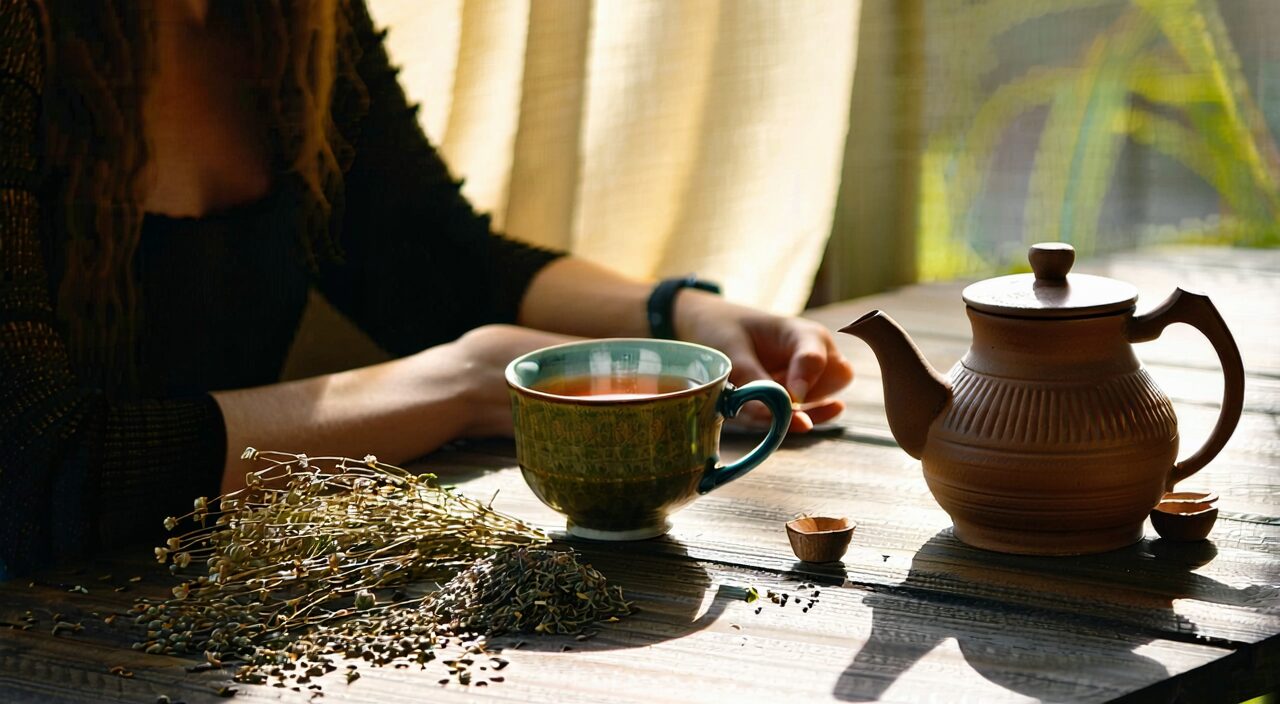
Returning to Baidu San itself, its value lies in demonstrating a traditional Chinese medicine approach to handling deficient external contraction: neither solely dispersing nor purely tonifying, but finding a balance between the two. This approach remains relevant for modern people, especially those with chronic fatigue, weakened constitution, and susceptibility to cold and dampness — they may need to understand the signals their body sends rather than blindly suppressing symptoms.
However, any formula is a tool; tools themselves are neither right nor wrong — the key is whether they are used in the appropriate context. Therefore, whether one wants to understand Baidu San or other formulas, it is advisable to study them as part of traditional knowledge and, when it comes to actual usage decisions, remain cautious and respect professional expertise.
Summary
Baidu San is one of the representative formulas in traditional medicine for boosting qi and releasing the exterior, often used for regulating conditions of qi deficiency with external contraction of wind, cold, and dampness, manifested as aversion to cold, fever, absence of sweating, heavy head and body pain, cough, etc. Its composition includes both dispersing cold-dampness agents like Qianghuo and Duhuo, and vital qi-supporting herbs like Renshen and Fuling, embodying the principle of simultaneously supporting the upright and expelling pathogens.
At the same time, Baidu San is not suitable for clear wind-heat, yin deficiency with fire hyperactivity, or simple high fever and severe conditions. Among similar formulas, it differs from Yinqiao San in cold-warm orientation, differs from Guizhi Tang and Mahuang Tang in sweating status and constitutional strength, and differs from Yupingfeng San in usage stage. Understanding these differences helps avoid directional errors when choosing and identifying.
This article is only a popular science introduction to traditional formulas and cannot replace professional diagnosis and personalized advice. If you experience significant discomfort, especially chronic, recurrent, or severe symptoms, please seek medical help promptly rather than self-prescribing formulas based on the content of this article.