
Who Is Wei Jing Tang Suitable For? Composition, Benefits, and Contraindications

In Chinese herbal medicine, Wei Jing Tang is a frequently cited classic formula. Many people hear that it “clears lung heat and resolves phlegm” or “expels pus,” and then wonder if they can use it when they have a cough with phlegm. However, formulas are not one-size-fits-all solutions. Whether it is suitable must be understood within the original context and the diagnostic framework of traditional Chinese medicine (TCM).
This article will provide a relatively systematic overview of the composition, traditional actions, suitable presentations, contraindications, and differences between Wei Jing Tang and similar formulas such as Ma Xing Shi Gan Tang, to help readers build a basic understanding.
Traditional Composition and Formula Analysis of Wei Jing Tang
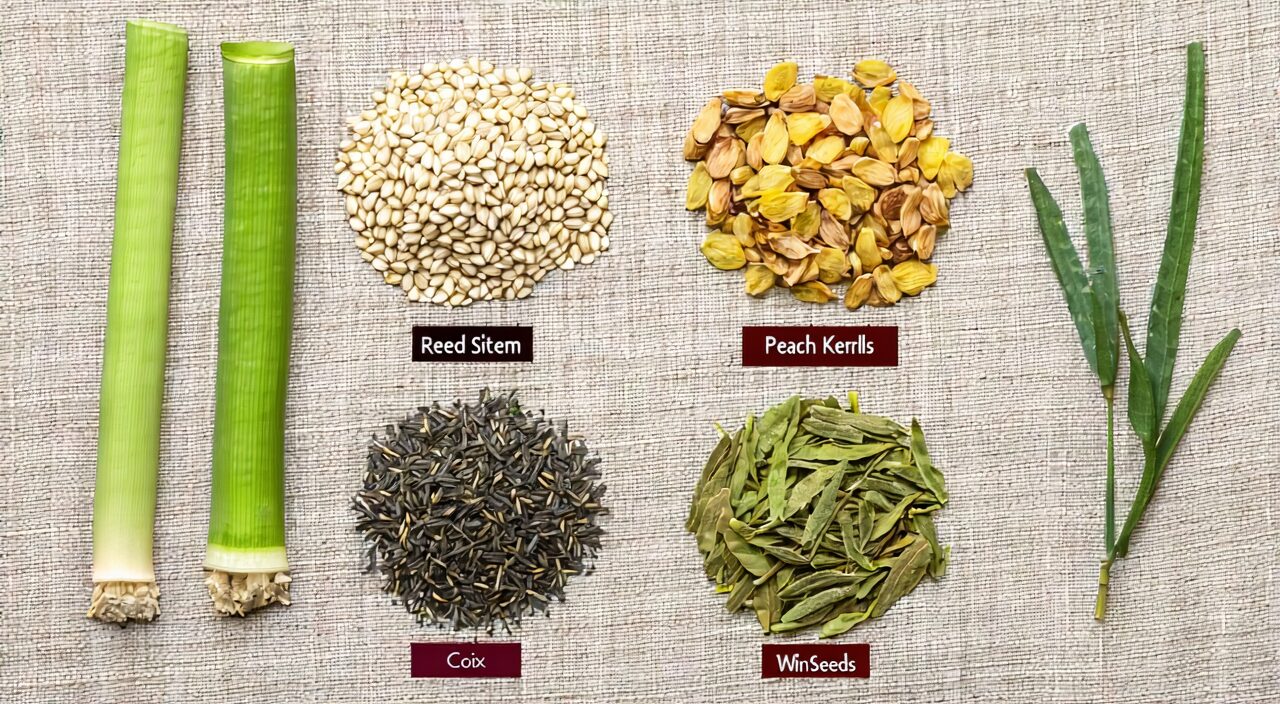
Wei Jing Tang originates from the Essential Prescriptions Worth a Thousand Gold (Bei Ji Qian Jin Yao Fang). The original formula consists of four herbs: Wei Jing (reed stem), Yi Yi Ren (coix seed), Tao Ren (peach kernel), and Gua Ban (melon seed). In later practice, Dong Gua Zi (winter melon seed) is often used in place of Gua Ban. Dosages and proportions commonly used in modern clinical practice may be adjusted according to the pattern, and only the basic composition is listed here for reference.
| Herb | Traditional Direction of Action |
|---|---|
| Wei Jing (Reed Stem / Lu Gen) | Clears lung heat, generates fluids; serves as the sovereign herb |
| Yi Yi Ren (Coix Seed) | Drains dampness, expels pus, fortifies the spleen |
| Tao Ren (Peach Kernel) | Invigorates blood, resolves stasis, moistens the intestines, unblocks the bowels |
| Gua Ban (Melon Seed / Dong Gua Zi) | Transforms phlegm, expels pus, drains dampness |
From the perspective of combination logic, the strategy of Wei Jing Tang is not simply to stop coughing. Rather, it is built around the idea of “clearing lung heat, transforming turbid phlegm, dispelling stasis, and expelling pus.” The entire formula clears while transforming, and transforms while unblocking. Traditionally, it is mainly used for conditions where lung heat, phlegm, and stasis are bound together, particularly those related to “lung abscess” (fei yong).
Traditional Action Directions of Wei Jing Tang
In TCM theory, the core pathogenesis that Wei Jing Tang addresses can be summarized as “heat toxin congesting the lung, phlegm and stasis binding together.” When pent-up heat in the lung cannot be properly dispersed, it condenses fluids into phlegm. The phlegm-heat then binds and further obstructs the movement of qi and blood, potentially forming a pathological state similar to “lung abscess,” characterized by coughing up foul, purulent sputum, chest pain, and so on.
From a functional perspective, Wei Jing Tang mainly exerts the following actions:
- Clears lung heat, transforms phlegm: Within the formula, Wei Jing clears and vents lung heat. Combined with Gua Ban and Yi Yi Ren to resolve turbid phlegm, the idea is that when heat is removed, phlegm will no longer be generated; when phlegm is transformed, heat has less to adhere to.
- Dispels stasis, expels pus: Tao Ren invigorates blood and resolves stasis, while Yi Yi Ren and Gua Ban help discharge turbid pus. For situations where phlegm-heat binds and stasis putrefies into pus, it provides a strategy of “resolving abscesses and expelling pus.”
- Unblocks and facilitates qi movement: The lung and the large intestine are interiorly-exteriorly related. Tao Ren also moistens the intestines and unblocks the bowels, and Yi Yi Ren percolates down and drains dampness. Together they help guide pathogenic factors downward and out, giving the evil a way to exit.
Therefore, Wei Jing Tang is not a common cough suppressant. Colds due to simple cold invasion without obvious heat signs and phlegm-stasis presentations are usually not within its scope of application.
Presentations That May Be Suitable for Wei Jing Tang
Since Wei Jing Tang revolves around lung heat, phlegm, and stasis, its suitable presentations are largely concentrated in this direction. Traditionally, when a person exhibits the following manifestations, it can serve as a direction for understanding this formula, but whether it is actually appropriate must be judged alongside the tongue, pulse, and other overall signs.
- Cough with yellow, thick, sticky sputum, or blood-streaked sputum: Sputum that is yellow and sticky, sometimes with a foul smell, indicates that heat signs are prominent, as opposed to clear, thin, white sputum.
- Chest pain that worsens with coughing: Chest pain caused by phlegm-heat stasis obstructing the lung collaterals, with obvious pain upon coughing, is a noteworthy signal.
- Fever, thirst, red tongue with a yellow, greasy coating: These signs commonly suggest the presence of heat and dampness in the body.
- TCM diagnosis of “lung abscess” or “lung heat with phlegm stasis” pattern types: For example, during pneumonia recovery or bronchiectasis with infection, if the pattern differentiation indicates phlegm-heat stasis binding, there are traditional cases of using Wei Jing Tang with modifications.
It must be emphasized that the above are only directional descriptions, not equal to being able to use the formula when only one or two symptoms match. Wei Jing Tang, as a formula for expelling pus and resolving abscesses, is biased toward attacking pathogenic factors. It is not suitable for people with a weak constitution and no heat signs.
Contraindications: When Not to Use Wei Jing Tang
Understanding a formula’s contraindications is sometimes more important than knowing what it addresses. The following situations are generally not recommended for Wei Jing Tang, or require strict evaluation by a professional before considering:
- Wind-cold cough: Presents with a heavy sounding cough, white, thin, clear sputum, aversion to cold, and clear nasal discharge. This is cold evil fettering the lung, not lung heat with phlegm stasis. The clearing and draining nature of Wei Jing Tang is not appropriate.
- Deficiency-cold cough: A persistent cough with thin, white, copious sputum, shortness of breath, fatigue, a pale complexion, and a tendency to diarrhea. The nature is deficiency and cold. Wei Jing Tang is relatively cool and could aggravate the discomfort.
- Simple dry cough: A dry cough with no sputum or very little sputum, dry throat and nose, a red tongue with scant fluids. This situation needs more lung-moistening. The clearing, disinhibiting, and pus-expelling direction of Wei Jing Tang does not fully match.
- Severe infections without medical attention: High fever that won’t abate, breathing difficulty, copious purulent sputum, and listlessness are manifestations that fall within the scope of acute and critical illness. Seek medical attention quickly. One should not self-treat as “lung abscess.”
- Pregnancy and special constitutions: Tao Ren has blood-invigorating activity and must be avoided during pregnancy. In addition, those with spleen-stomach deficiency-cold or loose stools also need caution.
In summary, Wei Jing Tang leans toward “dispelling pathogens.” It excels at clearing the lung, transforming phlegm, dispelling stasis, and expelling pus. It is not suitable for those with a marked insufficiency of righteous qi or prominent cold presentations.
Brief Differentiation from Similar Formulas
In TCM, there is more than one formula for clearing the lung, transforming phlegm, expelling pus, and resolving toxins, each with its own emphasis. Comparing Wei Jing Tang with a few similar formulas helps create a more three-dimensional understanding of its characteristics.
Difference Between Wei Jing Tang and Ma Xing Shi Gan Tang
Ma Xing Shi Gan Tang mainly vents with acrid-cool and diffuses the lung to calm wheezing, while Wei Jing Tang focuses on “phlegm and stasis binding, forming abscess and pus,” with a prominent pus-expelling action. The main differences are as follows:
| Comparison Dimension | Wei Jing Tang | Ma Xing Shi Gan Tang |
|---|---|---|
| Core Pathogenesis | Phlegm and stasis binding, lung abscess | Heat congesting the lung, lung qi not diffusing |
| Action Emphasis | Clear lung, transform phlegm, dispel stasis, expel pus | Acrid-cool diffusion, clear lung, calm wheezing |
| Applicable Direction | Yellow, foul sputum; chest pain; tendency to suppurate | Body heat, panting cough, thirst, sweating |
| Disease Stage | More chronic or sub-acute | More acute hot wheezing |
Simply put, Ma Xing Shi Gan Tang is more oriented toward acute hot wheezing, while Wei Jing Tang is more oriented toward the chronic or sub-acute stage where phlegm-heat stasis has bound and there is a tendency to form pus.
Difference Between Wei Jing Tang and Sang Ju Yin
Sang Ju Yin is a light acrid-cool formula with relatively mild action, whereas Wei Jing Tang’s power to clear heat, resolve toxins, and expel pus is far greater. Comparison:
| Comparison Dimension | Wei Jing Tang | Sang Ju Yin |
|---|---|---|
| Strength of Action | Strong clearing and resolving, biased toward attacking pathogens and expelling pus | Light acrid-cool agent, biased toward dispersing wind-heat |
| Applicable Disease Location | Deeper disease location; phlegm-heat stasis has taken form | Shallower disease location; mild wind-heat invading the lung |
| Typical Manifestations | Yellow, foul sputum; chest pain; lung abscess | Cough, body not very hot, slight thirst |
Therefore, Sang Ju Yin is mostly used at the early stage of external contraction, while Wei Jing Tang targets situations where phlegm-heat stasis is already deep-seated.
Difference Between Wei Jing Tang and Wu Wei Xiao Du Yin
Wu Wei Xiao Du Yin emphasizes clearing heat and resolving toxins, while Wei Jing Tang specializes in lung abscess and also has the ability to transform phlegm, expel pus, and invigorate blood. Comparison:
| Comparison Dimension | Wei Jing Tang | Wu Wei Xiao Du Yin |
|---|---|---|
| Core Action | Clear lung, transform phlegm, dispel stasis, expel pus | Clear heat, resolve toxins, disperse masses, resolve abscesses |
| Target Area | Specializes in lung abscess | Heat toxin congestion in the superficial layers or organs, leading to furuncles, boils, and abscesses |
| Combination Features | Uses phlegm-transforming, pus-expelling with blood-invigorating together | Uses multiple heat-clearing and toxin-resolving herbs in mutual reinforcement |
Although both have the idea of “resolving abscesses,” their targets and combination approaches differ.
Difference Between Wei Jing Tang and Qing Zao Jiu Fei Tang
Qing Zao Jiu Fei Tang emphasizes “clearing dryness and moistening the lung,” whereas Wei Jing Tang targets “phlegm-heat stasis binding.” The pathogenesis is completely different. Main differences:
| Comparison Dimension | Wei Jing Tang | Qing Zao Jiu Fei Tang |
|---|---|---|
| Core Pathogenesis | Phlegm-heat stasis binding, lung abscess | Warm-dryness damaging the lung, insufficient lung fluids |
| Action Emphasis | Transform phlegm, expel pus, dispel stasis | Clear dryness, moisten lung, boost qi, nourish yin |
| Key Manifestations | Copious yellow sputum, even foul | Dry cough with no or little sputum, dry throat and nose |
One moistens, the other transforms; they should not be used interchangeably.
Through these comparisons, it can be seen that the core advantage of Wei Jing Tang lies in managing problems of lung heat, phlegm stasis, and abscess/pus, rather than being a general formula for all coughs or lung diseases.
Key Points to Understand Before Use
If, under professional guidance, Wei Jing Tang is considered as a reference direction, the following points may help establish a safer understanding:
- Traditionally, Wei Jing Tang is mostly used in the acute or sub-acute stages of lung heat with phlegm stasis patterns and is generally not used as a long-term restorative formula. When the condition changes, it should be reassessed.
- The herbs and dosages in a formula are often modified according to individual circumstances and are not fixed. Self-prescribing herbs or using the original formula as-is carries significant risks.
- Whenever there is chest tightness, difficulty breathing, persistent high fever, or large amounts of hemoptysis, immediate medical attention is required. Do not rely on any single botanical formula.
- This article is for popular science reference only and cannot replace professional diagnosis or treatment advice. Whether it is suitable must be judged by a qualified TCM practitioner or relevant professional based on individual constitution and symptom presentation.
Summary
Wei Jing Tang, as a classic formula for clearing lung heat, transforming phlegm, dispelling stasis, and expelling pus, holds a certain position in the traditional management of lung heat, phlegm stasis, and lung abscess conditions.
Its composition is not complicated, but the combination logic is clear, reflecting the TCM thinking of “treating phlegm and stasis together” and “giving pathogenic factors a way out.” For those with cough with yellow sputum, chest pain, and evident phlegm-heat signs, Wei Jing Tang may be a direction worth understanding—provided the pattern identification is accurate and there are no deficiency-cold or special contraindications.
In contrast, formulas such as Ma Xing Shi Gan Tang, Sang Ju Yin, Wu Wei Xiao Du Yin, and Qing Zao Jiu Fei Tang each have their own emphases and cannot be simply interchanged. Understanding these distinctions helps avoid misuse and provides a deeper appreciation for the cautions inherent in TCM formula selection.
It is hoped that this overview can help readers face related information with a bit more poise and rationality, always prioritizing safety.