-
-
-
-
-
-
-
-
-
-
-
-
-
-
-
-
-
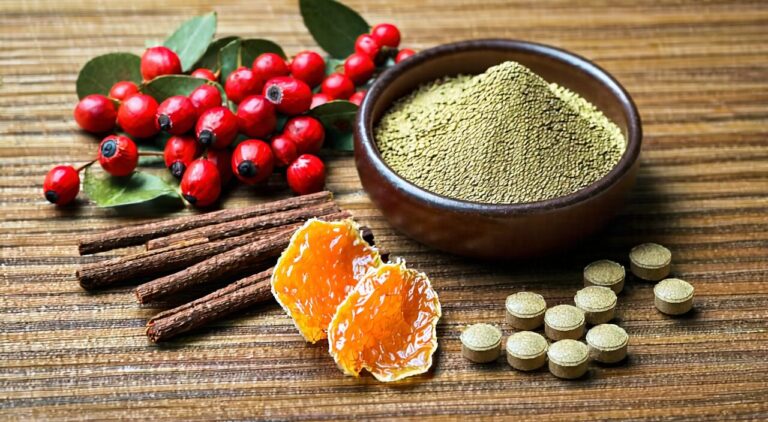
Comparison of Digestive Chinese Patent Medicines: The Roles of Baohe Wan, Hawthorn Pills, and Cassia Seed Products in Weight Management
In weight management, Baohe Wan, Hawthorn pills, and Cassia seed products are often used as supportive aids for digestion and resolving food stagnation. This article analyzes their respective characteristics, suitable scenarios, and precautions to help readers understand their supportive roles and limitations.
-
What Sleep Problems Is Suanzaoren Tang Suitable For? Traditional Uses and Precautions
Suanzaoren Tang is a classic formula in Chinese medicine for nourishing blood and calming the mind, mainly used for restless sleep caused by liver blood deficiency and internal deficiency heat. This article examines its traditional uses, applicable symptoms, precautions, and differences from Suanzaoren Wan to help you understand it more clearly.
-
Tianwang Buxin Dan and Sleep Problems: Traditional Use, Applicable Approaches, and Precautions
Tianwang Buxin Dan is a classic calming formula in Chinese medicine, often used for sleep issues stemming from yin deficiency with fire hyperactivity or insufficient heart yin. This article explains its traditional indications, the pattern types it suits, and key precautions to help you form a balanced perspective.
-
Guipi Wan and Sleep Issues: The Heart-Spleen Deficiency Approach, Common Manifestations, and Considerations
Many people turn their attention to Guipi Wan due to difficulty falling asleep, frequent dreaming, and waking up exhausted. This article approaches it from the heart-spleen deficiency perspective, outlining its traditional uses, common manifestations, and prerequisites for use, to help readers understand it rationally without offering medical advice.
-
Baizi Yangxin Wan and Sleep Issues: Traditional Uses, Indications, and Precautions
Many people find their sleep becomes lighter and they wake more easily after the age of 30. Baizi Yangxin Wan, a traditional Chinese patent medicine for nourishing the heart and calming the mind, is often mentioned in this context. This article introduces its formulation principles, traditional indications, and how it differs from other calming formulas, helping readers gain a balanced understanding—not as a substitute for professional diagnosis.
-
Jiawei Xiaoyao Wan and Sleep Problems: Emotional Stress, Liver Qi Stagnation Perspective, and Precautions
Sleep issues triggered by emotional stress are often categorized under “liver qi stagnation” in traditional Chinese medicine. Jiawei Xiaoyao Wan, a classic Chinese patent medicine, is often used in this context, but it is not a universal solution for sleep problems. This article outlines its traditional uses, possible connections, and key precautions.
-
What Is the Difference Between Suanzaoren Tang, Tianwang Buxin Dan, and Guipi Wan?
While Suanzaoren Tang, Tianwang Buxin Dan, and Guipi Wan are all commonly mentioned for sleep concerns, they correspond to liver blood deficiency, heart-kidney yin deficiency, and heart-spleen dual deficiency respectively. This article uses a comparison table and pattern differentiation logic to clearly outline their core differences, helping to establish an overall framework for understanding.
-
Precautions for Using Chinese Patent Medicines for Sleep: What You Need to Know Before Buying
When you find yourself tossing and turning at night, many people turn to Chinese patent medicines for sleep. But before you buy, understanding usage precautions and safety boundaries is essential. This article helps you fill in that critical gap—from reading the package insert and differentiating suitable user groups to avoiding long-term self-medication, so you can build safer knowledge.
-
TCM Approaches to Excessive Dreaming and Easily Awakened Sleep: Common Causes and Selection Tips
Excessive dreaming, easily waking up, and feeling tired afterwards troubles many people. From the perspective of traditional Chinese medicine, this article introduces common manifestations of excessive dreaming, related patterns such as heart-spleen deficiency and yin-blood deficiency, selection thoughts on traditional formulas like Gui Pi Wan and Tian Wang Bu Xin Dan, and lifestyle considerations.
-
How Overseas Users Choose Sleep-Related Chinese Patent Medicines? A Pre-Purchase Education Guide
Sleep issues trouble many overseas Chinese. How to rationally choose among numerous calming Chinese patent medicines? This article starts from self-observation, introduces the different perspectives of traditional Chinese medicine on sleep, and helps build a cognitive framework before making a purchase.
-
Middle-Age Weight Gain and Expanding Waistline? TCM Explains Aging and Metabolic Changes
Behind middle-age weight gain and an expanding waistline, it’s not just about calories. This article analyzes from a TCM perspective how kidney qi, spleen yang, and phlegm-dampness affect weight, and shares gentle approaches to regulation.
-
Common Questions About TCM Approaches to Sleep Problems: Patterns, Formulas, and Usage Considerations
Sleep problems are very common among middle-aged and older adults. This article organizes perspectives from traditional Chinese medicine on sleep, common pattern types, comparisons of several calming formulas, and usage precautions, providing a relatively systematic knowledge overview.
-
TCM Approaches for Light Sleep and Easily Waking: Common Manifestations and Considerations
You fall asleep but never feel deeply rested, waking at the slightest sound or opening your eyes right on schedule in the middle of the night. In Traditional Chinese Medicine, this kind of light sleep and easy waking is often linked to imbalances in qi, blood, yin-yang, and the internal organs. This article outlines common manifestations and approaches for regulation.
-
TCM Approaches to Excessive Dreaming and Frequent Waking: Common Causes and Key Considerations
Excessive dreaming and waking up tired is a common concern. This article introduces the common manifestations of vivid or frequent dreaming from a TCM perspective, related patterns such as heart-spleen deficiency and yin-blood deficiency, as well as traditional formulas like Gui Pi Wan and Tian Wang Bu Xin Dan, along with lifestyle tips for support.
-
Waking Up Early and Unable to Fall Back Asleep: TCM Understanding and Daily Care Suggestions
Waking up around 3 or 4 a.m. and struggling to fall back asleep is a common problem. TCM (Traditional Chinese Medicine) views this from the perspective of yin-yang waxing and waning and organ function, offering daily care ideas like sleep routines, emotional management, and diet. However, the use of Chinese patent medicines must be based on pattern differentiation and cannot replace professional diagnosis.
-
Still Tired After Waking Up? Sleep Quality and Daily Care from a TCM Perspective
You slept enough but still wake up tired? From a Traditional Chinese Medicine (TCM) perspective, this may relate to factors like qi and blood deficiency, dampness, and liver qi stagnation. This article analyzes common signs and causes, and shares dietary, sleep routine, and other care directions.
-
Heart-Spleen Deficiency and Sleep Problems: Common Signs, Adjustment Approaches, and Medication Considerations
Heart-Spleen Deficiency is a traditional Chinese medicine generalization of insufficient heart blood and weak spleen qi, often manifesting as light sleep, excessive dreaming, and post-wake fatigue. This article outlines its sleep patterns, adjustment strategies, and key points regarding the use of proprietary Chinese medicines like Gui Pi Wan, helping to rationally understand this pattern without substituting professional diagnosis.
-
Yin Deficiency with Fire and Sleep Issues: TCM Understanding, Common Manifestations, and Precautions
Many people have had this experience: feeling very tired, yet after lying down, they feel restless and unable to fall asleep. In TCM, this may be related to yin deficiency with fire. This article explores the TCM understanding, common manifestations, and care precautions to help build a cognitive framework.
-
Liver Qi Stagnation Transforming into Fire and Sleep Problems: A TCM Perspective on Stress, Emotions, and Sleep
Starting from the TCM concept of liver qi stagnation transforming into fire, this article reveals the inner connection between stress, emotions, and sleep problems, and provides reference directions for lifestyle adjustments and professional help.
-
A TCM Perspective on Obesity: Body Constitutions, Patterns, and Holistic Approaches Overview
This article attempts to organize obesity within the framework of body constitution, zang-fu function, and overall state from a traditional Chinese medicine perspective. It introduces common constitution types such as phlegm-dampness, spleen deficiency, stomach heat, and liver depression, along with conditioning approaches, helping readers build a clearer TCM cognitive outline.
-
Excessive Appetite, Always Wanting to Eat? TCM Explains Common Signs of Stomach-Heat Type Obesity
Excessive appetite, always wanting to eat? It might be Stomach-Heat type obesity. This article outlines its common signs, contributing factors, and daily regulation directions to help you better understand your own condition.
-
Abdominal Obesity and Belly Fat? TCM’s Perspective on the Relationship Between Abdominal Obesity, Dampness-Phlegm, and Spleen Deficiency
Having a large belly but slim limbs troubles many people. From a TCM perspective, abdominal obesity is often linked to dampness-phlegm, spleen deficiency, or qi stagnation. Observing whether the abdomen is soft or firm, along with accompanying symptoms, can help identify constitutional imbalances and guide the direction of regulation.
-
Comparison of Dampness-Resolving and Spleen-Fortifying Chinese Patent Medicines: Which One to Choose Among Shen Ling Bai Zhu San, Er Chen Wan, and Xiang Sha Liu Jun Zi Wan?
Many people feel confused about choosing among Shen Ling Bai Zhu San, Er Chen Wan, and Xiang Sha Liu Jun Zi Wan when addressing heavy dampness and spleen deficiency. This article analyzes the traditional positioning and suitable applications of these three formulas from the perspectives of qi deficiency, phlegm-dampness, and qi stagnation, helping you initially determine which one may be more appropriate.
-
10 Common Questions About TCM Weight Management: Body Constitution, Diet, and Choosing TCM Formulas
Weight management through Chinese medicine is not simply about eliminating dampness or purging. This article addresses 10 common questions on how to identify your body constitution, adjust your diet, and evaluate TCM formulas rationally, so you can find a clear direction.